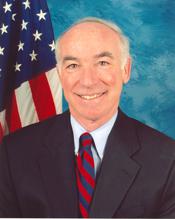
Joe Courtney
DDemocratCT-2 · Representative
52
/ 100
Average
Attendance95
Avg: 96
Independence3
Avg: 4
Bipartisan Tone9
Avg: 15
Ethics Record100
Avg: 99
Transparency40
Avg: 53
Accountability Score — composite of attendance, independence, bipartisan tone, ethics record & transparency.
Methodology13
Bills Sponsored
0
Enacted into Law
0
Passed a Chamber
13
In Committee
All Sponsored Bills
HR10427In Committee
MAGNET Act
HR10360In Committee
Safeguarding Taxpayer Investment for Executive Airlift Act of 2026
HR10308In Committee
Strengthening Coast Guard Communities Act of 2026
HR9735In Committee
CLINIC Assistance Act
The proposal would create a grant program that pays for law students to help workers and retirees pursue legal cases related to their retirement benefits and pension plans. This would give people with disputes over their retirement accounts access to free or low-cost legal assistance through law schools participating in the program. The grants would support law students in gaining practical experience while helping ordinary people navigate complex retirement benefit disputes.
HR8925In Committee
Job Corps and Skilled Defense Workforce Act
The proposal would direct the Department of Defense to coordinate the federal Job Corps program—which trains young people in various trades and skills—with the needs of defense manufacturers and contractors who build military equipment and weapons. This would help ensure that Job Corps graduates have the skills employers in the defense industry are actually looking for, potentially creating a pipeline of trained workers for defense-related jobs. The bill affects young people seeking job training, defense companies, and the military's supply chain.
HRES1209In Committee
Recognizing the significance of "Community College Month" in April as a celebration of more than 1,000 institutions throughout the United States supporting access to higher education, workforce training, and more, broadly sustaining and advancing the Nation's economic prosperity.
This resolution designates April as "Community College Month" to recognize the more than 1,000 community colleges across the United States that provide affordable education and job training to millions of students. Community colleges help people gain skills for careers, earn degrees, and access higher education without the high costs of four-year universities, which supports both individual economic mobility and the nation's workforce needs. The resolution is a symbolic measure that celebrates these institutions' role in strengthening the economy and expanding educational opportunities.
HJRES155In Committee
Providing for congressional disapproval under chapter 8 of title 5, United States Code, of the rule submitted by the Department of Education relating to "William D. Ford Federal Direct Loan (Direct Loan) Program".
Congress is considering blocking a new Department of Education rule about federal student loans, which would overturn the rule if approved. The rule affects millions of students and borrowers who use federal Direct Loans to pay for college. This is a procedural vote that would prevent the Education Department's changes from taking effect.
HR8045In Committee
Student Loan Interest Elimination Act
Student Loan Interest Elimination Act This bill eliminates interest on existing and new federal student loans beginning on July 1, 2026. Specifically, for existing federal student loans, the bill directs the Department of Education (ED) to establish and implement procedures to (1) modify the terms of Federal Direct Loans so that beginning on July 1, 2026, no interest shall accrue on such a loan; and (2) allow a borrower to opt out of this loan modification. Additionally, ED must establish and implement procedures to (1) refinance eligible loans that are not Federal Direct Loans (e.g., privately held Federal Family Education Loans and Perkins Loans), and (2) allow a borrower to opt out of this loan refinancing. The bill outlines the terms and conditions of these refinanced loans, including by prohibiting ED from charging origination fees and specifying that no interest shall accrue on these loans. For new federal student loans made on or after July 1, 2026, the bill sets the applicable interest rate at 0%. The bill establishes the Education Affordability Trust Fund. ED must deposit all payments made on federal student loans into this trust fund. The Education Affordability Trust Fund Board, as established by this bill, must transfer the assets from investments of this trust fund to ED to pay for the administrative costs of carrying out federal student loan programs. The bill allows ED to use excess amounts of funds in the trust fund to carry out a Supplemental Pell Grant Program.
HR3954In Committee
Improving Access to Medicare Coverage Act of 2025
Improving Access to Medicare Coverage Act of 2025 This bill deems an individual receiving outpatient observation services in a hospital as an inpatient for purposes of satisfying the three-day inpatient hospital-stay requirement with respect to Medicare coverage of skilled nursing facility (SNF) services. (Generally, individuals must have been an inpatient at a hospital for at least three days in order to qualify for SNF services. An individual's time spent under observation at a hospital for purposes of determining whether the individual should be admitted does not count towards this requirement.)
HR3036In Committee
Protecting America’s Workers Act
Protecting America's Workers Act This bill expands the coverage of requirements governing workplace safety and health to include protection for federal, state, and local government employees. However, the bill does not cover working conditions otherwise covered by federal requirements for mine safety and health. The bill revises requirements governing worker protection, including by expanding protections for whistle-blowers, such as protections for employees who refuse to perform work because they reasonably believe the work would result in serious injury or illness and for employees who aid inspections; directing employers to furnish a hazard-free place of employment to all individuals performing work, not just employees; directing employers to report work-related deaths or certain injuries, illnesses, or hospitalizations; establishing rights for victims, or representatives of victims, with respect to inspections or investigations of work-related bodily injuries or deaths; and setting the permitted period for employers to correct serious, willful, or repeated violations while citations for the violations are being contested. The bill also revises enforcement and oversight of workplace safety, including by increasing civil and criminal penalties for certain violations, requiring the Department of Labor to investigate fatalities or significant incidents in the workplace, expanding enforcement requirements relating to state occupational safety and health plans, expanding requirements for workplace health hazard evaluations by the National Institute for Occupational Safety and Health, and requiring Labor to provide training programs concerning employee rights and employer responsibilities.
HR2829In Committee
SERVICE Act
Strengthening Efforts for Relief and Vital Incentives for Community Service and Engagement Act or the SERVICE Act This bill makes changes to the Public Service Loan Forgiveness (PSLF) program. Under the current PSLF program, the Department of Education (ED) must cancel the balance of interest and principal due on a borrower's Federal Direct Loans after the borrower makes 120 monthly loan payments while employed in a public service job and, at the time of loan forgiveness, the borrower is employed in a public service job. Among other changes to the PSLF program, this bill reduces from 120 to 96 the number of monthly payments required for loan forgiveness; expands qualifying monthly payments, deferments, and forbearances allowed under the PSLF program; removes the requirement that a borrower must be employed in a public service job at the time of loan forgiveness; establishes a reconsideration process for borrowers who have their initial PSLF application denied; and prohibits interest capitalization on loans after deferment or forbearance. The bill directs ED to (1) establish an online portal that provides borrowers with information on loans and the PSLF program, and (2) establish and regularly update a database listing public service jobs. The bill allows an eligible teacher to use the same teaching service to qualify for both the Teacher Loan Forgiveness program and the PSLF program. The Government Accountability Office must study and report on the feasibility of establishing data matching agreements for PSLF that allows borrowers to forgo requesting employment certification from their employer.
HR2531In Committee
Workplace Violence Prevention for Health Care and Social Service Workers Act
Workplace Violence Prevention for Health Care and Social Service Workers Act This bill requires the Department of Labor to address workplace violence in health care, social service, and similar sectors. Specifically, Labor must issue an occupational safety and health standard that requires certain employers to take actions to protect workers and other personnel from workplace violence. The standard applies to employers in the health care sector, in the social service sector, and in sectors that conduct activities similar to those in the health care and social service sectors. Among other elements, the standard must require each employer to (1) develop a workplace violence prevention plan, (2) promptly investigate incidents of workplace violence, and (3) provide relevant training and education to employees. The bill requires certain hospitals and skilled nursing facilities to comply with this standard as a condition of Medicare participation.
HR2041In Committee
Hidden Fee Disclosure Act of 2025
This bill would require employers to clearly disclose all fees they charge workers, such as uniform costs, tool purchases, or training expenses, upfront before hiring or deducting money from paychecks. The goal is to prevent workers from being surprised by unexpected charges that reduce their actual take-home pay. The law would apply to most employers and give workers better information about the true cost of employment.