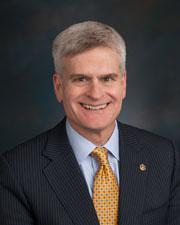
Bill Cassidy
RRepublicanLA · Senator
57
/ 100
Average
Attendance95
Avg: 97
Independence25
Avg: 23
Bipartisan Tone19
Avg: 14
Ethics Record100
Avg: 100
Transparency27
Avg: 47
Accountability Score — composite of attendance, independence, bipartisan tone, ethics record & transparency.
Methodology82
Bills Sponsored
1
Enacted into Law
5
Passed a Chamber
66
In Committee
Bills That Became Law
All Sponsored Bills
S3315Passed Senate
Health Care Cybersecurity and Resiliency Act of 2026
Health Care Cybersecurity and Resiliency Act of 2026 This bill expands federal requirements and resources for preventing and responding to cybersecurity incidents in the health care and public health sectors. The bill directs the Department of Health and Human Services (HHS) to require private health care-related entities to adopt minimum cybersecurity practices (e.g., multifactor authentication), more specifically identify the standards for mitigating penalties relating to violations of health information privacy and security, expand and update biennially a specified plan that details cybersecurity protocols for HHS personnel, provide training and best practices to support the expansion of the workforce for health care cybersecurity, provide guidance on cybersecurity readiness to rural entities, and designate one representative to lead oversight and coordination of cybersecurity activities within HHS. Also, HHS and the Cybersecurity and Infrastructure Security Agency (CISA) must coordinate to improve health care cybersecurity, including by (1) providing resources for entities receiving information from HHS or CISA programs, and (2) establishing a joint cybersecurity capability plan to coordinate responses to significant incidents. Additionally, the bill requires health care providers and plans to include the number of individuals affected when notifying individuals of unauthorized access to health information (i.e., a breach).
SRES933In Committee
A resolution expressing support for the designation of October 2026 as "National Dyslexia Awareness Month".
S5513In Committee
Domestic Manufacturing Revitalization Act of 2026
S5505In Committee
Safe and Fair Elections Act of 2026
S5503In Committee
Taxpayer Funded Compensation Accountability Act
S5421In Committee
A bill to amend the Internal Revenue Code of 1986 to eliminate the State opt-in requirement for the qualified elementary and secondary education scholarship credit.
S5420In Committee
A bill to amend the Internal Revenue Code of 1986 to increase the qualified elementary and secondary education scholarships credit limit for married taxpayers filing a joint return.
S4689Reported
READ Act
The bill would improve how schools teach reading by requiring states to use teaching methods backed by scientific research about how people learn to read. It would provide federal funding and support for teacher training programs, research into effective reading instruction, and accountability measures to track whether students are actually improving their reading skills. The changes would affect students, teachers, and school districts across the country.
SRES832In Committee
A resolution establishing a process to assure the long-term fiscal stability of the Federal Old-Age and Survivors Insurance Trust Fund and the Federal Disability Insurance Trust Fund.
S5258In Committee
PREFERRED Screening Act
S3010Reported
21st Century Dyslexia Act
21st Century Dyslexia Act This bill addresses the education of children with disabilities, with a particular focus on children with dyslexia. Currently, dyslexia is listed as one of the disabilities under the definition of specific learning disability in the Individuals with Disabilities Education Act (IDEA). This bill instead removes dyslexia from the definition of specific learning disability and establishes a stand-alone definition for dyslexia within the IDEA. Specifically, the bill defines dyslexia for purposes of the IDEA as an unexpected difficulty in reading for an individual who has the intelligence to be a much better reader, most commonly caused by a difficulty in the phonological processing (the appreciation of the individual sounds of spoken language), which affects the ability of an individual to speak, read, and spell. Additionally, the bill requires a local educational agency or other agency, in determining eligibility for or providing an accommodation or service under the IDEA, to provide equal access to (1) children from low-income families, (2) children from families with low socioeconomic status, and (3) children who are limited English proficient.
S2511Reported
College Transparency Act
College Transparency Act This bill requires the National Center for Education Statistics (NCES) to establish a secure and privacy-protected data system that contains information about postsecondary students. Specifically, the data system must evaluate student enrollment patterns, progression, completion, and postcollegiate outcomes, and higher education costs and financial aid; provide complete and customizable information for students and families making decisions about postsecondary education; reduce the requirements for reporting by institutions of higher education; and periodically match with other federal systems of data. The bill also establishes a postsecondary student data system advisory committee. The Department of Education (ED) and NCES must (1) provide dedicated and adequate staffing at ED to implement the bill's requirements, and (2) report to Congress on a quarterly basis regarding the progress of implementing the bill's requirements.
S4965Reported
Railroad Retirement Board Stability Act
The proposal would create a dedicated account to help the Railroad Retirement Board manage its administrative costs and operations more efficiently. This affects railroad workers and retirees who depend on the Railroad Retirement system for their pensions and benefits, as well as the railroads that contribute to the system.
S3097Reported
Health Information Privacy Reform Act
The legislation would update federal rules governing how healthcare providers, insurance companies, and other organizations handle patients' medical information, giving patients more control over their personal health data and requiring companies to notify people if their information is breached. The changes would affect doctors' offices, hospitals, health insurers, and pharmacies, as well as technology companies that process health information. Patients would gain stronger privacy protections and clearer explanations of how their medical records are used and shared.
S5062In Committee
FAIR DME Appeals Act
This bill would require Medicare contractors to pay the legal fees for durable medical equipment suppliers (companies that provide things like wheelchairs and oxygen tanks) when those suppliers were wrongly denied payment and had to fight in court to get their money back. The goal is to compensate suppliers for the costs they incurred defending themselves against incorrect payment denials by Medicare's contractors. This would primarily affect small medical equipment companies that were unfairly denied reimbursement and had to hire lawyers to resolve the dispute.
S5038In Committee
Special Education Administration Protection Act
The federal government would be prevented from moving or combining the Office of Special Education and Rehabilitative Services, which provides funding and oversight for special education programs in schools and rehabilitation services for people with disabilities. This affects students with disabilities, people seeking vocational rehabilitation, school districts, and disability service providers who rely on this office's programs and support. The bill ensures these services remain under a dedicated office rather than being absorbed into other government departments.
S5013In Committee
Veteran Acquired Brain Injury Caregiving Act
The Department of Veterans Affairs would test a new program allowing veterans with acquired brain injuries to use existing veteran care funds to hire and direct their own caregivers, giving them more control over who helps them and how they receive support. This pilot program would let veterans with brain injuries choose their own care providers rather than relying solely on VA-assigned staff, potentially improving their quality of life and independence. The program is currently being reviewed by the Senate Committee on Veterans' Affairs.
S5014In Committee
Veteran Suicide Spousal Career Services Act
The bill would expand the disabled veterans' outreach program to help certain spouses of disabled veterans find jobs and access employment services. Currently, these support services are limited mainly to veterans themselves, but this change would allow eligible spouses to receive the same job training, placement assistance, and career counseling. This would affect military families by giving spouses additional resources to enter or advance in the workforce.
S2120Passed Senate
Older Americans Act Reauthorization Act of 2025
Older Americans Act Reauthorization Act of 2025 This bill reauthorizes through FY2030, modifies, and establishes programs under the Older Americans Act, which supports social services and activities for individuals aged 60 years or older. Reauthorized programs and activities include the national eldercare locator service; regional aging and disability resource centers; grants to support counseling and assistance on pensions and other retirement benefits; grants to support home-delivered nutrition services (sometimes referred to as meals on wheels programs); programs to facilitate the delivery of supportive services to tribal organizations; and programs to prevent elder abuse, neglect, and exploitation. The bill also modifies existing programs for older individuals, including by explicitly permitting states to use certain grant funds to make carryout meals available at congregate meal sites or community locations. (Some providers began offering carryout meals to seniors in response to the COVID-19 pandemic.) Further, the bill permits the Administration on Aging to establish and operate, through grants to or contracts with eligible entities, a national resource center to support growth of the direct care workforce. The center’s activities may include the provision of training and technical assistance and the promotion of strategies to recruit and retain direct care workers. Finally, the bill establishes or reconvenes certain advisory groups, including (1) an advisory committee to provide guidance regarding the needs of older Native Americans and the implementation of related programs, and (2) a White House Conference on Aging to recommend improvements to federal programs that serve older individuals.
S4963In Committee
Outpatient Surgery Access Act of 2026
The proposal would update how Medicare pays ambulatory surgical centers—medical facilities where patients have outpatient surgeries without staying overnight—to reflect current costs and procedures. These changes would affect both the surgical centers that perform the procedures and Medicare beneficiaries who use these facilities. The bill aims to ensure payment rates keep pace with modern medical practices and operating expenses.
S4959In Committee
STOP Child Care Fraud Act
States would be required to pay child care providers based on how many children actually attend each day rather than using other payment methods, and could choose to reimburse providers for their costs instead of using other payment approaches. The bill also sets up new rules for how states must report and handle payment errors in the child care subsidy system. This would affect child care providers and families who receive government help paying for child care.
S4945In Committee
Home Market Restoration Act of 2026
The proposal would limit how much of certain imported goods can enter the country at a lower tax rate, with any amounts beyond that limit facing higher taxes. This would affect businesses that rely on imports, consumers who buy imported products, and domestic manufacturers competing with foreign goods. The measure aims to protect American industries while potentially raising prices for imported items.
SRES783Introduced
A resolution expressing support for the designation of June 11, 2026, as "Anti-Illicit Trade Awareness Day".
This resolution expresses support for the designation of June 11, 2026, as Anti-Illicit Trade Awareness Day.
SRES757Introduced
A resolution designating June 11, 2026, as "National Seersucker Day", designating every subsequent Thursday through the last Thursday in August 2026 as "Seersucker Thursday", and designating June 2026 as "Seersucker Appreciation Month".
The resolution officially recognizes June 11, 2026 as "National Seersucker Day" and declares every Thursday from mid-June through late August 2026 as "Seersucker Thursday," while also designating the entire month of June 2026 as "Seersucker Appreciation Month." This symbolic measure celebrates seersucker, a lightweight striped fabric traditionally worn in warm weather, particularly in professional and business settings. The resolution has already passed the Senate without any changes.
S4678In Committee
SIMS Act
The bill would make it illegal to create or distribute chatbots and AI programs that simulate minors and engage in sexually explicit conversations or conduct. This would apply to companies and individuals who develop or offer these tools, with the goal of preventing the creation of technology that sexualizes children. The measure has been sent to the Judiciary Committee for review.
S4584In Committee
Norma Ruth Criswell Carpenter & Clovis C. Criswell Grant Parish Restoration Act of 2026
The bill would make it easier for investors to get tax breaks when they put money into businesses and projects in low-income communities that lack access to capital. By expanding the new markets tax credit, the legislation aims to encourage investment in economically disadvantaged areas, potentially creating jobs and spurring development in neighborhoods that need it most. Investors, community development organizations, and residents of underserved areas would be the primary groups affected by these changes.
S3286In Committee
Veterans Appeals Improvement and Modernization Act 2.0
The legislation would overhaul how veterans appeal decisions about their benefits and disability claims by streamlining the appeals process and giving the Department of Veterans Affairs new tools to resolve disputes faster. Veterans would have clearer timelines for their appeals and more options for how to present their cases, potentially reducing the years-long waits many currently face when challenging denied benefits. The changes aim to make it easier for veterans to get the benefits they've earned while reducing the backlog of pending cases at the VA.
S4435In Committee
Improving Financial Aid Offers for Students Act
Colleges and universities would be required to provide students with clear, standardized financial aid offers that make it easier to compare costs and understand what aid is actually available to them. The bill aims to help students and families make better-informed decisions about which school to attend by presenting aid packages in a consistent format across institutions. This would affect prospective college students, their families, and all colleges and universities that offer financial aid.
S4442In Committee
Save America’s Family Forests Act of 2026
The proposal would let companies and landowners immediately deduct the full cost of reforestation expenses from their taxes rather than spreading those costs over many years, making it cheaper to invest in replanting forests. This change would primarily benefit timber companies, forest product manufacturers, and private landowners who manage forestland. The bill is designed to encourage more reforestation by reducing the upfront financial burden of replanting efforts.
S4427In Committee
Heat Workforce Standards Act of 2026
The proposal would prevent the Department of Labor from creating or enforcing new workplace safety rules designed to protect workers from heat-related injuries and illnesses. This would affect employers in industries like construction, agriculture, and outdoor work, as well as the workers in those fields who could face heat exposure risks. The bill is currently under review by a Senate committee.
S4386In Committee
ADVICE Act
The bill would create an advisory committee to develop consistent standards for how apprenticeship programs collect, organize, and share data across different organizations and states. This would help employers, schools, and government agencies better track apprenticeship outcomes and make it easier for workers to move between different apprenticeship programs. The committee would work to improve how information flows between the various groups involved in apprenticeships so the system runs more smoothly.
S4251In Committee
Mined in America Act of 2026
This bill would likely encourage or require the use of minerals and metals mined within the United States for energy production and related infrastructure projects, rather than relying on imports from other countries. The measure would affect energy companies, mining operations, and manufacturers who produce equipment for power generation and distribution. By promoting domestic mining, the bill aims to reduce dependence on foreign sources for critical materials needed in energy production.
S4232In Committee
A SMART Act
Without access to the full bill text, this appears to be legislation related to labor and employment policy, likely aimed at modernizing workplace standards or worker protections in some way. The bill's referral to the Health, Education, Labor, and Pensions Committee suggests it may address issues like job training, workplace safety, employee benefits, or labor market regulations. To provide a specific summary of what the bill would actually do, the detailed provisions would need to be reviewed.
S4131In Committee
Veteran Access to Neurosurgery Act of 2026
This bill would improve access to neurosurgery services for veterans by requiring the Department of Veterans Affairs to expand neurosurgical care options, either by hiring more neurosurgeons at VA hospitals or by ensuring veterans can see specialists outside the VA system when needed. The goal is to reduce wait times and give veterans better access to brain and spine surgery treatments that may not be readily available at their local VA facility. Veterans with neurological conditions like traumatic brain injuries, spinal cord injuries, or other nervous system disorders would be the primary beneficiaries.
S4076In Committee
Removing Medicare Mental Health Inpatient Limitations Act of 2026
Removing Medicare Mental Health Inpatient Limitations Act of 2026 This bill removes the 190-day lifetime limit on inpatient psychiatric hospital services under Medicare.
S4003In Committee
Securing Accountability in Foreign Entries Act
The bill would likely establish new rules or oversight mechanisms for foreign companies and financial transactions entering the U.S. market to ensure they follow American laws and regulations. This could affect international businesses, investors, and consumers by requiring greater transparency or accountability from foreign entities operating in the United States. The specific details of what accountability measures would apply depend on the bill's full text, which is still being reviewed by the Senate Finance Committee.
S3841In Committee
Last Sale Valuation Act of 2026
This bill would change how the U.S. values imported goods for tariff and tax purposes by using the price from the most recent sale of the product rather than other valuation methods currently used. The change would affect importers and companies that bring goods into the country, potentially altering how much they pay in tariffs and duties. The bill aims to simplify customs valuation rules and align U.S. practices with international trade standards.
S787Passed Senate
VetPAC Act of 2025
VetPAC Act of 2025 This bill establishes the Veterans Health Administration Policy Advisory Commission for purposes of reviewing operations at the Veterans Health Administration and preparing reports with recommendations for Congress based on such review.
S3473In Committee
MAP for Care Act
The legislation would expand access to mental health and addiction treatment services by improving how insurance companies cover these services and making it easier for patients to find providers. It aims to reduce barriers that currently prevent people from getting the mental health care they need, affecting both insured individuals and healthcare providers who treat mental health conditions. The bill is currently under review by the Senate Finance Committee.
S3265In Committee
Improve and Enhance the Work Opportunity Tax Credit Act
The proposal would expand a tax credit that employers can claim when they hire workers from groups that face barriers to employment, such as veterans, people with disabilities, and those receiving certain government benefits. By making the credit larger and easier to use, the bill aims to encourage companies to hire from these populations. Workers in these groups would benefit from increased job opportunities, while employers would receive financial incentives for expanding their hiring practices.
S3275In Committee
Humanoid ROBOT Act of 2025
The legislation would establish federal oversight and safety standards for humanoid robots used by the military and other government agencies, requiring developers to meet specific security and operational requirements before deployment. It affects defense contractors, robotics manufacturers, and military branches that use or plan to use humanoid robots in various capacities. The bill aims to ensure these advanced machines operate safely and securely while protecting national security interests.
S3086In Committee
Restoring Integrity in Fiduciary Duty Act
The proposal would clarify and strengthen the legal obligations that financial advisors and retirement plan managers have to act in their clients' best interests when managing money and investments. It would establish clearer standards for what constitutes a breach of fiduciary duty and could increase penalties for advisors who prioritize their own profits over their clients' financial wellbeing. This would primarily affect retirement savers, workers with 401(k) plans, and investment clients seeking to ensure their advisors are held accountable.
SRES471Introduced
A resolution calling on Congress, schools, and State and local educational agencies to recognize the significant educational implications of dyslexia that must be addressed, and designating October 2025 as "National Dyslexia Awareness Month".
This resolution designates October 2025 as National Dyslexia Awareness Month and calls on Congress, schools, and educational agencies to recognize that dyslexia has significant educational implications that must be addressed.
S1728Passed Senate
Employee Ownership Representation Act of 2025
Employee Ownership Representation Act of 2025 This bill expands the membership of the Advisory Council on Employee Welfare and Pension Benefit Plans to include two representatives of employee ownership organizations. The advisory council generally advises and makes recommendations to the Department of Labor about the department's functions under the Employee Retirement Income Security Act of 1974 (ERISA).
SRES357In Committee
A resolution recognizing the 20th anniversary of Hurricane Katrina.
SRES348In Committee
A resolution declaring August 14, 2025, as "National Save Social Security Day".
This resolution designates August 14, 2025, as a national day to raise awareness about Social Security and encourage people to think about protecting the program's future. The day would serve as an opportunity for Americans to learn about Social Security's importance to retirees, disabled workers, and survivors who depend on these benefits. The resolution itself does not make any changes to Social Security policy or benefits.
S2375In Committee
National Net Interest is National Security Act of 2025
S331Enacted
HALT Fentanyl Act
Halt All Lethal Trafficking of Fentanyl Act or the HALT Fentanyl Act This act permanently places fentanyl-related substances as a class into schedule I of the Controlled Substances Act. A schedule I controlled substance is a drug, substance, or chemical that has a high potential for abuse; has no currently accepted medical value; and is subject to regulatory controls and administrative, civil, and criminal penalties under the Controlled Substances Act. Under the act, offenses involving fentanyl-related substances are triggered by the same quantity thresholds and subject to the same penalties as offenses involving fentanyl analogues (e.g., offenses involving 100 grams or more trigger a 10-year mandatory minimum prison term). Additionally, the act establishes a new, alternative registration process for certain schedule I research. The act also makes several other changes to registration requirements for conducting research with controlled substances, including permitting a single registration for related research sites in certain circumstances, waiving the requirement for a new inspection in certain situations, and allowing a registered researcher to perform certain manufacturing activities with small quantities of a substance without obtaining a manufacturing registration. Finally, the act expresses the sense that Congress agrees with the interpretation of the Controlled Substances Act in United States v. McCray , a 2018 case decided by the U.S. District Court for the Western District of New York. In that case, the court held that butyryl fentanyl, a controlled substance, can be considered an analogue of fentanyl even though, under the Controlled Substances Act, the term controlled substance analogue specifically excludes a controlled substance.
SCONRES15Passed Senate
A concurrent resolution expressing support for America's law enforcement professionals.
The Senate passed a resolution expressing support for law enforcement officers across the country, recognizing their work in keeping communities safe. This is a symbolic measure that doesn't create new laws or funding, but rather makes an official statement of appreciation for police, sheriffs, and other law enforcement professionals and the challenges they face on the job.
S2121In Committee
SUPPORT for Patients and Communities Reauthorization Act of 2025
SUPPORT for Patients and Communities Reauthorization Act of 2025 This bill reauthorizes and revises Department of Health and Human Services (HHS) programs that address substance use disorders, overdoses, and mental health. For example, the bill reauthorizes for FY2026-FY2030 grant and other programs relating to • addressing substance use disorders with respect to pregnant and postpartum women, • prevention and recovery from substance use disorders for youth, • housing for individuals in recovery from substance use disorders, • community organizations facilitating recovery from substance use disorders, • loan repayment for certain health care providers treating substance use disorders, • prevention of overdoses of controlled substances, • treatment of children experiencing psychological trauma, and • mental and behavioral health education and training for medical and allied health students. Also, the bill revises several programs, including by (1) expanding a program that supports resources for first responders to include the purchase of drugs or devices to treat non-opioid overdoses, (2) expanding a program that supports employment services for individuals in recovery so as to allow for the provision of related transportation services, and (3) temporarily authorizing a regional technical assistance center to assist the National Peer-Run Training and Technical Assistance Center for Addiction Recovery Support. Additionally, the bill establishes new requirements for HHS, including requirements relating to • protecting the National Suicide Prevention Lifeline program from cybersecurity threats, • establishing a Federal Interagency Work Group on Fentanyl Contamination of Illegal Drugs, and • reviewing and potentially revising the scheduling of approved products containing a combination of buprenorphine and naloxone under the Controlled Substances Act.
SRES272Introduced
A resolution expressing support for the designation of the second Saturday in June as "Veterans Get Outside Day".
This resolution designates the second Saturday in June as Veterans Get Outside Day and encourages the Department of Veterans Affairs, the Forest Service within the Department of Agriculture, and the Department of the Interior to coordinate to promote the day along with National Get Outdoors Day.
S1973In Committee
Treat and Reduce Obesity Act of 2025
This bill would likely expand Medicare and Medicaid coverage for obesity treatments, which could include weight-loss medications, surgical procedures, and related medical services that are currently not fully covered. The change would help seniors, low-income individuals, and people with disabilities access obesity treatments more affordably by reducing their out-of-pocket costs. Insurance companies and healthcare providers would need to adjust their coverage policies to comply with the new requirements.
S1941In Committee
Cure Hepatitis C Act of 2025
Cure Hepatitis C Act of 2025 This bill establishes programs and requirements to provide free medications to treat hepatitis C in certain high-risk or vulnerable populations. It also establishes grants and other resources to support testing and treatment for hepatitis C. The bill provides funding for FY2025 to implement these provisions. The Department of Health and Human Services (HHS) must enter into a five-year purchasing contract with manufacturers of drugs that treat hepatitis C so that eligible individuals may receive the drugs without cost-sharing. Eligible individuals are those diagnosed with hepatitis C who are (1) enrolled in Medicaid or the Children’s Health Insurance Program (CHIP), (2) confined to federal, state, or local correctional facilities (or were released and began treatment there), (3) uninsured, or (4) receiving health care through the Indian Health Service. Eligibility is limited to those with specified legal immigration statuses. State Medicaid and CHIP programs and state and local correctional facilities may opt into the program; participation is mandatory for federal correctional facilities and the Indian Health Service. HHS must award grants to certain entities, including states, public health organizations, and correctional facilities, to support the coordination and provision of screening, treatment, and supportive services for the affected populations. The bill also allows Medicare beneficiaries to receive hepatitis C drugs without cost-sharing from 2027-2031.
S1933In Committee
Informing VETS Act of 2025
Informing Veterans on Education for Transitioning Servicemembers Act of 2025 or the Informing VETS Act of 2025 This bill requires the Department of Veterans Affairs to regularly promote the Veteran Readiness and Employment program by sending a letter to each veteran entitled to the program. The letter must explain the educational benefits of the program and provide a side-by-side comparison of benefits between the program and Post-9/11 GI Bill educational assistance. Such comparison must also be made available online.
SRES254Introduced
A resolution designating June 12, 2025, as "National Seersucker Day", designating every Thursday after National Seersucker Day through the last Thursday in August 2025 as "Seersucker Thursday", and designating June 2025 as "Seersucker Appreciation Month".
The resolution officially recognizes June 12, 2025, as a national day celebrating seersucker, a lightweight striped fabric commonly worn in warm weather, and declares the entire month of June 2025 as Seersucker Appreciation Month. It also designates every Thursday from mid-June through the end of August 2025 as "Seersucker Thursday" to encourage people to wear the fabric during the summer months. This is a symbolic gesture with no legal requirements or enforcement mechanisms.
S1776In Committee
Medicare Beneficiary Co-Pay Fairness Act
Medicare Beneficiary Co-Pay Fairness Act This bill limits the amount of coinsurance that may be assessed under Medicare for services performed in ambulatory surgical centers. Specifically, if the applicable coinsurance amount exceeds the inpatient hospital deductible, the Centers for Medicare & Medicaid Services must reduce the coinsurance amount so that it is equal to the amount of the deductible and pay the difference to the service provider.
S1727In Committee
Employee Ownership Fairness Act of 2025
The legislation would make it easier for employees to buy ownership stakes in their companies by allowing them to use retirement savings for these purchases and reducing certain tax barriers. This would particularly benefit workers at smaller companies and those interested in employee-owned businesses, while potentially giving them more say in how their workplace operates. The changes aim to expand worker ownership as an alternative way for employees to build wealth and have a stake in their company's success.
S1723In Committee
Equitable Access to School Facilities Act
This bill would require schools to provide equal access to their facilities for all student groups and organizations, regardless of the groups' beliefs or purposes. The legislation aims to prevent schools from discriminating against certain student clubs or activities by denying them use of gymnasiums, cafeterias, auditoriums, and other school spaces that are available to other groups.
S1720In Committee
Due Process Continuity of Care Act
This bill would require health insurance companies to continue covering patients' ongoing medical treatments during disputes over whether those treatments should be covered, rather than immediately stopping coverage while the disagreement is being resolved. The goal is to protect patients from having their care interrupted while they appeal insurance denials, ensuring they can keep seeing doctors and receiving medications without gaps. This would affect patients, insurance companies, and healthcare providers involved in coverage disputes.
S1707In Committee
Helping Young Americans Save for Retirement Act
This bill would make it easier for young workers to save money for retirement by allowing them to set aside pre-tax income in special savings accounts with potentially lower contribution limits or more flexible rules than traditional retirement accounts. The goal is to help younger employees, particularly those in entry-level or part-time jobs, build retirement savings early in their careers. The measure would likely reduce the immediate taxes workers owe while they're saving for their future.
S1638In Committee
Protection Against Foreign Adversarial Artificial Intelligence Act of 2025
S1504In Committee
Claiming Age Clarity Act
Claiming Age Clarity Act This bill changes certain terms that are used by the Social Security Administration (SSA) to describe the ages at which a worker may claim Social Security retirement benefits. First, the SSA must use minimum monthly benefit age instead of early eligibility age . This refers to the earliest age (62 under current law) at which a worker may claim benefits. (Currently, the benefit amount of a worker who claims benefits early is reduced to account for the longer period during which the worker is expected to receive benefits.) Second, the SSA must use standard monthly benefit age instead of full retirement age and normal retirement age . These terms refer to the age at which a worker may claim benefits without a reduction in the benefit amount. (Currently, this age ranges from 65 to 67, depending on the worker's year of birth.) Finally, the SSA must use the term maximum monthly benefit age for any reference to age 70 as the maximum age at which a worker may receive delayed retirement credits. The SSA may not use the term delayed retirement credit. These terms refer to the mechanism that increases the benefit amount of a worker who delays claiming benefits after reaching the full retirement age. (Currently, a worker receives a credit for each month between the full retirement age and age 70 that the worker delays claiming benefits. Each credit increases the benefit amount that the worker will receive after claiming benefits by a specified percentage.)
S1512In Committee
Protecting Military Servicemembers Data from Foreign Adversaries Act of 2025
S1406In Committee
SOAR Act of 2025
Supplemental Oxygen Access Reform Act of 2025 or the SOAR Act of 2025 This bill establishes certain requirements with respect to the payment and provision of supplemental oxygen and related services under Medicare. For example, the bill provides for separate payments, indexed to inflation, of oxygen and related equipment, supplies, and services under Medicare (rather than under the competitive acquisition program). It also specifically covers services that are provided by respiratory therapists under Medicare and provides for an additional payment adjustment for these services. Additionally, the bill (1) requires the Centers for Medicare & Medicaid Services to develop an electronic template for providers to use when prescribing oxygen and related equipment, supplies, and services; and (2) establishes certain rights for beneficiaries receiving these items and services, such as the right to choose their suppliers and to receive clear communications and be informed about the services provided.
S1459In Committee
Historic Tax Credit Growth and Opportunity Act of 2025
This bill would expand tax credits that developers and investors can claim when they rehabilitate historic buildings, making it more financially attractive to preserve older structures rather than demolish them. The changes would likely lower the cost of historic preservation projects across the country, potentially encouraging more investment in restoring aging buildings in communities. The bill affects real estate developers, investors, property owners, and communities interested in preserving their architectural heritage.
S1425In Committee
Red Tape Reduction Act of 2025
S1355In Committee
REPAIR Act of 2025
S1291In Committee
CLEAN FTZ Act of 2025
Containing and Limiting the Extensive Abuses Noticed in Free Trade Zones Act of 2025 or the CLEAN FTZ Act of 2025 This bill creates a system to classify countries based on compliance with international standards within their free trade zones and establishes related penalties. (Free trade zones are designated areas, typically located at or near ports, that contain production facilities and related infrastructure. Generally, these zones are treated as being outside the customs territory despite being physically located inside the geographic boundaries of countries.) Specifically, U.S. Customs and Border Protection (CBP) must identify, publish, and update a list of non-U.S. free trade zones that includes the identity, location, and administrators of each zone. Upon publication of the list of zones, CBP must then publish a classification of the countries in which those zones are located into four tiers based on specified standards (e.g., complying with international standards and countering illicit international trade). CBP must notify the government of each country of the tier to which the country was classified and periodically review the tier classification. The bill directs CBP to take additional actions with respect to countries classified as tier II, III, or IV, such as creating a hotline for reporting instances of illicit international trade. The bill also establishes related penalties, such as authorizing the President to impose property- and visa-blocking sanctions on any foreign person that has facilitated or supported illicit international trade within a zone located in a country classified as tier II, III, or IV.
S1287In Committee
DELETE Act
The legislation would require companies to delete personal data they collect about consumers when requested, with some exceptions for legal obligations and business needs. It establishes rules for how businesses must handle these deletion requests and what information they can keep on file. The law would give individuals more control over their personal information while affecting how companies manage customer data.
S1173In Committee
Restore Protections for Dialysis Patients Act
Restore Protections for Dialysis Patients Act This bill specifies certain requirements for private health insurers regarding coverage of individuals with end stage renal disease (ESRD) who are also covered under Medicare. In particular, the bill specifies that insurers may not limit benefits, including limiting network composition, in a manner that will affect ESRD Medicare beneficiaries differently compared to others without ESRD. The bill additionally specifies that insurers are not required to include a particular renal dialysis provider or a particular number of such providers as part of their networks.
S1141In Committee
Disaster Reforestation Act
This bill would likely provide tax incentives or credits to encourage property owners and companies to replant forests damaged by disasters like wildfires, hurricanes, or floods. By making reforestation more affordable through tax breaks, the legislation aims to help landowners, timber companies, and environmental groups restore forest ecosystems more quickly after natural disasters. The measure is currently under review by the Senate Finance Committee.
S1140In Committee
Health ACCESS Act
The Health ACCESS Act aims to improve people's ability to get health insurance and medical care, though the specific details of how it would do so are not yet clear from the bill's current stage. Based on its focus on "access," the legislation likely addresses barriers that prevent individuals or groups from obtaining affordable coverage or receiving necessary health services. The bill is currently under review by the Senate Finance Committee, which handles healthcare and insurance policy matters.
S1143In Committee
Stop Supreme Court Leakers Act of 2025
Stop Supreme Court Leakers Act of 2025 This bill establishes new federal crimes for the unauthorized disclosure of confidential information by officers or employees of the Supreme Court. Specifically, the bill prohibits an officer or employee of the Supreme Court from knowingly publishing, divulging, disclosing, or making known in any manner or to any extent not authorized by law any confidential information coming to that officer or employee in the course of the employment or official duties of that officer or employee. A violation is subject to criminal penalties. Additionally, any property constituting or derived from proceeds obtained as the result of the violation is subject to criminal forfeiture.
S956In Committee
Customs Facilitation Act of 2025
This bill aims to speed up and simplify the process of importing and exporting goods across U.S. borders by streamlining customs procedures and reducing delays at ports and airports. The changes would affect businesses that trade internationally, consumers who buy imported products, and customs officials who process shipments. By making customs operations more efficient, the bill could lower costs for companies and potentially reduce prices for imported goods.
S952In Committee
A bill to amend the Harmonized Tariff Schedule of the United States to provide a uniform 8-digit subheading number for all whiskies.
This bill revises Chapter 22 of the Harmonized Tariff Schedule of the United States to provide a uniform rate of duty for all whiskies.
SRES122In Committee
A resolution recognizing the contributions of AmeriCorps members and alumni and AmeriCorps Seniors volunteers in the lives of the people and communities of the United States.
This resolution encourages (1) the people of the United States to join in a national effort to salute AmeriCorps members, alumni, and AmeriCorps Seniors volunteers and to raise awareness about the importance of national and community service; and (2) all individuals to consider opportunities to serve in AmeriCorps and AmeriCorps Seniors.
S915In Committee
TLDR Act
S863In Committee
Genomic Data Protection Act
S743In Committee
Ag Disputes Act
Prioritizing Offensive Agricultural Disputes and Enforcement Act or the Ag Disputes Act This bill establishes a joint task force to identify and address trade barriers to U.S. agricultural exports. Specifically, the bill directs the President to establish the Agricultural Trade Enforcement Task Force. Members of this task force include employees of the Department of Agriculture's Foreign Agricultural Service and the Office of the U.S. Trade Representative. The bill requires the task force to (1) identify trade barriers to U.S. agricultural exports that are vulnerable to dispute settlement under the World Trade Organization (WTO) or other trade agreements to which the United States is a party, (2) develop and implement a strategy for enforcing violations of trade agreements related to those trade barriers, (3) identify like-minded trading partners that could act as complainants on disputes relating to specific trade barriers that are systemically or economically important to the United States, and (4) submit periodic reports to Congress. In its first report, the task force must include a plan for filing a request for consultations under the WTO with respect to agricultural price supports implemented by the Indian government.
S492In Committee
Improve and Enhance the Work Opportunity Tax Credit Act
Improve and Enhance the Work Opportunity Tax Credit Act This bill increases the work opportunity tax credit (WOTC) for wages paid during the first year of employment to certain employees. The bill also eliminates the maximum age limit applicable to Supplemental Nutrition Assistance Program (SNAP) benefit recipients for purposes of the WOTC. Under current law, an employer generally may claim a WOTC in the amount of 40% of up to $6,000 (or of up to $24,000 for certain veterans, $3,000 for summer youth employees, and $10,000 for long-term family aid recipients) of qualified wages paid during the first year of employment to an employee who is a member of a targeted group. (Exceptions and limitations apply.) The bill increases the WOTC to (1) 50% of up to $6,000 (or of up to $24,000 for certain veterans) of qualified first-year wages paid to an employee who is a member of a targeted group (other than a summer youth employee or recipient of long-term family aid), and (2) 50% of up to $12,000 (or of up to $48,000 for certain veterans) of qualified wages paid during the first year of employment to such employee if the employee works at least 400 hours during the year. Finally, the bill eliminates the maximum age limit applicable to SNAP benefit recipients and, thus, allows an employer to claim the WOTC for qualified first-year wages paid to an employee who is at least 18 years old and receiving SNAP benefits for a certain period of time.
S120In Committee
Disaster Housing Reform for American Families Act
Disaster Housing Reform for American Families Act This bill requires the Federal Emergency Management Agency (FEMA) to establish a five-year pilot program under the Individuals and Households Program (IHP) through which FEMA contracts to provide factory-built housing to serve disaster survivors until the disaster declaration terminates and then be utilized for affordable housing. It also authorizes FEMA to provide IHP grants for closing costs associated with obtaining certain mortgages. Specifically, FEMA must enter into a contract with a producer or seller of manufactured or modular homes to construct such housing as a type of temporary housing assistance under IHP. The bill requires the housing to meet specified criteria, including that it must be available within 90 days (unless extended to 120 days) after the disaster declaration, have no more than four units, and provide a minimum level of protection from natural hazards. The housing must conform to various specified standards, but the bill authorizes the Department of Housing and Urban Development to waive any such requirement for construction under the pilot program. Also, the bill requires FEMA to establish guidelines for transferring the housing to an affordable housing program after the termination of the relevant disaster declaration. However, the bill also authorizes it to become permanent housing after the declaration terminates. In addition, the bill authorizes FEMA to provide IHP grants to disaster-impacted individuals or households purchasing residential property for closing costs associated with obtaining a mortgage from a federal program providing affordable financing options.
S109In Committee
Offshore Energy Security Act of 2025
Offshore Energy Security Act of 2025 This bill directs the Department of the Interior to conduct two offshore oil and gas lease sales per year for 10 years in the Gulf of Mexico Region Program Area, places a moratorium on oil and gas leases in certain areas, and establishes related requirements. Interior must offer at least 74 million acres for each offshore lease sale in such region. The bill stipulates the terms and conditions of such leases. Interior must also carry out the lease sales in accordance with the Record of Decision approved by Interior on January 17, 2017. Interior may waive certain requirements under the National Outer Continental Shelf Oil and Gas Leasing Program that would delay final approval of those lease sales. In addition, the bill prohibits such lease sales from being invalidated as a result of lawsuits relating to environmental reviews under the National Environmental Policy Act of 1969. It also limits delays to the lease sales as a result of the lawsuits. Finally, the bill extends through 2035 a moratorium on oil and gas leasing in (1) any area east of the Military Mission Line in the Gulf of Mexico; (2) any area in the Eastern Planning Area that is within 125 miles of Florida's coastline; and (3) certain areas in the Central Planning Area, including specified areas along Florida's coastline. It also places a moratorium through 2035 on oil and gas leasing in the South Atlantic Planning Area or the Straits of Florida Planning Area.