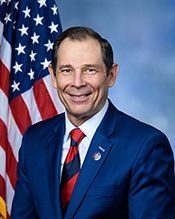
John R. Curtis
RRepublicanUT · Senator
62
/ 100
Average
Attendance98
Avg: 97
Independence23
Avg: 23
Bipartisan Tone46
Avg: 14
Ethics Record100
Avg: 100
Transparency23
Avg: 47
Accountability Score — composite of attendance, independence, bipartisan tone, ethics record & transparency.
Methodology50
Bills Sponsored
1
Enacted into Law
1
Passed a Chamber
40
In Committee
All Sponsored Bills
S5045Passed Senate
Wildfire Emissions Prevention Act of 2026
The proposal would change how the government measures air quality near prescribed fires—controlled burns that land managers use to reduce wildfire risk and maintain forests. Currently, air quality monitors may count smoke from these intentional burns as pollution violations, which could discourage their use; this bill would adjust those rules to better distinguish between prescribed fire smoke and other air pollution sources. The changes would mainly affect state environmental agencies, land managers, and communities near forests where controlled burns take place.
S5645In Committee
Data Center Community Empowerment Act of 2026
S5668In Committee
Methane Monitoring Science Act of 2026
S5674In Committee
Recycled Materials Attribution Act of 2026
S1321Reported
Moab UMTRA Project Transition Act of 2025
Moab UMTRA Project Transition Act of 2025 This bill allows the Department of Energy (DOE) to convey the Moab site to Grand County, Utah, at no cost when it finishes cleaning up uranium mill tailings (i.e., radioactive waste) at the site. (The Moab site is a uranium milling site located approximately three miles northwest of Moab, Utah.) DOE must retain certain water rights that are necessary to carry out its responsibilities, such as maintaining access to wells and the associated surface footprint of the wells if the remediation of groundwater is ongoing at the time of the conveyance. The conveyance of the site must include a provision that prohibits Grand County from reconveying to a private entity or nonprofit organization any portion of the land conveyed to the county.
S5400In Committee
STRIDE Act
S4523Reported
A bill to designate the facility of the United States Postal Service located at 111 South Tremont Street in Tremonton, Utah, as the "Sorensen-Estrada Post Office".
This bill designates the facility of the United States Postal Service located at 111 South Tremont Street in Tremonton, Utah, as the "Sorensen-Estrada Post Office".
S5330In Committee
Critical Mineral and Extraction Tax Parity Act
S5197In Committee
State-Sponsored Visa Pilot Program Act of 2026
States would be allowed to create pilot programs that sponsor certain foreign workers to come to the United States temporarily for jobs that employers say they cannot fill with American workers. The program would give states more control over which types of workers they can bring in, rather than having the federal government make all these decisions. This could affect employers looking to hire workers, state governments trying to address labor shortages, and foreign nationals seeking temporary work visas.
S5181In Committee
MAP Roads Act
The federal government would create a grant program to help counties convert their road information into digital formats and make that data publicly available online. This would allow local governments, businesses, and the public to access up-to-date information about county roads, potentially improving navigation, maintenance planning, and emergency response. Counties would apply for federal funding to support the costs of digitizing their road records and creating these accessible databases.
S5153In Committee
Federal Trade Commission Governance Reform Act
The Federal Trade Commission would need to have a majority of its commissioners present and voting before making major new rules or policy decisions, rather than allowing a smaller group to act. This requirement would apply to significant regulatory actions that affect businesses and consumers, ensuring broader agreement among the agency's leadership before implementing major changes. The change would make it harder for the FTC to quickly adopt new rules but could require more consensus among commissioners before proceeding.
S1542Reported
Uyghur Policy Act of 2026
This bill addresses U.S. policy toward the Uyghur region in China, likely establishing new diplomatic, economic, or humanitarian measures in response to concerns about human rights and treatment of Uyghur people. The legislation would affect U.S. relations with China, American companies doing business in the region, and potentially aid or support programs for Uyghur communities. The bill is currently under review by the Senate Foreign Relations Committee.
S4665Reported
BANNED in Latin America Act
The State Department would be required to develop and present a detailed plan to Congress for how the U.S. will counter efforts by Iran and Hezbollah to expand their political and military influence in Latin American countries. The strategy would address how these groups are trying to gain power and resources in the region, and what steps the U.S. government should take to prevent or limit their activities. This affects U.S. foreign policy in the Western Hemisphere and could influence how American diplomats and agencies work with Latin American governments.
S5114In Committee
PATH Act
The federal government would change how it decides whether to fund major public transportation projects like subway or light rail systems by allowing more flexible methods to predict how many people will actually use them. Currently, the government uses strict forecasting rules that sometimes overestimate ridership, which can lead to rejecting projects that might actually work; this bill would let transportation planners use additional prediction methods to make better decisions about which projects deserve federal funding. This affects cities and transit agencies that want to build new public transportation systems and the communities that depend on them.
S1135Reported
A bill to amend the National Trails System Act to direct the Secretary of the Interior to conduct a study on the feasibility of designating the Bonneville Shoreline Trail.
The federal government would study whether the Bonneville Shoreline Trail, a hiking path in Utah, should be officially added to the National Trails System, which provides federal protection and funding for important recreational routes. The study would examine the trail's historical significance, current condition, and whether it meets the standards for national designation. If approved, the trail would receive federal support and recognition alongside other nationally protected trails across the country.
SRES812In Committee
A resolution recognizing the 179th anniversary of the arrival of pioneers belonging to The Church of Jesus Christ of Latter-day Saints to the Great Salt Lake Valley, honoring the enduring pioneer spirit that shaped the American West, and celebrating its continued relevance to the unfolding American story.
This resolution honors the 179th anniversary of when members of The Church of Jesus Christ of Latter-day Saints arrived at the Great Salt Lake Valley and established settlements there. The resolution celebrates the pioneering spirit of these settlers and their lasting impact on the development of the American West. It recognizes how this historical event continues to be relevant to American history and culture today.
S4855In Committee
SAFE KIDS Act
AI companies would be required to build safety features into their systems to protect children, offer parental controls, and undergo independent audits to verify these protections work. The bill would also ban companies from targeting ads specifically at children and from selling or sharing children's personal information without proper safeguards. These requirements would apply to major AI providers and aim to reduce risks like exposure to harmful content or exploitation of young users.
S4371In Committee
TECH Act
The bill would allow technical and vocational schools that offer career training programs to compete for the same federal grants that community colleges and universities currently receive. This change would help students pursuing hands-on job training in fields like construction, healthcare, and manufacturing get the same financial support as those attending traditional colleges. The bill aims to level the playing field between different types of education pathways so students can choose the training option that best fits their career goals.
S1682In Committee
Alex Gate Safety Act of 2025
The bill would establish new safety standards and regulations for gates used in commercial and residential settings to prevent injuries and accidents. It likely requires manufacturers and installers to meet specific safety requirements, conduct testing, and provide proper warnings or instructions to consumers. The legislation aims to protect workers, homeowners, and the public from hazards related to gate malfunctions or unsafe design.
S4294In Committee
Taiwan Relations Reinforcement Act
The bill would require the Secretary of Defense to submit a yearly report to Congress evaluating whether the U.S. military and government have the resources and capability to support Taiwan according to existing law, which commits America to helping Taiwan defend itself. The report would help lawmakers understand what the country might need to do to keep that commitment, affecting military planning and defense spending decisions.
S4012In Committee
Fiscal Commission Act
This bill would create a special commission made up of members from Congress and outside experts to study the federal government's long-term budget problems and recommend ways to reduce the national debt. The commission would examine spending, taxes, and other financial policies, then present its findings and suggestions to Congress for consideration. This would affect taxpayers and anyone who relies on federal programs, as the commission's recommendations could influence future decisions about government spending and taxes.
S3989In Committee
Community TEAMS Act of 2026
This bill would establish or expand community-based health teams that bring together doctors, nurses, social workers, and other healthcare professionals to provide coordinated care to patients in their local areas. The program aims to improve health outcomes and reduce costs by helping people manage chronic diseases and connect with preventive services through these integrated teams. The legislation would likely affect patients seeking healthcare, healthcare workers, and community health organizations.
S3963In Committee
Rural Emergency Response Support Act
This bill would likely provide support and resources to emergency responders—such as firefighters, paramedics, and rescue workers—in rural areas where staffing and funding are often limited. It may include measures like grants, training programs, or equipment assistance to help rural communities maintain adequate emergency services. The legislation would affect rural fire departments, ambulance services, and the communities that depend on them for rapid emergency response.
S2417In Committee
Star-Spangled Summit Act of 2025
The bill likely aims to establish or coordinate a major summit or conference focused on managing and protecting America's public lands and natural resources. Based on the committee's focus, it probably addresses issues like forest management, mining on federal lands, and conservation policy, potentially bringing together government officials, environmental groups, and industry stakeholders to discuss these topics. The measure would affect federal land managers, mining companies, environmental organizations, and communities that depend on public lands for recreation or resources.
S2222Reported
Critical Undersea Infrastructure Resilience Initiative Act
This bill aims to protect underwater cables and pipelines that carry internet, power, and other critical services between countries from damage or sabotage. It likely establishes new monitoring systems, security measures, and international coordination to prevent disruptions to these undersea networks that billions of people depend on for communications and energy. The legislation would affect telecommunications companies, energy providers, and government agencies responsible for national security and infrastructure protection.
S3800In Committee
ePermit Act
ePermit Act This bill establishes requirements related to digitizing environmental reviews conducted under the National Environmental Policy Act of 1969 (NEPA). The Council on Environmental Quality (CEQ) must develop, publish, and iteratively update data standards for the collection and curation of certain data related to environmental reviews. CEQ must also design, test, and build prototype tools for environmental reviews. Additionally, CEQ must publish guidance to assist relevant agencies in implementing such standards as well as certain minimum functional requirements, such as data sharing that enables automated transfer of relevant data among federal agencies. Federal agencies responsible for environmental reviews or authorizations must implement the data standards and such minimum functional requirements. To the maximum extent practicable, CEQ and such agencies must iteratively develop and maintain a unified interagency data system consisting of interconnected federal agency systems and shared services for environmental reviews and authorizations, including a common interactive, digital, cloud-based authorization portal. Within a year, CEQ must oversee a pilot of shared services for environmental reviews and authorizations, including the portal. To the maximum extent practicable, CEQ must develop and implement the unified interagency data system by December 1, 2027.
S1508In Committee
Shivwits Band of Paiutes Jurisdictional Clarity Act
Shivwits Band of Paiutes Jurisdictional Clarity Act This bill confers legal jurisdiction to the State of Utah over certain civil cases involving the Shivwits Band of Paiutes. It also allows the tribe to lease its land held in trust. The tribe is located in southwestern Utah. Specifically, the bill confers jurisdiction to the State of Utah over any civil cause of action (1) to which the Shivwits Band of Paiutes is a party, and (2) that arises on or within Indian lands. Under the bill, Indian lands are lands of the tribe that are (1) held in trust for the benefit of the tribe, or (2) subject to restrictions by the United States against alienation (i.e., sale or transfer). Additionally, the bill specifies that any cause of action arising from any contract or agreement (including a lease) to which the tribe is party or that affects or arises on these Indian lands shall be deemed a civil cause of action. Therefore, this bill allows the tribe and third parties to resolve contract disputes in state court. The bill also authorizes the tribe to lease its land held in trust for a term of up to 99 years.
S3502In Committee
Timeshare Transparency Act
This bill would require timeshare companies to provide clearer information to buyers before they sign contracts, including details about costs, cancellation policies, and what owners actually own. The goal is to protect consumers from hidden fees and misleading sales practices that are common in the timeshare industry. Buyers would have stronger rights to cancel purchases and access straightforward explanations of their obligations.
S3400In Committee
Ally’s Act
This bill addresses health-related issues, though the specific details are not yet clear from the title alone. Based on its referral to the health committee, it likely aims to improve health outcomes or access to medical care for a particular group of people or condition. Once the bill moves through committee review, its concrete effects on patients, healthcare providers, or the healthcare system will become more apparent.
S3407In Committee
Western Refined Fuel Reserve Act of 2025
This bill would establish a strategic reserve of refined fuel products (like gasoline and diesel) in the western United States, similar to the existing Strategic Petroleum Reserve but focused on finished fuels rather than crude oil. The reserve would help ensure fuel availability and price stability during emergencies or supply disruptions that affect western states and their residents, businesses, and transportation systems. It likely aims to reduce regional fuel shortages and price spikes by maintaining a stockpile that can be released when needed.
S3354In Committee
QUIET Act
Quashing Unwanted and Interruptive Electronic Telecommunications Act or the QUIET Act This bill establishes a disclosure requirement for robocalls that use artificial intelligence (AI) to emulate a human being and increases forfeiture and fine amounts for certain violations of the Telephone Consumer Protection Act (TCPA). (The TCPA prohibits certain telemarketing calls made without the recipient’s consent and using specified automated technologies.) Specifically, any robocall that uses AI to emulate a human being must include a disclosure at the beginning of the message indicating that AI is being used. Under the bill, robocalls are defined as calls made or text messages sent (1) using automatic dialing technology, or (2) using an artificially generated message or an artificial or prerecorded voice. Calls or texts that are made or sent using equipment that requires substantial human intervention are excluded. Further, the bill doubles the maximum forfeiture penalty and criminal fine that may be imposed for certain violations of the TCPA involving the use of AI to impersonate an individual or entity with the intent to defraud, cause harm, or wrongfully obtain anything of value. This provision applies to violations that occur after the bill’s enactment.
S3338In Committee
A bill to direct the United States Postal Service to designate a single, unique ZIP Code for Highland City, Utah.
The bill would require the U.S. Postal Service to assign Highland City, Utah its own unique ZIP Code instead of sharing one with another area. This change would give the city its own postal identity, which could help with mail delivery, emergency services, and local business operations. The measure is currently under review by the Senate committee that oversees government operations.
S3208In Committee
Six Assurances to Taiwan Act
This bill would formally commit the United States to six specific security and diplomatic assurances to Taiwan, likely including military support, economic cooperation, and recognition of Taiwan's democratic status. The legislation aims to strengthen the U.S.-Taiwan relationship and provide Taiwan with clearer guarantees of American support in the face of pressure from China. The bill affects U.S. foreign policy, defense contractors, and Taiwan's security situation.
S3193In Committee
Algorithm Accountability Act
S3100In Committee
POST Act of 2025
The legislation would establish new procedures and requirements for how the federal government handles mail and postal operations, likely affecting both the U.S. Postal Service's operations and the public who rely on mail delivery. The bill has been sent to the Senate committee responsible for government efficiency and homeland security matters for review and consideration.
S1462Reported
Fix Our Forests Act
This bill would make it easier for the federal government to manage and restore forests on public lands by streamlining the process for removing dead trees, thinning overcrowded forests, and conducting controlled burns to prevent wildfires. The changes would affect timber companies, environmental groups, and communities near national forests by potentially speeding up forest management projects while trying to reduce the risk of catastrophic wildfires. The bill aims to balance forest health with environmental protections and economic interests in how public forests are maintained.
S3044In Committee
Wildfire Emissions Prevention Act of 2025
S2766In Committee
Consumer Safety Technology Act
S2660In Committee
Modern Risk Detection Act of 2025
S2661In Committee
A bill to allow for the use of risk-based inspections for in-service breakout tanks.
S330In Committee
CCP IP Act
This bill likely aims to protect American intellectual property (like patents, trademarks, and trade secrets) from theft or unfair practices by Chinese companies and the Chinese government. It would probably give U.S. businesses, inventors, and entrepreneurs stronger tools to defend their innovations and prevent them from being copied or stolen abroad. The measure has been referred to the Small Business Committee, suggesting it focuses on protecting smaller American companies from intellectual property violations.
SJRES31Enacted
A joint resolution providing for congressional disapproval under chapter 8 of title 5, United States Code, of the rule submitted by the Environmental Protection Agency relating to "Review of Final Rule Reclassification of Major Sources as Area Sources Under Section 112 of the Clean Air Act".
This joint resolution removes the requirements for sources of persistent and bioaccumulative hazardous air pollutants to comply with certain major source emissions standards when those sources reclassify as area sources (which have less stringent standards). Specifically, the joint resolution nullifies the Environmental Protection Agency rule titled Review of Final Rule Reclassification of Major Sources as Area Sources Under Section 112 of the Clean Air Act . The rule requires sources that seek to reclassify as area sources to implement certain control methods (e.g., continue to employ emission control methods required under the major sources requirements) to ensure they do not increase emissions beyond the major source requirements applicable at the time of reclassification.
S842Reported
No Hezbollah In Our Hemisphere Act
The legislation would prohibit the terrorist organization Hezbollah from operating in the Western Hemisphere and require the U.S. government to take action against any of its activities, finances, or personnel in the Americas. It would also direct the State Department and other agencies to work with countries in the region to identify and counter Hezbollah's presence and influence. The bill affects foreign policy, national security efforts, and diplomatic relations with countries in North and South America.
S1339In Committee
Stop CCP Money Laundering Act of 2025
The legislation would require U.S. banks and financial institutions to identify and report suspicious transactions involving Chinese government entities and their affiliates, aiming to prevent money laundering and financial crimes. Banks would face stricter scrutiny and reporting requirements when dealing with accounts or transfers connected to Chinese Communist Party officials and state-owned companies. The measure targets financial institutions and their compliance officers while affecting how they conduct business with Chinese entities.
S1191In Committee
Studying NEPA’s Impact on Projects Act
S1107In Committee
MATCH Act of 2025
Making Access To Cleanup Happen Act of 2025 or the MATCH Act of 2025 This bill modifies the Department of Agriculture's (USDA's) Emergency Watershed Protection (EWP) program to allow sponsors (i.e., states, local governments, and Indian tribes) to undertake certain emergency watershed protection measures prior to entering into a project agreement with USDA and count the costs as part of the sponsor's share of the project cost once an agreement with USDA is in place. As background, USDA's EWP Program offers assistance to sponsors to carry out projects that help safeguard people and property from floods, drought, fires, windstorms, and other natural disasters that impair a watershed. This bill requires USDA to identify a list of emergency watershed protection measures that a sponsor may incur costs for prior to entering into a project agreement with USDA under the EWP Program. USDA must develop a procedure, to be implemented at the state level, through which these entities may request additional emergency watershed protection measures. The cost of undertaking these additional measures may be incurred by a sponsor prior to entering into an agreement with USDA. Further, USDA must consider pre-agreement costs incurred by a sponsor for undertaking the emergency watershed protection measures as meeting part of a sponsor's contribution towards the project costs.
S941In Committee
A bill to prohibit natural asset companies from entering into any agreement with respect to land in the State of Utah or natural assets on or in land in the State of Utah.
This bill would prevent natural asset companies from buying, leasing, or making agreements to control land or natural resources in Utah. Natural asset companies are investment firms that profit by managing environmental features like forests, wetlands, or water rights, and this law would block them from operating in the state. The bill aims to keep Utah land and resources under local or traditional ownership rather than allowing outside investment companies to control them.
S896In Committee
Co-Location Energy Act
S857In Committee
Water Conservation Rebate Tax Parity Act
The proposal would allow homeowners and businesses to claim tax credits or deductions for money they spend on water-saving improvements like efficient toilets, showerheads, and irrigation systems, similar to existing tax breaks for energy-efficient upgrades. This would make water conservation financially more attractive by reducing the out-of-pocket cost for people and companies that install these water-saving devices. The change would primarily benefit property owners looking to lower their water usage and utility bills.
SJRES30In Committee
A joint resolution providing for congressional disapproval under chapter 8 of title 5, United States Code, of the rule submitted by the National Park Service relating to "Glen Canyon National Recreation Area; Motor Vehicles".
This joint resolution nullifies the final rule issued by the National Park Service titled Glen Canyon National Recreation Area; Motor Vehicles and published on January 13, 2025. The rule modified regulations concerning the Glen Canyon National Recreation Area, which is located in northern Arizona and southeastern Utah. For example, the rule limited the use of off-road vehicles, such as off-highway vehicles and all-terrain vehicles, in certain areas.