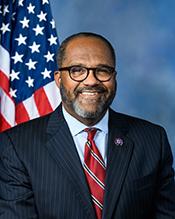
Troy A. Carter
DDemocratLA-2 · Representative
56
/ 100
Average
Attendance99
Avg: 96
Independence2
Avg: 4
Bipartisan Tone31
Avg: 15
Ethics Record100
Avg: 99
Transparency28
Avg: 53
Accountability Score — composite of attendance, independence, bipartisan tone, ethics record & transparency.
Methodology31
Bills Sponsored
0
Enacted into Law
4
Passed a Chamber
27
In Committee
All Sponsored Bills
HR10771In Committee
Emergency Preparedness in Higher Education Act
HR10752In Committee
CISA Securing AI Task Force Act
HR10722In Committee
9–8–8 Crisis Response Workforce Act
HR10537In Committee
Federal Emergency Mobilization Accountability (FEMA) Workforce Planning Act
HR5109Passed House
Transportation Worker Identification Credential Efficiency Act
This bill directs the Transportation Security Administration (TSA) to develop guidelines to improve access to a Transportation Worker Identification Credential (TWIC) for prisoners prior to their release. Specifically, TSA must develop guidelines to assist individuals in federal, state, and local prisons in (1) pre-applying or preparing an application for a TWIC card; and (2) requesting an appeal or waiver of a preliminary determination of ineligibility for a TWIC card. As background, a TWIC card is required by the Maritime Transportation Security Act for workers who need access to secure areas of U.S. maritime facilities and vessels. TSA conducts a background check to determine a person’s eligibility and issues the credential.
HR10424In Committee
Equity in Research Act
HR10253In Committee
To designate the facility of the United States Postal Service located at 1706 South Burnside Avenue in Gonzales, Louisiana, as the "Cpl. Lawrence Brown Post Office Building".
This bill designates the facility of the United States Postal Service located at 1706 South Burnside Avenue in Gonzales, Louisiana, as the "Cpl. Lawrence Brown Post Office Building".
HRES1506In Committee
Expressing support for the designation of September 2026 as "National Prostate Cancer Awareness Month".
HR10122In Committee
STORM FORTIFIED and Wildfire Prepared Act
HR9842In Committee
State Offices of Women’s Health Support and Expansion Act
The federal government would provide grants to states to create and run dedicated offices focused on women's health issues, helping coordinate healthcare services and programs specifically for women. These state offices would work to improve women's access to preventive care, treatment, and health information across their regions. The funding would support states in addressing health concerns that disproportionately affect women and ensuring their healthcare needs are properly addressed.
HR8874Passed House
Homeland Security Capabilities Preservation Reporting Act of 2026
Homeland Security Capabilities Preservation Reporting Act of 2026 This bill requires the Federal Emergency Management Agency (FEMA) to submit a report to Congress every three years (current law requires only one report) regarding urban areas’ security capabilities previously supported with funding from the Urban Area Security Initiative (UASI) and at risk of being reduced or eliminated without additional federal assistance. FEMA’s UASI grants assist designated high-risk urban areas with developing and sustaining capabilities to prevent, prepare for, protect against, and respond to acts of terrorism. Each report must contain a proposal for FEMA to provide financial assistance for at least three consecutive years to urban areas previously receiving UASI funds to allow them to transition to other funding sources to preserve their security capabilities.
HR9344In Committee
EDUCATE Act of 2026
The proposal would allow universities that historically served African American students to conduct research on growing marijuana for medical and scientific purposes. This would give these institutions the same agricultural research opportunities that other universities have, potentially creating jobs and economic benefits at these schools while expanding knowledge about cannabis cultivation and uses.
HR9312In Committee
To amend the Immigration and Nationality Act to include the processing of crawfish as agricultural labor or services, and for other purposes.
The proposal would classify crawfish processing work as agricultural labor under immigration law, potentially allowing employers to hire foreign workers for these jobs through existing agricultural visa programs. This change would affect crawfish processing facilities, primarily in Louisiana and other Gulf Coast states, by giving them access to temporary foreign workers when they cannot find enough domestic employees. The measure is currently under review by the House Judiciary Committee.
HRES1355In Committee
Supporting the designation of the week of June 14 through June 21, 2026, as "National Men's Health Week".
The proposal would officially recognize the week of June 14-21, 2026, as National Men's Health Week to raise awareness about health issues affecting men and encourage them to seek medical care and adopt healthier lifestyles. This designation is largely symbolic and does not create new programs or funding, but it allows the government to highlight the importance of men's health through official recognition and public awareness efforts. The measure affects public health messaging and could help health organizations and medical professionals focus attention on men's wellness during that designated week.
HR8961In Committee
Student Suicide Prevention Awareness Act of 2026
The federal government would fund and organize a public awareness campaign to help schools teach students about suicide prevention resources and mental health support. Schools would receive information and materials to share with young people about where to find help if they or their peers are struggling. This aims to reduce youth suicide by making sure students know what resources are available to them.
HR8650In Committee
Medicaid Outreach and Assistance for Communities Act of 2026
The proposal would give states more federal money to help people sign up for Medicaid and learn about the program's benefits. States would use these increased payments to fund outreach workers and enrollment assistance, making it easier for eligible individuals and families to access health coverage through Medicaid.
HR8440In Committee
ZELDIN Act
The Environmental Protection Agency would need to get approval from Congress before dropping lawsuits or stopping legal cases involving the release of cancer-causing chemicals. This requirement would prevent the EPA from quietly abandoning cases without public oversight and would give lawmakers a say in enforcement decisions that affect public health and the environment.
HR8368In Committee
To appropriate funds for the Federal Emergency Management Agency's Disaster Relief Fund, and for other purposes.
This bill provides $26.367 billion in FY2026 emergency funding for the Federal Emergency Management Agency's (FEMA's) Disaster Relief Fund. The bill provides the funding to FEMA for the necessary expenses to carry out the Robert T. Stafford Disaster Relief and Emergency Assistance Act with respect to major disasters.
HR7787In Committee
To amend title VII of the Public Health Service Act to strengthen the mental health workforce, and for other purposes.
This bill would expand and strengthen the mental health workforce by increasing funding and support for training mental health professionals like therapists, counselors, and psychiatrists, and would likely make it easier for people to access mental health services in underserved areas. The changes would affect healthcare providers, patients seeking mental health treatment, and communities that currently lack adequate mental health resources.
HR7602In Committee
State of Men’s Health Act
This bill would likely establish new federal programs or funding to address health issues that disproportionately affect men, such as heart disease, suicide, and certain cancers. It may direct the government to conduct research, improve screening and prevention efforts, or support healthcare initiatives specifically focused on men's health outcomes. The legislation would affect men seeking healthcare services, medical researchers, and potentially healthcare providers and insurance companies involved in treatment and prevention programs.
HR7092In Committee
RAYS Act
The RAYS Act addresses education policy, though the specific details of what it would change are not clear from the title alone. Based on its referral to the House Committee on Education and Workforce, the bill likely aims to modify how schools operate, fund education programs, or support students and teachers in some way. Once the bill moves through committee, its concrete effects on schools, students, or education funding will become clearer.
HR6782In Committee
Public Health Air Quality Act of 2025
The proposal would establish new federal standards and regulations to monitor and improve air quality across the country, requiring states and industries to meet stricter pollution limits to protect public health. It would affect power plants, factories, vehicle manufacturers, and other major pollution sources, while also benefiting communities—especially those near industrial areas—by reducing harmful air pollutants linked to respiratory diseases and other health problems. The legislation has been sent to the House Committee on Energy and Commerce for review and debate.
HRES926In Committee
RESPECT Resolution
Realizing Equitable & Sustainable Participation in Emerging Cannabis Trades Resolution or the RESPECT Resolution This resolution encourages states and localities to adopt best practices and take bold steps to address disparities in the cannabis marketplace and to address, reverse, and repair the effects of the war on drugs on communities of color. The resolution also expresses the sense that the President should direct the U.S. Mission to the United Nations and the Commission on Narcotic Drugs to seek to treat cannabis as a legal commodity.
HRES675In Committee
Expressing support for the designation of September 2025 as "National Prostate Cancer Awareness Month".
This resolution expresses support for the designation of National Prostate Cancer Awareness Month.
HR2037Passed House
Open RAN Outreach Act
Open RAN Outreach Act This bill requires the National Telecommunications and Information Administration (NTIA) to conduct outreach and provide technical assistance to small communications network providers regarding the benefits, uses, and challenges of Open Radio Access Network (Open RAN) standards and other open network architectures. (Open RAN is a nonproprietary, standardized network deployment approach that promotes open networks with interoperable equipment and virtualized network operations.) The NTIA must also conduct outreach and provide assistance to small providers regarding participation in the Public Wireless Supply Chain Innovation Fund, a competitive grant program that funds efforts to accelerate the development, deployment, and adoption of Open RAN.
HRES544In Committee
Supporting the designation of the month of June 2025, as "National Men's Health Month".
This resolution expresses support for National Men's Health Month.
HRES495In Committee
Supporting the designation of the week of June 9 through June 15, 2025, as "National Men's Health Week".
This resolution expresses support for National Men's Health Week.
HR3805In Committee
Protecting Community Television Act
This bill would protect community television stations—local channels that provide programming and services to their neighborhoods—by establishing rules or funding to help them compete with larger commercial broadcasters and streaming services. The legislation likely aims to preserve access to local news, educational content, and community information for people who rely on these smaller stations. It affects local television broadcasters, viewers in communities served by these stations, and potentially the companies that operate cable and internet services that carry them.
HR2992In Committee
To amend title 23, United States Code, and the Infrastructure Investment and Jobs Act with respect to vehicle roadside crashes, work zone safety, and for other purposes.
This bill would strengthen safety rules for highway work zones and roadside crashes by updating federal transportation laws and the infrastructure law passed in 2021. It would likely require better protections for road workers, clearer warning systems for drivers approaching construction areas, and stricter penalties for speeding or reckless driving in these dangerous zones. The changes would affect highway construction companies, state transportation departments, and drivers who use roads with active work zones.
HR2539In Committee
FISCAL Act
The FISCAL Act addresses agriculture and food policy, though the specific details of what changes it would make are unclear from the title alone. Based on its referral to the House Committee on Education and Workforce, it likely involves how food and agricultural programs connect to worker training, nutrition assistance, or educational initiatives. Farmers, food producers, workers in agriculture-related industries, and potentially low-income families receiving food assistance could be affected by the bill's provisions.
HR1374Passed House
Securing the Cities Improvement Act
Securing the Cities Improvement Act This bill makes changes to the Department of Homeland Security (DHS) Countering Weapons of Mass Destruction Office's (CWMD's) Securing the Cities program, which seeks to detect nuclear or radiological materials to prevent terrorist attacks and other events posing a risk to cities in the United States. Specifically, the bill requires the CWMD to establish performance metrics and milestones for the program and to track performance against them. Also, under current law, in carrying out the Securing the Cities program, the CWMD may only partner with cities that are high-risk urban areas , which are designated by the Federal Emergency Management Agency under a different program. Instead, the bill requires the CWMD to designate the jurisdictions it may partner with for the program, and the designations must be based on the capability and capacity of the jurisdiction relating to preparedness and response, as well as the relative threat to, vulnerability of, and consequences for, such jurisdiction regarding terrorist attacks and other high-consequence events utilizing nuclear or radiological materials. Additionally, within two years of enactment of the bill, the CWMD must submit a report to Congress regarding participation in the Securing the Cities program, the establishment of metrics and milestones, performance against such metrics and milestones, and plans for any changes to the program.