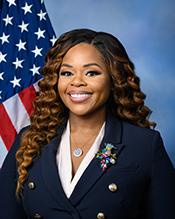
Sheila Cherfilus-McCormick
DDemocratFL-20 · Representative
50
/ 100
Average
Attendance97
Avg: 96
Independence2
Avg: 4
Bipartisan Tone8
Avg: 15
Ethics Record100
Avg: 99
Transparency22
Avg: 53
Accountability Score — composite of attendance, independence, bipartisan tone, ethics record & transparency.
Methodology12
Bills Sponsored
0
Enacted into Law
0
Passed a Chamber
12
In Committee
All Sponsored Bills
HR1114In Committee
L’Ouverture Economic Development Plan for Haiti Act of 2025
HR4586In Committee
AIDA
I don't have enough information to write an accurate summary. The bill title "AIDA" and subject line "International Affairs" are too vague to determine what specific actions this bill would take or who it would affect. To provide a reliable plain-English summary, I would need the bill's full text or a more detailed description of its actual provisions.
HRES179In Committee
Expressing support for the strengthening of United States-Africa partnerships in critical minerals development.
HR8369In Committee
No ICE in Schools Act
Schools and colleges that receive federal funding would be prohibited from sharing student records or personal information with immigration enforcement agencies. This would protect students and families from having their educational data used to identify or locate people for deportation purposes. The measure aims to keep schools as safe spaces where families feel comfortable enrolling children without fear that their information will be turned over to immigration authorities.
HR8260In Committee
Cardiovascular Disease Early Detection and Prevention Act of 2026
This bill would likely establish or expand programs to help detect heart disease and related conditions earlier in people's lives, potentially through screening initiatives, research funding, or improved access to preventive care. It would probably affect patients, healthcare providers, and insurance companies by changing how cardiovascular disease is identified and treated before it becomes severe. The bill has been sent to two House committees that handle health policy and healthcare funding to review its specific provisions.
HR8214In Committee
W.A.R. Act Wartime Anti-Profiteering and Relief Act
During wartime or national emergencies, this bill would give the government power to prevent companies from dramatically raising prices on essential goods and services to take advantage of the crisis. It would likely allow authorities to investigate price gouging, set limits on profits, and potentially impose penalties on businesses that exploit emergency situations for excessive gains. The measure would affect manufacturers, retailers, and service providers across industries while aiming to protect consumers and ensure fair access to necessities during emergencies.
HR8042In Committee
Empowering Women in Agriculture Act
This bill aims to support women who work in farming and agricultural businesses by likely providing funding, training, or policy changes to help them succeed. The specific measures probably address challenges women farmers face, such as access to loans, land ownership, or business resources. The bill is currently being reviewed by the House Agriculture Committee to determine what final form it will take.
HR7899In Committee
Respect for Essential Workers Act
This bill would likely create or expand immigration protections for workers deemed essential to the economy and public services, such as healthcare workers, agricultural laborers, or other critical industries. The measure would probably make it easier for these workers to obtain visas, work permits, or legal status in the United States, recognizing their importance to the country's functioning. The bill is currently under review by the House Judiciary Committee.
HR7820In Committee
To amend the Internal Revenue Code of 1986 to modify the rules for investments in qualified opportunity funds, and for other purposes.
This bill would change the tax rules for opportunity funds, which are investment programs designed to encourage people to put money into economically struggling communities in exchange for tax breaks. The changes would likely adjust how long investors need to hold their money in these funds or modify the tax benefits they receive, affecting both individual investors and the communities hoping to attract this investment capital.
HR3489In Committee
Department of Veterans Affairs Medical Physicist Pay Cap Relief Act
This bill would allow the Department of Veterans Affairs to pay medical physicists (specialists who work with radiation and imaging equipment in hospitals) at higher salary levels than current federal pay caps allow, making it easier for the VA to hire and keep qualified professionals. Medical physicists are critical for cancer treatment and diagnostic imaging at VA hospitals, but the agency has struggled to recruit them because federal pay limits are lower than what private hospitals offer. The change would help ensure veterans receive better cancer care and other medical services by allowing the VA to compete for top talent.
HR2494In Committee
To direct the Secretary of Housing and Urban Development to annually submit to the Congress a report that analyzes State and local strategies, activities, and plans that promote affordable housing, and for other purposes.
The federal government would require the Housing and Urban Development Secretary to study and report to Congress each year on what states and local communities are doing to create and maintain affordable housing, including their strategies and plans. This would help lawmakers understand which approaches are working to address housing affordability challenges across the country and could inform future housing policy decisions. The bill affects state and local governments, housing developers, and anyone struggling to find affordable places to live.
HRES185In Committee
Recognizing the need of Congress to prevent, address, and treat obesity as a disease in the United States on this World Obesity Day, March 4, 2025.
This resolution supports the urgent need to prevent, treat, and address obesity as a disease on World Obesity Day.