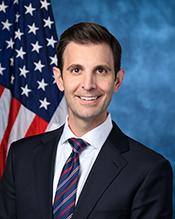
Christopher R. Deluzio
DDemocratPA-17 · Representative
50
/ 100
Average
Attendance100
Avg: 96
Independence2
Avg: 4
Bipartisan Tone18
Avg: 15
Ethics Record100
Avg: 99
Transparency9
Avg: 53
Accountability Score — composite of attendance, independence, bipartisan tone, ethics record & transparency.
Methodology28
Bills Sponsored
0
Enacted into Law
1
Passed a Chamber
27
In Committee
All Sponsored Bills
HR10545In Committee
Freedom from Intimidation in Elections Act
HR10151In Committee
Water Authority Cybersecurity Protection Act
HR10111In Committee
Oversight Access Act
HR9954In Committee
Build America Fund Act
The bill would create a new government fund designed to invest in American manufacturing industries and help the country reduce its dependence on foreign manufacturing. This fund would work similarly to investment funds used by other countries, pooling money to support domestic factories and production capabilities. The proposal would affect manufacturers, workers in industrial sectors, and potentially taxpayers who would fund the initiative.
HR9955In Committee
Pathway to Trades Act
The proposal would change federal higher education rules to make it easier for students at colleges and universities to pursue training in skilled trades like plumbing, electrical work, and construction alongside or instead of traditional four-year degrees. This would affect college students, trade schools, and employers looking to fill jobs that require specialized technical skills. The bill aims to expand career options for students who might benefit more from hands-on trade training than a traditional academic path.
HR8003In Committee
Expanding the Fast Track Act of 2026
This bill would likely speed up the approval process for transportation and infrastructure projects by reducing the time and paperwork required for environmental reviews and permits. The changes would affect construction companies, state and local governments, and communities waiting for projects like roads, bridges, and public transit systems to be built or improved. By streamlining bureaucratic steps, the bill aims to get these projects moving faster, though it could also reduce the amount of time available for public input and environmental analysis.
HR9402In Committee
Stop Spying Bosses Act
Employers would be prohibited from secretly monitoring workers' activities or collecting certain personal data without their knowledge, or would be required to clearly disclose what information they're gathering and how they're using it. The bill aims to protect employees from invasive workplace surveillance practices like keystroke tracking, location monitoring, or other data collection that happens without their awareness or consent. Workers in various industries would gain more transparency and control over what personal information their employers can collect about them.
HR9091In Committee
Defense Industrial Base Advanced Manufacturing Enhancement Act
The Department of Defense would be required to study and create a plan for using advanced manufacturing techniques to produce critical military supplies and equipment that are essential for keeping the armed forces ready and operational. This would involve analyzing which items are most important to military readiness and determining how newer manufacturing methods could improve production of those items. The plan would help ensure the military has reliable access to necessary supplies without depending too heavily on any single supplier or manufacturing location.
HR8888In Committee
Ending Passenger Rail Forced Arbitration Act
The proposal would prevent Amtrak from forcing passengers to sign agreements that require them to resolve disputes through private arbitration instead of going to court. This change would give train passengers the right to sue Amtrak in court if they have complaints about their service or experience injuries, rather than being locked into a private dispute-resolution process. The measure is currently under review by the House Committee on Transportation and Infrastructure.
HR8788In Committee
Let Kids Play Act
The proposal would prevent investment firms known as "vulture investors" from buying stakes in youth sports organizations and leagues. These types of investors typically purchase struggling companies or organizations with the goal of making quick profits, often by cutting costs or raising prices, which could harm youth athletes' access to affordable sports programs. The bill aims to protect young people's ability to participate in sports by keeping these profit-focused investors out of youth athletic organizations.
HR8743In Committee
SMART Kids Act
The federal government's top health official would be asked to create guidelines recommending how much time children should spend on screens like phones, tablets, and computers to support their healthy growth and development. These recommendations could help parents, schools, and healthcare providers make better decisions about children's media use. The proposal is currently being reviewed by a House committee.
HR8405In Committee
Railroad Retirement Fairness Act
Railroad workers and their families would receive changes to how their retirement benefits are calculated and paid under this proposal. The legislation aims to address fairness concerns in the railroad retirement system, which operates separately from Social Security and covers employees of freight and passenger rail companies. The House Committee on Transportation and Infrastructure will review the specific details of how these benefit changes would work.
HR6848In Committee
Whole Health for Veterans Act
This bill would expand health care options for veterans by promoting comprehensive wellness approaches that go beyond traditional medical treatment, potentially including services like mental health support, physical therapy, nutrition counseling, and other preventive care programs. The legislation aims to give veterans more choices in how they receive care through the Department of Veterans Affairs and could improve their overall quality of life and recovery outcomes. Veterans and their families would be the primary beneficiaries of these expanded health services.
HR8135In Committee
Cost-of-living Emergency Act
The bill aims to address rising costs of living by taking action in areas like housing, education, energy, and worker protections, though the specific measures aren't yet detailed since it's still in the early referral stage. Once the relevant congressional committees review their portions, they'll determine what concrete steps—such as affordable housing programs, job training, or utility assistance—should be included. The bill affects renters and homeowners struggling with housing costs, workers seeking better wages or job opportunities, and families dealing with high energy bills.
HR7748In Committee
Railway Safety Act of 2026
The bill would establish or strengthen safety standards and regulations for railroad operations and infrastructure across the United States. It likely addresses issues like train accident prevention, track maintenance requirements, and safety protocols for both freight and passenger rail systems, affecting railroad companies, workers, and the traveling public. The bill has been sent to two committees for review to determine which parts each committee should handle.
HR6960In Committee
Thomas M. Conway Veterans Access to Resources in the Workplace Act
This bill would require employers to provide veterans with access to workplace resources and support services to help them transition into civilian jobs and succeed in their careers. The legislation aims to make it easier for veterans to find information about benefits, training programs, and other assistance available to them while working. Veterans and employers would both benefit from clearer pathways to connect returning service members with the support they need.
HR7249In Committee
Bond Improvement and Reclamation Assurance Act of 2026
This bill would likely establish or strengthen requirements for companies that extract energy resources like coal, oil, or natural gas to post financial bonds that guarantee they'll properly clean up and restore the land after mining or drilling operations end. If a company fails to complete reclamation work, the government could use the bond money to finish the job itself rather than leaving polluted or damaged sites behind. The legislation would primarily affect energy companies and protect communities and taxpayers from bearing the costs of environmental cleanup.
HR7174In Committee
Full Cost of War Act
This bill would require the federal government to calculate and publicly report the true total cost of military operations and wars, including direct spending, healthcare for veterans, and other long-term expenses that are often spread across different budgets. The goal is to give Congress and the public a clearer picture of what wars actually cost taxpayers so they can make more informed decisions about military spending and foreign policy. The measure affects how the government accounts for military expenses and could influence debates over defense budgets and military interventions.
HR7011In Committee
Under Pressure Act
I cannot provide a meaningful summary because no subjects or bill details are listed. Based solely on the title and referral to the Transportation and Infrastructure Committee, this likely addresses infrastructure pressure systems, water pressure management, or pipeline safety, but without additional information about the bill's actual provisions, I cannot accurately describe what it would do or who it would affect.
HR1461Passed House
To designate the facility of the United States Postal Service located at 521 Thorn Street in Sewickley, Pennsylvania, as the "Mary Elizabeth 'Bettie' Cole Post Office Building".
This bill designates the facility of the United States Postal Service located at 521 Thorn Street in Sewickley, Pennsylvania, as the "Mary Elizabeth 'Bettie' Cole Post Office Building".
HR5176In Committee
Defense Industry Pricing Transparency Act
The legislation would require defense contractors to disclose more detailed information about their pricing and costs when bidding for military contracts, giving the Department of Defense and Congress better visibility into how much companies are spending to produce weapons and equipment. This increased transparency is intended to help the government negotiate better prices and identify cases where contractors may be overcharging for defense products and services. The measure would primarily affect large defense companies and military procurement officials who evaluate contract bids.
HR4790In Committee
All Aboard Act of 2025
The bill likely aims to improve or expand rail transportation infrastructure and services across the country. It would probably affect railroad companies, commuters who use trains, and communities served by rail networks, potentially through funding, safety upgrades, or modernization of existing rail systems. The specific details will be determined as the subcommittee reviews the proposal.
HR4076In Committee
Insurrection Act of 2025
The bill would modify rules governing when and how the President can deploy active-duty military troops to handle domestic emergencies or civil unrest within the United States. It affects the balance of power between federal and state governments during crises, as well as the rights of civilians who might be affected by military involvement in domestic situations. The specific changes would determine whether it becomes easier or harder for the President to use the military domestically and what protections exist for states and citizens.
HR3680In Committee
No Corporate Crooks Act
The bill aims to increase accountability and penalties for corporate executives and officials who commit fraud or misconduct while working for the federal government or receiving federal contracts and funding. It likely targets situations where company leaders or government contractors engage in illegal activities like embezzlement, bribery, or misuse of taxpayer money. The measure would give federal authorities stronger tools to prosecute these offenses and potentially impose harsher consequences on guilty parties.
HR3532In Committee
Striking and Locked Out Workers Healthcare Protection Act
This bill would ensure that workers who are on strike or locked out by their employers can continue to receive health insurance coverage during the labor dispute, rather than losing their benefits. It aims to protect striking and locked-out workers and their families from losing access to medical care while they are not receiving regular paychecks. The bill addresses a gap where workers engaged in labor actions often face the double hardship of lost wages and lost health coverage simultaneously.
HR1987In Committee
Saving Our Veterans Lives Act of 2025
Saving Our Veterans Lives Act of 2025 This bill requires the Department of Veterans Affairs (VA) to implement a program to provide, upon request, a firearm lockbox (or voucher for such item) to eligible individuals. Currently, there is a pilot program under which certain veterans may be prescribed a lockbox by a VA clinician. The VA must also provide information with respect to the benefits of and options for secure firearm storage. The VA must develop an informational video on the secure storage of firearms as a suicide prevention strategy and publish the video on its website. Additionally, the VA must publish information to inform individuals who participate in the lockbox program that such lockboxes are not for resale. The VA must also implement a public education campaign to educate eligible individuals about the availability of lockboxes under the program and that participation in the program does not affect the rights of an individual with respect to the lawful ownership of a firearm.
HR3139In Committee
Public Service Worker Protection Act
This bill would establish new protections for public sector employees—such as teachers, firefighters, and government workers—likely addressing workplace safety, fair treatment, or job security concerns. The specific protections would depend on the bill's details, but the intent appears to be safeguarding public workers from unfair labor practices or unsafe conditions. The proposal is currently under review by the House Committee on Education and Workforce.
HR928In Committee
Railway Safety Act of 2025
The bill would establish or strengthen safety requirements for railroad operations, likely covering areas like train inspection standards, crew training, hazardous material transport, and accident prevention measures. It would affect railroad companies, workers, and communities near rail lines by potentially requiring new safety protocols or equipment upgrades. The specific details of what safety improvements are required would be determined as the bill moves through the subcommittee review process.