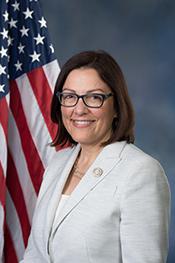
Suzan K. DelBene
DDemocratWA-1 · Representative
61
/ 100
Average
Attendance98
Avg: 96
Independence1
Avg: 4
Bipartisan Tone25
Avg: 15
Ethics Record100
Avg: 99
Transparency76
Avg: 53
Accountability Score — composite of attendance, independence, bipartisan tone, ethics record & transparency.
Methodology17
Bills Sponsored
0
Enacted into Law
0
Passed a Chamber
17
In Committee
All Sponsored Bills
HR10774In Committee
SWIMS Act of 2026
HR9736In Committee
Stop CHEATERS Act
Stop Corporations and High Earners from Avoiding Taxes and Enforce the Rules Strictly Act or the Stop CHEATERS Act This bill provides additional appropriations to the Internal Revenue Service (IRS) for FY2026-FY2031 and establishes reporting requirements related to tax enforcement for high-income individuals and corporations. The bill provides specified appropriations to the IRS for FY2026-FY2031 for purposes such as tax enforcement, taxpayer services, technology and operations support, and business systems modernization. The funds provided by the bill remain available until expended. The bill also requires the IRS to submit a report to Congress every two years that includes a comprehensive description of a plan to shift more IRS auditing and enforcement assets toward high-income individuals and large corporations, recruit and retain auditors with the skills essential to audit high-income individuals and large corporations, and increase voluntary compliance among high-income individuals and large corporations. The report must also include (1) a description of the progress that has been made in implementing the plan; and (2) an analysis of how much of the difference between the taxes owed and the taxes collected by the IRS is attributable to taxpayers at different income levels, including high-income individuals and large corporations. The bill also requires the Treasury Inspector General for Tax Administration to submit a report to Congress evaluating the IRS's plan and its progress in implementing the plan.
HR9509In Committee
Kidney Disease Education Access Expansion Act of 2026
The proposal would require Medicare and private health insurance plans to cover educational services that help people with kidney disease understand their condition and manage their treatment options. This would ensure that patients dealing with kidney problems have access to counseling and training programs without having to pay out of pocket, potentially helping them make better health decisions and slow disease progression. The change would affect both seniors on Medicare and people with private insurance coverage.
HR9121In Committee
Manufacturing Jobs for Veterans Act of 2026
The federal government would create a test program to help veterans find jobs in manufacturing by providing training, support, and incentives to companies that hire them. This pilot program would help veterans transition to civilian work after military service while addressing labor shortages in the manufacturing industry. The program is currently under review by the House Committee on Education and Workforce.
HR9016In Committee
Email Privacy Act
The legislation would require law enforcement agencies to obtain a search warrant before accessing people's emails and other electronic communications stored online, rather than allowing them to use a simpler administrative request. This change would give email users the same privacy protections that currently apply to physical mail and phone calls. The bill affects anyone who uses email or cloud storage services, as well as technology companies and law enforcement agencies.
HR8261In Committee
Chronic Care Management Improvement Act of 2026
Chronic Care Management Improvement Act of 2026 This bill eliminates cost-sharing for chronic care management services under Medicare.
HR7868In Committee
Expanding Support for Living Donors Act of 2026
This bill would provide financial and other support to people who donate organs or tissue while alive, such as kidney or liver donors, to help cover their medical costs and lost wages during recovery. The legislation aims to remove financial barriers that might discourage people from becoming living donors, which could increase the number of organs available for transplant patients who need them. It would affect both the donors themselves and patients waiting for transplants, as well as hospitals and insurance programs that cover transplant procedures.
HRES1049In Committee
Congratulating the Seattle Seahawks for winning Super Bowl LX and the 12th Man for their unwavering support.
This is a ceremonial resolution expressing Congress's congratulations to the Seattle Seahawks football team for winning Super Bowl LX and praising their fans, known as the "12th Man," for their loyal support. The resolution has no practical effect on laws or policy but serves as an official recognition of the team's achievement. It was referred to the House Committee on Oversight and Government Reform for consideration.
HR2250In Committee
National Landslide Preparedness Act Reauthorization Act of 2025
National Landslide Preparedness Act Reauthorization Act of 2025 This bill reauthorizes through FY2030 and expands the National Landslide Hazards Reduction Program (NLHRP) of the U.S. Geological Survey (USGS) and reauthorizes and expands other related programs. The bill reauthorizes the NLHRP’s activities including analyzing, preparing for, and responding to landslide hazards. It specifies a minimum amount of NLHRP funds that must be used for deploying landslide early warning systems in high-risk areas. It also specifies that tribal organizations and Native Hawaiian organizations may receive the benefits of the NLHRP. Also, the bill expands the NLHRP by requiring the USGS to incorporate atmospheric rivers and extreme precipitation events into the program’s national strategy, resources for communities on landslide preparedness, and emergency response activities. It requires a landslide hazards database to include information regarding identification of areas in need of additional landslide risk assessment and authorizes regional partnerships to coordinate landslide monitoring efforts. It also authorizes the USGS to consult with institutions of higher education when establishing priorities for grants and implementing the debris flow early warning system. Additionally, the bill reauthorizes the USGS’s 3D Elevation Program through FY2030 and requires relevant federal agencies to integrate enhanced elevation data. It also requires the National Oceanic and Atmospheric Administration’s precipitation frequency estimates to include precipitation from hurricanes, atmospheric rivers, and extreme precipitation events.
HR6787In Committee
Clean Competition Act
The bill would adjust how the U.S. taxes imports and domestic products to make competition fairer between American companies and foreign competitors, particularly in manufacturing and energy sectors. It likely aims to level the playing field by modifying tax rules so that foreign goods aren't underpriced compared to American-made alternatives, which could affect prices consumers pay and how U.S. companies compete globally.
HR5940In Committee
Seniors Deserve SMARTER Care Act of 2025
The bill aims to improve healthcare services and outcomes for seniors through changes to Medicare and related health programs, though the specific reforms are not yet detailed in its current stage. The proposal has been sent to two congressional committees that handle healthcare funding and policy to determine what changes would best serve older Americans. Seniors, healthcare providers, and Medicare programs would be affected by whatever modifications Congress ultimately decides to include.
HR4649In Committee
Smart Cities and Communities Act of 2025
The proposal would support the development and adoption of smart city technology—systems that use data and digital tools to improve urban services like traffic flow, energy use, and public safety. It would likely provide funding, set standards, and coordinate efforts across federal agencies to help cities implement these technologies while addressing concerns about privacy, cybersecurity, and equitable access for all residents. The bill affects city governments, technology companies, workers in tech and infrastructure fields, and urban residents who would benefit from or be impacted by these smart systems.
HRES549In Committee
Expressing support for the designation of June 26 as "LGBTQI+ Equality Day".
This resolution expresses support for (1) equal rights and protections for all people, regardless of actual or perceived sexual orientation, gender identity, or sex characteristics; and (2) the designation of LGBTQI+ Equality Day to commemorate Supreme Court decisions handed down on June 26 in 2003, 2013, and 2015. The resolution also acknowledges the need for further legislation to ensure that people in the United States are free from all forms of discrimination on the basis of actual or perceived sexual orientation, gender identity, or sex characteristics.
HR2421In Committee
Protecting Taxpayer Resources Act
Protecting Taxpayer Resources Act This bill provides that Department of Homeland Security functions (e.g., immigration enforcement) may not be assigned to Internal Revenue Service (IRS) personnel (e.g., IRS criminal investigators) unless the Treasury Inspector General for Tax Administration determines (1) such IRS personnel are trained to administer such functions, and (2) the imposition of such functions on IRS personnel will not impede the IRS from enforcing federal tax law and providing quality services to taxpayers.
HR2321In Committee
United States Leadership in Immersive Technology Act of 2025
The federal government would establish new programs and funding to help the United States compete globally in developing virtual reality, augmented reality, and other immersive technologies. The legislation would support research, workforce training, and industry partnerships to advance these technologies across sectors like healthcare, education, and manufacturing. This would affect tech companies, researchers, workers seeking training in emerging fields, and various industries looking to adopt these technologies.
HR1859In Committee
Apprenticeship Opportunity Act
The proposal would expand apprenticeship programs by providing tax credits and funding to employers who hire and train apprentices in skilled trades and other occupations. Workers entering apprenticeships would gain paid on-the-job training combined with classroom instruction, helping them earn while they learn without taking on student debt. The measure aims to create more pathways into good-paying jobs for people who might not pursue traditional four-year college degrees.
HR407In Committee
Prevent Tariff Abuse Act
Prevent Tariff Abuse Act This bill prohibits the President from exercising authorities under the International Emergency Economic Powers Act (IEEPA) to impose duties, tariff-rate quotas, or other quotas on imports entering the United States. (IEEPA provides the President with broad authority to regulate various economic transactions following a declaration of a national emergency.)