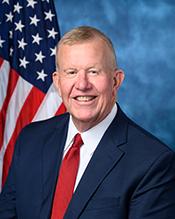
Mike Ezell
RRepublicanMS-4 · Representative
54
/ 100
Average
Attendance98
Avg: 96
Independence3
Avg: 4
Bipartisan Tone19
Avg: 15
Ethics Record100
Avg: 99
Transparency36
Avg: 53
Accountability Score — composite of attendance, independence, bipartisan tone, ethics record & transparency.
Methodology20
Bills Sponsored
0
Enacted into Law
6
Passed a Chamber
14
In Committee
All Sponsored Bills
HR10776In Committee
To amend the Marine Mammal Protection Act of 1972 to change certain requirements regarding certain allowed take of marine mammals, and for other purposes.
HR10756In Committee
Regional Ocean Partnerships Reauthorization Act
HR5745In Committee
Marine Fisheries Habitat Protection Act
The legislation would establish new protections for ocean habitats that support fish populations, including rules for activities like fishing, shipping, and offshore development in designated marine areas. Commercial and recreational fishermen, coastal communities that depend on fishing, and companies involved in ocean-based industries would all be affected by these habitat restrictions. The goal is to preserve fish breeding grounds and ecosystems to maintain healthy fish stocks for long-term fishing sustainability.
HR6995Passed House
To designate the facility of the United States Postal Service located at 825 Highway 198 in Beaumont, Mississippi, as the "Jeremy Malone Post Office".
This bill designates the facility of the United States Postal Service located at 825 Highway 198 in Beaumont, Mississippi, as the "Jeremy Malone Post Office".
HR9802In Committee
MARA Act of 2026
The federal government would create a program to test and evaluate large-scale fish and seafood farming in ocean waters through demonstration projects, helping the U.S. develop a domestic aquaculture industry. This would affect fishing companies, coastal communities, and seafood producers by providing support and guidance for growing food in the ocean rather than relying solely on wild-caught fish. The program would be run by the National Oceanic and Atmospheric Administration, the agency responsible for ocean and weather management.
HR9673In Committee
MARA Act of 2026
The federal government would create a program to test and evaluate large-scale fish farming operations in ocean waters through demonstration projects, while also establishing research centers focused on aquaculture expertise and funding programs to train workers for jobs in this industry. The bill aims to help develop sustainable seafood production at sea and support coastal communities that depend on fishing and water-based economies. NOAA, the ocean and weather agency, would oversee these initiatives.
HR9674In Committee
United States Coast Guard Corrosion Control Assistance Team Pilot Program Act
The Coast Guard would launch a test program to help its local units prevent and manage rust and corrosion damage on equipment and facilities. This assistance would help reduce maintenance costs and extend the lifespan of Coast Guard assets like ships, buildings, and other infrastructure. The program would allow the Coast Guard to identify the most effective corrosion prevention methods before potentially expanding them service-wide.
HR9650In Committee
Vessel Identification Protection Act of 2026
The proposal would make it a federal crime to change, remove, or illegally add identification numbers on boats, and to buy or sell vessels that have been tampered with in this way. This targets boat theft and trafficking operations where criminals alter vessel numbers to hide stolen property or obscure ownership. The law would apply to anyone involved in these activities, from thieves to dealers who knowingly trade in boats with fraudulent identification.
HR8542In Committee
Offshore Parity Act of 2026
This bill would give Louisiana, Mississippi, and Alabama more control over managing ocean areas off their coasts, including decisions about fishing and other uses of underwater lands on the continental shelf. The states would take on responsibilities currently handled by the federal government, allowing them to set their own rules for these coastal waters. The change affects fishing companies, commercial fishermen, and anyone involved in offshore activities in these three states.
HCONRES98In Committee
Expressing support for America's law enforcement professionals.
This resolution expresses congressional support for law enforcement officers across the country and recognizes their contributions to public safety and their communities. The measure acknowledges the challenges and risks that police, sheriffs, and other law enforcement professionals face in their daily work.
HR2294Passed House
To reauthorize the Integrated Coastal and Ocean Observation System Act of 2009.
This bill reauthorizes and modifies the National Oceanic and Atmospheric Administration's Integrated Ocean Observation System (IOOS). (The IOOS is made up of radar, gliders, buoys, vessels, and different models and forecasts that collect data points to monitor and report on conditions along the nation's coasts and in marine waters.) Specifically, the bill reauthorizes the IOOS through FY2030. The bill also directs the Interagency Ocean Observation Committee (which coordinates interagency planning, budgeting, and assessments for the system) to develop requirements and processes for regional offices and federally funded projects of the agencies of the committee to collaborate with the regional coastal observing systems for data sharing at regional levels.
HR2293Passed House
Cormorant Relief Act of 2025
Cormorant Relief Act of 2025 This bill requires the Department of the Interior to reissue the depredation order for double-crested cormorants at aquaculture facilities in certain states. (The previous order was vacated in 2016 by court order.) Depredation orders allow for the taking (i.e., capturing, killing, dispersing, or transport of the carcass) of a specified species without a permit, generally to reduce damage caused by the species or to protect interests like health or property. Reissuing this order authorizes landowners, operators, tenants, and employees of entities engaged in aquaculture to take double-crested cormorants that are causing or threatening harm at aquaculture facilities and state and federal fish hatcheries. Interior must reissue the depredation order with updates, including an expansion of (1) the number of states covered by the order, and (2) the entities to whom the order applies (i.e., private lake and pond managers who are licensed by the state). Under the bill, Interior must renew the depredation order every five years.
HR5746In Committee
MARA Act of 2025
Without access to the full bill text, the MARA Act of 2025 appears to address public lands and natural resources policy, likely involving management, conservation, or use of federal lands and possibly workforce or educational components related to these areas. The bill has been referred to both the Natural Resources Committee and the Education and Workforce Committee, suggesting it may involve training, jobs, or educational programs connected to land management or environmental work. To provide a more specific summary of what the bill would actually do, the complete legislative text would be needed.
HR4589In Committee
Port Crane Tax Credit Act of 2025
The legislation would create a tax credit for businesses that purchase or install port cranes and related cargo-handling equipment at U.S. ports. Companies investing in these machines could reduce their federal taxes, potentially making it cheaper for ports to upgrade their infrastructure and equipment. This would primarily benefit port operators, shipping companies, and manufacturers of port equipment.
HR3585In Committee
Capacity Building for Business Districts Pilot Program Act of 2025
This bill would create a pilot program to help struggling business districts in cities and towns get the resources and training they need to revitalize their local economies and attract new businesses. The program would likely provide funding and technical assistance to business improvement organizations and local leaders so they can develop better marketing strategies, improve public spaces, and coordinate economic development efforts. Small business owners, local governments, and community organizations in participating districts would be the main beneficiaries of this support.
HCONRES30Passed House
Expressing support for local law enforcement officers.
This concurrent resolution recognizes and appreciates local law enforcement officers, extends gratitude to local law enforcement officers and their families, honors local law enforcement officers who have fallen in the line of duty, and encourages continued collaboration between local law enforcement agencies and the communities they serve.
HR3324In Committee
Safer Shrimp Imports Act
Safer Shrimp Imports Act This bill prohibits the importation of shrimp from countries that do not have food inspection systems equivalent to the Food and Drug Administration (FDA) inspection system for shrimp, or that have not entered into an agreement with the FDA facilitating U.S. inspection of their food facilities. Specifically, the FDA must seek to enter into arrangements and agreements with the government of each country with at least one facility that manufactures, processes, packs, or holds shrimp for consumption in the United States to facilitate FDA inspection of such facilities. The bill prohibits the importation of shrimp that is manufactured, processed, packed, or held in a country (1) that has not entered into an inspection arrangement or agreement with the FDA, or (2) the food inspection system of which is not equivalent to the FDA’s food inspection system with respect to shrimp. To be considered equivalent, a country’s food inspection system must include staffing that ensures uniform enforcement of applicable laws and regulations, and must provide for the enforcement of laws and regulations that address conditions under which shrimp are raised and transported to processing facilities. Further, shrimp imported or offered for import into the United States that have been manufactured, processed, packed, or held in a country that is not compliant with these requirements are deemed adulterated, and thus may not be introduced into interstate commerce.
HJRES62In Committee
Providing for congressional disapproval under chapter 8 of title 5, United States Code, of the rule submitted by the Bureau of Ocean Energy Management relating to "Protection of Marine Archaeological Resources".
This joint resolution nullifies the final rule issued by the Bureau of Ocean Energy Management (BOEM) titled Protection of Marine Archaeological Resources and published on September 3, 2024. The rule requires operators and lessees conducting oil and gas exploration or development on the Outer Continental Shelf and that are seeking BOEM approval for such activities to also provide BOEM with an archaeological report for the area of potential effects. The report must identify potential archaeological resources (material remains of human life or activities that are at least 50 years old and that are of archaeological interest) on the sea floor. The rule modified regulations that only required such a report when a BOEM regional director has reason to believe that an archaeological resource may be present in the lease area.
HR153Passed House
Post-Disaster Assistance Online Accountability Act
Post-Disaster Assistance Online Accountability Act This bill establishes a centralized location to publish information on disaster assistance provided by federal agencies. The Small Business Administration, the Department of Housing and Urban Development, and any agencies providing disaster assistance must make available to the public on a quarterly basis information regarding (1) the total amount of assistance provided by the agency; (2) the amount provided that was expended or obligated; and (3) all projects or activities for which assistance was expended, obligated, or used.
HR152Passed House
Federal Disaster Assistance Coordination Act
Federal Disaster Assistance Coordination Act This bill requires the Federal Emergency Management Agency (FEMA) to streamline disaster information collection, convene a working group on preliminary damage assessments, and provide a report to Congress. FEMA must (1) conduct a study and develop a plan under which the collection of information from disaster assistance applicants and grantees will be made less burdensome, duplicative, and time consuming for applicants and grantees; and (2) develop a plan for the regular collection and reporting of information on federal disaster assistance awarded. Additionally, not later than two years after enactment of the bill, FEMA must convene a working group on a regular basis to (1) identify potential areas of duplication or fragmentation in preliminary damage assessments after disaster declarations; (2) determine the applicability of having one federal agency make the assessments for all agencies; and (3) identify potential emerging technologies, such as unmanned aircraft systems (i.e., drones), to expedite the administration of preliminary damage assessments. FEMA must submit a comprehensive report on the plans for streamlining and consolidating information collection and the findings and recommendations of the working group to Congress with a briefing. The report must be made available to the public and posted on FEMA's website.