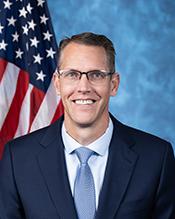
Randy Feenstra
RRepublicanIA-4 · Representative
54
/ 100
Average
Attendance98
Avg: 96
Independence2
Avg: 4
Bipartisan Tone13
Avg: 15
Ethics Record100
Avg: 99
Transparency40
Avg: 53
Accountability Score — composite of attendance, independence, bipartisan tone, ethics record & transparency.
Methodology22
Bills Sponsored
1
Enacted into Law
2
Passed a Chamber
19
In Committee
Bills That Became Law
All Sponsored Bills
HR997Passed House
National Taxpayer Advocate Enhancement Act of 2025
National Taxpayer Advocate Enhancement Act of 2025 This bill authorizes the National Taxpayer Advocate to appoint legal counsel within the Taxpayer Advocate Service (TAS) to report directly to the National Taxpayer Advocate. The bill also expands the authority of the National Taxpayer Advocate to take personnel actions with respect to local taxpayer advocates (located in each state) to include actions with respect to any employee of TAS. Currently, pursuant to a Department of the Treasury order, all legal counsel whose duties include providing legal advice to any official in any office or bureau of Treasury are part of the Legal Division within Treasury and under the supervision of the General Counsel, with limited exceptions. TAS assists taxpayers in matters involving the Internal Revenue Service (IRS) and is part of the IRS, within Treasury.
HR8967In Committee
Rural Community Hospital Demonstration Program Reauthorization
Rural Community Hospital Demonstration Program Reauthorization This bill extends the Rural Community Hospital Demonstration Program for an additional five years. The program tests the feasibility of cost-based reimbursement under Medicare for small rural hospitals that are too large to qualify for special payment as critical access hospitals. The bill specifies that hospitals that participate in the program between December 30, 2024, and January 1, 2027, may continue to participate during the five-year extension period.
HR8891In Committee
Rural MOMS Act of 2026
The proposal would change how Medicare counts hospital beds at critical access hospitals, which are smaller facilities that serve rural and remote areas. Specifically, certain types of beds would no longer count toward the total number of acute care beds that determine a hospital's Medicare funding and classification. This could affect how much money these rural hospitals receive and what services they're required to provide under the Medicare program.
HR7749In Committee
Quantum in Practice Act
This bill would likely establish programs and funding to help move quantum computing technology from laboratories into real-world business and government applications. It probably aims to support companies, universities, and federal agencies in developing practical uses for quantum computers in areas like communications, drug discovery, and data security. The legislation would help bridge the gap between quantum research breakthroughs and the actual deployment of this technology to solve problems that matter to American workers and industries.
HR7177In Committee
Protecting Girls with Turner Syndrome Act of 2026
Protecting Girls with Turner Syndrome Act of 2026 This bill creates new federal crimes related to the performance of an abortion on an unborn child who has Turner syndrome. It subjects a violator to criminal penalties—a fine, a prison term of up to five years, or both. It also authorizes civil remedies, including damages and injunctive relief. A woman who undergoes such an abortion may not be prosecuted or held civilly liable.
HR5037In Committee
Middle Mile for Rural America Act
Middle Mile for Rural America Act This bill reauthorizes through FY2031 a Department of Agriculture program to support middle mile broadband infrastructure in rural areas. Under the program, m iddle mile infrastructure is broadband infrastructure that does not connect directly to end users (including anchor institutions) and may include interoffice transport, backhaul, internet connectivity, data centers, or special access transport to rural areas. The program provides grants, loans, and loan guarantees for middle mile projects in rural areas. It was established in 2018 but has not been funded.
HR6944In Committee
To require the Secretary of Agriculture to make cost-share grants for retrofitting agricultural tractors with rollover protection structures, and for other purposes.
The federal government would provide money to help farmers pay for safety equipment that protects tractor operators if the vehicle tips over, reducing serious injuries and deaths on farms. Farmers could receive grants to cover part of the cost of installing these rollover protection structures on their existing tractors, making the safety upgrades more affordable for agricultural workers.
HR998Enacted
Internal Revenue Service Math and Taxpayer Help Act
Internal Revenue Service Math and Taxpayer Help Act This act requires the Internal Revenue Service (IRS) to provide specific information on a notice related to a math or clerical error, send a notice related to an abatement of taxes assessed due to a math or clerical error, provide procedures for requesting such an abatement, and implement a pilot program for sending notices of a math or clerical error. Under the act, a notice sent by the IRS regarding a math or clerical error must include a clear description of the error, including the type of error and the specific federal tax return line on which the error was made; an itemized computation of adjustments required to correct the error; the telephone number for the automated transcript service; and the deadline for requesting an abatement of any tax assessed due to the error. Further, the act requires the IRS to send a notice related to an abatement of tax assessed due to a math or clerical error that clearly describes the abatement and includes an itemized computation of adjustments to be made to the items described in the notice of the error. This act also requires the IRS to provide procedures for requesting in writing, electronically, by phone, or in person an abatement of tax assessed due to a math or clerical error; implement a pilot program to send notices of a math or clerical error by certified or registered mail; and report to Congress certain information about the pilot program.
HR4793In Committee
SOS Act
HR4400In Committee
Farmers First Act of 2025
Farmers First Act of 2025 This bill extends through FY2030 and revises the Farm and Ranch Stress Assistance Network (FRSAN). This Department of Agriculture program provides competitive grants to states, Indian tribes, and qualified nonprofit organizations to provide stress assistance programs (i.e., professional agricultural behavioral health counseling, helplines, and resources) to individuals engaged in farming, ranching, and agriculture-related occupations. The bill specifies that the grant funding for farm telephone helplines and websites may also be used for crisis lines. Further, FRSAN grant recipients may establish referral relationships with providers, including Certified Community Behavioral Health Clinics, health centers, rural health clinics, and critical access hospitals.
HR4032In Committee
Lowering Broadband Costs for Consumers Act of 2025
This bill aims to reduce what Americans pay for internet service by addressing factors that drive up broadband costs, such as infrastructure competition and service provider practices. It would likely affect both internet companies and consumers by potentially requiring changes to how broadband is priced or delivered. The specific measures would help lower-income households and rural areas gain more affordable access to high-speed internet.
HR3280In Committee
Rural Broadband Modernization Act
This bill would improve internet access in rural areas by modernizing broadband infrastructure and making it easier for rural communities to get high-speed internet service. It likely includes funding, grants, or tax incentives to help rural broadband providers expand their networks and upgrade outdated systems. The changes would primarily benefit rural residents and businesses that currently lack reliable internet access.
HR3038In Committee
SAFE Act of 2025
Safe American Food Exports Act of 2025 or the SAFE Act of 2025 This bill provides statutory authority for the Department of Agriculture to negotiate in advance for regional export ban agreements for known animal disease threats that apply only to areas affected by animal disease outbreaks to enable the continuation of exports from areas not affected by an outbreak. The Animal and Plant Health Inspection Service, the Food Safety and Inspection Service, and the Foreign Agricultural Service, in consultation with the Office of the U.S. Trade Representative, may negotiate the regionalization, zoning, compartmentalization, and other agreements regarding outbreaks of known animal disease threats of trade significance with countries with export markets for livestock animals or animal products from the United States. The bill also specifies that such a negotiation should seek to take into account accepted global research advances.
HR2839In Committee
AG2PI Act of 2025
Genome to Phenome Initiative Reauthorization Act of 2025 or the AG2PI Act of 2025 This bill reauthorizes the Agricultural Genome to Phenome Initiative (AG2PI) of the National Institute of Food and Agriculture through FY2030. The AG2PI competitive grant program seeks to (1) expand knowledge concerning genomes and phenomes of crops and animals that are of importance to the U.S. agriculture sector, and (2) support and coordinate research.
HR2660In Committee
To amend the Internal Revenue Code of 1986 to exempt qualified student loan bonds from the volume cap and the alternative minimum tax.
This bill would allow states and nonprofits to issue more bonds to help pay for student loans without hitting federal limits on how many such bonds they can issue, and would make these bonds exempt from the alternative minimum tax that high-income individuals sometimes have to pay. The change would make it cheaper and easier for organizations to raise money through these bonds to help students finance their education. Students and borrowers could potentially benefit from lower interest rates or more available loan options as a result.
HR2547In Committee
Secure Family Futures Act of 2025
The bill would likely modify tax rules affecting families and their financial planning, though the specific changes aren't yet clear from the title alone. Based on its focus on taxation and family-related policy, it probably addresses issues like tax credits for families, inheritance and estate taxes, or savings accounts for education and retirement. The proposal is currently under review by the House committee responsible for tax legislation.
HR1920In Committee
FARMLAND Act of 2025
Foreign Agricultural Restrictions to Maintain Local Agriculture and National Defense Act of 2025 or the FARMLAND Act of 2025 This bill expands federal authority and oversight over foreign investments in the U.S. agricultural industry. The bill expands the authority of the Committee on Foreign Investment in the United States (CFIUS) to include the review of land transactions (involving foreign entities) that exceed $5 million or 320 acres of land over the preceding three years. This applies to land that is primarily used for agriculture, the extraction of energy sources, or the extraction of critical precursor materials for biological technology industries, information technology components, or national defense technologies. Further, the bill adds the Secretary of Agriculture and the Commissioner of Food and Drugs to CFIUS membership. As background, CFIUS is an interagency committee that oversees the national security risks of certain foreign direct investment in the U.S. economy, including by reviewing certain real estate transactions. Further, the bill expands enforcement of the Agricultural Foreign Investment Disclosure Act (AFIDA). The Department of Agriculture (USDA) must appoint a Chief of Operations of Investigative Actions to (1) monitor AFIDA compliance, and (2) conduct investigations on efforts to steal agricultural knowledge and technology and to disrupt the U.S. agricultural base. The bill prohibits foreign persons who own or operate land from participating in Farm Service Agency programs and establishes penalties for violators. The bill also requires USDA and the Department of Homeland Security to jointly develop a database of agricultural land owned by foreign persons.
HR1899In Committee
Audio-Only Telehealth Access Act of 2025
This bill would allow patients to receive certain healthcare services through phone calls alone, without requiring video visits, and would ensure that insurance companies reimburse doctors for audio-only telehealth appointments the same way they do for video visits. The change would make healthcare more accessible for people without reliable internet or video equipment, while giving doctors flexibility in how they deliver remote care to patients.
HR579Passed House
Recruiting Families Using Data Act of 2025
Recruiting Families Using Data Act of 2025 This bill requires state plans for child welfare services to provide for the development and implementation of a family partnership plan to improve foster care placement stability, increase rates of kinship placements, and align the composition of foster and adoptive families with the needs of children in or entering foster care. The Children's Bureau of the Administration for Children and Families also must include in its annual report information from states about the number, demographics, and characteristics of foster and adoptive families as well as a summary of the challenges related to recruiting and being foster or adoptive parents.
HR1301In Committee
Death Tax Repeal Act
The proposal would eliminate the federal estate tax, which currently applies to the inheritance of very large estates (generally over $13 million per person) and requires heirs to pay taxes on the value of what they inherit. This would primarily benefit wealthy families and business owners who pass down large amounts of money or property to their heirs, while reducing federal tax revenue that currently funds government programs. The change would have little to no effect on most Americans, since the estate tax only applies to a small percentage of the wealthiest estates in the country.
HR1062In Committee
Growing and Preserving Innovation in America Act of 2025
This bill likely aims to provide tax incentives or breaks for companies and individuals involved in research, development, and innovation activities to encourage them to invest more in new technologies and inventions within the United States. The changes would probably affect businesses of various sizes, startups, researchers, and potentially workers in tech and manufacturing sectors by making it more affordable to pursue innovative projects. The goal appears to be keeping American innovation competitive globally while potentially boosting economic growth through tax policy.
HR996In Committee
Paid Family and Medical Leave Tax Credit Extension and Enhancement Act
Paid Family and Medical Leave Tax Credit Extension and Enhancement Act This bill makes the paid family and medical leave tax credit permanent, expands eligibility for the credit, requires outreach to increase awareness of the tax credit, and makes other changes to the credit. Currently, an eligible employer may claim a tax credit (through 2025) for up to 25% of wages paid to a qualifying employee (who has worked for the employer for one year or more) while the employee is on family and medical leave. The bill makes the tax credit for paid family and medical leave permanent and allows an eligible employer to claim the tax credit for 25% of either (1) wages paid to a qualifying employee while the employee is on family and medical leave, or (2) premiums paid for paid family or medical leave insurance. The bill also allows an employer to provide family and medical leave to an employee who has worked for the employer for six months or more, provides that leave that is paid by a state or local government or required by state or local law must be taken into account in determining the amount of leave provided by the employer but may not be counted when determining the amount of the credit, and provides a limited exception to the requirements related to written family and medical leave policies. Finally, the bill requires targeted outreach to employers and other relevant parties regarding the availability and requirements of the tax credit.