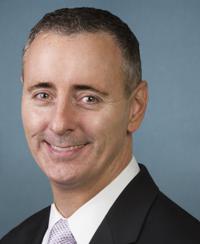
Brian K. Fitzpatrick
RRepublicanPA-1 · Representative
69
/ 100
Above Average
Attendance99
Avg: 96
Independence16
Avg: 4
Bipartisan Tone30
Avg: 15
Ethics Record100
Avg: 99
Transparency100
Avg: 53
Accountability Score — composite of attendance, independence, bipartisan tone, ethics record & transparency.
Methodology66
Bills Sponsored
0
Enacted into Law
1
Passed a Chamber
65
In Committee
All Sponsored Bills
HR10818In Committee
Fire Service Workforce Stability Act of 2026
HR10380In Committee
Problem Solvers Independent Commissions Act
HRES1510In Committee
Expressing support for the designation of September 4, 2026, as "Taekwondo Grandmasters Appreciation Day".
HR10261In Committee
Edgely Community Protection and Transparency Act
HR10153In Committee
American Mariner Tax Fairness Act
HRES1452In Committee
Recognizing the importance of independent living and economic self-sufficiency for individuals with disabilities made possible by the Americans with Disabilities Act of 1990 and calling for further action to strengthen and expand opportunities for individuals with disabilities to participate in work and community life.
This resolution expresses support for helping people with disabilities achieve independence and economic self-sufficiency through work and community participation, building on protections established by the Americans with Disabilities Act. It calls on Congress and relevant agencies to take additional steps to expand job opportunities and remove barriers that prevent people with disabilities from fully participating in the workforce and community life. The measure has been referred to multiple committees including Education, Transportation, Judiciary, Energy, and Financial Services to determine what legislative actions might be needed.
HR9901In Committee
To provide that the final rule of the United States Fish and Wildlife Service and National Oceanic and Atmospheric Administration titled "Rescinding the Definition of 'Harm' Under the Endangered Species Act" shall have no force or effect.
This bill would block a recent rule change that narrowed what counts as "harm" to endangered species under federal law. The change would restore the broader definition of harm that was previously used to protect endangered animals and their habitats from human activities. Environmental groups, wildlife advocates, and some states support keeping stronger protections, while businesses argue the narrower definition reduces unnecessary restrictions on development and other activities.
HR3535Passed House
Stop Foreign Funds in Elections Act
Stop Foreign Funds in Elections Act This bill prohibits contributions or donations by foreign nationals in connection with state or local ballot initiatives, referenda, or recall elections.
HR8955In Committee
Bipartisan Transparency for American Taxpayers Act
The proposal would prevent the federal government from using taxpayer money to pay any claims made against something called the Anti-Weaponization Fund. This would affect anyone who might otherwise receive federal compensation through this fund, though the specific details of what claims would be blocked depend on how the fund operates. The bill is currently being reviewed by the House Judiciary Committee.
HR8844In Committee
U.S. Customs and Border Protection Officer Retirement Technical Corrections Act
This bill would restore enhanced retirement and annuity benefits to certain U.S. Customs and Border Protection Officers who were previously denied these benefits. The legislation aims to correct what supporters view as an unfair treatment of specific CBP officers by allowing them to receive the same retirement pay increases that other federal law enforcement officers receive. This would primarily affect current and former CBP officers and their families who depend on these retirement payments.
HRES1253In Committee
Expressing the sense of the House of Representatives that public servants should be commended for their dedication and continued service to the United States, including their commitment to defending the Constitution and delivering essential services to United States citizens, and in doing so, supporting the United States economy, during Public Service Recognition Week and throughout the year.
This resolution expresses the House's appreciation for government workers and public servants who dedicate themselves to serving the country, protecting the Constitution, and providing important services to Americans. It recognizes that these workers contribute to the nation's economy and calls for them to be honored during Public Service Recognition Week and throughout the year. The measure is a statement of support rather than a law that would change any policies or programs.
HRES1219In Committee
Expressing support for the month of April as "Sikh History Month".
The resolution would officially recognize April as "Sikh History Month" to honor the contributions and heritage of Sikhs in the United States. This symbolic designation would encourage Americans to learn about Sikh history, culture, and the community's role in American society. The measure does not create any new laws or programs, but rather expresses congressional support for dedicating the month to this purpose.
HR8477In Committee
To amend the Internal Revenue Code of 1986 to reverse certain energy-related modifications enacted by Public Law 119-21.
This bill would undo certain tax breaks and energy-related benefits that were recently created for energy companies and projects under a previous law. The changes would affect businesses involved in energy production and potentially increase their tax obligations. The proposal is currently being reviewed by the House Committee on Ways and Means.
HJRES156In Committee
Directing the President, pursuant to the War Powers Resolution, to comply with the 60-day use of force and 30-day phased withdrawal requirements regarding the use of the United States Armed Forces in Operation Epic Fury in Iran.
This resolution would require the President to follow the War Powers Resolution's rules about military operations, specifically demanding that any use of armed forces in Iran (called Operation Epic Fury) must end within 60 days unless Congress approves it, and then requires a 30-day gradual withdrawal of troops. The measure is designed to ensure Congress has a say in military decisions rather than letting the President act alone for extended periods. It affects military personnel deployed to Iran and could impact U.S. foreign policy in the Middle East.
HR8173In Committee
Reforming ICE and Protecting America Act
This bill would change how the Immigration and Customs Enforcement agency operates and is funded, likely aiming to reform its practices while maintaining border security and immigration enforcement. The specific changes would affect ICE operations, federal spending on immigration enforcement, and potentially how the agency interacts with local law enforcement and detained immigrants. Congress is currently reviewing the proposal to determine which committees should evaluate different parts of the bill.
HR8081In Committee
Mental Health Access and Provider Support Act of 2026
This bill aims to improve access to mental health services and support the doctors and therapists who provide them, likely through measures such as expanding insurance coverage, increasing payment rates for mental health providers, or reducing barriers to care. The legislation would affect patients seeking mental health treatment, mental health professionals, insurance companies, and potentially employers who offer health benefits. The bill is currently being reviewed by two congressional committees to determine how its various provisions should be handled.
HRES1126In Committee
Recognizing the role of Mae Krier and her contributions as she celebrates her 100th birthday.
This resolution recognizes and thanks Mae Krier on her 100 th birthday for her contributions to the United States as a trailblazer and a Rosie the Riveter (a term used to describe women who joined the workforce during World War II).
HRES1067In Committee
Providing for consideration of the bill (H.R. 6856) to impose sanctions and other measures with respect to the Russian Federation if the Government of the Russian Federation refuses to negotiate a peace agreement with Ukraine, violates any such agreement, or initiates another military invasion of Ukraine, and for other purposes.
This resolution provides for the consideration of the bill (H.R. 6856) to impose sanctions and other measures with respect to the Russian Federation if the Government of the Russian Federation refuses to negotiate a peace agreement with Ukraine, violates any such agreement, or initiates another military invasion of Ukraine, and for other purposes.
HR1685In Committee
Justice for ALS Veterans Act of 2025
Justice for ALS Veterans Act of 2025 This bill extends increased dependency and indemnity compensation to the surviving spouse of a veteran who dies from amyotrophic lateral sclerosis (ALS or Lou Gehrig's disease) regardless of how long the veteran had such disease prior to death. Under current law, such compensation is paid for a service-connected disability that was rated totally disabling for a continuous period of at least eight years immediately preceding death. For purposes of compensation for a surviving spouse of a veteran who dies from ALS, the spouse must have been married to the veteran for a continuous period of eight years or longer prior to the death of the veteran. Additionally, the Department of Veterans Affairs (VA) must report on service-connected disabilities the VA determines should be treated in the same manner as ALS for purposes of dependency and indemnity compensation.
HRES1029In Committee
Providing for consideration of the bill (H.R. 6636) to advance sensible priorities.
This resolution provides for the consideration of the bill (H.R. 6636) to advance sensible priorities.
HRES1021In Committee
Raising awareness and encouraging the prevention of stalking by designating January 2026 as "National Stalking Awareness Month".
This resolution designates National Stalking Awareness Month.
HR7210In Committee
Fuel the Force Act of 2026
This bill likely proposes tax changes related to military fuel or energy costs, though the specific details aren't yet clear from the title alone. Based on its focus on taxation and military operations, it probably aims to either reduce tax burdens on military fuel purchases, adjust how the military is taxed on energy expenses, or provide tax incentives for fuel-related military programs. The changes would affect how the Department of Defense manages its budget and potentially influence military readiness and operational costs.
HR6637In Committee
To advance bipartisan priorities.
HR6636In Committee
To advance sensible priorities.
HR6856In Committee
Peace Through Strength Against Russia Act of 2025
This bill likely aims to strengthen U.S. military, economic, and diplomatic measures against Russia, possibly including increased defense spending, sanctions, or support for Ukraine and other allied nations. The broad referral to multiple committees suggests it addresses a range of policy areas including defense, finances, trade, and government operations. The specific provisions won't be clear until the bill text is released, but the title indicates a focus on deterring Russian aggression through military and economic strength.
HR4993In Committee
Joe Fiandra Access to Home Infusion Act of 2025
Joe Fiandra Access to Home Infusion Act of 2025 This bill provides for Medicare coverage of certain home infusion drugs that are administered by health care professionals at a beneficiary’s home. Specifically, the bill provides for coverage of external infusion pumps and associated home infusion drugs for which (1) the prescription requires that the drug be administered by or under the supervision of a health care professional, (2) a qualified home infusion therapy supplier administers or supervises the administration of the drug at the beneficiary's home, and (3) the prescription requires that the drug be infused at least 12 times per year in a manner that requires the use of an external infusion pump.
HR6261In Committee
Fairness for 9/11 Families Technical Fix Act
This bill would make technical corrections to laws related to compensation and legal rights for families affected by the September 11, 2001 terrorist attacks. The changes likely aim to fix procedural issues or clarify existing rules that govern how 9/11 victims' families can pursue claims for damages or access government assistance programs. The bill would primarily affect the families of people killed or injured in the attacks and potentially the companies or entities they might sue.
HR6137In Committee
Recognizing the Role of Direct Support Professionals Act
This bill recognizes and highlights the important work of direct support professionals—people who provide daily care and assistance to individuals with disabilities, elderly people, and others who need help with daily living activities. The legislation aims to draw attention to these workers' contributions and likely supports efforts to improve their working conditions, pay, or training standards. Direct support professionals, their employers, and the people who depend on their care would be affected by any changes this bill might bring.
HR6055In Committee
SEMI Investment Act
This bill would likely provide tax incentives or credits to encourage investment in semiconductor manufacturing and research in the United States, helping domestic companies compete with foreign chip makers. The tax breaks would probably apply to companies that build or expand semiconductor factories and research facilities, potentially lowering their tax bills in exchange for creating jobs and boosting domestic production of computer chips. Workers in manufacturing and tech sectors, as well as consumers who depend on affordable electronics, could be affected by changes to how the semiconductor industry invests and grows.
HR6054In Committee
Fairness to Kids with Cancer Act of 2025
Fairness to Kids with Cancer Act of 2025 This bill requires the share of federal funds for cancer research that is allocated to pediatric cancer research to equal the percentage of the U.S. population that is under the age of 18.
HR5797In Committee
Designating the Russian Federation as a State Sponsor of Terrorism Act
This bill would officially label Russia as a state sponsor of terrorism, a designation that would trigger automatic economic sanctions and restrict U.S. military aid and trade with Russia. The move would affect American businesses operating in Russia, Russian entities seeking to do business with the U.S., and could influence how the U.S. government interacts with Russia on diplomatic and military matters. The designation is primarily a symbolic and legal statement about Russia's foreign policy, though it carries real economic consequences.
HRES730In Committee
Providing for consideration of the joint resolution (H.J.Res.4) proposing an amendment to the Constitution of the United States to provide that debate upon legislation pending before the Senate may not be brought to a close without the concurrence of a minimum of three-fifths of the Senators.
This resolution provides for the consideration of the joint resolution (H.J.Res.4) proposing an amendment to the Constitution of the United States to provide that debate upon legislation pending before the Senate may not be brought to a close without the concurrence of a minimum of three-fifths of the Senators.
HRES731In Committee
Providing for consideration of the bill (H.R. 155) to require States to permit unaffiliated voters to vote in primary elections for Federal office, and for other purposes.
This resolution provides for the consideration of the bill (H.R. 155) to require States to permit unaffiliated voters to vote in primary elections for Federal office, and for other purposes.
HRES602In Committee
Recognizing the importance of independent living and economic self-sufficiency for individuals with disabilities made possible by the Americans with Disabilities Act of 1990 and calling for further action to strengthen and expand opportunities for individuals with disabilities to participate in work and community life.
This resolution expresses support for expanding job opportunities and community participation for people with disabilities, building on protections established by the Americans with Disabilities Act. It calls for Congress to take additional steps to help people with disabilities achieve economic independence and live more fully in their communities. The measure has been referred to multiple committees to examine how different areas of government—including education, transportation, courts, and financial services—can better support these goals.
HR4169In Committee
Preventing Crimes Against Veterans Act of 2025
Preventing Crimes Against Veterans Act of 2025 This bill establishes a new federal criminal offense for knowingly executing, or attempting to execute, a scheme to defraud an individual of veterans' benefits, or in connection with obtaining veteran's benefits for an individual. A violator is subject to criminal penalties—a fine, a prison term of up to five years, or both.
HR4168In Committee
PFAS National Drinking Water Standard Act of 2025
This bill would require the Environmental Protection Agency to set national drinking water safety limits for PFAS chemicals, which are human-made substances found in many consumer products and industrial sites that can contaminate water supplies. The standards would apply to all public water systems across the country, protecting millions of Americans who rely on tap water by ensuring PFAS levels don't exceed safe thresholds. Water utilities would need to test for these chemicals and treat their water if contamination is found, which could increase costs for some communities but would reduce health risks from long-term exposure to these persistent chemicals.
HR3808In Committee
Expanding Seniors Access to Mental Health Services Act
This legislation would make it easier for seniors on Medicare to access mental health services by expanding coverage and reducing barriers like copayments or requiring referrals from doctors. The changes would help older Americans get counseling, therapy, and psychiatric care more affordably and without as much red tape. The bill affects seniors, mental health providers, and Medicare's budget.
HR3629In Committee
End Banking for Human Traffickers Act of 2025
HR3534In Committee
Mental Health in Schools Excellence Program Act of 2025
The legislation would establish a federal grant program to help schools hire and train mental health professionals like counselors, psychologists, and social workers to support student mental health and wellness. Schools would use the funding to expand mental health services, create prevention programs, and connect students with treatment resources. This would primarily affect students, school districts, and mental health professionals working in educational settings.
HR3145In Committee
Nurse Corps Tax Parity Act of 2025
This bill would allow nurses who work for the federal government through the Nurse Corps program to receive the same tax benefits and treatment as other federal employees, eliminating any tax disadvantages they currently face compared to their peers. The change would make the tax code fairer for these nurses by ensuring they're not taxed differently simply because of how their position is classified. This affects federal nurses who serve in military hospitals, Veterans Affairs facilities, and other government healthcare settings.
HR3144In Committee
Honoring our K9 Heroes Act
This bill would recognize and honor military and law enforcement dogs that have served the United States, likely by establishing formal recognition programs or memorials for these working animals. The measure affects federal agencies that use K9 units, such as the military, FBI, and local police departments, as well as the handlers and families of these dogs. The bill is currently under review by the House Committee on Oversight and Government Reform.
HR3001In Committee
To advance commonsense priorities.
HR3000In Committee
Caring for Seniors Act
The proposal would establish or expand health care programs and services specifically designed to help older Americans access medical treatment and support. It affects seniors, their families, and potentially healthcare providers and insurance companies that would need to implement these new services. The bill is currently being reviewed by two congressional committees to determine which parts each committee should handle.
HR2767In Committee
BRAIN Act
The BRAIN Act likely aims to increase funding and support for brain research, including studies on neurological diseases, brain injuries, and mental health conditions. This would help scientists better understand how the brain works and develop new treatments for conditions like Alzheimer's, Parkinson's, and stroke, potentially benefiting millions of patients and their families.
HR2678In Committee
Ellie’s Law
Ellie Helton, Lisa Colagrossi, Kristen Shafer Englert, Teresa Anne Lawrence, and Jennifer Sedney Focused Research Act or Ellie's Law This bill authorizes through FY2030 appropriations for the National Institute of Neurological Disorders and Stroke to conduct or support research on unruptured brain aneurysms in a patient population diversified by age, sex, and race.
HR2253In Committee
Puppy Protection Act of 2025
This bill would establish federal standards to protect puppies from harmful breeding practices and unsafe conditions in commercial dog breeding operations. It likely aims to regulate puppy mills and improve animal welfare requirements for breeders, affecting both the dog breeding industry and consumers who purchase puppies. The measure has been sent to a congressional subcommittee for review and discussion.
HR2596In Committee
Renewable Natural Gas Incentive Act of 2025
The proposal would create tax incentives to encourage companies to produce renewable natural gas—fuel made from organic waste like manure, food scraps, and sewage—as an alternative to fossil fuels. Businesses that invest in or operate renewable natural gas facilities could receive tax credits or deductions to make these projects more financially attractive. This would affect energy companies, farms, waste management facilities, and potentially lower-income consumers who benefit from cleaner energy options.
HR2548In Committee
Sanctioning Russia Act of 2025
Sanctioning Russia Act of 2025 This bill imposes penalties on certain persons (individuals and entities) if the President determines that the Russian government or a person acting at Russia's direction is involved with (1) refusing to negotiate a peace agreement with Ukraine; (2) violating a negotiated peace agreement; (3) initiating another invasion of Ukraine; or (4) overthrowing, dismantling, or seeking to subvert the Ukrainian government. If the President makes such a determination, the bill requires certain actions including the President must impose visa- and property-blocking sanctions on specified persons such as the Russian president, certain Russian military commanders, and any foreign person that knowingly provides defense items to the Russian armed forces; the President must increase the rate of duty on all goods and services imported from Russia into the United States to at least 500% relative to the value of such goods and services; the President must increase the rate of duty on all goods and services imported into the United States from countries that knowingly engage in the exchange of Russian-origin uranium and petroleum products to at least 500% relative to the value of such goods and services; the Department of the Treasury must impose property-blocking sanctions on any financial institution organized under Russian law and owned wholly or partly by Russia, and any financial institution that engages in transactions with those entities; and the Department of Commerce must prohibit the export, reexport, or in-country transfer to or in Russia of any U.S.-produced energy or energy product.
HR2121In Committee
Commission to Study the Creation of a National Museum of Irish American History
HR2119In Committee
St. Patrick’s Day Act
This bill likely aims to recognize or establish official observances related to St. Patrick's Day, possibly through federal acknowledgment, commemorative events, or cultural celebrations. The measure would affect how the federal government acknowledges Irish-American heritage and culture, potentially impacting federal employees, cultural institutions, or public observances. Without more specific details about the bill's provisions, it appears designed to elevate the cultural or religious significance of St. Patrick's Day at the federal level.
HR2118In Committee
Protecting our Guests During Hostilities in Ukraine Act
HR2120In Committee
ROCR Value Based Program Act
Radiation Oncology Case Rate Value Based Program Act of 2025 or the ROCR Value Based Program Act This bill establishes a specialized payment program under Medicare for providers and suppliers of radiation oncology services. Specifically, the Centers for Medicare & Medicaid Services (CMS) must establish a program under which radiation therapy providers (i.e., hospital outpatient departments) and suppliers (i.e., physician group practices and freestanding radiation therapy centers) receive payments for each episode of care provided to individuals with specified types of cancer. An episode of care means the period beginning on the day radiation therapy planning is furnished to the individual and ending (1) for individuals with bone or brain metastases, 30 days later; and (2) for individuals with other cancer types, 90 days later. Participation in the program is mandatory for providers and suppliers that participate in Medicare, unless the provider or supplier is part of a state-based Center for Medicare & Medicaid Innovation model or qualifies for a significant hardship exemption. The CMS must set payment rates for the program based on national payment rates with specified adjustments (e.g., geographic adjustments). Providers and suppliers who provide certain transportation services for individuals under their care may receive an additional payment. Providers and suppliers must be accredited in accordance with certain standards, subject to payment reductions. The Government Accountability Office must report on (1) implementation of the program, and (2) underserved areas that are in need of more or newer radiation therapy resources.
HR932In Committee
Protecting VA Employees Act
Protecting VA Employees Act This bill modifies procedures related to removals, demotions, suspensions, and disciplinary and grievance procedures for certain employees of the Department of Veterans Affairs (VA). The bill provides that employees of the VA must be treated the same as other federal employees in procedures for removals, demotions, or suspensions based on performance or misconduct. Specifically, the bill repeals certain provisions that implemented separate procedures for the removal, demotion, or suspension of VA employees based on performance or misconduct. The provisions repealed by the bill do not apply to senior executives, appointees in the Veterans Health Administration (VHA), political appointees, or individuals who have not completed a probationary or trial period. The bill also restores certain disciplinary and grievance procedures for certain appointed VHA personnel, specifically physicians, dentists, podiatrists, chiropractors, optometrists, registered nurses, physician assistants, and expanded-function dental auxiliaries. Specifically, the bill (1) reauthorizes individuals who are covered by a collective bargaining agreement to elect whether to proceed with a case via collective bargaining procedures or through the VA grievance procedures; and (2) restores the timing of the administration of cases regarding major adverse actions and other cases brought against specified VHA appointed positions, including to require the deciding official to render a decision within 21 days of receipt of the employee’s answer to a major adverse action charge.
HR1684In Committee
PAST Act of 2025
Prevent All Soring Tactics Act of 2025 or the PAST Act of 2025 This bill increases protections for horses at shows, exhibitions, sales, or auctions (horse events) to prevent the practice of soring horses. Generally, the soring of horses includes certain actions taken on horses' limbs to produce higher gaits that may cause pain, distress, inflammation, or lameness. Specifically, the bill expands existing soring prohibitions under the Horse Protection Act, including by banning the use of certain action devices (e.g., nonprotective boots) on specified horse breeds. The bill also requires soring inspectors at horse events to be assigned by the Animal and Plant Health Inspection Service (APHIS) of the Department of Agriculture rather than appointed by the management of horse events. APHIS must also license, train, and oversee inspectors to detect and diagnose soring at such events. Additionally, the bill increases penalties for violations of the act. It also directs APHIS to disqualify horses found to be sore from being shown or exhibited for specified periods. Further, APHIS may permanently disqualify violators from participating in horse events after the third or any subsequent violation. By way of background, APHIS issued a rule in 2024 to increase efforts to protect horses from soring practices. However, in 2025, a court vacated parts of the rule as exceeding APHIS' statutory authority (e.g., prohibiting the use of certain action devices) while deeming other parts acceptable (e.g., establishing APHIS-designated inspectors). APHIS subsequently delayed the effective date of the rule to December 31, 2026.
HR1464In Committee
MODERN WIC Act of 2025
More Options to Develop and Enhance Remote Nutrition in WIC Act of 2025 or the MODERN WIC Act of 2025 This bill permanently allows individuals to remotely certify their eligibility for, and receive benefits through, the Special Supplemental Nutrition Program for Women, Infants, and Children (WIC). Specifically, the bill requires that a state agency allow an individual seeking a WIC certification, recertification, or a nutritional risk evaluation to do so by phone or through video teleconference, in addition to the in-person option. A state agency has 90 days to collect data for a nutritional risk evaluation for a remotely certified individual. Further, a state agency may consider an applicant who meets the income eligibility standards to be temporarily eligible on an interim basis to participate in the program and may certify the individual for immediate participation without waiting for a nutritional risk evaluation. The bill also allows states to provide benefits on WIC electronic benefit transfer cards through mail or remote issuance instead of requiring participants to pick up or reload benefits in person at a WIC office. Further, the Department of Agriculture must report to Congress about the use of remote technologies and other digital tools in the WIC program. Currently, individuals are generally required to be physically present to certify their WIC eligibility and receive benefits, with exceptions. The Food and Nutrition Service has temporarily waived these requirements and allowed remote certification and benefits using authorities that were provided by laws that were enacted to address COVID-19.
HR1304In Committee
Delaware River Basin Restoration Program Reauthorization Act of 2025
This bill would extend and reauthorize a federal program that funds projects to restore and improve the Delaware River Basin, which supplies drinking water to millions of people across Pennsylvania, New Jersey, Delaware, and New York. The program would likely support activities like cleaning up polluted areas, protecting water quality, restoring natural habitats, and building infrastructure to manage water resources in the region. The bill has been sent to two House committees for review before it can move forward.
HR1065In Committee
Protect Our Letter Carriers Act of 2025
Protect Our Letter Carriers Act of 2025 This bill requires or authorizes certain actions related to the U.S. Postal Service (USPS). The bill requires the Department of Justice to appoint an assistant U.S. attorney in each judicial district to coordinate and supervise the investigation and prosecution of various crimes related to postal services (for example, assault on a postal service employee, breaking into a post office, or obstruction of mails). The bill also requires the U.S. Sentencing Commission to amend sentencing guidelines to provide that the assault or robbery of a postal employee shall be treated the same as the assault of a law enforcement officer. Additionally, the bill authorizes appropriations for the USPS to install high security collection boxes and replace older versions of the universal mailbox key with electronic versions.
HR911In Committee
Patriot Day Act
Patriot Day Act This bill establishes Patriot Day as a federal holiday.
HRES99In Committee
Raising awareness and encouraging the prevention of stalking by designating January 2025 as "National Stalking Awareness Month".
This resolution designates National Stalking Awareness Month.
HRES72In Committee
Expressing support for the designation of January 30, 2025, as CTE (chronic traumatic encephalopathy) and RHI (repeated head impacts) Awareness Day.
This resolution expresses support for the designation of CTE (chronic traumatic encephalopathy) and RHI (repeated head impacts) Awareness Day. CTE is a brain condition thought to be related to repeated head injuries.
HR253In Committee
Bipartisan Restoring Faith in Government Act
Bipartisan Restoring Faith in Government Act This bill prohibits Members of Congress (and their spouses and dependents) from purchasing or selling certain investments, such as individual stocks and related financial instruments that are not diversified investment funds, U.S. Treasury securities, or other specified holdings. Members must divest prohibited investments within 90 days by selling them or placing them in a qualified blind trust. The bill also restricts communications between trustees and beneficiaries related to investments held in qualified blind trusts. Members must certify their compliance with the supervising ethics office, which must make the certificates publicly available online. Violations are subject to specified civil penalties. Additionally, losses stemming from a transaction involving a prohibited investment that violates the provisions of the bill may not be deducted from income taxes.
HJRES5In Committee
Proposing an amendment to the Constitution of the United States to limit the number of terms an individual may serve as a Member of Congress.
This joint resolution proposes an amendment to the Constitution to limit terms in the Senate and the House of Representatives. Specifically, the amendment limits an individual serving as a Member of the House of Representatives to six two-year terms and an individual serving as a Senator to two six-year terms. The amendment specifies that the term limits do not apply to an individual who served in either chamber of Congress before the 118th Congress. The joint resolution provides that the amendment shall be valid when ratified by the legislatures of three-fourths of the states within seven years after the date of its submission for ratification. Under Article V of the Constitution, both chambers of Congress may propose an amendment by a vote of two-thirds of all Members present for such vote. A proposed amendment must be ratified by the states as prescribed in Article V and as specified by Congress.
HJRES6In Committee
Proposing an amendment to the Constitution of the United States to provide for balanced budgets for the Government.
This joint resolution proposes a constitutional amendment prohibiting total outlays for a fiscal year from exceeding total receipts for that fiscal year unless Congress authorizes the excess by a two-thirds roll call vote of each chamber. The amendment also requires the President to submit an annual budget in which total outlays for the fiscal year do not exceed total receipts. Congress may waive the requirements for any fiscal year in which (1) a declaration of war is in effect by a roll call vote, or (2) a declaration of a natural disaster or a national emergency is in effect that was declared by a joint resolution that became law after being adopted by a majority of each chamber of Congress.
HR158In Committee
CLEAN Elections Act
Citizen Legislature Anti-Corruption Reform of Elections Act or the CLEAN Elections Act This bill establishes requirements for nonpartisan redistricting. States must conduct congressional redistricting using a plan developed by a nonpartisan independent redistricting commission, beginning with the 2020 census. A state may not use federal funds provided for election administration purposes unless it certifies to the Election Assistance Commission that it conducts redistricting for its state legislative districts using a plan developed by a nonpartisan independent redistricting commission.
HR160In Committee
Restoring Faith in Elections Act
Restoring Faith in Elections Act This bill establishes certain standards for voting, including voting by mail, in federal elections. It also establishes certain requirements for voter registration and maintenance of official lists of eligible voters. First, the bill establishes certain requirements for voting by mail in federal elections, including by requiring mail-in ballots to be received by the time the polls close on election day. Additionally, the bill makes it unlawful to possess or return a mail-in ballot completed by another person (commonly referred to as ballot harvesting), with exceptions. A violator is subject to criminal penalties—a fine, a prison term of up to one year, or both. Further, the bill establishes certain requirements for reporting results of federal elections, including by requiring states to count all eligible ballots within 24 hours after the election. Next, the bill provides for the automatic registration of eligible voters. The Election Assistance Commission must make grants to states to implement these automatic voter registration programs. It also requires states and jurisdictions to use standards that apply equally to all methods of voting used in federal elections, including standards related to signature verification. Finally, the bill establishes the National Deconfliction Voting Database and Clearinghouse to serve as a database and clearinghouse for voter registration records and lists of eligible voters. Additionally, each state must certify that it has removed ineligible voters from the official list of eligible voters prior to the federal election.
HR154In Committee
Election Day Act
Election Day Act This bill establishes Election Day as a federal holiday.