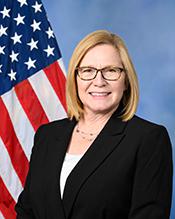
Michelle Fischbach
RRepublicanMN-7 · Representative
63
/ 100
Average
Attendance99
Avg: 96
Independence2
Avg: 4
Bipartisan Tone16
Avg: 15
Ethics Record100
Avg: 99
Transparency98
Avg: 53
Accountability Score — composite of attendance, independence, bipartisan tone, ethics record & transparency.
Methodology26
Bills Sponsored
0
Enacted into Law
12
Passed a Chamber
14
In Committee
All Sponsored Bills
HR10356In Committee
Empowering Moms Act
HRES1530Passed House
Providing for consideration of the bill (H.R. 9576) to establish the National Fraud Enforcement Division of the Department of Justice; providing for consideration of the bill (H.R. 10326) to enhance information-sharing capabilities between Federal law enforcement and State agencies to detect, investigate, and prosecute fraud in certain Federal programs, and to protect individual privacy; providing for consideration of the joint resolution (H.J. Res. 210) providing for congressional disapproval under chapter 8 of title 5, United States Code, of the rule submitted by the Environmental Protection Agency relating to ‘‘California State Nonroad Engine Pollution Control Standards; Ocean-Going Vessels At-Berth; Notice of Decision''; providing for consideration of the joint resolution (H.J. Res. 213) providing for congressional disapproval under chapter 8 of title 5, United States Code, of the rule issued by the Environmental Protection Agency relating to the ‘‘California State Nonroad Engine Pollution Control Standards; Commercial Harbor Craft Regulations; Notice of Decision''; and providing for consideration of the Senate amendments to the bill (H.R. 5334) to amend the Internal Revenue Code of 1986 to allow early childhood educators to take the educator expense deduction, and for other purposes.
This resolution provides for the consideration of the bill (H.R. 9576) to establish the National Fraud Enforcement Division of the Department of Justice; providing for consideration of the bill (H.R. 10326) to enhance information-sharing capabilities between Federal law enforcement and State agencies to detect, investigate, and prosecute fraud in certain Federal programs, and to protect individual privacy; providing for consideration of the joint resolution (H.J. Res. 210) providing for congressional disapproval under chapter 8 of title 5, United States Code, of the rule submitted by the Environmental Protection Agency relating to ''California State Nonroad Engine Pollution Control Standards; Ocean-Going Vessels At-Berth; Notice of Decision''; providing for consideration of the joint resolution (H.J. Res. 213) providing for congressional disapproval under chapter 8 of title 5, United States Code, of the rule issued by the Environmental Protection Agency relating to the ''California State Nonroad Engine Pollution Control Standards; Commercial Harbor Craft Regulations; Notice of Decision''; and providing for consideration of the Senate amendments to the bill (H.R. 5334) to amend the Internal Revenue Code of 1986 to allow early childhood educators to take the educator expense deduction, and for other purposes.
HR10072In Committee
Hardworking Seniors Act
HRES1274Passed House
Providing that section 11 of House Resolution 1224 shall have no force or effect.
This resolution eliminates a requirement to include the text of H.R. 1346, the Nationwide Consumer and Fuel Retailer Choice Act of 2025, as passed by the House of Representatives, in H.R. 7567, the Farm, Food, and National Security Act of 2026 (commonly known as the farm bill). The requirement is contained in H.Res. 1224, which also provides for the consideration of both H.R. 7567 and H.R. 1346. (H.Res. 1224 was agreed to in the House on April 29, 2026.)
HR8329In Committee
Form 990 Immigrant Resettlement Schedule Act
This bill would require tax-exempt organizations (like charities and nonprofits) to report detailed information to the IRS about their activities related to resettling or relocating noncitizens into the United States. The reporting requirement would apply to organizations that receive tax-exempt status and would need to disclose specifics about these resettlement programs to federal authorities. The bill affects nonprofits and charitable organizations that work with immigrants or refugees.
HR8172In Committee
Federal Benefits Repatriation Verification Act of 2026
The bill would prevent noncitizens who receive federal benefits like Social Security or unemployment assistance from sending money out of the country, and would require the government to verify that recipients are following this rule. It would also create a new database in the Treasury Department to track and monitor these restrictions across federal benefit programs. The measure aims to ensure that federal assistance stays within the U.S. rather than being transferred abroad by noncitizen recipients.
HR8137In Committee
To amend the Internal Revenue Code of 1986 to establish tax credits for the production of, and investment in, certain renewable materials.
The bill would create tax credits to encourage companies to produce renewable materials and investors to fund those operations, making it financially attractive for businesses to shift toward sustainable alternatives to traditional materials. These credits would reduce the taxes that qualifying companies owe, effectively subsidizing the development and manufacturing of renewable products. The goal is to boost the renewable materials industry and help transition away from fossil fuel-dependent production.
HRES1142Passed House
Providing for disposition of the Senate amendment to the bill (H.R. 7147) making further consolidated appropriations for the fiscal year ending September 30, 2026, and for other purposes.
This is a procedural measure that allows the House to accept changes the Senate made to a large spending bill that funds federal government operations for fiscal year 2026. The vote essentially finalizes the compromise version of the spending bill after both chambers negotiated their differences. This affects all federal agencies and programs that depend on annual appropriations to operate.
HR7824In Committee
Federal Funds Whistleblower Protection Extension Act
This bill would extend legal protections for federal employees and contractors who report waste, fraud, or illegal activities within government agencies. Workers who blow the whistle on wrongdoing would gain stronger safeguards against retaliation like firing, demotion, or harassment. The measure aims to encourage people working in or with the federal government to come forward with evidence of misconduct without fear of losing their jobs.
HR7731In Committee
To amend the Internal Revenue Code of 1986 to remove the income limitation on the exclusion from gross income of any medal or prize money won in competition in the Olympic Games or Paralympic Games.
Currently, U.S. athletes who win Olympic or Paralympic medals can only exclude prize money from their taxes if they earn below a certain income threshold, meaning higher-earning athletes have to pay taxes on their winnings while lower-earning ones don't. This bill would remove that income limit so all American medal winners could exclude their prize money from taxes regardless of how much they earn. The change would primarily benefit elite athletes competing in the Olympics and Paralympics.
HR6945Passed House
Supporting Pregnant and Parenting Women and Families Act
Supporting Pregnant and Parenting Women and Families Act This bill provides statutory authority for states to use Temporary Assistance for Needy Families (TANF) funds for pregnancy centers that (1) support protecting the life of the mother and the unborn child; and (2) offer resources and services to mothers, fathers, and families, including relationship counseling, prenatal and pregnancy education, pregnancy testing, diapers, baby clothes, and material supports.
HRES988Passed House
Providing for consideration of the bill (H.R. 2988) to amend the Employee Retirement Income Security Act of 1974 to specify requirements concerning the consideration of pecuniary and non-pecuniary factors, and for other purposes; providing for consideration of the bill (H.R. 2262) to amend the Fair Labor Standards Act of 1938 to exclude certain activities from hours worked, and for other purposes; providing for consideration of the bill (H.R. 2270) to amend the Fair Labor Standards Act of 1938 to exclude child and dependent care services and payments from the rate used to compute overtime compensation; providing for consideration of the bill (H.R. 2312) to amend the Fair Labor Standards Act of 1938 to revise the definition of the term ''tipped employee'', and for other purposes; and providing for consideration of the bill (H.R. 4366) to clarify the treatment of 2 or more employers as joint employers under the National Labor Relations Act and the Fair Labor Standards Act of 1938.
This resolution provides for the consideration of the bill (H.R. 2988) to amend the Employee Retirement Income Security Act of 1974 to specify requirements concerning the consideration of pecuniary and non-pecuniary factors, and for other purposes; providing for consideration of the bill (H.R. 2262) to amend the Fair Labor Standards Act of 1938 to exclude certain activities from hours worked, and for other purposes; providing for consideration of the bill (H.R. 2270) to amend the Fair Labor Standards Act of 1938 to exclude child and dependent care services and payments from the rate used to compute overtime compensation; providing for consideration of the bill (H.R. 2312) to amend the Fair Labor Standards Act of 1938 to revise the definition of the term ''tipped employee'', and for other purposes; and providing for consideration of the bill (H.R. 4366) to clarify the treatment of 2 or more employers as joint employers under the National Labor Relations Act and the Fair Labor Standards Act of 1938.
HRES873Passed House
Providing for consideration of the Senate amendment to the bill (H.R. 5371) making continuing appropriations and extensions for fiscal year 2026, and for other purposes.
This resolution provides for House consideration of S.Amdt. 3937, a Senate amendment to H.R. 5371, Continuing Appropriations, Agriculture, Legislative Branch, Military Construction and Veterans Affairs, and Extensions Act, 2026.
HRES211Passed House
Providing for consideration of the joint resolution (H.J. Res. 25) providing for congressional disapproval under chapter 8 of title 5, United States Code, of the rule submitted by the Internal Revenue Service relating to ‘‘Gross Proceeds Reporting by Brokers That Regularly Provide Services Effectuating Digital Asset Sales’’; providing for consideration of the bill (H.R. 1156) to amend the CARES Act to extend the statute of limitations for fraud under certain unemployment programs, and for other purposes; providing for consideration of the bill (H.R. 1968) making further continuing appropriations and other extensions for the fiscal year ending September 30, 2025, and for other purposes; and for other purposes.
This is a procedural measure that sets the rules for Congress to consider three separate proposals: one to block an IRS rule requiring cryptocurrency brokers to report sales information, another to extend the deadline for prosecuting fraud cases involving pandemic unemployment benefits, and a third to continue government funding through September 2025. The resolution determines how much time lawmakers will have to debate each measure and what amendments they can propose during the voting process.
HR4591In Committee
Habitat Enhancement Now Act
The proposal would authorize funding and programs to restore and improve natural habitats for wildlife and plants across the country. It would affect environmental organizations, landowners, and communities by providing resources for projects like wetland restoration, forest management, and species protection efforts. The bill aims to help endangered species recover and maintain healthy ecosystems that support both wildlife and human communities.
HRES458Passed House
Providing for consideration of the bill (H.R. 2483) to reauthorize certain programs that provide for opioid use disorder prevention, treatment, and recovery, and for other purposes; providing for consideration of the bill (H.R. 2931) to direct the Administrator of the Small Business Administration to relocate certain offices of the Small Business Administration in sanctuary jurisdictions, and for other purposes; providing for consideration of the bill (H.R. 2966) to require the Administrator of the Small Business Administration to require an applicant for certain loans of the Administration to provide certain citizenship status documentation, and for other purposes; and providing for consideration of the bill (H.R. 2987) to amend the Small Business Act to require a limit on the number of small business lending companies, and for other purposes.
This is a procedural measure that allows the House to debate and vote on four separate bills: one to continue federal programs fighting opioid addiction and recovery, one to move Small Business Administration offices out of sanctuary cities, one to require citizenship documentation for certain SBA loans, and one to limit the number of small business lending companies. The measure passed the House, meaning lawmakers approved moving forward with consideration of these bills. These proposals would affect people struggling with addiction, small business owners seeking loans, and federal agencies administering these programs.
HR3235In Committee
MOMS Act
More Opportunities for Moms to Succeed Act or the MOMS Act This bill establishes requirements to enable the collection of certain child support during pregnancy, establishes grants for supportive services for women that promote alternatives to abortions, and requires the Department of Health and Human Services (HHS) to establish a website with pregnancy resources other than those about abortions. Specifically, the bill requires states to apply child support obligations to the time period during pregnancy under the Child Support Enforcement program. (The program enables states to receive federal matching funds for expenses related to child support enforcement activities and related services.) Such child support applies at the request of the mother and may be applied retroactively. Also, HHS must award grants to nonprofits to provide pregnant and postpartum women, and women parenting young children, with services or information on topics including health care (excluding abortions), child care, and employment assistance. It also requires HHS to provide grants to health care providers in rural or medically underserved areas, as well as tribal areas, to purchase equipment enabling telehealth visits for prenatal and postnatal care (e.g., monitoring devices). Additionally, the bill requires HHS to establish a public website to inform pregnant and postpartum women, and women parenting young children, of nearby services and resources on topics including health care, material or legal support, and alternatives to abortion. States must, as a condition of receiving certain federal funds, provide lists of nonprofit child placement agencies for potential inclusion on the site.
HR1246In Committee
Investing in Rural America Act of 2025
Investing in Rural America Act of 2025 This bill allows Farm Credit System (FCS) institutions to make and participate in loans and commitments (and extend other technical and financial assistance) for essential community facility projects as part of the Department of Agriculture's Community Facilities Direct Loan & Grant Program. This program provides funding to develop essential community facilities in rural areas. The FCS financing and technical assistance may be provided in order to make capital available to develop, build, maintain, improve, or provide related equipment or other support for essential community facilities in rural communities (e.g., certain facilities that provide healthcare, community support, public safety, educational, or utility services). Under the bill, the financing provided by an FCS institution may not exceed 15% of the total of all outstanding loans of the institution. Further, an FCS institution must (1) offer at least one non-FCS lending institution an interest in the financing under reasonable terms and conditions acceptable to the borrower, and (2) report the offer to the Farm Credit Administration (FCA). The FCA must submit an annual report to Congress on the activities undertaken by FCS institutions under this bill, including through the partnerships between FCS institutions and other lending institutions. The FCA must post the report on the administration's website.
HR1921In Committee
Hearing Device Coverage Clarification Act
Hearing Device Coverage Clarification Act This bill requires the Centers for Medicare & Medicaid Services to specify that fully implanted active middle ear hearing devices are prosthetics (not hearing aids) and are covered under Medicare.
HR1303In Committee
Protecting America’s Seniors’ Access to Care Act
Protecting America’s Seniors’ Access to Care Act This bill prohibits administration, implementation, or enforcement of the rule titled Medicare and Medicaid Programs; Minimum Staffing Standards for Long-Term Care Facilities and Medicaid Institutional Payment Transparency Reporting , which was issued by the Centers for Medicare & Medicaid Services on May 10, 2024. Specifically, the bill prohibits administration, implementation, or enforcement of provisions that, among other changes, (1) establish minimum staffing standards for nurses in Medicare and Medicaid long-term care facilities, including requiring a nurse to be onsite 24/7 and requiring a minimum of 3.48 total nurse staffing hours per resident per day; and (2) require state Medicaid programs to report on payments to direct care workers and support staff of nursing facilities and intermediate care facilities for individuals with intellectual disabilities.
HRES122Passed House
Providing for consideration of the bill (H.R. 77) to amend chapter 8 of title 5, United States Code, to provide for en bloc consideration in resolutions of disapproval for "midnight rules", and for other purposes.
This bill changes how Congress reviews last-minute regulations issued by federal agencies at the end of a presidential term. Instead of voting on each regulation separately, Congress can now vote on multiple regulations together in a single vote, making it faster and easier to reject rules that lawmakers want to overturn. The change affects how Congress exercises its power to block regulations it disagrees with before they take effect.
HR272In Committee
Protecting Life and Taxpayers Act of 2025
Protecting Life and Taxpayers Act of 2025 This bill requires entities receiving federal funds to certify that they will not, subject to certain exceptions, perform abortions or provide funding to other entities that perform abortions. The bill provides exceptions for abortions performed in cases of rape or incest or when necessary to resolve a physical condition that endangers a woman's life.
HR271In Committee
Defund Planned Parenthood Act of 2025
Defund Planned Parenthood Act of 2025 This bill restricts federal funding for Planned Parenthood Federation of America, Inc. or any of its affiliates or clinics for one year. Specifically, it prohibits providing federal funding to those entities unless they certify that the affiliates and clinics will not perform, and will not provide funds to entities that perform, abortions during that year. If the certification requirement is not met, the Department of Health and Human Services and the Department of Agriculture must recoup any federal assistance received by those entities. However, the bill's funding restriction does not apply to abortions performed in cases of rape or incest or when necessary to resolve a physical condition that endangers a woman's life. The bill also provides additional funding for community health centers for the one-year period. These funds are subject to the same abortion-related restrictions and exceptions.
HCONRES1Passed House
Regarding consent to assemble outside the seat of government.
This concurrent resolution authorizes Congress to assemble at a place outside Washington, DC, during the 119th Congress if the Speaker of the House and the Senate Majority Leader agree that it is in the public interest. The concurrent resolution provides that the Speaker of the House and the Senate Majority Leader shall act jointly after consultation with the House and Senate Minority Leaders.
HRES5Passed House
Adopting the Rules of the House of Representatives for the One Hundred Nineteenth Congress, and for other purposes.
This resolution establishes rules for the House of Representatives for the 119th Congress. The resolution adopts the rules from the 118th Congress with specified changes, including providing that a resolution vacating the Office of Speaker is only privileged (takes precedence over all matters other than motions to adjourn) if it is offered by a sponsor of the majority party joined by eight cosponsors from the majority party; providing that the Speaker may only entertain a motion to suspend the rules on Mondays, Tuesdays, and Wednesdays; prohibiting waiver (by rule or by order) of the germaneness rule (which requires amendments to be of the same subject matter as the measure under consideration); and prohibiting consideration of measures that exceed a specified long-term budget impact according to the Congressional Budget Office. Additional changes include authorizing the use of electronic voting within a committee; authorizing remote appearances by non-executive branch witnesses and their counsel in committee proceedings; eliminating the House Office of Diversity and Inclusion; eliminating certain collective bargaining rights for employees of the House of Representatives; reauthorizing the House Select Committee on the Strategic Competition Between the United States and the Chinese Communist Party; reauthorizing the Tom Lantos Human Rights Commission; and reauthorizing the House Democracy Assistance Commission (an entity that advises democratic parliaments in other countries) and renaming it the House Democracy Partnership. The resolution provides for the consideration of H.R. 21, H.R. 22, H.R. 23, H.R. 26, H.R. 27, H.R. 28, H.R. 29, H.R. 30, H.R. 31, H.R. 32, H.R. 33, and H.R. 35.
HRES6Passed House
Fixing the daily hour of meeting of the First Session of the One Hundred Nineteenth Congress.
This resolution provides that, unless otherwise ordered, the hour of daily meeting of the House of Representatives is Monday at 2:00 p.m.; Tuesday at 12:00 p.m. (noon) or, if no legislative business was conducted on the preceding Monday, at 2:00 p.m.; Wednesdays and Thursdays at 12:00 pm (noon); and 9:00 a.m. on all other days of the week.