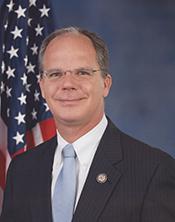
Brett Guthrie
RRepublicanKY-2 · Representative
68
/ 100
Above Average
Attendance99
Avg: 96
Independence2
Avg: 4
Bipartisan Tone37
Avg: 15
Ethics Record100
Avg: 99
Transparency100
Avg: 53
Accountability Score — composite of attendance, independence, bipartisan tone, ethics record & transparency.
Methodology10
Bills Sponsored
1
Enacted into Law
1
Passed a Chamber
8
In Committee
Bills That Became Law
All Sponsored Bills
HR8255In Committee
SAT Streamlining Act
Based on the title and subjects, this bill likely aims to simplify or modernize regulations related to science, technology, and communications systems, though the specific changes are unclear from the title alone. The bill has been sent to the House Committee on Energy and Commerce, which typically handles telecommunications, energy, and technology policy matters. Once in committee, lawmakers will review what specific rules or processes the bill would streamline and how it would affect technology companies, internet providers, and consumers.
HR9393In Committee
Lower Costs, More Transparency Act of 2026
The proposal would require hospitals, insurance companies, and other healthcare providers to publicly disclose their prices for medical services and procedures so patients can compare costs before receiving care. By making pricing information transparent and easy to access, patients and their families would be able to shop around for more affordable healthcare options and understand what they'll pay upfront. This affects anyone who uses healthcare services, as well as the hospitals and insurance companies that would need to comply with the new disclosure requirements.
HR7757Passed House
KIDS Act
Kids Internet and Digital Safety Act or the KIDS Act This bill requires specified online platforms to establish safeguards for minors. The safeguards include (1) limiting access to specified sexual material, (2) providing parental controls on social media and online video game platforms, and (3) requiring artificial intelligence (AI) chatbots to disclose certain information to users who are minors. First, publicly available online platforms on which more than one-third of the content is considered sexual material harmful to minors under the bill must adopt technology to identify minors and prevent them from accessing such material. Next, social media platforms must (1) implement default settings for minors that limit compulsive usage features and the ability of other users to communicate with minors, and (2) provide tools for parents to manage the privacy and account settings of a minor. Social media platforms may not allow ephemeral messaging features for minors. The bill also requires online video game platforms to provide tools that allow parents to (1) limit communication between a minor and other users of the platform, and (2) restrict purchases by a minor on the platform. Further, providers of AI chatbots must disclose to users who are minors (1) that the chatbot is an AI system and not a human, and (2) suicide and crisis intervention hotline information. Finally, the bill requires specified studies and reports about the effects of social media platforms on minors and provides for enforcement of the bill's requirements by the Federal Trade Commission and state attorneys general.
HR7389In Committee
Motor Vehicle Modernization Act of 2026
This bill would update federal rules governing how cars and trucks are designed, manufactured, and sold to reflect modern technology and safety standards. It likely addresses issues like vehicle emissions, fuel efficiency requirements, autonomous vehicle regulations, and safety features that have evolved since existing laws were written. The changes would affect automakers, consumers buying vehicles, and potentially workers in the automotive industry.
HR8739In Committee
Brownfields Revitalization for a Better Tomorrow Act
This bill would help clean up and redevelop abandoned or polluted industrial sites (called brownfields) so they can be reused for new businesses, housing, or other purposes instead of sitting unused. The legislation aims to make it easier and cheaper for communities and developers to restore these contaminated properties by providing funding, technical assistance, and liability protections. This would benefit property owners, local governments, and workers by creating opportunities for economic development and job creation in areas with abandoned industrial land.
HR3286In Committee
Mammoth Cave National Park Boundary Adjustment Act of 2025
This bill would adjust the boundaries of Mammoth Cave National Park in Kentucky, likely adding or removing land from the park's protected area. The change would affect how much federal land is managed as part of the park and could impact local property owners, the park's operations, and public access to cave systems and surrounding natural areas.
HR7871In Committee
MVP Act
Medicaid VBPs for Patients Act or the MVP Act This bill provides statutory authority for regulations that allow for the use of varying best price points under value-based purchasing arrangements for purposes of the Medicaid Drug Rebate Program. ( Value-based purchasing arrangements refer to arrangements in which the price of a drug is linked to clinical outcomes; such arrangements are particularly used for new high-cost treatments, such as gene therapies.) The Government Accountability Office must study the impact of value-based purchasing arrangements on federal health care programs, including with respect to the bill's changes. Additionally, the bill (1) exempts sales of drugs that are made under value-based purchasing arrangements from calculations of the manufacturer average sales price for purposes of payments under Medicare medical services, if the manufacturer reports multiple best prices under Medicaid in accordance with the bill's changes; and (2) requires the Centers for Medicare & Medicaid Services to issue guidance on how state Medicaid programs may cover drugs in inpatient settings via value-based purchasing arrangements.
HR6498In Committee
Student Financial Clarity Act of 2025
Student Financial Clarity Act of 2025 This bill requires certain actions to provide consumers (e.g., enrolled and prospective students) with additional financial information on institutions of higher education (IHEs) that participate in federal student aid programs. Specifically, the Department of Education (ED) must update its College Scorecard website with additional information, including detailed data (e.g., costs, financial aid, student debt and repayment, and earnings) for each program of study at each IHE. (The College Scorecard is a comparison tool for information on school sizes, settings, graduation rates, average costs, and salary ranges per field of study.) Additionally, ED must establish a Universal Net Price Calculator on a dedicated ED website and annually update the data. Among other elements, this calculator must (1) allow an individual to select and compare multiple IHEs and programs of study, (2) provide the individual with net price estimates for each selected IHE and each selected program of study, and (3) provide access to information in an electronic and downloadable format. Each IHE must make publicly available on its website either the net price calculator developed by ED or the IHE's own calculator (if it includes, at a minimum, the same data elements of ED's calculator).
HR2483Enacted
SUPPORT for Patients and Communities Reauthorization Act of 2025
SUPPORT for Patients and Communities Reauthorization Act of 2025 This act reauthorizes and revises programs and activities relating to addressing substance use disorders, overdoses, and mental health. (For additional information on each section of this act, see CRS Report R48864 .) TITLE I--PREVENTION (Sec. 101) This section reauthorizes through FY2030 Centers for Disease Control and Prevention (CDC) programs that provide information, grants, and technical assistance relating to studying and preventing prenatal and postnatal substance use disorders. (Sec. 102) This section reauthorizes through FY2030 CDC programs that carry out and provide grants for surveillance, treatment, and education relating to infections associated with illicit drug use. (Sec. 103) This section reauthorizes through FY2030 and expands CDC programs that carry out activities and provide grants relating to monitoring drug use and overdoses (e.g., supporting state prescription drug monitoring programs), preventing and responding to substance use disorders, and raising awareness regarding opioids and other substances. The section authorizes additional activities, including wastewater surveillance and collecting data on risk factors associated with overdoses. (Sec. 104) This section reestablishes, expands, and provides statutory authority for Department of Health and Human Services (HHS) activities addressing fetal alcohol spectrum disorders (i.e., conditions caused by prenatal alcohol exposure), including carrying out and providing grants for research, education and public awareness, and intervention and support services for affected individuals. (Sec. 105) This section specifies that, in providing grants to support state prescription drug monitoring programs, the CDC is not authorized to require states to use specific vendors or interoperability systems other than to align with general, consensus-based standards for interoperability. (Sec. 106) This section reauthorizes through FY2030 and expands grants to government entities to provide first responders with opioid overdose reversal drugs (e.g., naloxone) and related training. The grant program is administered by the Substance Abuse and Mental Health Services Administration (SAMHSA). The section expands the program to include (1) treatment and training for overdoses from other drugs besides opioids, and (2) treatment with drugs or devices that are legally marketed under applicable law. Current law limits the program to addressing opioid overdoses and to drugs or devices that are officially approved or cleared by the Food and Drug Administration (FDA). (Sec. 107) This section reauthorizes through FY2030 and revises the National Child Traumatic Stress Initiative and related activities, which are administered by SAMHSA. Under the initiative, SAMHSA provides grants and other support to improve the quality of and increase access to services addressing psychological trauma in youth and families. The section requires grant recipients to develop training and other resources for collaborative implementation of best practices. (Sec. 108) This section requires SAMHSA to undertake efforts to protect the 9-8-8 Suicide & Crisis Lifeline from cybersecurity threats. (The lifeline is a three-digit number that connects callers in suicidal crisis or mental health distress to a national network of crisis centers.) The section includes requirements for the lifeline’s network administrator and participating local and regional crisis centers to report identified cybersecurity incidents and vulnerabilities. The Government Accountability Office must conduct a study that evaluates cybersecurity risks and vulnerabilities associated with the lifeline and report the findings to Congress. (Sec. 109) This section reauthorizes through FY2030 CDC activities to collect and report certain public health data relating to potentially traumatic childhood experiences. (Sec. 110) This section reauthorizes through FY2030 an interdepartmental committee on substance use disorders, establishes an interagency work group on fentanyl contamination of illegal drugs, and expands certain SAMHSA activities to include supporting strategies to raise awareness about the dangers of synthetic opioids for youth. (Sec. 111) This section requires HHS to publish guidance regarding at-home safe drug disposal systems. (Sec. 112) This section requires HHS to publish a plan for assessing approved opioid analgesic drugs (i.e., opioid pain relievers) that addresses the public health effects of these drugs, including updates on actions by the FDA with respect to risk-benefit assessments and supporting development and approval of nonaddictive medical products. HHS must provide an opportunity for public input on the FDA’s regulation of opioid analgesic drugs. (Sec. 113) This section provides statutory authority for SAMHSA’s State Opioid Response and Tribal Opioid Response Grants to be used for facilitating access to drug checking technologies, such as fentanyl and xylazine test strips, to the extent permitted by federal and state law. TITLE II--TREATMENT (Sec. 201) This section reauthorizes through FY2030 the Residential Treatment for Pregnant and Postpartum Women program, which is administered by the Center for Substance Abuse Treatment within SAMHSA. This program awards grants to fund services for pregnant and postpartum women with substance use disorders, including services for treatment, recovery support, and case management. The section also specifically allows grant recipients to conduct outreach that is targeted at women disproportionately impacted by maternal substance use disorders. (Sec. 202) This section provides statutory authority for the Minority Fellowship Program to include fellowships for training in the field of addiction medicine. The Minority Fellowship Program, administered by SAMHSA, funds fellowships for individuals seeking graduate degrees and planning to work on addressing mental or substance use disorders in racial and ethnic minority populations. (Sec. 203) This section reauthorizes through FY2030 the Behavioral Health Workforce Education and Training Program for Professionals, which is administered by the Health Resources and Services Administration (HRSA). This program provides grants to educational organizations and programs to recruit and educate students in mental and behavioral health. (Sec. 204) This section reauthorizes through FY2030 the Substance Use Disorder Treatment and Recovery Loan Repayment Program, which is administered by HRSA. This program provides repayment of educational loans for health care practitioners who agree to provide direct treatment or recovery support for substance use disorders in certain areas with shortages of health professionals or high rates of overdose. (Sec. 206) This section reauthorizes through FY2030 and expands an interagency task force that must develop recommendations relating to (1) best practices for preventing and mitigating trauma in youth and (2) coordinating the federal response to families impacted by substance use disorders and other trauma. (Sec. 208) This section requires SAMHSA to conduct a review of how states use funds under the Community Mental Health Services Block Grant program to address first episode psychosis, including the use of evidence-based services for individuals with early serious mental illness and children with serious emotional disturbance. SAMHSA must report to Congress on the findings of the review and update the guidance for the block grant program based on such findings. (Sec. 209) This section requires HHS to review relevant data and, if determined appropriate, request that the Drug Enforcement Administration (DEA) revise the scheduling of approved products containing a combination of buprenorphine and naloxone under the Controlled Substances Act. The DEA must review such requests and determine whether to revise the schedules. (Sec. 210) This section requires that, when HHS issues new regulations or guidance on grant programs addressing opioid use disorders, references to an opioid overdose reversal drug (e.g., naloxone) must broadly include any opioid overdose reversal drug approved by the FDA. Within one year after the act’s enactment, HHS must update all references accordingly in regulations or guidance issued prior to the act’s enactment that are applicable to State Opioid Response Grants, Tribal Opioid Response Grants, or certain other grants relating to substance use disorder prevention. (Sec. 211) This section requires HHS to convene a public roundtable with public and private stakeholders on expanding the use of electronic health records among mental health and substance use disorder service providers. HHS must report to Congress on the results of the roundtable with respect to specified topics. TITLE III--RECOVERY (Sec. 301) This section reauthorizes through FY2030 the Building Communities of Recovery program, which is administered by the Center for Substance Abuse Treatment within SAMHSA. This program provides grants to certain community nonprofit organizations for developing and delivering coordinated community and statewide recovery support services for individuals with substance use disorders. (Sec. 302) This section reauthorizes through FY2030 and expands the National Peer-Run Training and Technical Assistance Center for Addiction Recovery Support, which is administered by SAMHSA. The center provides training and resources to public and private nonprofit entities relating to recovery support services for substance use disorders and co-occurring conditions (i.e., mental health conditions coexisting with substance use disorders). The section expands the center's functions to include professional development of peer support specialists and recovery support services in nonclinical settings. It also authorizes through FY2030 a regional technical assistance center to support the ability of the center to meet a particular region's needs. (Sec. 303) This section reauthorizes through FY2030 grants to nonprofits for establishing or operating opioid recovery centers providing comprehensive treatment and recovery support services. The grant program is administered by SAMHSA. (Sec. 304) This section reauthorizes through FY2030 and revises the Preventing Youth Overdose: Treatment, Recovery, Education, Awareness, and Training (PYO-TREAT) program, which is administered by SAMHSA. The PYO-TREAT program provides grants and other support to educational and public entities for substance use disorder prevention, treatment, and recovery for children and young adults. The section revises the program to provide statutory authority for (1) requiring applicants to submit plans for sustaining activities under the program after the grant has ended, and (2) expanding eligible grant recipients to include consortia of local educational agencies. SAMHSA must report to Congress on the PYO-TREAT program’s effectiveness. (Sec. 305) This section reauthorizes through FY2030 and expands the Treatment, Recovery, and Workforce Support program, which is administered by SAMHSA. This program provides grants to public and private nonprofit entities to support individuals in treatment and recovery for substance use disorders and co-occurring conditions to live independently and participate in the workforce. The section authorizes using 5% of such grant funds for transportation services and requires grant recipients to report on the employment and earnings outcomes of program participants. Also, the section reauthorizes through FY2030 the Recovery Housing Pilot Program, which assists states in providing individuals in recovery from a substance use disorder with stable, temporary housing for up to two years. This program is administered by the Department of Housing and Urban Development. (Sec. 306) This section reauthorizes through FY2030 the Support to Communities: Fostering Opioid Recovery through Workforce Development program, which is administered by the Department of Labor. This program provides grants to public entities to address the economic and workforce-related impacts of substance use disorders through activities such as screening and support services, training, and engaging with employers. (Sec. 307) This section requires HHS to convene a public meeting relating to improving awareness of and access to grants provided by SAMHSA. Based on the stakeholder feedback received at the meeting, HHS must implement improvements to relevant websites and report to Congress. TITLE IV--MISCELLANEOUS MATTERS (Sec. 401) This section allows pharmacies to deliver to prescribing practitioners schedule III-V controlled substances that are not directly administered by the practitioner (i.e., self-administered), provided the controlled substances are subject to a risk evaluation and mitigation strategy to assure safe use by the patient, including post-administration monitoring by a health care provider. (Sec. 402) This section expands the types of organizations that may provide training or education required for practitioners registering with the DEA to dispense (i.e., prescribe or administer) schedule II-V controlled substances. This section applies retroactively, taking effect as if enacted on December 29, 2022.
HRES85In Committee
Providing amounts for the expenses of the Committee on Energy and Commerce in the One Hundred Nineteenth Congress.
This resolution provides amounts for the expenses of the House Committee on Energy and Commerce for the 119th Congress.