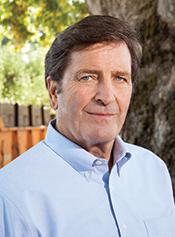
John Garamendi
DDemocratCA-8 · Representative
58
/ 100
Average
Attendance86
Avg: 96
Independence1
Avg: 4
Bipartisan Tone7
Avg: 15
Ethics Record100
Avg: 99
Transparency100
Avg: 53
Accountability Score — composite of attendance, independence, bipartisan tone, ethics record & transparency.
Methodology12
Bills Sponsored
0
Enacted into Law
0
Passed a Chamber
12
In Committee
All Sponsored Bills
HCONRES119In Committee
Celebrating the 65th anniversary of the establishment of the Peace Corps, and commending its volunteers and contributions to global peace, friendship, and development.
HR10267In Committee
Cabin Air Safety Act of 2026
HR9980In Committee
American Food for American Schools Act of 2026
Schools that receive federal lunch funding would have to publicly post any waivers they receive that allow them to buy food from foreign sources instead of American suppliers. This transparency requirement would let parents, taxpayers, and local officials see when schools are exempted from the "Buy American" rule that normally requires them to prioritize domestic food purchases. The change affects school districts across the country that participate in the federal school lunch program.
HR8653In Committee
ADAPT Assets Act
The federal government would create a grant program to fund projects that strengthen transportation infrastructure—like roads, bridges, and transit systems—against damage from natural disasters such as floods, earthquakes, and hurricanes. States, cities, and transportation agencies could apply for these grants to test new methods and technologies that make their infrastructure more resilient and better able to withstand extreme weather and other natural hazards. This would help communities protect their transportation networks and reduce costly disruptions when natural disasters occur.
HCONRES92In Committee
Directing the President, pursuant to section 5(c) of the War Powers Resolution, to remove United States Armed Forces from hostilities with Iran.
This concurrent resolution directs the President to remove U.S. Armed Forces from hostilities against Iran or any part of its government or military unless a declaration of war or authorization to use military force for such purpose has been enacted. The resolution specifies that it shall not be construed to prevent the United States from defending itself, its Armed Forces, its diplomatic facilities, or allied states from imminent attack.
HRES603In Committee
Reaffirming the principles of the United States Constitution, including separation of powers and the rule of law, and condemning efforts to undermine the same.
This resolution expresses support for core constitutional principles like the separation of powers between the executive, legislative, and judicial branches, as well as the rule of law that applies equally to everyone. It formally condemns actions or efforts that the sponsors believe undermine these foundational principles of American government. The measure is currently under review by the House Judiciary Committee.
HR4170In Committee
Bridge Corrosion Prevention and Repair Act of 2025
Bridge Corrosion Prevention and Repair Act of 2025 This bill establishes certain requirements to address corrosion control in bridge and railroad-bridge projects that receive federal assistance. Specifically, certified contractors must employ a substantial number of individuals who are certified by a qualified training program in corrosion control, mitigation, and prevention in order to work on certain aspects of bridge project activities. A certified contractor must also provide training for any non-certified coating applicators employed by the contractor to work on certain aspects of a project. The bill further requires bridge projects to implement a corrosion management system that utilizes industry-recognized standards and corrosion mitigation and prevention methods for construction, repair, and maintenance projects. In addition, the bill expands the scope of the Railroad Rehabilitation and Improvement Financing Program to include corrosion control work on rail bridges. (This program provides direct loans and loan guarantees for the development of railroad infrastructure.) The bill also requires the Department of Transportation to study and report on best practices for inspecting and addressing corrosion on weathering steel bridges. This report must be made available to state and local governments, metropolitan planning organizations, and regional organizations.
HR2771In Committee
Forest Legacy Management Flexibility Act
This bill would give the federal government more flexibility in how it manages forests on public lands, likely allowing officials to adjust timber harvesting, conservation, and land-use practices more easily without going through lengthy approval processes. The changes would affect national forests and other public lands managed by agencies like the Forest Service, potentially speeding up decisions about logging, wildfire prevention, and environmental protection. The bill aims to help land managers respond more quickly to forest conditions and local needs, though the specific tradeoffs between development and conservation would depend on how agencies use this increased authority.
HR2629In Committee
Impact Aid Infrastructure Partnership Act
This bill would help schools in areas near federal military bases and Native American reservations get funding and support to improve their buildings and infrastructure. These schools often struggle financially because they serve students whose families work on federal property and don't pay local property taxes, so the bill aims to make it easier for them to partner with the federal government on construction and renovation projects. The changes would affect school districts, military communities, and tribal nations that depend on federal impact aid for education.
HR2256In Committee
National Rosie the Riveter Day Act
This bill would establish a national day of recognition to honor Rosie the Riveter and the women who worked in factories and shipyards during World War II, helping to produce weapons and equipment for the war effort. The designation would celebrate the contributions these women made to the economy and national defense during a critical time in American history. It's a symbolic measure that doesn't create new programs or spending, but rather sets aside a day for Americans to remember this important chapter of women's labor history.
HR728In Committee
Expanding Head Start Eligibility Act of 2025
Expanding Head Start Eligibility Act of 2025 This bill expands eligibility for Head Start programs to include the children of families eligible for specified public assistance programs. Specifically, the bill expands Head Start eligibility to include the children of families that qualify for the Special Supplemental Nutrition Program for Women, Infants, and Children (WIC), the Food Distribution Program on Indian Reservations (FDPIR), and federal housing assistance (commonly known as Section 8). The bill also provides statutory authority for the eligibility of families that qualify for Temporary Assistance for Needy Families (TANF), Supplemental Security Income (SSI), and the Supplemental Nutrition Assistance Program (SNAP). Families that qualify for state-funded food assistance programs with eligibility standards identical or substantially similar to the standards for SNAP must also be eligible for Head Start.
HR429In Committee
Rosie the Riveter Commemorative Coin Act
Rosie the Riveter Commemorative Coin Act This bill directs the Department of the Treasury to mint and issue coins in recognition and celebration of the women who contributed to the U.S. home front during World War II. All sales of coins issued under this bill must include a surcharge to be paid to the Rosie the Riveter Trust to support the National Park Service in maintaining and repairing the Rosie the Riveter WWII Home Front National Historical Park.