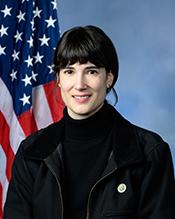
Marie Gluesenkamp Perez
DDemocratWA-3 · Representative
60
/ 100
Average
Attendance99
Avg: 96
Independence22
Avg: 4
Bipartisan Tone8
Avg: 15
Ethics Record100
Avg: 99
Transparency61
Avg: 53
Accountability Score — composite of attendance, independence, bipartisan tone, ethics record & transparency.
Methodology27
Bills Sponsored
0
Enacted into Law
1
Passed a Chamber
26
In Committee
All Sponsored Bills
HR10829In Committee
To direct the Elder Justice Coordinator of the Federal Trade Commission to establish a website and hotline for victims of fraud and scams directed at elders, and for other purposes.
HR10790In Committee
Chemical Safety Board Accountability Act
HR10694In Committee
More Nurses in Rural Schools Act
HR10590In Committee
Veteran Owner-Builders Rights Act
HR9637In Committee
Protecting Columbia River Salmon Act of 2026
This bill would allow certain Indian Tribes in California to legally kill sea lions in a specific section of the Columbia River, which they say are eating too many salmon and interfering with fishing. Currently, federal law protects these sea lions from being killed, so this change would give the Tribes an exception to that protection. The Tribes argue this action is necessary to protect salmon populations and their traditional fishing practices.
HR8828In Committee
To direct the Attorney General to establish an official station for the United States attorney for the Western District of Washington in the county of Clark, Washington, and for other purposes.
The federal government would establish an official office for the U.S. Attorney serving western Washington state in Clark County, allowing prosecutors to work closer to the communities they serve in that area. This would give the U.S. Attorney's office a physical location in Clark County to handle federal cases and legal matters affecting residents there, rather than requiring all work to be done from a distant office.
HR8799In Committee
Stop Scamming Truckers Act
The proposal would set rules for how private companies can use or communicate about Department of Transportation identification numbers and information. This would likely prevent businesses from misusing official government numbers in their marketing or communications in ways that could confuse consumers or misrepresent their authority. The measure affects any private business that references or uses DOT numbers in their operations or advertising.
HRES1161In Committee
Congressional Quilt Show Resolution of 2026
This resolution would authorize and organize a quilt show to be displayed in Congress, likely featuring quilts made by constituents or artists from across the country. The event would be managed by the House Committee on House Administration and would serve as a cultural exhibition within the Capitol building. This type of resolution is primarily ceremonial and does not create new laws or policies affecting the public.
HR8184In Committee
Fair Prices for Local Businesses Act
This bill would likely establish rules to prevent large companies from unfairly pricing out or discriminating against small local businesses in their dealings with them. The legislation appears aimed at protecting small retailers and service providers from being squeezed out by bigger competitors through pricing practices or other unfair business tactics. It would affect how large corporations can conduct business with smaller companies that depend on them as suppliers or partners.
HRES1104In Committee
Directing the Office of Congressional Conduct to establish standards of conduct related to mental capacity of members of the House of Representatives.
The bill would require the Office of Congressional Conduct to create official rules about what happens when House members may have mental or cognitive problems that affect their ability to do their job. These standards would establish a process for addressing concerns about a member's mental fitness to serve, affecting how Congress handles situations where a representative's mental capacity is questioned. The proposal aims to give Congress a clear, formal procedure rather than leaving such sensitive matters unaddressed.
HR7772In Committee
LIGHT Safety Act
The LIGHT Safety Act addresses transportation safety and infrastructure issues, likely focusing on lighting standards or visibility requirements for vehicles and roadways to reduce accidents and improve public safety. The bill has been sent to two congressional committees—Transportation and Infrastructure, and Energy and Commerce—to review different parts of the proposal based on their areas of responsibility.
HR5363In Committee
Expanding Childcare in Rural America Act of 2025
Expanding Childcare in Rural America Act of 2025 This bill requires the Department of Agriculture (USDA) to establish the Expanding Childcare in Rural America Initiative to prioritize certain loans and grants that address childcare in agricultural and rural communities. Under the bill, childcare includes eligible programs that provide quality care and early education for young children who are in kindergarten or have not yet entered kindergarten. Under the initiative, USDA must give priority to applicants that propose to use certain loans or grants to address the availability, quality, or costs of childcare in an agricultural or rural community. In addition, USDA must prioritize communities in farming-dependent counties and ensure a balanced geographical distribution of the benefits. USDA must conduct a comprehensive quantitative and qualitative evaluation of the projects carried out under the initiative and submit a report to Congress.
HRES878Passed House
Disapproving the behavior of Representative Jesús G. Chuy García of Illinois.
This resolution expresses that the House of Representatives disapproves of the behavior of Representative Jesús G. “Chuy” García of Illinois.
HR5857In Committee
FARM Act
The proposal would establish new regulations and support programs for American farmers and food producers, likely addressing issues like crop management, livestock practices, and food safety standards. It would affect farmers, agricultural businesses, and potentially consumers by changing how food is produced and distributed across the country. The bill is currently being reviewed by the House Committee on Energy and Commerce to determine whether it should move forward for a vote.
HR5155In Committee
Warrior Right to Repair Act of 2025
This bill would allow military service members and veterans to repair their own military equipment and gear, similar to "right to repair" laws for consumer products, rather than being forced to send items back to manufacturers or official repair centers. The legislation aims to give soldiers more independence and potentially save money by letting them fix things like uniforms, gear, and equipment themselves without voiding warranties or facing legal restrictions. It affects active-duty personnel, veterans, and military families who currently have limited options for maintaining or repairing their issued equipment.
HR4575In Committee
Jobs in the Woods Act
This bill would likely create or expand job training and employment programs focused on forestry, timber harvesting, and woodland management work. It would help workers gain skills in forest-related jobs while potentially supporting rural communities that depend on timber and forest industries. The bill affects workers seeking forestry careers, rural economies, and companies in the timber and forest management sectors.
HR3991In Committee
Research for Healthy Soils Act
Research for Healthy Soils Act This bill includes research on the agricultural impacts of microplastics and PFAS in land-applied biosolids or compost on farmland as a Department of Agriculture (USDA) high-priority research and extension area. Microplastic is a plastic or plastic-coated particle that is less than 5 millimeters in size. Perfluoroalky and polyfluoroalkyl substances, commonly referred to as PFAS, are man-made and may have adverse human health effects. The bill specifically allows grants for carrying out or enhancing research in this area (e.g., the development or analysis of techniques, including wastewater treatment and composting, to filter out or biodegrade such substances from biosolids intended to be used for agricultural purposes). Further, the bill reauthorizes USDA grants to support competitive specialized research and extension activities, including high-priority areas, through FY2031. The bill also specifically reauthorizes through FY2031 the Pulse Crop Health Initiative; the Comprehensive Food Safety Training Network; pollinator protection research and extension grants; increased USDA capacity and infrastructure to address and conduct research on colony collapse disorder and other pollinator issues; and a USDA-conducted nationwide honey bee pest, pathogen, health, and population status surveillance program.
HR2517In Committee
Community Wood Facilities Assistance Act of 2025
Community Wood Facilities Assistance Act of 2025 This bill makes changes to grant programs administered by the Forest Service to promote wood products. Specifically, the bill reauthorizes through FY2030, modifies, and renames the Community Wood Facilities Grant program. Currently named the Community Wood Energy and Wood Innovation Program, this program provides competitive grants to fund a portion of the capital costs for installing community wood energy systems or building innovative wood products facilities. Modifications to the program include increasing the maximum grant amount per facility, increasing the portion of a project's cost that may be covered by a grant, and changing the grant selection criteria. The bill also modifies the Wood Innovation Grant Program, which provides grants to develop and expand the market for innovative wood products. Specifically, the bill increases the portion of a project's cost that may be covered by such a grant. The bill also modifies both programs to prioritize grants for the construction, use, or retrofitting of forest products manufacturing.
HR2077In Committee
Helping Heroes Act
Helping Heroes Act This bill requires the Department of Veterans Affairs (VA) to establish the Veteran Family Resource Program to address social determinants of health challenges experienced in veterans’ family units and ensure veterans and their families have access to services and resources to support wellness within the family units. In implementing the program, the VA must (1) appoint at least one family coordinator in each Veterans Integrated Service Network (regional VA health care administrative areas), and (2) ensure adequate staffing and resources to ensure family coordinators are able to carry out their duties and functions. Under the bill, a family coordinator’s function is generally to serve at a VA medical center as a point person regarding VA and community resources for veterans, their families, and caregivers and survivors of veterans. The VA may expand the program to additional medical centers as appropriate. Not later than one year after the date of enactment of this bill, and not less frequently than once every five years after, the VA must survey disabled veterans and their families to identify and better understand their needs.
HR1733In Committee
Rural Veterans Transportation to Care Act
Rural Veterans Transportation to Care Act This bill expands and makes permanent the Department of Veterans Affairs (VA) grant program that provides transportation options to veterans for medical purposes. First, the bill expands the program to cover transportation for veterans in rural areas, in addition to veterans in highly rural areas (who are already eligible under the program). The bill also authorizes the VA to award such grants to county veterans service organizations and tribal organizations to assist veterans with transportation for medical care. Further, the bill increases the maximum grant amount to $60,000. However, if a grant recipient is required to purchase a vehicle to comply with the Americans with Disabilities Act of 1990, such grant amount may be increased to not more than $80,000. Finally, the bill defines rural and highly rural in the same manner as the terms are given under the Rural-Urban Commuting Areas (RUCA) coding system of the Department of Agriculture. RUCA uses population density and commuting patterns to assign designations.
HR2220In Committee
PARA–EMT Act of 2025
The bill would establish federal standards and support for paramedics and emergency medical technicians (EMTs) who respond to medical emergencies and transport patients to hospitals. It likely aims to improve training requirements, certification, and working conditions for these emergency responders across different states, which currently have varying rules. The measure would affect paramedics and EMTs, the hospitals and ambulance services that employ them, and the patients who depend on emergency medical services.
HR1267In Committee
Water Systems PFAS Liability Protection Act
Water Systems PFAS Liability Protection Act This bill exempts specified water management entities from liability under the Comprehensive Environmental Response, Compensation, and Liability Act of 1980 (CERCLA) for releases of certain perfluoroalkyl or polyfluoroalkyl substances, commonly referred to as PFAS. Specifically, the entities covered under the bill are public water systems, publicly or privately owned or operated treatment works, municipalities with a stormwater discharge permit, political subdivisions or special districts of a state that act as a wholesale water agency, and contractors performing the management or disposal activities for such entities. Under the bill, the exemption only applies if a specified entity transports, treats, disposes of, or arranges for the transport, treatment or disposal of PFAS consistent with applicable laws and during and following the conveyance or treatment of water under federal or state law, such as through the management or disposal of biosolids consistent with the Federal Water Pollution Control Act. Liability for damages or costs associated with the release of certain PFAS must not be precluded if an entity acted with gross negligence or willful misconduct.
HR1091In Committee
Carried Interest Fairness Act of 2025
Carried Interest Fairness Act of 2025 This bill taxes income from carried interest at ordinary income tax rates and makes other changes related to carried interest. (Some exceptions apply.) As background, a general partner in a private equity firm or hedge fund (typically structured as a partnership) generally receives a share of the profits from the assets managed by the general partner (known as carried interest). Under current law, carried interest is characterized (for federal tax purposes) as an interest in a partnership’s capital and, thus, taxed at capital gains tax rates (which may be lower than the applicable ordinary income tax rates). Under the bill, net capital gain and loss attributable to carried interest is recharacterized as ordinary income and loss and, thus, taxed at ordinary income tax rates. (Some exceptions apply.) The bill also treats as ordinary the money (or fair market value of property) received by a partner in a sale or exchange of carried interest. (Thus, the bill extends what is known as the hot asset rule to include carried interest.) Further, the bill deems distributions of carried interest by a partnership in exchange for interest in other partnership property a sale or exchange of such property and, thus, requires the partner to recognize ordinary gain on the distributed carried interest. Finally, the bill imposes self-employment taxes on carried interest income.
HR808In Committee
Fairness for the Trades Act
Fairness for the Trades Act This bill expands the expenses that may be paid for with tax-free distributions from a qualified tuition program (known as a 529 plan) to include those incurred to purchase business property in certain industries. (Some limitations apply.) Under the bill, tax-free 529 plan distributions may be used to pay for certain property for use by the plan beneficiary in industries within the following industry groups (as classified in the North American Industry Classification System): timber tract operations; forest nurseries and gathering of forest products; logging; fishing; hunting and trapping; support activities for forestry; residential and nonresidential building construction; utility system construction; land subdivision; highway, street, and bridge construction; other heavy and civil engineering construction; foundation, structure, and building exterior contracting; building equipment contracting; building finishing contracting; other specialty trade contracting; automotive repair and maintenance; electronic and precision equipment repair and maintenance; commercial and industrial machinery and equipment (except automotive and electronic) repair and maintenance; and personal and household goods repair and maintenance.
HR447In Committee
Reliability for Ratepayers Act
Reliability for Ratepayers Act This bill modifies provisions concerning the hiring and compensation of employees of the Bonneville Power Administration (BPA), which is a nonprofit federal power marketing administration that sells hydropower in the Northwest. Specifically, it directs BPA to develop and implement a plan that specifies and fixes the compensation for its employees, including members of the Senior Executive Service. Within a year, BPA must develop an initial compensation plan, which must be approved by the Department of Energy. BPA must implement the plan no later than one year after the plan is developed. The compensation plan must be based on an annual survey of the prevailing compensation for similar positions in the public sectors of the electric industry, provide compensation that is competitive with similar positions among consumer-owned utilities in the Western Interconnection, be consistent with BPA's approved annual general and administrative budget, and meet other criteria as outlined in the bill. BPA must (1) annually review the compensation plan and make any updates as appropriate, and (2) publish the plan and any updates made to the plan. The bill exempts BPA from certain civil service laws when it is carrying out its hiring authority. Finally, the bill subjects BPA's employees to certain merit system principles.
HRES28In Committee
BRIDGE to Congress Resolution
Bringing Real Ideas, Data, and Genuine Experience to Congress Resolution or the BRIDGE to Congress Resolution This resolution modifies the House Rules regarding remote testimony of witnesses in committee proceedings. Specifically, the resolution eliminates the requirement for the committee chair to approve remote testimony of witnesses.
HRES20In Committee
Establishing the Select Committee on Electoral Reform.
This resolution establishes the House Select Committee on Electoral Reform to examine current methods of electing Members of Congress, consider alternative methods of election, and report appropriate recommendations to Congress and the President. Specifically, the committee must (1) determine how alternative methods of election would affect the responsiveness, accountability, and functionality of Congress; (2) conduct hearings to take testimony and receive evidence from appropriate expert witnesses; and (3) examine federal barriers to state experimentation with alternative electoral systems. The committee must consider alternatives to current methods that include adopting multi-member congressional districts with proportional representation; adjusting the total number of Members of the House of Representatives; adopting alternative methods of voting (e.g., ranked-choice voting); and holding open and nonpartisan primaries. The committee shall be made up of 14 Members of Congress appointed by the Speaker of the House, 7 of whom shall be appointed in consultation with the minority leader. The committee's co-chairs shall be designated by the Speaker and minority leader, respectively. The resolution provides that the committee must hold its first meeting within 30 days after all of its members have been appointed. The committee shall issue its final report to Congress and the President within one year after the committee's first meeting.