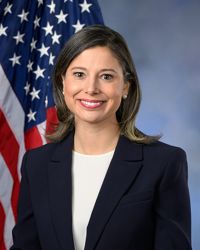
Maggie Goodlander
DDemocratNH-2 · Representative
64
/ 100
Average
Attendance100
Avg: 96
Independence6
Avg: 4
Bipartisan Tone30
Avg: 15
Ethics Record100
Avg: 99
Transparency76
Avg: 53
Accountability Score — composite of attendance, independence, bipartisan tone, ethics record & transparency.
Methodology9
Bills Sponsored
0
Enacted into Law
1
Passed a Chamber
8
In Committee
All Sponsored Bills
HR9705In Committee
To require the Secretary of the Army to issue guidance relating to the review of applications for alteration or temporary or permanent occupation or use of certain hydropower projects, and for other purposes.
The Army Secretary would be required to create clear guidelines for how the government reviews requests from companies or individuals who want to alter, temporarily use, or permanently occupy hydropower dams and related water projects. This would establish a standardized process to help speed up decisions and make the review system more transparent for dam operators, energy companies, and other parties seeking to modify or use these facilities. The measure aims to reduce confusion and delays in the approval process for changes to these important energy and water management infrastructure projects.
HR9464In Committee
To prohibit the Secretary of Agriculture from closing any research and development facility of the Forest Service.
The government would be prevented from shutting down any research and development facilities run by the Forest Service, which studies forestry, wildlife management, and natural resource issues. This would affect Forest Service scientists and researchers who work at these facilities, as well as the communities where these facilities operate. The restriction would limit the Agriculture Department's ability to reorganize or consolidate its research operations even if budget constraints or efficiency concerns arise.
HR9429In Committee
The Public Service Accountability Act
Members of Congress, their spouses, and their dependents would be banned from buying, selling, or owning individual stocks under this proposal. The goal is to prevent lawmakers from potentially profiting from stock trades based on inside information they gain through their work in government. The measure would apply the same restrictions to family members living with or financially dependent on members of Congress.
HR8613In Committee
To providing access to certain memorials on Federal property during Government shutdown, and for other purposes.
During a government shutdown, federal memorials and monuments would remain open to the public instead of being closed. This would allow visitors to access places like the Lincoln Memorial, World War II Memorial, and other historic sites on federal land even when most government operations are suspended. The bill affects tourists, veterans, and families who want to visit these important landmarks regardless of whether Congress has approved a budget.
HRES1229In Committee
Supporting the designation of April 2026 as "National Native Plant Month".
The proposal would officially recognize April 2026 as "National Native Plant Month" to raise awareness about plants that naturally grow in different regions of the United States. This designation would encourage people, schools, gardeners, and communities to learn about and plant native species, which help support local wildlife and require less water and maintenance than non-native plants. The recognition aims to promote environmental conservation and education among the general public.
HR7537In Committee
Corporate Crimes Against Health Care Act
This bill would create new criminal penalties for corporations and executives who commit fraud, negligence, or other serious violations in the health care industry, such as knowingly selling unsafe drugs or billing for services never provided. It aims to hold large health care companies and their leaders personally accountable through fines and potential prison time for misconduct that harms patients. The bill has been sent to multiple congressional committees to review how it would affect health care regulation, criminal law, and tax policy.
HR7099In Committee
PATH to Education Act
This bill would likely improve pedestrian and bicycle infrastructure or safe routes to schools, making it easier and safer for students to walk or bike to class. The legislation would probably involve funding or requirements for states and local communities to build sidewalks, bike lanes, or traffic safety improvements near schools. Students, families, and communities with limited transportation options would be the main beneficiaries of these infrastructure upgrades.
HR4594In Committee
Military Learning for Credit Act of 2025
This bill would allow military service members and veterans to earn college credit for training and skills they develop while serving in the armed forces, making it easier for them to complete degrees or certifications after leaving the military. The goal is to recognize that military training in areas like mechanics, electronics, or leadership often teaches the same skills as college courses, so service members wouldn't have to repeat that learning in civilian education. This could help veterans transition faster to civilian careers and reduce the time and cost of getting a college degree.
HR4549Passed House
Office of Rural Affairs Enhancement Act
Office of Rural Affairs Enhancement Act This bill requires the Small Business Administration (SBA) to use a competitive hiring process to select an assistant administrator for the Office of Rural Affairs. The assistant administrator must have experience (1) with rural affairs and issues relating to small businesses, and (2) providing development assistance to rural small businesses. Additionally, the bill requires the office to host webinars and regional outreach events for rural small businesses. The SBA must report annually about the office's activities.