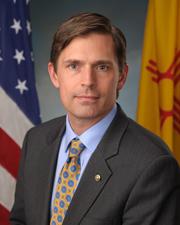
Martin Heinrich
DDemocratNM · Senator
56
/ 100
Average
Attendance96
Avg: 97
Independence18
Avg: 23
Bipartisan Tone5
Avg: 14
Ethics Record100
Avg: 100
Transparency47
Avg: 47
Accountability Score — composite of attendance, independence, bipartisan tone, ethics record & transparency.
Methodology51
Bills Sponsored
0
Enacted into Law
1
Passed a Chamber
44
In Committee
All Sponsored Bills
S3219Passed Senate
Albuquerque Indian School Act of 2026
Albuquerque Indian School Act of 2025 This bill takes three tracts of specified federal land (approximately 9.89 acres) in Albuquerque, New Mexico, into trust for the benefit of the 19 Pueblos of New Mexico. (These three tracts of land were historically part of the Albuquerque Indian School, which was an Indian boarding school until 1981.) The land is currently administered by the General Services Administration (GSA). Within 90 days of this bill's enactment and the relocation of all federal tenants, the bill requires (1) the GSA to transfer administrative jurisdiction over the land to the Department of the Interior, and (2) Interior to take the land into trust for the benefit of the 19 Pueblos. The land taken into trust must be subject to a right-of-way easement, as determined by the GSA, on the federal land located within Tract 1 for purposes of retrieving or relocating federal property from the land to another location. (Tract 1, which is approximately 3.57 acres, contains a warehouse that is 76,682 square feet.) The bill requires the land taken into trust to be used for the educational, health, cultural, business, and economic development of the 19 Pueblos. Further, the land must remain subject to existing private and municipal encumbrances, rights-of-way, restrictions, easements of record, and utility service agreements. The bill prohibits gaming on the land taken into trust.
S5675In Committee
Nutrition Continuity for Military Families Act of 2026
S5659In Committee
Literacy Improvement for Transformation Act of 2026
S5650In Committee
SPR Readiness and Long-Term Modernization Act
S4252In Committee
WIPP Economic Assistance Assurance Act of 2026
This bill would provide economic support and assistance to communities and workers affected by the Waste Isolation Pilot Plant (WIPP), a federal nuclear waste storage facility in New Mexico. The legislation aims to help local economies and residents manage the economic impacts of the facility's operations, closures, or changes in activity levels. Workers in the region and nearby communities would be the primary beneficiaries of any assistance programs created under this bill.
SRES900In Committee
A resolution expressing support for the designation of the second Monday in October 2026 as "Indigenous Peoples' Day" to celebrate and honor Indigenous Peoples and their shared history and culture.
S5460In Committee
Healthy Meals Help Kids Learn Act of 2026
S5453In Committee
Grid Resiliency Tax Credit Act
S5401In Committee
Good Energy Jobs Act of 2026
S5299In Committee
Native Language Educators in Classrooms Act
S5296In Committee
Pathways to Health Careers Act
S5350In Committee
American Energy Independence and Tax Fairness Act
S5199In Committee
GRID Savings Act of 2026
The bill would give the Federal Energy Regulatory Commission clearer authority to oversee how large industrial facilities and power consumers connect to the nation's electrical grid, and would establish standardized rules and timelines for these connections. This would affect major energy users like factories and data centers that need to hook up to the transmission system, potentially making the process more predictable and efficient. The measure aims to reduce delays and confusion when large loads seek grid connections.
S1470Reported
Continental Divide National Scenic Trail Completion Act
Continental Divide National Scenic Trail Completion Act This bill directs the Department of Agriculture (USDA) and the Department of the Interior to seek to complete the Continental Divide National Scenic Trail no later than 10 years after the enactment of this bill. USDA and Interior must establish a joint Forest Service and Bureau of Land Management trail completion team to work in coordination with the administrator of the trail to facilitate its completion and optimization. USDA must complete a comprehensive development plan for the trail within three years. USDA and Interior must also seek to enter into agreements with volunteer and nonprofit organizations to facilitate the completion and administration of the trail.
S5120In Committee
Increasing Mental Health Options Act of 2026
Increasing Mental Health Options Act of 2026 This bill provides for an additional payment for clinical psychologists under Medicare who provide services in designated health professional shortage areas. It also allows clinical psychologists to provide behavioral health services (in accordance with state law) for purposes of hospitalization services, home health services, and other services under Medicare.
S5008In Committee
Grid Connection and Congestion Management Act
The bill would require companies that manage the nation's electrical grid to offer a simpler, cheaper option for delivering electricity without requiring customers to purchase additional services or capacity guarantees. This change would make it easier for smaller power producers and renewable energy companies to get their electricity to consumers at lower costs. The measure affects electric utilities, grid operators, and energy producers across the country.
S5027In Committee
Protecting Home-Based Care for Rural Veterans Act of 2026
The Department of Veterans Affairs would be required to set fair payment rates for home and community-based services like in-home care and assisted living that it provides to veterans. This ensures that veterans can access these services without the VA underpaying providers, which could limit availability or quality of care. The bill affects veterans who need long-term care services and the healthcare providers who deliver them.
S4458In Committee
Caja del Rio Protection Act
The bill would protect a large area of land in New Mexico called Caja del Rio by creating a special management area and national conservation area, which means the land would be managed for conservation purposes rather than developed for other uses. This would affect outdoor enthusiasts, local communities, and conservation groups by preserving the landscape for activities like hiking and wildlife habitat while potentially limiting mining, drilling, and other extractive industries in the region.
S4961In Committee
PATH Act
The federal government would fund and help create training programs that prepare people for apprenticeships in construction and building trades, with a focus on reaching people from low-income areas and rural communities who are typically underrepresented in these fields. These pre-apprenticeship programs would help workers gain the skills needed to enter well-paying construction jobs while expanding opportunity in communities that have been left behind. The Labor Department would oversee the development and support of these programs across the country.
S4933In Committee
Defenders of Bataan and Corregidor Congressional Gold Medal Act
This bill would award a Congressional Gold Medal to American military members and allied soldiers who were captured by Japan during World War II in the Pacific and held as prisoners of war between December 1941 and August 1945. The medal is a prestigious honor that recognizes extraordinary service and sacrifice, and would acknowledge the suffering and resilience of these former prisoners of war. The award would apply collectively to all individuals who meet these criteria, rather than being given to specific individuals.
S4869In Committee
Indigenous Students Excel through Parity Act of 2026
The federal government would update how it distributes funding to schools serving Native American students, aiming to make the allocation process fairer and more equitable across tribal communities. This affects Native American families, students, and schools on or near reservations that rely on federal education funding. The changes would help ensure schools have adequate resources to provide quality education to their students.
S4844In Committee
PFAS Alternatives Act
The bill would speed up development of new protective clothing for firefighters that doesn't contain PFAS, which are chemicals that can build up in the body and potentially cause health problems. By funding research and removing regulatory barriers, the legislation aims to help manufacturers create safer turnout gear (the heavy protective suits firefighters wear) while maintaining the same level of fire protection. This would benefit firefighters who are exposed to these chemicals through their current gear and the companies working to develop better alternatives.
S4778In Committee
Postsecondary Student Success Act of 2026
The federal government would provide money to schools and educational organizations to develop and run programs that help struggling students stay in school and graduate. These programs would focus on students facing the biggest obstacles to success, such as those from low-income families or with other challenges, and would use teaching methods that research has proven to work. Schools receiving these grants would track whether their programs actually improve how many students enroll, continue their education, and complete their degrees.
SRES762In Committee
A resolution supporting the designation of the second Friday in June as "National Service and Conservation Corps Day".
The resolution would officially recognize the second Friday in June as "National Service and Conservation Corps Day" to honor the work of service and conservation corps programs across the country. These programs employ young adults and volunteers in environmental conservation, infrastructure improvement, and community service projects. The designation would raise awareness about these organizations and the contributions their members make to communities and natural resources.
S563Reported
Ohkay Owingeh Rio Chama Water Rights Settlement Act of 2025
Ohkay Owingeh Rio Chama Water Rights Settlement Act of 2025 This bill recognizes and settles certain water rights claims in New Mexico of the pueblo of Ohkay Owingeh. It also establishes and provides funding for a settlement trust fund. Specifically, the bill authorizes, ratifies, and confirms a specified water rights settlement agreement entered into by Ohkay Owingeh, New Mexico, and others, thus satisfying claims to water rights in the Rio Chama Stream System in New Mexico. The bill establishes and provides funding for the Ohkay Owingeh Water Rights Settlement Trust Fund. This trust fund may only be used for five specified purposes, including for activities related to water production, treatment, or delivery infrastructure. The bill also (1) specifies the water rights of the pueblo; and (2) outlines waivers, releases, and retentions of claims by the pueblo and the United States.
S564Reported
Zuni Indian Tribe Water Rights Settlement Act of 2025
Zuni Indian Tribe Water Rights Settlement Act of 2025 This bill recognizes and settles certain water rights claims in New Mexico of the pueblo of Zuni and establishes and provides funding for a related settlement trust fund. It also requires federal actions related to the Zuni Salt Lake in New Mexico. Specifically, the bill authorizes, ratifies, and confirms a specified water rights settlement agreement entered into by Zuni, New Mexico, and others, thus satisfying claims to water rights in the Zuni River Stream System in New Mexico. The bill establishes and provides funding for the Zuni Tribe Settlement Trust Fund (and specified accounts) for purposes of carrying out this bill. Additionally, the bill (1) specifies the water rights of the pueblo; and (2) outlines waivers, releases, and retentions of claims by the pueblo and the United States. The bill also withdraws certain federal land in New Mexico from mineral development. The bill reserves this federal land for the following three purposes: (1) the protection of the Zuni Salt Lake and Sanctuary, (2) the protection of the quality and quantity of the Zuni Salt Lake's water supply, and (3) the protection of any cultural resources associated with the Zuni Salt Lake and Sanctuary. The Bureau of Land Management must manage this land. The Department of the Interior must take certain land surrounding the Zuni Salt Lake into trust for the benefit of Zuni.
S4420In Committee
Physical Therapist Workforce and Patient Access Act of 2026
The bill would allow physical therapists to participate in a federal loan repayment program that helps healthcare workers pay off student loans in exchange for working in underserved areas, and it would expand Medicare coverage to include physical therapy services at rural health clinics and community health centers. These changes would make it easier for patients in rural and low-income areas to access physical therapy treatment without traveling to specialized facilities. The bill aims to address healthcare shortages in underserved communities by incentivizing physical therapists to work there and expanding the services available to Medicare patients.
S4425In Committee
No Immunity for Glyphosate Act
This bill would prevent the federal government from spending money to carry out an executive order aimed at increasing the domestic supply of phosphorus (a chemical used in fertilizers and other products) and glyphosate-based herbicides (common weedkillers). The measure would block funding for any programs or initiatives created under that executive order, affecting farmers, agricultural companies, and chemical manufacturers who might have benefited from government support for these products.
S4258In Committee
Revitalizing America’s Schoolyards Act of 2026
This bill would provide federal funding and support to help schools upgrade and improve their outdoor play areas and recreational spaces. The money could be used for things like fixing broken equipment, adding new playground structures, improving sports fields, or making schoolyards safer and more accessible for students with disabilities. The goal is to give kids better places to play and exercise during school.
S4183In Committee
Veteran Education Assistance Adjustment Act of 2026
This bill would likely adjust or expand education benefits available to military veterans, such as tuition assistance, GI Bill payments, or vocational training programs. The changes could affect how much money veterans receive for college, trade schools, or other educational programs, or make it easier for them to use existing benefits. Veterans and their families would be the primary groups impacted by any modifications to these education support programs.
S4093In Committee
Tariff Refunds for Working Families Act
This bill would create a refund or tax credit system to help working families offset the higher prices they pay when the government puts tariffs on imported goods. The goal is to reduce the financial burden that tariffs place on everyday consumers who buy products made from or containing imported materials. Families earning below certain income thresholds would likely receive direct payments or tax breaks to compensate for increased costs on groceries, clothing, and other household goods.
S4091In Committee
Habitat Connectivity on Working Lands Act of 2026
This bill would help farmers and ranchers create wildlife corridors and connected habitats on their land while continuing to farm or raise livestock, likely through grants, technical assistance, or tax incentives. The goal is to allow animals to move safely between different areas without crossing developed land, which helps maintain healthy wildlife populations and biodiversity. Farmers and conservation groups would be the main beneficiaries, as the bill aims to balance agricultural production with environmental protection.
S4021In Committee
Promoting Reduction of Emissions through Landscaping Equipment Act
This bill would likely provide tax incentives or credits to encourage people and businesses to switch from gas-powered landscaping equipment (like mowers and leaf blowers) to electric or zero-emission alternatives. The goal is to reduce air pollution and emissions by making it more affordable for landscapers, property owners, and municipalities to adopt cleaner equipment. The tax benefits would apply to both the purchase of new electric equipment and potentially the costs of converting existing operations.
S1497In Committee
Cerro de la Olla Wilderness Establishment Act
This bill would designate a specific area called Cerro de la Olla as a protected wilderness area, which means the land would be preserved in its natural state with restrictions on development, logging, and motorized vehicles. The designation would affect how the federal government manages the land and could impact local communities, outdoor enthusiasts, and any businesses with interests in the area. Wilderness designations typically protect scenic and ecological values while allowing hiking, camping, and other non-motorized recreation.
S1464In Committee
Buffalo Tract Protection Act
This bill would protect a specific area of land known as the Buffalo Tract from development or resource extraction by designating it as protected public land. The protection would preserve the area's natural features and wildlife habitat while potentially restricting activities like mining, logging, or commercial development on that land. The measure affects landowners, conservation groups, and companies interested in using the land for resource extraction or development.
SRES601Introduced
A resolution designating the week beginning February 2, 2026, as "National Tribal Colleges and Universities Week".
This resolution designates the week beginning on February 2, 2026, as National Tribal Colleges and Universities Week.
S3503In Committee
Wildlife Road Crossing Program Reauthorization Act of 2025
S3478In Committee
Indian Buffalo Management Act
This bill would establish rules for how Native American tribes manage buffalo herds on their lands, likely giving tribes more control over hunting, breeding, and conservation of these animals. The legislation aims to support tribal sovereignty and economic interests by allowing Native American communities to develop their own buffalo management programs rather than following federal regulations designed for other purposes. This would affect Native American tribes, ranchers on tribal lands, and potentially wildlife conservation efforts in the West.
S3358In Committee
Native American Seeds Act of 2025
The legislation would support Native American tribes in preserving, cultivating, and distributing traditional seeds that are culturally and historically important to their communities. It aims to help tribes maintain control over their seed heritage and promote agricultural practices that are tied to Native American traditions and food sovereignty. The bill would affect Native American communities, tribal governments, and potentially farmers and gardeners interested in traditional indigenous crop varieties.
S1476In Committee
M.H. Dutch Salmon Greater Gila Wild and Scenic River Act
This bill would designate a section of the Gila River in New Mexico as a protected "Wild and Scenic River," which means the federal government would manage it to preserve its natural character and prevent development like dams or commercial projects. The designation would affect how the river and surrounding land can be used, potentially limiting mining, logging, and other industrial activities in the area while protecting the river's ecology and recreational opportunities for visitors. Local communities, outdoor enthusiasts, and environmental groups would be the main stakeholders affected by these protections.
S1319In Committee
Pecos Watershed Protection Act
This bill would protect the Pecos River watershed and surrounding lands in New Mexico by establishing new conservation measures and potentially restricting certain development or resource extraction activities in the region. The legislation aims to preserve the area's natural resources, water quality, and ecosystems for both environmental and recreational purposes. It would affect landowners, water users, and companies involved in mining or other resource development in the Pecos watershed area.
S3195In Committee
Anti-Cash Grab Act
SRES450In Committee
A resolution expressing support for the designation of the second Monday in October 2025 as "Indigenous Peoples' Day" to celebrate and honor Indigenous Peoples and their shared history and culture.
S2564In Committee
Tribal Gaming Regulatory Compliance Act
Tribal Gaming Regulatory Compliance Act This bill allows the Ysleta del Sur Pueblo and Alabama-Coushatta tribes to conduct gaming activities on their land in Texas if certain conditions are met. Currently, the Ysleta del Sur Pueblo and Alabama-Coushatta Indian Tribes of Texas Restoration Act prohibits the tribes from conducting gaming activities on their land if those activities are prohibited by Texas law. The bill repeals those provisions and instead applies the Indian Gaming Regulatory Act (IGRA) to gaming activities on Indian lands of the tribes.
S2595In Committee
Saving the Department of Energy's Workforce Act
This bill would protect jobs and staffing levels at the Department of Energy by limiting the agency's ability to reduce its workforce through layoffs or attrition. The legislation aims to preserve the department's capacity to carry out its missions in energy research, nuclear security, and environmental cleanup by keeping experienced employees on staff. It would affect DOE workers and potentially impact the department's ability to meet its operational goals if staffing cuts were planned.
S2597In Committee
Saving the Department of the Interior's Workforce Act
This bill would protect jobs and staffing levels at the Department of the Interior, which manages federal lands, national parks, and natural resources across the country. The legislation likely aims to prevent significant workforce reductions or restructuring that could affect park rangers, scientists, and other employees who manage public lands and enforce environmental regulations. The bill has been sent to the Senate committee responsible for energy and natural resources policy for review.
S2350In Committee
Protect DREAMer Confidentiality Act of 2025
SRES211Introduced
A resolution designating May 10, 2025, as "World Migratory Bird Day".
This resolution designates May 10, 2025, as World Migratory Bird Day.
S1370In Committee
GOSAFE Act
Gas-Operated Semi-Automatic Firearms Exclusion Act or the GOSAFE Act This bill establishes a framework to regulate gas-operated semiautomatic firearms and large capacity ammunition feeding devices under federal firearms laws. First, the bill generally prohibits the import, sale, manufacture, transfer, receipt, or possession of a firearm that is or is modified to operate as a prohibited gas-operated semiautomatic firearm; a combination of parts that modify or can be assembled into a prohibited gas-operated semiautomatic firearm, or that produce an unlawful gas-operated semiautomatic cycling action; a device or combination of parts designed to materially increase the rate of fire of a semiautomatic firearm; or a firearm that is modified to materially increase the rate of fire. Second, the bill generally prohibits (1) the import, sale, manufacture, transfer, or receipt of a large capacity ammunition feeding device; or (2) the possession of a large capacity ammunition feeding device manufactured after the date of enactment. A violation is subject to criminal penalties—a fine, a prison term of up to 12 months, or both, for each violation. In addition, an individual who possesses a prohibited gas-operated semiautomatic firearm during a federal felony offense is subject to additional penalties—a fine, a mandatory minimum prison term of two years, or both. Finally, the bill allows a state or local government to use Edward Byrne Memorial Justice Assistance Grant Program funds to compensate individuals who surrender gas-operated semiautomatic firearms and large capacity ammunition feeding devices under a buy-back program.
S1374In Committee
BUMP Act
Banning Unlawful Machinegun Parts Act or the BUMP Act This bill generally prohibits the import, sale, manufacture, transfer, receipt, or possession of a device that is primarily designed, or redesigned, to increase the rate of fire when attached to a semiautomatic firearm; a device, part, or combination of parts that is designed and functions to increase the rate of fire of a firearm; or a semiautomatic firearm that has been modified to materially increase the rate of fire or to approximate the action or rate of fire of a machine gun. Additionally, the bill adds to the list of firearms subject to regulation under the National Firearms Act semiautomatic firearms that have been modified to materially increase the rate of fire or approximate the action or rate of fire of a machine gun.
SRES49Introduced
A resolution designating the week beginning February 3, 2025, as "National Tribal Colleges and Universities Week".
This resolution officially recognizes the week of February 3, 2025, as "National Tribal Colleges and Universities Week" to honor and raise awareness of the colleges and universities that serve Native American students and communities. The designation celebrates these institutions' contributions to education and cultural preservation for Native American populations. The resolution passed the Senate without opposition.