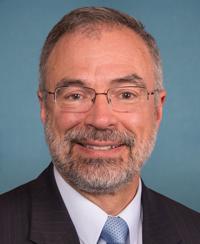
Andy Harris
RRepublicanMD-1 · Representative
49
/ 100
Below Average
Attendance97
Avg: 96
Independence13
Avg: 4
Bipartisan Tone18
Avg: 15
Ethics Record80
Avg: 99
Transparency19
Avg: 53
Accountability Score — composite of attendance, independence, bipartisan tone, ethics record & transparency.
Methodology5
Bills Sponsored
0
Enacted into Law
1
Passed a Chamber
4
In Committee
All Sponsored Bills
HR10392In Committee
To temporarily suspend the imposition of certain fuel taxes.
HR8646Passed House
Agriculture, Rural Development, Food and Drug Administration, and Related Agency Appropriations Act, 2027
Agriculture, Rural Development, Food and Drug Administration, and Related Agency Appropriations Act, 2027 This bill provides FY2027 appropriations for the Department of Agriculture (USDA), the Food and Drug Administration, and related agencies. The bill provides appropriations to USDA for agricultural programs, including the Office of the Secretary, Executive Operations, the Economic Research Service, the National Agricultural Statistics Service, the Agricultural Research Service, the National Institute of Food and Agriculture, the Animal and Plant Health Inspection Service, the Agricultural Marketing Service, and the Food Safety and Inspection Service. The bill also provides appropriations to USDA for farm production and conservation programs, including the Farm Production and Conservation Business Center, the Farm Service Agency, the Risk Management Agency, and the Natural Resources Conservation Service. The bill provides appropriations to the Federal Crop Insurance Corporation Fund and the Commodity Credit Corporation Fund. For USDA rural development programs, the bill includes appropriations for Salaries and Expenses, the Rural Housing Service, the Rural Business-Cooperative Service, and the Rural Utilities Service. The bill provides appropriations to the Food and Nutrition Service for Child Nutrition Programs; the Special Supplemental Nutrition Program for Women, Infants, and Children (WIC); the Supplemental Nutrition Assistance Program (SNAP); the Commodity Assistance Program; and Nutrition Programs Administration. The bill provides appropriations to the Foreign Agricultural Service for (1) Food for Peace Title II Grants, and (2) McGovern-Dole International Food for Education and Child Nutrition Program Grants. The bill also provides appropriations for the Food and Drug Administration, the Commodity Futures Trading Commission, and the Farm Credit Administration. Additionally, the bill sets forth requirements and restrictions for using funds provided by this and other appropriations acts. It also includes provisions that address the regulation of animal food, liability for donations of pet-related products, and payments for the construction of the Arkansas Valley Conduit.
HR4229In Committee
To amend the Impoundment Control Act of 1974 to require prior approval from Congress before the Comptroller General may pursue a civil action under such Act, and for other purposes.
This bill prohibits the Government Accountability Office (GAO) from bringing a civil action under the Impoundment Control Act of 1974 (ICA) to compel the release of appropriated funds unless Congress has enacted a concurrent resolution authorizing GAO to bring the action. The ICA generally limits the authority of the President to impound (i.e., withhold from obligation or expenditure) funds that have been appropriated by Congress and establishes related procedures. Under current law, GAO is authorized to bring a civil action to compel a federal agency to release budget authority for obligation if the budget authority is required to be released under the ICA, and the agency has not released the funds. This bill prohibits GAO from bringing such an action without prior congressional approval.
HR4121In Committee
Agriculture, Rural Development, Food and Drug Administration, and Related Agencies Appropriations Act, 2026
Agriculture, Rural Development, Food and Drug Administration, and Related Agencies Appropriations Act, 2026 This bill provides FY2026 appropriations for the Department of Agriculture (USDA), the Food and Drug Administration, and related agencies. The bill provides appropriations to USDA for agricultural programs, including the Office of the Secretary, Executive Operations, the Economic Research Service, the National Agricultural Statistics Service, the Agricultural Research Service, the National Institute of Food and Agriculture, the Animal and Plant Health Inspection Service, the Agricultural Marketing Service, and the Food Safety and Inspection Service. The bill also provides appropriations to USDA for farm production and conservation programs, including the Farm Production and Conservation Business Center, the Farm Service Agency, the Risk Management Agency, and the Natural Resources Conservation Service. The bill provides appropriations to the Federal Crop Insurance Corporation Fund and the Commodity Credit Corporation Fund. For USDA rural development programs, the bill includes appropriations for Salaries and Expenses, the Rural Housing Service, the Rural Business-Cooperative Service, and the Rural Utilities Service. The bill provides appropriations to the Food and Nutrition Service for Child Nutrition Programs; the Special Supplemental Nutrition Program for Women, Infants, and Children (WIC); the Supplemental Nutrition Assistance Program (SNAP); the Commodity Assistance Program; and Nutrition Programs Administration. The bill provides appropriations to the Foreign Agricultural Service for (1) Food for Peace Title II Grants, and (2) McGovern-Dole International Food for Education and Child Nutrition Program Grants. The bill also provides appropriations for the Food and Drug Administration, the Commodity Futures Trading Commission, and the Farm Credit Administration. Additionally, the bill sets forth requirements and restrictions for using funds provided by this and other appropriations acts.
HCONRES10In Committee
Emergency Border Control Resolution
Emergency Border Control Resolution This concurrent resolution establishes the congressional budget for the federal government for FY2025, sets forth budgetary levels for FY2026-FY2034, and provides reconciliation instructions for legislation that increases or decreases the deficit and increases the statutory debt limit by specified amounts. The resolution recommends levels and amounts for FY2025-FY2034 for federal revenues, new budget authority, budget outlays, deficits (on-budget), debt subject to limit, debt held by the public, and the major functional categories of spending. The resolution includes reconciliation instructions that direct several House committees to submit legislation that will increase or decrease the deficit and increase the statutory debt limit by specified amounts. The committees must submit the legislation to the House Budget Committee by February 27, 2025. (Under current law, reconciliation bills are considered by Congress using expedited legislative procedures that prevent a filibuster and restrict amendments in the Senate.) Finally, the resolution specifies that it is the policy of this resolution that (1) federal spending levels should be restored to the levels that existed prior to the COVID-19 pandemic, adjusted to protect current Social Security and Medicare spending and reflect existing debt service obligations; and (2) it shall be the objective of the House to reach total budget outlays of $6.057 trillion or less this fiscal year.