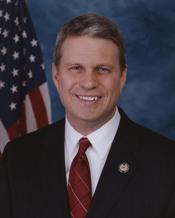
Bill Huizenga
RRepublicanMI-4 · Representative
57
/ 100
Average
Attendance98
Avg: 96
Independence2
Avg: 4
Bipartisan Tone26
Avg: 15
Ethics Record100
Avg: 99
Transparency49
Avg: 53
Accountability Score — composite of attendance, independence, bipartisan tone, ethics record & transparency.
Methodology31
Bills Sponsored
0
Enacted into Law
2
Passed a Chamber
27
In Committee
All Sponsored Bills
HR10675In Committee
BUILD with Allies Act of 2026
HR9517In Committee
UNLOCK AUKUS Act
The proposal would change rules that currently limit how the U.S. can share military equipment and technology with Australia and the United Kingdom as part of their defense partnership known as AUKUS. By relaxing these restrictions, the U.S. would be able to more easily transfer advanced defense articles and services to these allied countries without going through some of the normal approval processes. This affects defense contractors, military officials, and the three allied nations involved in coordinating their defense capabilities.
HR8793In Committee
Veterans Suicide Prevention and Care Enhancement Act of 2026
The Department of Veterans Affairs would create and maintain a public list of healthcare providers who have completed annual training on recognizing and preventing suicide among veterans. Veterans would be able to access this list to find providers with specialized suicide prevention training when seeking mental health care. This aims to connect veterans with providers who have demonstrated commitment to understanding and addressing suicide risk in this population.
HR9097In Committee
American Manufacturing Revitalization Exchange Program Act of 2026
The proposal would create an educational exchange program that allows students and workers to study manufacturing skills and techniques across different countries, helping to build a stronger workforce in the manufacturing industry. By facilitating international learning opportunities, the program aims to improve manufacturing education and training while strengthening relationships between participating nations. Workers and students interested in manufacturing careers would benefit from access to global expertise and best practices in the field.
HR9096In Committee
Deport the Terrorists Act of 2026
The proposal would allow the government to strip citizenship from people who became U.S. citizens through naturalization if they are convicted of terrorism-related crimes. This would affect immigrants who went through the naturalization process and were later found guilty of terrorism offenses, potentially making them stateless or subject to deportation. The measure is currently being reviewed by the House Judiciary Committee.
HR8283In Committee
Deterring American AI Model Theft Act of 2026
This bill would create legal penalties and enforcement tools to prevent foreign countries and companies from stealing American artificial intelligence technology and research. It likely aims to protect U.S. AI companies' competitive advantages and intellectual property by establishing consequences for theft or unauthorized access to AI models and training data. The measure would affect AI developers, tech companies, and potentially government agencies involved in monitoring and prosecuting technology theft.
HR6058In Committee
STRIDE Act
The legislation would establish a new federal program to strengthen diplomatic and development partnerships with countries in Africa, Asia, and Latin America by coordinating U.S. government agencies and increasing funding for strategic initiatives in these regions. It aims to help the U.S. compete more effectively with other major powers in building relationships and influence in developing nations. The bill affects foreign service workers, international development organizations, and countries receiving U.S. aid and diplomatic engagement.
HR8398In Committee
Guidelines for Use, Access, and Responsible Disclosure of Financial Data Act
The legislation would establish rules for how financial institutions and government agencies can use, share, and protect people's financial data, while also creating a process for security researchers to safely report data breaches without facing legal penalties. It affects banks, credit card companies, fintech firms, and anyone whose financial information is stored by these organizations. The bill aims to balance protecting consumer privacy with allowing legitimate uses of financial data and encouraging companies to fix security problems quickly.
HR8265In Committee
Empowering Shareholders Act of 2026
Without specific subjects listed, this bill likely aims to give shareholders (people who own stock in companies) more power in corporate decision-making, possibly through changes to voting rules, disclosure requirements, or how companies are governed. The exact impact on workers, investors, and companies would depend on which shareholder rights the bill strengthens, but it generally seeks to shift more control toward individual and institutional investors rather than corporate management.
HR8251In Committee
Protecting America’s Orchardists and Nursery Tree Growers Act
This bill would likely provide financial support, tax breaks, or regulatory relief to farmers who grow fruit trees and ornamental nursery plants, helping them compete with imported products and weather economic challenges. The measure appears designed to protect these agricultural businesses from market pressures and ensure the survival of American orchards and tree nurseries.
HR8139In Committee
Congressional Office for International Leadership Accountability and Reform Act of 2026
This bill would create a new office within Congress to oversee and evaluate how U.S. lawmakers and congressional staff handle international relations and diplomatic activities. The office would likely investigate whether members of Congress are following proper procedures when dealing with foreign governments and international organizations, and would report findings back to Congress. This affects how Congress conducts its foreign policy work and could influence the rules governing lawmakers' international engagement.
HR3447In Committee
Chip Security Act
Chip Security Act This bill requires covered integrated circuit products (e.g., advanced computing chips) to incorporate certain security mechanisms. Specifically, the bill directs the Department of Commerce to require any covered integrated circuit product to have chip security mechanisms that implement location verification before the product is exported, reexported, or in-country transferred to or in a foreign country. Commerce must require any person that has received a license or other authorization under the Export Control Reform Act of 2018 to export, reexport, or in-country transfer a covered product to promptly report to Commerce's Bureau of Industry and Security if the person obtains credible information that the product has been diverted away from its intended location or has been subjected to tampering. Additionally, Commerce must conduct an assessment and report to Congress on whether additional chip security mechanisms should be adopted. If Commerce determines additional security measures are necessary, then Commerce must require any covered product to include the secondary chip security mechanisms before the product is exported, reexported, or in-country transferred to or in a foreign country. The bill authorizes Commerce to take certain enforcement actions, such as verifying the ownership and location of a covered product that has been exported, reexported, or in-country transferred to or in a foreign country. Commerce must, within two years of the bill's enactment and annually thereafter for three years, assess new chip security mechanisms and report to Congress.
HR7085In Committee
To amend the Securities Exchange Act of 1934 to repeal certain disclosure requirements related to conflict minerals, and for other purposes.
This bill repeals reporting requirements related to the use of certain minerals from the Democratic Republic of the Congo (DRC) and the surrounding area by publicly traded companies. Currently, publicly traded companies must annually make disclosures if certain minerals (tin, tungsten, tantalum, or gold) are necessary to the functionality or production of a product manufactured by the company. As part of the reporting process, companies must determine if such minerals are from the DRC or the surrounding area and exercise due diligence to determine if the minerals are DRC conflict free, not found to be DRC conflict free, or are unable to be classified. ( DRC conflict free means the minerals do not finance or benefit armed groups in the DRC or an adjoining country.)
HR6555In Committee
Enhancing Bank Resolution Participation Act
This bill would allow more types of financial institutions to participate in the Federal Deposit Insurance Corporation's process for managing bank failures, potentially giving regulators more options and flexibility when a bank needs to be shut down or restructured. The change could affect how quickly and smoothly troubled banks are resolved, which impacts depositors trying to recover their money and the broader financial system's stability. Banks and financial companies would face new rules about their role in these resolution processes.
HR3190Passed House
BRAVE Burma Act
Bringing Real Accountability Via Enforcement in Burma Act or the BRAVE Burma Act This bill extends and expands a law imposing sanctions on Burma. The bill also requires the President to appoint a Special Envoy for Burma. Current law authorizes, and in some cases requires, the President to impose sanctions on certain Burmese state-owned enterprises, Burmese officials and family members, and other foreign persons. The bill extends this law through December 23, 2032. The bill also requires the President to annually determine, for the next seven years, whether the Myanma Oil and Gas Enterprise, the Myanma Economic Bank, or foreign persons operating in Burma's jet fuel sector meet the criteria for required sanctions under (1) the previously mentioned law; or (2) Executive Order 14014 , Blocking Property With Respect to the Situation in Burma . The U.S. Executive Director at the International Monetary Fund (IMF) must advocate and vote to limit any increase to Burma's IMF shareholding while Burma's State Administrative Council is in power. (The State Administrative Council is the junta installed after Burma's 2021 military coup.) The President must appoint a Special Envoy for Burma with the advice and consent of the Senate. The envoy shall have the rank and status of ambassador and be responsible for coordinating all aspects of U.S. policy regarding Burma, including sanctions, arms embargoes, and assistance to the people of Burma.
HR7036Reported
Data Driven Diplomacy Act
The legislation would require the State Department to use data analysis and research to guide diplomatic decisions and foreign policy strategies, similar to how businesses use data to make decisions. It would establish systems for collecting, analyzing, and sharing information about international issues to help diplomats and policymakers make more informed choices about how the U.S. engages with other countries. This affects how American diplomats operate abroad and could influence U.S. relationships with foreign governments.
HR7014In Committee
To provide for the designation of Burma for temporary protected status.
This bill would allow people from Burma (Myanmar) to live and work temporarily in the United States without fear of being deported back to their home country, typically because of ongoing violence, natural disasters, or other dangerous conditions there. The designation would protect Burmese nationals already in the U.S. and potentially allow some new arrivals to stay and work legally while conditions in Burma remain unsafe. The House Judiciary Committee would need to review and vote on the proposal before it could move forward.
HRES981In Committee
Expressing the sense of the House of Representatives that the United States should reduce and maintain the Federal unified budget deficit at or below 3 percent of gross domestic product.
This resolution expresses the sense of the House of Representatives that (1) Congress should adopt a fiscal target to reduce the federal budget deficit to 3% of gross domestic product or less as soon as possible and no later than the end of FY2030; and (2) after the target is achieved, Congress should continue to pursue further deficit reduction with the goal of achieving a balanced federal budget.
HR5270In Committee
Stress Testing Accountability and Transparency Act
Stress Testing Accountability and Transparency Act This bill requires the Federal Reserve Board to make public certain details concerning annual stress tests performed by the board and prohibits certain stress test practices. (Stress tests assess a financial institution’s response to a hypothetical disruptive economic event. The board sets an institution’s capital requirements or stress capital buffer based on the results.) Specifically, the bill requires the board to issue a rule that establishes the models, assumptions, and methods used by the board to perform annual stress tests on certain nonbank financial companies and large bank holding companies. The board must also issue a rule determining the stress capital buffer requirement for certain companies that have at least two results from periodic stress tests. In addition, the board must disclose annually each scenario to be used in stress testing. Further, the board is prohibited from materially changing stress test methodologies outside of the rulemaking process. The board must also ensure that stress capital buffer requirements and risk-based capital requirements do not contain capital requirements for the same risks. The board is also prohibited from performing climate-related stress tests. The Government Accountability Office must report on the effectiveness of the stress tests every three years.
HR5271In Committee
Pakistan Freedom and Accountability Act
This bill would establish new conditions and accountability measures related to U.S. relations with Pakistan, likely addressing concerns about governance, human rights, or counterterrorism cooperation. The specific provisions would be reviewed by both the Foreign Affairs and Judiciary committees to determine what actions Congress should take regarding Pakistan policy and any restrictions on aid or diplomatic engagement.
HR5233In Committee
Peace Corps Modernization Act
The legislation would update how the Peace Corps operates by modernizing its policies, recruitment practices, and support systems for volunteers serving abroad. The changes aim to make the program more attractive to younger Americans and better equipped to handle modern challenges like cybersecurity and mental health support for volunteers. The bill would affect current and prospective Peace Corps volunteers as well as the communities they serve in developing countries around the world.
HR3446Reported
FDIC Board Accountability Act
FDIC Board Accountability Act This bill revises provisions related to the board of directors of the Federal Deposit Insurance Corporation. Specifically, the bill removes the director of the Consumer Financial Protection Bureau from the board as a voting member and instead makes them a non-voting observer. In addition, the bill requires the appointment of one individual with state bank supervisory experience, and another with demonstrated primary experience working in or supervising small depository institutions. Further, the bill limits the term length of a board member to 12 years.
HR3068In Committee
To amend the Arms Export Control Act to modify certain provisions relating to AUKUS defense trade cooperation, and for other purposes.
The proposal would change rules around how the U.S. shares military technology and equipment with Australia and the United Kingdom as part of a defense partnership called AUKUS, making it easier for these countries to access certain American defense products and information. The changes would streamline the approval process for sharing advanced military capabilities between the three countries while maintaining security safeguards. This affects defense contractors, military officials, and the governments involved in this international defense cooperation.
HR3719In Committee
Restoring American Freedom Act
Based on the vague title and referral to the Foreign Affairs Committee, this bill likely addresses government policies related to international relations or foreign policy, though the specific provisions are unclear from the title alone. The bill's intent appears to be reforming or changing how the federal government conducts foreign affairs or international engagement. Without access to the bill's actual text, it's difficult to determine exactly which Americans would be affected or what concrete changes it would make.
HR2441In Committee
Improving Disclosure for Investors Act of 2025
Improving Disclosure for Investors Act of 2025 This bill requires the Securities and Exchange Commission (SEC) to propose and finalize rules to allow entities to deliver regulatory documents to investors electronically. The SEC must establish a mechanism for investors to opt out of electronic delivery and receive paper documents instead. If the SEC does not finalize rules within one year after enactment, the bill allows for electronic delivery of these documents.
HR3348In Committee
Accredited Investor Definition Review Act
Accredited Investor Definition Review Act This bill revises who may be considered an accredited investor for purposes of participating in private offerings of securities. Certain unregistered securities may only be offered to accredited investors. Specifically, the bill allows the Securities and Exchange Commission (SEC) discretion in determining what certifications, designations, or credentials investors must possess for purposes of investor protection, provided that the credentials are at least as broad as the existing regulations and include those professional licenses currently approved by the SEC. Additionally, the SEC must review these credentials every five years.
HR1701Passed House
Strategic Ports Reporting Act
Strategic Ports Reporting Act This bill requires the Department of State to conduct a study and submit a report to Congress on strategic ports. The report shall contain various elements related to such ports, including (1) a detailed list of all strategic ports owned, operated, or controlled by China or a foreign person of China; (2) a detailed list of all strategic ports owned, operated, or controlled by the United States or a U.S. person; (3) an assessment of the national security and economic interests relevant to each such port; (4) an analysis of actions by China to gain control or ownership of strategic ports; and (5) courses of action to protect strategic ports and maritime infrastructure from Chinese control. The bill also requires the State Department to develop and provide to Congress a global mapping of foreign and domestic ports of importance to the United States because of a capability to provide military, diplomatic, economic, or resource exploitation superiority.
HR3445In Committee
Bureau of Consumer Financial Protection Commission Act
Bureau of Consumer Financial Protection Commission Act This bill restructures the Consumer Financial Protection Bureau (CFPB) and creates a five-member commission to manage the bureau. Currently, the CFPB is an autonomous bureau within the Federal Reserve System and is led by a director who is appointed by the President with the advice and consent of the Senate. The bill removes the CFPB from the Federal Reserve System and reestablishes it as an independent agency. The commission established by this bill is composed of five members appointed by the President with the advice and consent of the Senate, with one member selected by the President to serve as chair of the commission. No more than three commissioners may be members of the same political party. The bill also sets forth provisions regarding terms, quorums, and vacancies. The bill specifies that the President may a remove a commissioner for inefficiency, neglect of duty, or malfeasance in office. The bill also revises the membership requirements of the Consumer Advisory Board. The board advises and consults with the CFPB regarding relevant consumer financial laws and provides information on emerging practices in the consumer financial products and services industry. Currently, at least six members must be appointed upon recommendation of the regional Federal Reserve Bank presidents. The bill removes this requirement and requires at least half of all members to have private sector experience.
HR3289In Committee
Fiscal Commission Act
This bill would create a special commission to study the federal government's long-term budget problems and recommend ways to address issues like spending, taxes, and the national debt. The commission would bring together members of Congress and outside experts to develop a plan that Congress could then vote on as a package, making it harder to pick apart individual proposals. The goal is to force a serious conversation about how to balance the budget rather than letting these difficult decisions get delayed year after year.
HR2850In Committee
Youth Sports Facilities Act of 2025
This bill would likely provide federal funding or support to help build, improve, or maintain sports facilities for young people across the country. It could affect communities, schools, and youth organizations by making it easier and more affordable to create places where kids can play sports and stay active. The bill is still in early stages and has been sent to a subcommittee for review.
HRES163In Committee
Expressing the sense of the House of Representatives that the goal of education in schools across America shall be that virtually every student in the United States achieves grade-level reading proficiency, providing them with the foundation to develop the skills and knowledge needed for success in school, work, and life.
This resolution recognizes the goal of education in U.S. schools as that of ensuring that virtually every student achieves grade-level reading proficiency. It also encourages state and local governments, including educational agencies, to collaborate with private organizations that offer proven literacy programs to (1) identify and implement effective solutions to address illiteracy, and (2) create adult literacy initiatives for adults with reading skills below an 8th grade level.