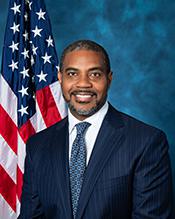
Steven Horsford
DDemocratNV-4 · Representative
51
/ 100
Average
Attendance98
Avg: 96
Independence6
Avg: 4
Bipartisan Tone14
Avg: 15
Ethics Record100
Avg: 99
Transparency19
Avg: 53
Accountability Score — composite of attendance, independence, bipartisan tone, ethics record & transparency.
Methodology16
Bills Sponsored
1
Enacted into Law
0
Passed a Chamber
15
In Committee
Bills That Became Law
All Sponsored Bills
HR9856In Committee
Prediction Markets Are Gambling Act
The legislation would classify prediction markets—platforms where people bet money on the outcomes of future events like elections, sports, or economic indicators—as gambling rather than allowing them to operate under current financial regulations. This would subject these markets to gambling laws and oversight, potentially restricting their operation or requiring special licensing, which would affect both the companies running these platforms and the millions of people who currently participate in them.
HR9352In Committee
AI-Related Job Impacts Clarity Act
The government would require companies and agencies to report on how artificial intelligence is affecting jobs, including which positions are being eliminated, created, or changed. These reports would help lawmakers and workers understand the real-world impact of AI technology on employment across different industries. The information gathered would inform future decisions about worker training programs, job protections, and economic policies.
HR8816In Committee
Tax Cut for Striking Workers Act of 2026
Workers who receive financial assistance from their unions during strikes would no longer have to pay federal income taxes on those benefits. Currently, strike pay is treated as taxable income, which can increase a worker's tax bill during periods when they're not earning regular wages. This change would apply to union members across various industries who rely on strike benefits to cover living expenses while engaged in labor disputes.
HR7736In Committee
RELIEF Act
The RELIEF Act addresses international trade and finance issues, likely aimed at providing economic relief related to tariffs, trade agreements, or financial obligations with other countries. Without more specific details about the bill's provisions, the exact impact would depend on whether it reduces trade barriers, modifies existing trade deals, or adjusts how the U.S. handles international financial commitments. The measure would primarily affect American businesses engaged in international trade, consumers who buy imported goods, and potentially workers in industries affected by trade policy changes.
HR7615In Committee
RELIEF Act
The RELIEF Act addresses foreign trade and international finance issues, likely aiming to provide relief or reforms related to tariffs, trade agreements, or international economic policies. Without more specific details about the bill's provisions, it appears designed to affect American businesses engaged in international trade, consumers who buy imported goods, and potentially workers in trade-sensitive industries. The bill is currently under review by the House Committee on Ways and Means, which handles tax and trade legislation.
HR7577In Committee
TIP Improvement Act of 2026
The bill would change how tips are taxed for workers in the service industry, likely by adjusting tax rates, reporting requirements, or how tips are counted toward income. The changes would affect restaurant servers, bartenders, hotel staff, and other tipped employees, as well as the businesses that employ them. The bill is currently being reviewed by two congressional committees to determine which parts fall under their areas of responsibility.
HR6796In Committee
Military CARE Act
The Military CARE Act would establish or expand healthcare and support services for active-duty military members, veterans, and their families. Based on the bill's focus on armed forces welfare, it likely aims to improve access to medical treatment, mental health services, or other benefits for people who serve or have served in the military. The House Committee on Armed Services is currently reviewing the proposal.
HR6689In Committee
ETHICAL Procurement Act
HR6032In Committee
Headstones for Honor Act
HR5951In Committee
No Nuclear Testing Without Approval Act
HR4674In Committee
Baby Hygiene Tax Relief Act
Baby Hygiene Tax Relief Act This bill prohibits the imposition of duties (i.e., tariffs) on specified baby hygiene items (e.g., diapers, baby wipes, and baby changing tables) pursuant to certain presidential powers. Specifically, the bill prohibits the President from exercising authorities under the International Emergency Economic Powers Act (IEEPA) to impose duties on specified baby hygiene items entering the United States. (IEEPA provides the President with broad authority to regulate various economic transactions following a declaration of a national emergency.) Further, the President must terminate the duties on these items that were imposed pursuant to IEEPA and are in effect as of the date of the bill's enactment. The bill also prohibits the President from using any other authorities to impose duties on these items that are substantially similar to the duties imposed pursuant to IEEPA.
HR618Enacted
Apex Area Technical Corrections Act
Apex Area Technical Corrections Act This act directs the Department of the Interior to grant certain rights-of-way related to the Apex Project (an industrial park) to Clark County in Nevada, the city of North Las Vegas, and the Apex Industrial Park Owners Association. Thus, the act expedites the federal permitting process for expanding the industrial park's infrastructure. Specifically, the act directs Interior to grant utility and transportation rights-of-way to the city of North Las Vegas and the Apex Industrial Park Owners Association for the connection of existing electric power, water, natural gas, telephone, railroad, and highway facilities to lands within the Apex Project site. (Interior is already directed to grant such rights-of-way to Clark County.) Interior must also grant to the county, the city, and association such rights-of-way on public lands as may be necessary to support the development of the industrial park as a heavy use industrial zone. (Currently, Interior may grant the rights-of-way to the county.) The act also requires that the withdrawal of the transferred lands within the Apex Site from all forms of entry and appropriation under the public land laws (e.g., leasing the land for minerals) continue in perpetuity. In the case of the sale of mineral materials resulting from grading or other activities on the surface of a land parcel within the Apex Project site, the sales are exempt from quantity and term limitations placed on noncompetitive sales.
HR4103In Committee
Break the Cycle of Violence Act
Break the Cycle of Violence Act This bill establishes federal grant programs and related entities to support violence intervention initiatives. Specifically, the bill directs the Department of Health and Human Services (HHS) to award grants for coordinated community violence intervention initiatives in communities disproportionately impacted by homicides and community violence. HHS must also establish several related entities, including an Office of Community Violence Intervention to administer programs and activities related to violence intervention; the Community Violence Intervention Advisory Committee to advise and assist the office and HHS; and the National Community Violence Response Center to provide training and technical assistance, coordinate research, and develop data collection policies. Additionally, the bill directs the Department of Labor to award grants for job training and workforce programs in communities disproportionately affected by gun violence to connect youth ages 16 to 24 to in-demand occupations.
HR3879In Committee
Broadcast VOICES Act
Broadcast Varied Ownership Incentives for Community Expanded Service Act or the Broadcast VOICES Act This bill establishes tax incentives for certain transactions that facilitate the ownership and management of broadcast radio stations by socially disadvantaged individuals and imposes related reporting requirements. Under the bill, a socially disadvantaged individual is a woman or an individual who has been subjected to racial or ethnic prejudice or cultural bias because of their membership in a group. (A similar tax incentive, known as the Minority Tax Certificate Program, was in effect from 1978 to 1995.) Specifically, the bill permits individuals and entities engaged in the qualifying sale of a radio station to elect nonrecognition of the gain or loss resulting from the sale. A qualifying sale is (1) a sale of an interest in a station that results in or preserves ownership of the station by socially disadvantaged individuals, or (2) a sale of some or all of an interest in a station that is owned by socially disadvantaged individuals by an individual or entity that contributed capital in exchange for the interest (e.g., an investor that contributed startup capital). Such sales must also meet other requirements, including a cap on the value of the sale. The bill also establishes a tax credit for contributions of radio stations for the training of socially disadvantaged individuals in station management and operations. Finally, the bill requires the Federal Communications Commission to report to Congress with recommendations for increasing ownership of radio stations by socially disadvantaged individuals.
HR2553In Committee
Capping Prescription Costs Act of 2025
This bill would limit how much Americans have to pay out of pocket for prescription medications by setting a cap on annual drug costs. The measure would affect patients who buy medications, insurance companies that cover prescriptions, and pharmaceutical manufacturers, with the goal of making medicines more affordable for people struggling with high drug prices.
HR1314In Committee
TIPS Act