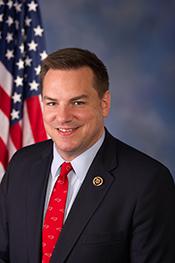
Richard Hudson
RRepublicanNC-9 · Representative
54
/ 100
Average
Attendance99
Avg: 96
Independence2
Avg: 4
Bipartisan Tone9
Avg: 15
Ethics Record100
Avg: 99
Transparency47
Avg: 53
Accountability Score — composite of attendance, independence, bipartisan tone, ethics record & transparency.
Methodology9
Bills Sponsored
1
Enacted into Law
2
Passed a Chamber
6
In Committee
Bills That Became Law
All Sponsored Bills
HR10159Passed House
To authorize the Secretary of the Army to convey to the State of North Carolina a certain parcel of real property located at Fort Bragg, North Carolina, on which the State shall construct a veterans’ State home, and for other purposes.
This bill authorizes the Department of the Army to transfer, without compensation or other consideration, all right, title, and interest to a specified 20-acre parcel of land on Fort Bragg to the State of North Carolina for the purpose of constructing a state home under the jurisdiction of the North Carolina Department of Military and Veterans Affairs. (A state home is a home established by a state for veterans who are disabled by age, disease, or otherwise and are incapable of earning a living because of such disability. The term also includes a home that furnishes nursing home care for veterans.) Specifically, the bill authorizes the conveyance of a 20-acre parcel of land situated on the Fort Bragg Training Area in Harnett County, North Carolina, that is commonly referred to as Parcel 3B. The State of North Carolina must cover all costs to carry out the conveyance. If the Department of the Army determines the property is not being used for activities related to a state home, all right, title, and interest in the property may revert to the United States.
HR2196Enacted
National Emergency Medical Services Memorial Extension Act
National Emergency Medical Services Memorial Extension Act This bill reauthorizes the National Emergency Medical Services Memorial Foundation to establish in Washington, DC, a monument to commemorate the commitment and service represented by emergency medical services. This authorization expires seven years after enactment of the bill.
HR1004In Committee
Love Lives On Act of 2025
Love Lives On Act of 2025 This bill extends entitlement for various benefit programs and services for surviving spouses of deceased members of the Armed Forces or veterans. The bill provides that the remarriage of a surviving spouse must not bar the furnishing of dependency and indemnity compensation or special pension benefits to such spouse. Additionally, the Department of Defense may not terminate the payment of an annuity for a surviving spouse under the Survivor Benefit Plan solely because the surviving spouse remarries. The bill also expands the definition of a dependent under TRICARE to include a remarried widow or widower whose subsequent marriage has ended due to death, divorce, or annulment.
HR6505In Committee
Next Generation 9–1–1 Act
Next Generation 9–1–1 Act This bill establishes a grant program to support implementation of next generation 9-1-1 (NG9-1-1) systems by state, territorial, and tribal governments and requires other related activities. NG9-1-1 means a secure, interoperable, Internet Protocol-based (IP-based) system for receiving 9-1-1 requests for emergency assistance. (IP-based 9-1-1 systems have capabilities that legacy telephone systems do not, including enhanced location-finding and the ability to receive text and multimedia messages.) Under the bill, the National Telecommunications and Information Administration (NTIA) must provide grants to state, territorial, and tribal governments (and entities established by those governments) to support the implementation and maintenance of NG9-1-1 systems. Grant funds may also be used for public outreach on NG9-1-1, implementation of cybersecurity measures, and, subject to certain limits, training and administrative costs. Entities applying for grants must submit a plan for NG9-1-1 coordination and implementation that ensures interoperability and reliability, incorporates cybersecurity tools, and meets other requirements related to technology and procurement. Applicants must also certify that they have established, or will establish within a specified time frame, a sustainable funding mechanism to support NG9-1-1 and effective cybersecurity resources. The NTIA must advise applicants on the preparation of implementation plans and provide technical assistance to grant recipients. Further, the NTIA must establish (1) an advisory board to provide recommendations with respect to the grant program and other topics related to NG9-1-1; and (2) a cybersecurity center to coordinate with state, local, and regional governments on the sharing of cybersecurity information related to NG9-1-1.
HR3668Passed House
Improving Interagency Coordination for Pipeline Reviews Act
Improving Interagency Coordination for Pipeline Reviews Act This bill expedites the environmental review of certain natural gas pipeline projects or liquefied natural gas (LNG) import or export terminals for authorizations under the Natural Gas Act. Specifically, the bill makes the Federal Energy Regulatory Commission (FERC) the only lead agency for the purpose of coordinating the environmental review of such projects under the National Environmental Policy Act of 1969 (NEPA). Thus, agencies involved in the environmental review process must defer to FERC's approved scope for a NEPA review. FERC must invite certain federal, state, local, or tribal governmental agencies to participate in the review process for an authorization and designate the applicable governments as participating agencies by deadlines established by the bill. In addition, FERC must consult with the Transportation Security Administration regarding various pipeline security measures. The bill prohibits FERC from establishing a deadline for authorizing a project that is more than 90 days after the completion of the NEPA review. It also requires concurrent reviews when multiple federal or state agencies are involved. Applicants for projects do not have to obtain a water quality certification from states under Section 401 of the Clean Water Act. FERC must coordinate its NEPA review with states where a potential discharge into navigable waters may occur. If a federal or state agency requires an applicant for a pipeline authorization to submit data, the agency must consider any such data gathered by aerial or other remote means that is submitted.
HR38In Committee
Constitutional Concealed Carry Reciprocity Act of 2025
Constitutional Concealed Carry Reciprocity Act This bill establishes a federal statutory framework to regulate the carry or possession of concealed firearms across state lines. Specifically, an individual who is eligible to carry a concealed firearm in one state may carry or possess a concealed handgun (other than a machine gun or destructive device) in another state that allows its residents to carry concealed firearms. It sets forth requirements for lawful concealed carry across state lines. The bill preempts most state and local laws related to concealed carry and establishes a private right of action for a person adversely affected by interference with a concealed-carry right established by this bill.
HR5269In Committee
RESULTS Act
Reforming and Enhancing Sustainable Updates to Laboratory Testing Services Act of 2025 or the RESULTS Act This bill requires the use of particular data from the private sector to inform Medicare payment rates for certain widely available laboratory tests. Specifically, the Centers for Medicare & Medicaid Services (CMS) must contract with an entity that maintains a database of claims data for clinical diagnostic laboratory tests that (1) are not advanced diagnostic tests, and (2) were furnished by more than 100 providers and suppliers of such services over a specified six-month period (i.e., widely available tests). The database must meet specified requirements, such as having data that is representative of the entire country and from more than 50 private payors and claims administrators. The contracted entity must be a nonprofit entity that is not affiliated with any government agency, any insurance issuer or provider, or any other organization in the health care sector. Beginning January 1, 2028, the CMS must use the information obtained from the database to inform Medicare payment rates for these widely available laboratory tests. The bill additionally specifies processes for determining payment rates for laboratory tests that are not advanced diagnostic tests, are not widely available, and lack adequate claims data. The CMS must use certain existing processes to set appropriate rates. The bill also delays scheduled payment reductions for laboratory tests until 2028 and allows for judicial and administrative review of payment rates.
HR3443In Committee
When Minutes Count for Emergency Medical Patients Act
This bill aims to improve emergency medical response times by addressing delays that can occur when patients need immediate care. The legislation likely focuses on removing barriers that slow down emergency services, such as insurance verification requirements or other administrative steps that can delay treatment in life-threatening situations. The bill would affect emergency room staff, ambulance services, and patients who need urgent medical attention.
HR860In Committee
Congressional Award Program Reauthorization Act
Congressional Award Program Reauthorization Act This bill reauthorizes through FY2028 the board that administers the Congressional Award Program, which promotes and recognizes service, initiative, and achievement in America's youth. The reauthorization is effective as if enacted on October 1, 2023. The bill also removes a requirement for program medals to consist of gold-plate over bronze, rhodium over bronze, or bronze.