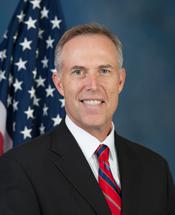
Jared Huffman
DDemocratCA-2 · Representative
62
/ 100
Average
Attendance97
Avg: 96
Independence2
Avg: 4
Bipartisan Tone13
Avg: 15
Ethics Record100
Avg: 99
Transparency100
Avg: 53
Accountability Score — composite of attendance, independence, bipartisan tone, ethics record & transparency.
Methodology20
Bills Sponsored
0
Enacted into Law
0
Passed a Chamber
20
In Committee
All Sponsored Bills
HR10674In Committee
National Institutes of Clean Energy Act of 2026
HR10623In Committee
To reaffirm the applicability of the Indian Reorganization Act to the Lytton Rancheria of California, and for other purposes.
HR7254In Committee
To amend the National Trails System Act to direct the Secretary of the Interior to conduct a study on the feasibility of designating the Bay Area Ridge National Scenic Trail, and for other purposes.
The federal government would study whether a hiking trail system around the San Francisco Bay Area could be officially designated as a National Scenic Trail, which would bring it under federal protection and potentially increase funding and maintenance. The study would examine the trail's current condition, public support, and ability to meet national standards for scenic trails. This designation would make the Bay Area Ridge Trail more prominent and help preserve it for hikers and outdoor enthusiasts.
HR10073In Committee
Critically Endangered Animals Conservation Act of 2026
HRES1415In Committee
Celebrating the country's history of church-state separation and recognizing the 250th anniversary of the founding of the United States.
This resolution celebrates America's 250th anniversary and honors the historical separation between government and religion that has been a core principle since the nation's founding. The measure recognizes how this separation has protected both religious freedom and government neutrality throughout U.S. history. It has been referred to the House Committee on Oversight and Government Reform for consideration.
HR8514In Committee
Active Transportation for Public Lands Act
The legislation would fund and support walking and biking infrastructure on federal public lands, making it easier for visitors to access parks and recreation areas without cars. It would provide grants and resources to build trails, bike paths, and pedestrian facilities on lands managed by agencies like the National Park Service and Forest Service. This would benefit outdoor enthusiasts, local communities near public lands, and people looking for car-free ways to enjoy nature.
HCONRES88In Committee
Directing the President, pursuant to section 5(c) of the War Powers Resolution, to remove United States Armed Forces from hostilities with Iran.
This concurrent resolution directs the President to remove U.S. Armed Forces from hostilities against Iran or any part of its government or military unless a declaration of war or authorization to use military force for such purpose has been enacted. The resolution specifies that it shall not be construed to prevent the United States from defending itself, its Armed Forces, its diplomatic facilities, or allied states from imminent attack.
HCONRES85In Committee
Celebrating the 50th anniversary of the Magnuson-Stevens Fishery Conservation and Management Act on April 13, 2026, and recognizing its significant impact on the sustainable and profitable management of the Nation's fishery resources.
This is a commemorative resolution marking the 50th anniversary of a major law that governs how the U.S. manages its ocean fisheries, recognizing the law's role in helping keep fish populations healthy while allowing commercial and recreational fishing to remain profitable. The resolution honors the law's impact on balancing environmental protection with the fishing industry's economic interests. It has no direct policy changes but serves to acknowledge the importance of this foundational fisheries management law.
HR6090In Committee
FRESHER Act of 2025
Focused Reduction of Effluence and Stormwater runoff through Hydrofracking Environmental Regulation Act of 2025 or the FRESHER Act of 2025 This bill addresses stormwater runoff from mining, oil, or gas operations. Specifically, it eliminates a prohibition on the Environmental Protection Agency from requiring a permit under the National Pollutant Discharge Elimination System for discharges of certain collected, uncontaminated stormwater runoff from mining operations or oil and gas operations. In addition, the Department of the Interior must study stormwater runoff associated with oil or gas operations, including an analysis of (1) measurable contamination, (2) groundwater resources, and (3) the susceptibility of aquifers to contamination from stormwater runoff associated with the operations.
HR4595In Committee
Small and Homestead Independent Producers Act of 2025
Small and independent farmers and producers would gain protections from certain federal regulations and enforcement actions, with the bill addressing how government agencies oversee agricultural operations and small-scale food production. The legislation affects farmers, homestead operators, and small food producers by potentially reducing compliance burdens and changing how law enforcement handles violations in agriculture. The bill has been sent to multiple congressional committees for review, including those handling agriculture, energy, and oversight matters.
HR4180In Committee
Canyon’s Law
I don't have access to the specific details of Canyon's Law beyond its title and referral information. To write an accurate summary of what this bill would actually do, I would need to review its full text or legislative summary. I'd recommend checking Congress.gov or your representative's website for the complete bill details so I can provide you with an accurate explanation of its concrete effects.
HR3444In Committee
Tribal Self-Determination and Co-Management in Forestry Act of 2025
HR3188In Committee
Migratory Bird Protection Act of 2025
This bill would strengthen protections for migratory birds by establishing or updating rules about how companies and individuals can interact with bird populations and their habitats. It likely affects hunters, energy companies, developers, and environmental groups by setting standards for activities like wind farm construction, pesticide use, and hunting seasons that could impact bird survival. The goal is to prevent bird species from declining or disappearing while balancing the needs of industries and recreational activities that depend on or affect these birds.
HR3067In Committee
Arctic Refuge Protection Act
This bill would permanently protect a large area of Alaska's Arctic National Wildlife Refuge from oil and gas drilling and other development. The legislation aims to preserve the refuge's wilderness, wildlife habitats, and ecosystems for conservation purposes, which would affect oil companies' ability to extract resources in the region while benefiting environmental protection and wildlife conservation advocates.
HR2849In Committee
West Coast Ocean Protection Act of 2025
This bill would restrict or prohibit oil and gas drilling and related activities in federal waters off the coasts of California, Oregon, and Washington. The legislation would affect energy companies that operate offshore drilling operations and could influence energy prices and jobs in the oil and gas industry, while supporters argue it would protect marine ecosystems and coastal communities from environmental risks.
HR2848In Committee
Stop Arctic Ocean Drilling Act of 2025
This bill would ban oil and gas drilling in the Arctic Ocean, preventing companies from exploring or extracting fossil fuels in those waters. The measure would affect energy companies that operate in the Arctic region and could influence U.S. energy production and climate policy, while supporters argue it protects the sensitive Arctic environment from potential spills and damage.
HR2598In Committee
IDEA Full Funding Act
The federal government currently pays only a portion of the costs for special education services that schools are required to provide under the Individuals with Disabilities Education Act (IDEA), leaving states and local school districts to cover the remaining expenses. This bill would increase federal funding to fully cover the costs of special education, reducing the financial burden on schools and potentially allowing them to spend more resources on other educational needs. The change would affect students with disabilities, schools, and state education budgets across the country.
HR1871In Committee
Water Conservation Rebate Tax Parity Act
The bill would allow homeowners and businesses to claim tax credits or deductions for money they spend on water-saving upgrades like efficient toilets, showerheads, and irrigation systems, similar to existing tax breaks for energy-efficient improvements. This would make water conservation financially more attractive by reducing the upfront cost of installing these water-saving devices. The change would primarily benefit property owners looking to lower their water usage and bills.
HR1124In Committee
Help Our Kelp Act of 2025
This bill would likely establish or expand protections and management programs for kelp forests and kelp ecosystems on public lands and in coastal waters. The legislation probably aims to support kelp restoration, research, or conservation efforts that benefit marine environments and the communities that depend on them, such as fishing industries and coastal residents. Kelp forests provide important habitat for fish and other marine life while also helping absorb carbon dioxide from the atmosphere.
HR582In Committee
Community Protection and Wildfire Resilience Act
Community Protection and Wildfire Resilience Act This bill establishes a wildfire resilience grant program within the U.S. Fire Administration (USFA), expands an existing U.S. Forest Service (USFS) wildfire risk reduction grant program, and requires the USFA and Government Accountability Office (GAO) to produce various reports and resources relating to wildfire resilience. Specifically, the bill requires the USFA to award grants to state or local governments, tribes, volunteer fire departments, or groups thereof for developing a community protection and wildfire resilience plan or carrying out projects that support strategies described in such a plan. Also, under current law, the USFS’s Community Wildfire Defense Grant program provides grants to at-risk communities for implementing wildfire risk reduction, including reducing hazardous fuels and restoring fire-adapted ecosystems, but excluding activities such as construction and home hardening (e.g., roof upgrades, fire-resistant siding). The bill expands the eligible project types to include construction or modification of a structure to increase fire-resistance and modification of a structure or the adjacent area to reduce exposure to contact with wildfire. Additionally, the bill requires the USFA to develop and publish a map depicting communities at risk from wildfire. The USFA must also provide a report evaluating and ensuring public entities have radio communication capabilities adequate for wildfire management. The bill also requires the GAO to publish a study on potential certification for community protection and wildfire resilience plans, and a report assessing impediments for federal wildfire resilience programs.