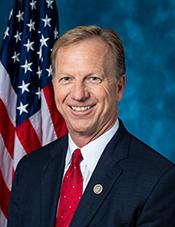
Kevin Hern
RRepublicanOK-1 · Representative
50
/ 100
Average
Attendance97
Avg: 96
Independence3
Avg: 4
Bipartisan Tone15
Avg: 15
Ethics Record100
Avg: 99
Transparency17
Avg: 53
Accountability Score — composite of attendance, independence, bipartisan tone, ethics record & transparency.
Methodology16
Bills Sponsored
0
Enacted into Law
4
Passed a Chamber
12
In Committee
All Sponsored Bills
HR5267In Committee
American Franchise Act
The American Franchise Act would establish new labor rules specifically for franchise businesses, likely addressing how franchise owners and workers are classified and what employment protections apply to them. This could affect millions of workers at franchised restaurants, retail stores, and service businesses, as well as the franchise companies and individual franchise owners who operate them. The bill aims to clarify the relationship between corporate franchisors, individual franchise operators, and their employees.
HR9468In Committee
STAR Act
The proposal would change how Medicare pays long-term care hospitals, which treat patients who need extended hospital stays for serious conditions like recovery from surgery or managing chronic illnesses. These payment adjustments could affect both the hospitals that provide this care and the Medicare beneficiaries who rely on these facilities for treatment. The bill is currently under review by the House Committee on Ways and Means.
HR9060In Committee
Precious Metals Parity Act
Investment companies that focus on precious metals like gold and silver would be allowed to count income from these assets as "qualifying income" under tax law, which could help them maintain their special tax status. Currently, these companies face stricter rules that might disqualify them if too much of their income comes from precious metals rather than traditional stocks and bonds. This change would make it easier for precious metals investment funds to operate while keeping their favorable tax treatment.
HR1069Passed House
PROTECT Our Kids Act
Promoting Responsible Oversight To Eliminate Communist Teachings for Our Kids Act or the PROTECT Our Kids Act This bill prohibits federal education funding for any elementary or secondary school that directly or indirectly receives support from the Chinese government. Specifically, the bill prohibits such funding for any school that (1) has a partnership in effect with a cultural or language institute funded by the Chinese government, including a Confucius Institute; (2) operates a learning center supported by the Chinese government (commonly referred to as a Confucius Classroom); or (3) receives support from an individual or entity acting on behalf of the Chinese government, including support in the form of teaching materials, personnel, funds, or other resources. However, the Department of Education (ED) may issue a waiver of the prohibition if a school has an existing contract with one of these entities and the school demonstrates that the contract is for the benefit of the school and promotes the security, stability, and economy of the United States. The bill directs ED to provide notice of the bill's requirements to schools, as well as guidance for achieving compliance with the requirements.
HR5463In Committee
Choice Arrangement
The bill appears to address tax policy, though the vague title makes the specific provisions unclear. Based on its referral to the House Ways and Means Committee, it likely involves changes to how taxes are calculated, collected, or structured for individuals or businesses. Without more detailed information about the bill's actual language, the exact impact on taxpayers cannot be determined.
HR5142In Committee
Home Health Stabilization Act of 2025
The bill would address financial challenges facing home health care agencies that provide medical services to patients in their homes by adjusting how Medicare and insurance programs pay for these services. It aims to help home health providers remain stable and continue operating while ensuring patients can still access care at home rather than in hospitals or nursing facilities. The proposal has been sent to two congressional committees that handle healthcare policy and budget matters for further review.
HRES600Passed House
Electing Members to certain standing committees of the House of Representatives.
The House of Representatives voted to fill vacant seats on several of its standing committees, which are the permanent groups that handle specific areas like taxes, defense, healthcare, and other policy areas. These committees are where most legislative work happens before bills go to the full House for a vote. The motion to reconsider was set aside, meaning the committee assignments are now final.
HR3512In Committee
Tackling Predatory Litigation Funding Act
This bill would change tax rules around litigation funding—money that outside investors provide to help people or companies pay for lawsuits. The legislation aims to prevent what supporters see as predatory practices where funders take excessive cuts of lawsuit settlements, potentially by making certain funding arrangements less tax-advantaged or more transparent. The changes would affect plaintiffs, defendants, and the investment companies that finance legal cases.
HR3288In Committee
Access to Prescription Digital Therapeutics Act of 2025
Access to Prescription Digital Therapeutics Act of 2025 This bill provides for Medicare and Medicaid coverage of prescription digital therapeutics (i.e., software applications that are used to prevent, manage, or treat medical conditions). The Centers for Medicare & Medicaid Services must establish a Medicare payment methodology for payments to manufacturers that takes into account certain factors (e.g., ongoing use); manufacturers must report specified information about private payors, subject to civil penalties.
HR2436In Committee
To amend the Internal Revenue Code of 1986 to treat distributions from health savings accounts for funeral expenses of the account beneficiary as qualified distributions.
This bill would allow people to withdraw money from their health savings accounts (HSAs) to pay for funeral and burial expenses without facing tax penalties, treating these withdrawals the same way the tax code currently treats medical expenses. Currently, HSA withdrawals for non-medical purposes are taxed as regular income plus a 20% penalty, so this change would give account holders more flexibility in how they use these tax-advantaged savings. The change would primarily benefit HSA owners and their families by reducing the financial burden of funeral costs.
HR1924In Committee
Securing Access to Care for Seniors in Critical Condition Act of 2025
Securing Access to Care for Seniors in Critical Condition Act of 2025 This bill exempts discharges from long-term care hospitals (LTCHs) from the Medicare site-neutral payment rate if the discharge meets specified high acuity criteria and occurs on or after October 1, 2026. (The site-neutral rate is the lower of Medicare’s acute care hospital payment rate under the inpatient prospective payment system or 100% of the cost of the stay. LTCH stays that do not qualify for the specialized LTCH payment rate under Medicare are instead paid at the site-neutral rate.)
HR1867In Committee
To amend title XVIII of the Social Security Act to remove in-person requirements under Medicare for mental health services furnished through telehealth and telecommunications technology.
The bill would allow Medicare to cover mental health services delivered remotely through video calls or other telecommunications technology without requiring patients to have an in-person visit first, making it easier for seniors and people with disabilities to access counseling and psychiatric care from home. Currently, Medicare has restrictions that often require an initial face-to-face appointment before telehealth mental health services can begin, which can be a barrier for people in rural areas or those with mobility challenges. This change would expand access to mental health treatment for the roughly 65 million Medicare beneficiaries across the country.
HR1525In Committee
Protecting Life from Chemical Abortions Act
Protecting Life from Chemical Abortions Act This bill nullifies certain changes made by the Food and Drug Administration (FDA) to dispensing requirements for mifepristone. (Mifepristone is a drug that is approved to end pregnancies through 10 weeks gestation when used in conjunction with the drug misoprostol. The procedure is often referred to as medication abortion or the abortion pill.) The FDA regulates mifepristone through the Mifepristone Risk Evaluation and Mitigation Strategy (REMS) program. The program requires health care providers to comply with certain requirements in order to prescribe or dispense mifepristone to end a pregnancy; the program previously included an in-person dispensing requirement that required mifepristone to be directly dispensed to patients in clinics, medical offices, or hospitals. During the COVID-19 public health emergency, the FDA stopped enforcing the in-person dispensing requirement, which allowed mail-order pharmacies to fill and dispense mifepristone prescriptions. In January 2023, the FDA modified program requirements so as to (1) remove the in-person dispensing requirement, and (2) require pharmacies to be program-certified in order to dispense mifepristone. The modifications allow certified retail pharmacies to dispense mifepristone pursuant to prescriptions that are written by certified prescribers. The bill nullifies the January 2023 changes and prohibits the FDA from (1) exercising any enforcement discretion with respect to program requirements, or (2) reducing program protections until every state submits certain data regarding abortions to the Centers for Disease Control and Prevention. The bill also generally prohibits the declaration of a public health emergency with respect to abortions.
HR1003In Committee
Enhancing Energy Recovery Act
The proposal would create tax incentives for companies that invest in energy recovery systems—equipment that captures and reuses waste heat and energy from industrial processes. This would reduce the upfront costs for businesses to adopt these technologies, potentially lowering their operating expenses while decreasing energy consumption and pollution. The changes would primarily affect manufacturing companies and industrial facilities looking to upgrade their operations.
HRES43Passed House
Providing for the attendance of the House at the Inaugural Ceremonies of the President and Vice President of the United States.
This resolution provides for the House to attend the inaugural ceremonies of the President and Vice President of the United States on January 20, 2025, and, thereafter, for the House to stand adjourned until 12:00 p.m. (noon) on January 21, 2025.
HRES42Passed House
Electing Members to certain standing committees of the House of Representatives.
This resolution elects Members to the Committees on Agriculture; Foreign Affairs; Natural Resources; and Science, Space, and Technology.