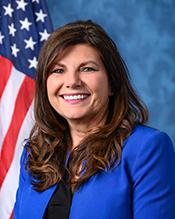
Diana Harshbarger
RRepublicanTN-1 · Representative
57
/ 100
Average
Attendance99
Avg: 96
Independence8
Avg: 4
Bipartisan Tone20
Avg: 15
Ethics Record100
Avg: 99
Transparency47
Avg: 53
Accountability Score — composite of attendance, independence, bipartisan tone, ethics record & transparency.
Methodology30
Bills Sponsored
0
Enacted into Law
2
Passed a Chamber
26
In Committee
All Sponsored Bills
HR2713In Committee
MAIN Event Ticketing Act
Mitigating Automated Internet Networks for Event Ticketing Act or the MAIN Event Ticketing Act This bill expands measures to protect the security and integrity of online ticket sales. Specifically, the bill prohibits the use of applications that perform automated tasks to purchase event tickets from online ticket sellers in circumvention of the seller's posted ticket purchasing order rules. This includes using software applications that circumvent access control systems or security measures. In addition, online ticket sellers must establish, implement, and maintain reasonable administrative, technical, and physical safeguards to protect the security, confidentiality, integrity, or availability of the seller's website or service. Further, online ticket sellers must report known incidents of circumvention to the Federal Trade Commission and take reasonable steps to address any such incidents. The bill establishes civil penalties for violations of the provisions of this bill (and related prohibitions under current law) and authorizes the commission to bring civil actions for such violations. Federal, state, and local law enforcement agencies must coordinate as appropriate with the commission to share information about known instances of cyberattacks against the websites or online services used by ticket sellers. The commission must report to Congress on the status of enforcement actions taken under this bill.
HR10158Reported
Automotive National and Economic Security Act of 2026
HR9339Passed House
Affordable Innovation for the Grid Act
Affordable Innovation for the Grid Act This bill directs the Department of Energy to assess and report on the use of artificial intelligence and high-performance computing technologies to enhance the capacity, reliable operation, and operational efficiency of the bulk-power system.
HR10336In Committee
Dietary Supplement Innovation Act
HRES1507In Committee
Honoring the life and legacy of Dolly Parton, a daughter of Tennessee whose extraordinary contributions to music, philanthropy, literacy, education, health, conservation, and culture enriched the lives of countless Americans.
HR10157In Committee
Freedom to Home Distill Act
HR9743In Committee
TRUTH in Coverage Act of 2026
This bill would require health insurance plans that cover certain medical procedures to also cover follow-up treatments aimed at reversing or addressing complications from those procedures. The requirement would apply to both group health plans offered by employers and individual insurance policies, affecting workers, patients, and insurance companies. The bill has been referred to three House committees for review.
HR9708In Committee
SECURED Act of 2026
The legislation would require short-term rental platforms like Airbnb and Vrbo to clearly disclose important information to renters, such as total fees, taxes, and cancellation policies before they book a property. This transparency measure aims to help travelers make informed decisions and prevent hidden charges from appearing only after they've committed to a reservation. The bill would affect vacation rental companies and the millions of Americans who book short-term accommodations each year.
HR9613In Committee
Nuclear Advisory Committee Reform Act
The proposal would expand the responsibilities of the Advisory Committee on Reactor Safeguards, a group of experts that reviews nuclear reactor safety, to give them a larger role in how the Nuclear Regulatory Commission approves and monitors nuclear power plants. This change would affect nuclear facility operators and the NRC's decision-making process by potentially requiring more expert review before plants are licensed or significant changes are made to their operations. The bill is currently under review by the House Committee on Energy and Commerce.
HR9389In Committee
Nutrition Education and Chronic Disease Prevention in Community Health Centers Act of 2026
The proposal would provide federal funding to community health centers that serve low-income and uninsured patients to teach people about nutrition and help prevent chronic diseases like diabetes and heart disease. These health centers would use the money to offer education programs and preventive services to their patients. The bill is currently under review by the House Committee on Energy and Commerce.
HR9190In Committee
Right to Try for Individualized Treatments Act
This bill would allow patients with serious or life-threatening illnesses to try experimental medical treatments that haven't yet been officially approved by the FDA, giving them access to drugs and therapies still being tested in clinical trials. The change would apply to patients who have exhausted standard treatment options and have a doctor's support, potentially giving them a last-resort option when conventional medicine hasn't worked. The bill affects patients with terminal or severely debilitating conditions, pharmaceutical companies developing new treatments, and the FDA's approval process.
HR8779In Committee
PBM Act
The legislation would prevent pharmacy benefit managers (companies that manage prescription drug benefits for insurance plans) and pharmacies from being owned by the same parent company. This change aims to reduce conflicts of interest where these companies could favor their own pharmacies over competitors or manipulate drug prices to benefit themselves, ultimately affecting patients' access to affordable medications and pharmacists' ability to compete fairly.
HR8573In Committee
STOP Act
The proposal would ban medical procedures related to gender transition for people under 18 years old and allow the federal government to fine doctors and other medical professionals who perform such procedures on minors. It would apply to healthcare providers across the country and affect transgender youth seeking medical treatment. The bill is currently being reviewed by two congressional committees to determine whether it should move forward for a vote.
HR7902In Committee
Safeguarding Women from Chemical Abortion Act
This bill would revoke the FDA's approval of mifepristone, a medication used for medication abortion, and create a new federal lawsuit that would allow women to sue drug manufacturers for harm they claim resulted from using abortion medications. The measure would affect women seeking medication abortion, pharmaceutical companies that produce or distribute these drugs, and potentially expand legal liability in cases involving pregnancy complications.
HR2844In Committee
Michael Enzi Voluntary Protection Program Act of 2025
Michael Enzi Voluntary Protection Program Act of 2025 This bill provides statutory authority for the Voluntary Protection Programs (VPP) within the Occupational Safety and Health Administration (OSHA). Under VPP, an employer that has established an OSHA-approved comprehensive safety and health management system (SHMS) is exempt from programmed inspections (i.e., OSHA-initiated inspections relating to enforcement priorities). A participating employer's SHMS must include hazard assessment and control measures; management and employee participation; and employee safety and health training. Participating employers must conduct annual self-evaluations and are also subject to onsite evaluations by OSHA. The bill prohibits the Department of Labor from requiring payment for employers to qualify for or participate in VPP. It also directs Labor to develop a plan for modernizing VPP technology. OSHA must also dedicate at least 5% of annual fiscal year appropriations to funding VPP.
HR6688In Committee
ADAS Functionality and Integrity Act
This bill would establish safety standards and testing requirements for advanced driver assistance systems (ADAS)—the semi-autonomous features in modern cars like lane-keeping assist and automatic braking—to ensure they work reliably and don't malfunction in ways that could endanger drivers and pedestrians. It would likely require car manufacturers to meet specific performance benchmarks and provide clear information to consumers about what these systems can and cannot do safely. The rules would affect automakers, drivers, and anyone sharing the road with vehicles using these technologies.
HR7104In Committee
Immediate Access for the Terminally Ill Act
Immediate Access for the Terminally Ill Act This bill permits Social Security Disability Insurance (SSDI) beneficiaries with specified terminal illnesses to elect expedited payment of benefits in exchange for a reduction in the amount of their monthly benefit. Specifically, the bill requires the Social Security Administration (SSA) to establish a list of medical conditions that qualify an individual for expedited payment. These conditions must have no known cure, must involve a life expectancy of five years or less, and must be present on the most recent Compassionate Allowances list (a list of medical conditions that, by definition, meet the standards for SSDI benefits). The bill directs SSA to update the list every five years. Congress must approve each medical condition added to the list. Under the bill, individuals diagnosed with a specified terminal condition may elect to receive SSDI benefits beginning the month after the onset of disability. Under current law, individuals generally must wait five months after the onset of disability to begin receiving SSDI benefits. Individuals who opt to receive expedited payment must accept a 7% reduction in monthly benefits. Separately, the bill prohibits individuals receiving unemployment benefits from simultaneously receiving SSDI benefits. The bill also permits SSA to collect less than 100% of an overpaid Social Security beneficiary’s monthly benefit, so long as the collection amount is not less than 10% of their monthly benefit.
HR6687In Committee
DRIVER Act
The DRIVER Act would establish new regulations and standards for autonomous vehicles and self-driving technology in the United States, affecting both the companies developing these vehicles and consumers who use them. The bill aims to create a federal framework for testing, safety requirements, and liability rules so that self-driving cars can be deployed on public roads in a consistent way across all states. This would impact automakers, technology companies, insurance companies, and drivers by clarifying who is responsible when accidents happen and what safety features autonomous vehicles must have.
HRES891In Committee
Supporting the goals and ideals of "National Rural Health Day".
This resolution supports the designation of National Rural Health Day.
HR5737In Committee
ROOT Act
HR5316In Committee
Drug Shortage Compounding Patient Access Act of 2025
Drug Shortage Compounding Patient Access Act of 2025 This bill relaxes certain requirements for the compounding of drugs facing shortages. Currently, subject to certain requirements, compounded drugs (i.e., drugs altered to meet patient needs) do not require Food and Drug Administration (FDA) approval. There are two general categories of compounding: (1) pharmacy compounding, wherein a licensed pharmacist or physician not registered with the FDA compounds in limited quantities for identified patients; and (2) bulk compounding, wherein an FDA-registered outsourcing facility compounds in bulk for use in medical facilities. The bill permits pharmacy compounding in limited quantities for an urgent medical need not involving a specific patient if, among other requirements, the drug appeared on the FDA’s drug shortage list within a specified period. The bill also formally waives limits on pharmacy compounding of drugs that are essentially copies of commercially available drugs if the drug appeared on the shortage list within a specified period. Separately, the bill extends the period during which an outsourcing facility may compound a drug that appeared on the shortage list to 180 days after the drug’s removal from the list. The bill also requires the FDA to publish annual updates on its evaluation of substances for inclusion on the list of bulk drug substances (i.e., active pharmaceutical ingredients) that may be used in bulk compounding of drugs not on the shortage list. Finally, manufacturers of certain drugs, including life-supporting and life-sustaining drugs, must report to the FDA certain surges in demand for such drugs.
HR4132In Committee
Prescription Information Modernization Act of 2025
HR3589In Committee
RESTORE Act
Reproductive Empowerment and Support Through Optimal Restoration Act or the RESTORE ACT This bill explicitly prohibits penalizing health care providers for declining to participate in assisted reproductive technology (e.g., in vitro fertilization). It also modifies services and training relating to reproductive health, especially to support an approach the bill refers to as restorative reproductive medicine . The bill describes restorative reproductive medicine as using methods such as monitoring reproductive health and addressing health conditions that may cause infertility (e.g., endometriosis) to restore reproductive function without using methods such as assisted reproductive technology. The bill prohibits the federal government and entities receiving federal funding from penalizing health care providers that decline to (1) participate in assisted reproductive technology, or (2) facilitate such activities due to religious beliefs or moral convictions. The Department of Health and Human Services (HHS) must update the medical codes for classifying infertility treatments to reflect the latest practices for restorative reproductive medicine. Also, HHS must expand the Teen Pregnancy Prevention program to include grants to entities focusing on restorative reproductive medicine. HHS must also deem entities providing or teaching restorative reproductive medicine eligible for certain family planning grants, when otherwise eligible. Additionally, HHS must issue reports every three years on the standards of care for diagnosing infertility and reproductive health conditions, require the Reproductive Health National Training Center to provide training on restorative reproductive medicine, develop education within HHS programs on treating male infertility, and expand research on restorative reproductive medicine and reproductive health conditions.
HR3287In Committee
Pregnancy.Gov Act
The bill would establish and maintain a federal website called Pregnancy.Gov to provide pregnant people and those planning pregnancy with reliable health information, resources, and support services in one centralized location. The website would help users access information about prenatal care, childbirth options, postpartum support, and related health topics from government health agencies. This resource would be particularly useful for people seeking trustworthy medical guidance during pregnancy and the period after giving birth.
HR3186In Committee
Universal Savings Account Act of 2025
Universal Savings Account Act of 2025 This bill establishes Universal Savings Accounts, which are tax-advantaged savings accounts that allow contributions up to a certain amount, exempt earnings and distributions from federal income taxes, and allow distributions to be used for any purpose. (Conditions and exceptions apply.) Specifically, the bill allows cash contributions to a Universal Savings Account of up to $10,000 in 2025 (maximum base contribution), excluding qualified amounts rolled over from another tax-advantaged account (e.g., individual retirement account). The maximum base contribution amount is increased by $500 each year beginning in 2026 and adjusted annually for inflation, up to a total maximum contribution of $25,000 (also adjusted annually for inflation beginning in 2026). Under the bill, earnings and distributions from a Universal Savings Account are excluded from gross income for federal tax purposes and, thus, are not subject to federal income taxes (similar to the federal tax treatment of distributions from a Roth individual retirement account). (Some exceptions apply.) Further, distributions from such accounts are not restricted and may be used for any purpose (unlike other types of tax-advantaged accounts currently available). The bill also imposes a federal excise tax on contributions to a Universal Savings Account in excess of the applicable contribution limit, a federal excise tax on certain transactions involving a Universal Savings Account and disqualified persons, certain reporting requirements on Universal Savings Account trustees, and a federal excise tax for failing to meet such reporting requirements.
HR2484Reported
Seniors’ Access to Critical Medications Act of 2025
Seniors’ Access to Critical Medications Act of 2025 This bill temporarily expands flexibilities under the Stark law (i.e., the Physician Self-Referral Law) for certain physicians who dispense covered outpatient drugs under the Medicare prescription drug benefit at the physician's office location (e.g., through an integrated pharmacy). The Stark law generally prohibits physicians from referring patients to receive services that are payable under Medicare or Medicaid from entities in which the physician or an immediate family member has a financial relationship. Specifically, the bill allows, from 2026-2030, physicians to dispense such drugs from the physician's office, including through in-person pickup by a caregiver or via mail, if (1) the physician prescribed the drug, (2) the beneficiary has an ongoing relationship with the physician, (3) the beneficiary had at least one face-to-face visit with the physician in the prior year, and (4) the physician bills for the drug. These requirements also apply to physicians within the same group practice. The Government Accountability Office must report on pharmacies or pharmacy networks that dispense significantly more covered drugs under the Medicare prescription drug benefit after the bill's enactment, the extent to which such pharmacies and networks are owned by physicians or integrated into physician practices, and the common characteristics of these types of arrangements.
HR617Passed House
American Music Tourism Act of 2025
American Music Tourism Act of 2025 This bill directs the National Travel and Tourism Office (NTTO) of the Department of Commerce to promote tourism to music-related and sports attractions. The bill requires NTTO to promote domestic and international travel and tourism to U.S. music festivals, concert venues, and other music-related attractions and locations. The bill also expands NTTO's current mandate to facilitate sports and recreation events and activities to include the promotion of international travel and tourism to such activities in the United States. NTTO must report its activities and findings to Congress within one year after the bill's enactment and, thereafter, every two years.
HR2314In Committee
FAIR Act
Fair Access In Residency Act of 2025 or the FAIR Act of 2025 This bill requires hospitals that receive graduate medical education (GME) payments under Medicare to report certain information about the composition of their medical residency training programs. Specifically, hospitals must provide to the Centers for Medicare & Medicaid Services (CMS) (1) the number of applicants for residencies who are from osteopathic medical schools and from allopathic medical schools, (2) the number of applicants who are accepted from each of these types of medical schools, and (3) an affirmation that the hospital considers applicants from each of these types of medical schools and accepts specified related examination results, as appropriate. Hospitals that do not provide this information are subject to a 2% reduction in their GME payments. The CMS must post the information it receives on a public website.
HR1313In Committee
One Flag for All Act
The proposal would establish a single official U.S. flag design that would be used by all federal agencies and government buildings, replacing the current practice where different agencies sometimes use varying flag standards. This would affect federal employees, government contractors, and anyone visiting federal facilities by creating a uniform visual standard across all government operations. The bill aims to simplify flag protocols and ensure consistency in how the United States is represented through its official symbols.
HR1153In Committee
Rural Physician Workforce Production Act of 2025
Rural Physician Workforce Production Act of 2025 This bill allows certain hospitals to receive additional payment under Medicare for full-time equivalent residents who receive training in rural areas. Specifically, hospitals, critical access hospitals, sole community hospitals, and rural emergency hospitals may elect to receive payment for time spent by a resident in a rural training location if the resident trains for at least eight weeks in the location and the hospital pays the salary and benefits of the resident during this time. Additionally, hospitals may receive payment for all time spent by residents in a residency program in which 50% of all training is in rural locations, regardless of where the training occurs or specialty. Payments are based on the difference between the total amount of eligible payments (as determined by the Centers for Medicare & Medicaid Services) and the amount of graduate medical education payments received (if applicable).