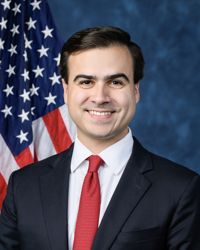
Pablo José Hernández
DDemocratPR · Representative
53
/ 100
Average
Attendance94
Avg: 96
Independence0
Avg: 4
Bipartisan Tone5
Avg: 15
Ethics Record100
Avg: 99
Transparency57
Avg: 53
Accountability Score — composite of attendance, independence, bipartisan tone, ethics record & transparency.
Methodology18
Bills Sponsored
0
Enacted into Law
1
Passed a Chamber
17
In Committee
All Sponsored Bills
HR10622In Committee
PROMISE for Small Businesses Act
HR10441In Committee
Puerto Rico Disaster Recovery Completion Act of 2026
HR10275In Committee
Puerto Rico Energy Opportunity and Geothermal Assessment Act of 2026
HR9595In Committee
Sergeant First Class Jorge Otero Barreto Medal of Honor Act
The President would be authorized to award the Medal of Honor, the military's highest decoration for bravery, to a deceased Army sergeant who performed acts of valor during the Vietnam War. This recognition would honor Sergeant First Class Jorge Otero Barret's military service and courage in combat. The medal would be awarded posthumously, meaning after his death.
HR9246In Committee
Puerto Rico Democratic Self Determination Act
The legislation would allow Puerto Rico residents to hold a referendum where they could vote on whether Puerto Rico should become a U.S. state, remain a commonwealth, or become an independent nation. The federal government would recognize and implement the results of whatever option Puerto Ricans choose in the vote. This would give Puerto Rico's 3.2 million residents direct control over their political future rather than having Congress make that decision for them.
HR7829In Committee
Disaster Aid Without Delay Act of 2026
This bill would speed up how quickly disaster aid reaches people and communities affected by hurricanes, floods, earthquakes, and other emergencies by reducing paperwork delays and streamlining approval processes. It would affect disaster victims, state and local governments, and emergency management agencies by making it easier to get federal funding and resources when disasters strike. The goal is to get help to affected areas faster rather than having people wait months for assistance while dealing with damage and recovery.
HR7696In Committee
AI Cyber Grid Protection Resilient Development Act of 2026
This bill would establish new standards and protections for computer systems that use artificial intelligence to manage the electrical grid and other critical infrastructure, aiming to prevent cyberattacks and system failures. It would likely require utilities, tech companies, and government agencies to implement security measures and share information about threats to keep the power grid and related systems running safely and reliably.
HR7697In Committee
International AI Energy Grid Modernization Strategy Act
This bill would establish a strategy for coordinating with other countries to modernize electrical grids in ways that support artificial intelligence infrastructure and energy efficiency. The legislation likely aims to help the U.S. work with international partners on developing and deploying advanced power systems that can handle the growing energy demands of AI technology while promoting clean energy goals. It would affect how the U.S. government approaches energy and technology partnerships with foreign nations.
HR7397In Committee
Puerto Rico Water Infrastructure Resilience Act
This bill would provide federal funding and support to improve Puerto Rico's water systems, making them more reliable and better able to withstand hurricanes and other disasters. The money would help repair aging pipes, upgrade treatment facilities, and build infrastructure that can recover faster when storms damage the water supply. Puerto Rico residents and businesses would benefit from more consistent access to clean water and reduced service interruptions.
HR7179In Committee
Historic Infrastructure Management and Jobs Training Act
This bill would likely create job training programs and employment opportunities focused on maintaining and improving historic buildings and infrastructure across the country. Workers would gain skills in preservation and restoration work while helping protect historically significant structures, potentially benefiting both the construction and heritage preservation industries. The program would aim to connect job seekers with training and employment in this specialized field.
HR5168In Committee
Puerto Rico Nutrition Assistance Fairness Act
This bill would adjust how federal nutrition assistance benefits are calculated for Puerto Rico residents, likely aiming to ensure they receive comparable support to people in the mainland United States under food assistance programs. Puerto Rico currently receives lower federal funding for nutrition programs than the states, so this legislation would address that disparity to help low-income families on the island afford food.
HR6716In Committee
SATOS Act of 2025
The SATOS Act would establish new protections or regulations for animals, though the specific provisions aren't detailed in the available information. Based on its referral to the House Agriculture Committee, the bill likely addresses issues related to animal welfare, livestock management, or agricultural animal practices that affect farmers, ranchers, and animal welfare advocates. Once the committee reviews it, lawmakers will determine whether the proposed changes should move forward.
HR6441In Committee
Puerto Rico Postal Equity Act of 2025
This bill would ensure that Puerto Rico's postal service receives the same federal funding and support as the mainland United States, addressing long-standing disparities in mail delivery services and costs for residents and businesses on the island. The legislation aims to improve mail reliability and reduce shipping expenses for Puerto Ricans, who currently face higher postal rates and slower service compared to the continental U.S.
HR2261Passed House
Strengthening Oversight of DHS Intelligence Act
Strengthening Oversight of DHS Intelligence Act This bill increases privacy protections associated with Department of Homeland Security (DHS) intelligence information. Specifically, the bill requires designated DHS officials to ensure that certain intelligence information is shared, stored, and disseminated in a manner consistent with the protection of civil rights, civil liberties, and privacy rights. The bill also provides statutory authority for requirements for DHS to train intelligence personnel on civil rights, civil liberties, privacy rights, and privacy-related regulations and information practices. Such training must focus on those who disseminate information analyzed by DHS or who review such information for dissemination.
HR6031In Committee
Medicare Advantage Integrity Act of 2025
Medicare Advantage Integrity Act of 2025 This bill temporarily establishes geographic adjustments for certain Medicare Advantage payment formulations, and specifies that a certain percentage of corresponding payment increases must be directed toward payments for basic benefits.
HR2632In Committee
TRICARE Equality Act
This bill would extend TRICARE health insurance benefits to same-sex spouses and their families on the same basis as opposite-sex military families currently receive them. The change would affect military personnel, retirees, and their dependents who are in same-sex marriages, ensuring they have equal access to the Defense Department's health coverage system. The bill addresses a gap in current military benefits policy by treating all military families equally regardless of the spouse's gender.
HR1763In Committee
For the relief of Diego Montoya Bedoya.
This bill provides for the relief of Diego Montoya Bedoya.
HR1697In Committee
Child Tax Credit Relief for Puerto Rican Families Act
This bill would allow families living in Puerto Rico to claim the federal child tax credit, a tax break that reduces what families owe based on the number of children they have. Currently, Puerto Rican residents are largely excluded from this benefit even though they pay some federal taxes, so this change would put them on more equal footing with families in the 50 states. The bill would primarily help lower and middle-income Puerto Rican families reduce their tax burden.