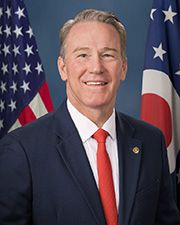
Jon Husted
RRepublicanOH · Senator
54
/ 100
Average
Attendance100
Avg: 97
Independence23
Avg: 23
Bipartisan Tone10
Avg: 14
Ethics Record100
Avg: 100
Transparency19
Avg: 47
Accountability Score — composite of attendance, independence, bipartisan tone, ethics record & transparency.
Methodology47
Bills Sponsored
0
Enacted into Law
0
Passed a Chamber
42
In Committee
All Sponsored Bills
S5638In Committee
Protecting American Workers Through H–1B Modernization Act.
S5523In Committee
Measuring Illicit Fentanyl Trafficking Act
SRES867In Committee
A resolution designating the week of September 14 through September 20, 2026, as "Interscholastic Athletic Administration Week".
S5413In Committee
Red Light Act
S5392In Committee
TEAM USA Act
S4745Reported
A bill to designate the facility of the United States Postal Service located at 201 East Grant Avenue in Georgetown, Ohio, as the "Ulysses S. Grant Post Office Building".
This bill designates the facility of the United States Postal Service located at 201 East Grant Avenue in Georgetown, Ohio, as the "Ulysses S. Grant Post Office Building".
S3618Reported
No Fentanyl on Social Media Act of 2026
This bill would require social media platforms to take stronger steps to prevent illegal drug dealers from using their services to sell fentanyl and other dangerous drugs, including removing drug-related content and reporting suspicious activity to law enforcement. The law would hold companies like Facebook, Instagram, and TikTok accountable if they knowingly allow drug trafficking on their platforms, potentially through fines or legal penalties. It aims to protect young people and communities from easy access to fentanyl, which has become a major cause of overdose deaths in the United States.
S5271Introduced
A bill to amend the Help America Vote Act of 2002 to require voters to provide photo identification.
This bill establishes certain photo identification requirements for voting in federal elections. Specifically, the bill prohibits a state or local election official from providing a ballot for a federal election to an individual who does not present valid physical photo identification. Next, the bill outlines the availability of provisional ballots and the requirements for counting those ballots. An individual who does not present a valid photo identification must be permitted to cast a provisional ballot. However, an election official may not determine that the individual is eligible under state law to vote in the election unless, not later than three days after casting the provisional ballot, the individual presents (1) the identification required, or (2) an affidavit attesting that the individual does not possess the identification because of a religious objection to being photographed. An election official may not allow for voting methods other than in-person voting unless the individual submits with the ballot (1) a copy of their photo identification, or (2) the last four digits of their Social Security number with an affidavit attesting that the individual is unable to obtain a copy of a valid photo identification after making reasonable efforts to obtain a copy. This prohibition shall not apply to overseas military voters and certain disabled or elderly voters. States must, to the extent practicable, ensure public access to digital imaging devices for individuals to make a free copy of their valid photo identification. These requirements take effect one day after the bill's enactment.
S5381In Committee
ADVERSARIES Act
S5382In Committee
China AI Power Report Act
S5363In Committee
New Source Review Permitting Improvement Act
S5380In Committee
A bill to provide for a ten-year statute of limitations for export control violations under the Export Control Reform Act of 2018.
This bill extends from 5 to 10 years the statute of limitations for civil and criminal violations of U.S. export control laws. The bill also specifies that the commencement of an action, suit, or proceeding includes the issuance of a charging letter. (A charging letter is a formal notification by the Department of Commerce's Bureau of Industry and Security that a company or individual is under investigation for an apparent violation of export administration laws or regulations.)
S5379In Committee
BIS STRENGTH Act
SJRES208In Committee
A joint resolution providing for congressional disapproval under chapter 8 of title 5, United States Code, of the rule submitted by the Environmental Protection Agency relating to "California State Motor Vehicle Pollution Control Standards; Advanced Clean Car Program; Reconsideration of a Previous Withdrawal of a Waiver of Preemption; Notice of Decision".
S5227In Committee
First-Time Home Buyer Empowerment Act
S5154In Committee
CHAT Act 2.0
The bill would create safety rules for AI chatbots designed to interact with children, requiring companies to protect minors from harmful content and predatory behavior. It would give parents and guardians more control over what their children can access through these AI tools and require companies to be transparent about how they collect and use children's data. The measure affects tech companies that develop chatbots, parents, and young users who interact with these AI systems.
S5028In Committee
Ratepayer Protection Act
Ratepayer Protection Act The bill requires state utility regulators and nonregulated utilities to consider implementing a standard to hold certain large-load customers responsible for the costs associated with any generation, transmission, or distribution upgrade of electric service necessary to serve such customers. A large-load customer means a non-residential electric consumer that enters, or requests to enter, an agreement concerning the sale of electric energy primarily to operate information technology infrastructure and related systems pertaining to data storage and computational applications and services (e.g., data centers) that have a peak electric demand of 100 megawatts or more at a single site or campus. Specifically, the bill requires states to consider implementing a federal standard for large-load customers. The standard must require rates charged by electric utilities for providing electric service to a large-load customer to be designed to recover from the large-load customer the full, incremental cost of any generation, transmission, or distribution upgrade necessary to serve such customer. This rate must include the costs that would be incurred if the large-load customer terminates an agreement with the electric utility pertaining to the sale of electric energy or otherwise ceases the purchase of energy from the electric utility. Under the standard, an electric utility must require the large-load customer to provide to the utility financial assurances or contributions to cover the cost of any generation, transmission, or distribution upgrade that is necessary to serve the load of a large-load customer before the utility makes any generation, transmission, or distribution upgrade.
S4893In Committee
U.S. Swine Health Improvement Plan Act of 2026
The bill would create a national plan to improve the health and disease prevention of pigs raised in the United States, giving the federal government tools to monitor and manage swine diseases more effectively. This would affect pig farmers, meat producers, and potentially consumers by helping prevent disease outbreaks that could harm the pork industry and food supply. The plan would likely include requirements for disease reporting, research funding, and coordination between farms and government agencies.
S4798In Committee
INVEST Act
The federal government would be required to sell off any ownership stakes it holds in private companies and use the money from those sales to reduce the national debt. This would affect various federal agencies that currently own shares in businesses, potentially changing how the government manages its investments in the private sector. The bill aims to convert government equity holdings into cash to help pay down federal borrowing.
S3583In Committee
Upward Mobility Act of 2026
The bill aims to improve economic opportunities and advancement for lower and middle-income Americans, likely through changes to government programs, tax policies, or workforce development initiatives. Based on its referral to the Finance Committee, it probably addresses how federal spending or tax rules could help people earn higher wages, access better jobs, or build wealth over time. The specific details would affect workers, families, and potentially businesses depending on which policies the bill ultimately includes.
S4634In Committee
CONNECT Act
This bill would update the goals of a federal program that helps young people aging out of foster care by emphasizing the importance of maintaining long-term relationships with mentors and supportive adults, based on what research and young people with foster care experience have learned works best. The change would guide how states use federal funding to better support foster youth in building and keeping meaningful connections as they transition to adulthood, rather than focusing solely on other outcomes. This affects foster youth, social workers, and organizations that provide support services to help these young people succeed after leaving the foster care system.
SRES743In Committee
A resolution supporting the designation of May 3 through May 9, 2026, as "Children's Mental Health Awareness Week".
The resolution would officially recognize May 3-9, 2026, as "Children's Mental Health Awareness Week" to draw attention to mental health issues affecting young people. This designation would encourage schools, healthcare providers, and communities to focus on educating families about children's mental health and available support resources during that week. The resolution does not create new programs or funding, but rather serves as a symbolic statement to raise awareness about an important public health issue.
S4531In Committee
Student Aid Fraud Oversight and Accountability Act of 2026
Student Aid Fraud Oversight and Accountability Act of 2026 This bill requires the Department of Education (ED) to prioritize the review of institutions of higher education (IHEs) that disburse federal student aid without verifying the identity of a student whose Free Application for Federal Student Aid (FAFSA) presents a reasonable suspicion of identity fraud. Specifically, the bill requires ED to identify each IHE that disburses, on or after October 1, 2026, federal financial aid for an award year to any student whose FAFSA presents a reasonable suspicion of identity fraud, as determined by ED's identity fraud detection system. However, the bill excludes from this identification any IHE that demonstrates to ED, for each student and before disbursing federal financial aid, that the IHE (1) verifies the student's identity in person or by live video, (2) notifies ED of the identify verification, and (3) maintains a record of such identity verification. ED may use identification information to inform program reviews, audits, investigations, and other oversight activities related to federal student aid. (On April 26, 2026, ED began implementing a real-time identity fraud detection process within the FAFSA form that places applicants into one of four risk categories. High-risk applicants must confirm their identity by presenting documentation during the online application process, including via a live camera process. Applicants who are rejected via this automated process must then have their identity verified in person by IHEs.)
S4459In Committee
Expanding Appalachia’s Broadband Access Act
Expanding Appalachia’s Broadband Access Act This bill requires the Government Accountability Office to study and report to Congress on the Appalachian Regional Commission’s capability to incorporate satellites in broadband projects. Specifically, the study must review and analyze the capacity and cost-effectiveness of using satellite broadband service for business purposes and economic development.
S4159In Committee
Sammy’s Law
I don't have enough information to write an accurate summary. The bill title "Sammy's Law" is too vague, and the subjects listed (Science, Technology, Communications) are very broad. To provide a meaningful summary of what this bill would actually do and who it affects, I would need to see the bill's text or a more detailed description of its specific provisions.
S4155In Committee
A bill to require voters to provide photo identification as a condition of casting a ballot, and for other purposes.
This bill establishes certain photo identification requirements for voting in federal elections. Specifically, the bill prohibits a state or local election official from providing a ballot for a federal election to an individual who does not present valid physical photo identification. Next, the bill outlines the availability of provisional ballots and the requirements for counting those ballots. In particular, an individual who does not present a valid photo identification must be permitted to cast a provisional ballot. However, an election official may not determine that the individual is eligible under state law to vote in the election unless, not later than three days after casting the provisional ballot, the individual presents (1) the identification required, or (2) an affidavit attesting that the individual does not possess the identification because of a religious objection to being photographed. An election official may not allow for voting methods other than in-person voting unless the individual submits the ballot with (1) a copy of their photo identification, or (2) the last four digits of their Social Security number with an affidavit attesting that the individual is unable to obtain a copy of a valid photo identification after making reasonable efforts to obtain a copy. This prohibition shall not apply to overseas military voters and certain disabled or elderly voters.
S4033In Committee
Critical Minerals Investment Tax Modernization Act of 2026
This bill would update tax rules to encourage companies to invest in mining and processing critical minerals like lithium, cobalt, and rare earths that are essential for batteries, electronics, and defense equipment. The changes likely include tax credits or deductions to make it more profitable for businesses to develop domestic sources of these materials rather than relying on imports. The goal is to strengthen America's supply chain for minerals needed in clean energy and technology while reducing dependence on foreign suppliers.
S4027In Committee
Healthy Competition for Better Care Act
This bill aims to increase competition in the healthcare industry to potentially lower costs and improve care quality for patients. It likely includes measures to reduce barriers that prevent new healthcare providers and companies from entering the market, such as removing unnecessary regulations or limiting the power of large healthcare corporations to block competitors. The changes would affect hospitals, insurance companies, doctors, and patients across the country.
S3903In Committee
Railway Safety Act of 2026
This bill would establish or strengthen safety standards for railroad operations, likely covering areas like train inspection requirements, crew training, and accident prevention measures. The changes would affect railroad companies, their workers, and the traveling public by potentially requiring new safety protocols or equipment upgrades. The bill is currently under review by the Senate committee responsible for transportation policy.
S3879In Committee
Spent Petroleum Catalyst Recycling and Critical Minerals and Metals Recovery Exemption Act
This bill would exempt spent petroleum catalysts—materials used in oil refining that have worn out—from certain hazardous waste regulations so they can be more easily recycled to recover valuable metals and minerals. The change would allow refineries and recycling companies to process these catalysts more efficiently to extract critical materials needed for batteries, electronics, and other industries, rather than treating them as waste. This affects oil refineries, recycling facilities, and manufacturers who depend on these recovered materials.
S3760In Committee
CLOSE Act
The CLOSE Act would restrict or eliminate certain tax benefits and deductions that companies currently use, likely to increase federal revenue or change how businesses are taxed. The bill would affect employers and potentially workers whose compensation or benefits are tied to these tax advantages. The specific changes would depend on which tax provisions the legislation targets.
S3703In Committee
Rural Veterans’ Improved Access to Benefits Act of 2026
This bill aims to make it easier for veterans living in rural areas to access benefits and services by addressing barriers like distance and limited local resources. The legislation likely includes measures such as expanding telehealth options, improving transportation assistance, or increasing the number of service centers in rural communities so that veterans don't have to travel long distances to get the help they've earned.
S3316In Committee
WATER Act of 2025
S3317In Committee
Water Resources Technical Assistance Review Act of 2025
SJRES97In Committee
A joint resolution proposing a balanced budget amendment to the Constitution of the United States.
This joint resolution proposes a constitutional amendment that requires federal expenditures and receipts to be balanced, which may occur over more than one year. Under the amendment, expenditures include all federal expenditures except those for payment of debt. Receipts do not include receipts derived from borrowing. The amendment requires Congress to achieve balance within 10 years of the ratification of the amendment. In an emergency situation, Congress may authorize additional expenditures that are not otherwise permitted by the amendment if two-thirds of the House of Representatives and the Senate agree to pass the bill. The additional expenditures must be for a limited time, and debts incurred from the expenditures must be paid as soon as practicable.
SRES499In Committee
A resolution supporting the goals and ideals of "Creutzfeldt-Jakob Disease (CJD) Awareness Day".
This resolution supports the goals and ideals of Creutzfeldt-Jakob Disease (CJD) Awareness Day.
S2082Reported
Nuclear REFUEL Act of 2025
This bill would make it easier for nuclear power plants to obtain and use fuel by streamlining the approval process and potentially reducing regulatory barriers that currently slow down refueling operations. The changes would help keep existing nuclear plants running more efficiently while they generate electricity, which could lower energy costs and reduce reliance on other power sources. The bill affects nuclear plant operators, energy companies, and ultimately consumers who depend on reliable electricity.
S2802In Committee
Student Debt Alternative and CTE Awareness Act
Student Debt Alternative and CTE Awareness Act This bill requires the Department of Education (ED) to disclose certain information related to career and technical education. Specifically, the bill requires the Office of Federal Student Aid within ED to publish on its public website information on (1) career and technical education programs, including average completion time, program cost, and postgraduation employment rate; (2) opportunities in each state to pursue these programs and obtain Perkins funding; and (3) Workforce Pell Grants. In addition, ED must include this information and a related acknowledgment signature box on the Free Application for Federal Student Aid (FAFSA).
SRES375In Committee
A resolution recognizing September 8 through 14, 2025, as "Interscholastic Athletic Administrators' Week".
This resolution designates September 8-14, 2025, as a week to recognize and honor interscholastic athletic administrators—the school officials who manage sports programs, schedules, budgets, and compliance at the high school and middle school levels. The resolution is a symbolic gesture intended to acknowledge the often-behind-the-scenes work these administrators do to support student athletes and school athletic programs. It does not create any new laws or funding, but rather calls attention to their contributions during a designated week.
S2714In Committee
CHAT Act
I don't have enough information to write an accurate summary. The title "CHAT Act" and subject area of "Commerce" are too vague to determine what specific policy changes this bill would make or who it would affect. To provide a meaningful summary, I would need to know the bill's actual provisions—for example, whether it regulates artificial intelligence, addresses consumer protections, affects telecommunications, or covers another commerce-related topic entirely.
S2529In Committee
A bill to increase the clarity and predictability of the process for developing applications for Rx-to-nonprescription switches.
The proposal would create clearer rules and timelines for how pharmaceutical companies can request to switch medications from prescription-only to over-the-counter status, making the approval process more predictable and transparent. This would help drug makers understand exactly what steps they need to follow and what information the FDA requires when seeking to make a medicine available without a doctor's prescription. Patients could potentially gain faster access to certain medications they could buy directly, while companies would have more certainty about the process and timeline for getting approval.
S2434In Committee
A bill to amend the Dayton Aviation Heritage Preservation Act of 1992 to adjust the boundary of the Dayton Aviation Heritage National Historical Park, and for other purposes.
This bill adjusts the boundary of the Dayton Aviation Heritage National Historical Park to include approximately one acre of land in Dayton, Ohio.
S2241In Committee
Enhancing Detection of Human Trafficking Act
Enhancing Detection of Human Trafficking Act This bill requires the Department of Labor to provide training and education to its employees on how to effectively assist law enforcement in detecting human trafficking. The bill directs Labor to determine which employees should receive the training and education based on their official duties. Further, it requires the training and education to include information that is appropriate for the employees' location or environment; that reflects current trends and best practices for the location or environment; and that is relevant to detecting human trafficking, identifying suspected victims, and referring potential cases to the Department of Justice and other appropriate authorities.
S1950In Committee
Susan Muffley Act of 2025
Without access to the bill's specific text or provisions, this legislation appears to address labor and employment issues, though the exact policy changes are unclear from the title alone. Based on its referral to the Committee on Health, Education, Labor, and Pensions, it likely affects workers' rights, workplace standards, or employment protections in some way. To provide a concrete summary of what the bill would actually do, the specific provisions would need to be reviewed.
SRES251Introduced
A resolution supporting the designation of May 4 through May 10, 2025, as "Children's Mental Health Awareness Week".
Congress is officially recognizing May 4-10, 2025, as a week dedicated to raising awareness about children's mental health issues. The designation aims to draw public attention to the importance of mental health support for young people and encourage communities, schools, and families to prioritize children's emotional well-being. This symbolic recognition passed the Senate without opposition.
SJRES50In Committee
A joint resolution providing for congressional disapproval under chapter 8 of title 5, United States Code, of the rule submitted by the Department of Energy relating to "Energy Conservation Program for Appliance Standards: Certification Requirements, Labeling Requirements, and Enforcement Provisions for Certain Consumer Products and Commercial Equipment".
This joint resolution nullifies the Energy Conservation Program for Appliance Standards: Certification Requirements, Labeling Requirements, and Enforcement Provisions for Certain Consumer Products and Commercial Equipment rule published by the Department of Energy (DOE) on October 9, 2024. Under the rule, DOE modified its regulations on the energy efficiency of certain types of consumer products (e.g., washing machines and dishwashers) and industrial equipment (e.g., computer room air conditioners). Specifically, it modified certification requirements, labeling requirements, and enforcement provisions for these products and equipment to (1) align reporting requirements with currently applicable energy conservation standards and test procedures, and (2) provide DOE with the information necessary to determine the appropriate classification of products for the application of standards.
SJRES29In Committee
A joint resolution providing for congressional disapproval under chapter 8 of title 5, United States Code, of the rule submitted by the Environmental Protection Agency relating to "Air Plan Approval; Ohio; Withdrawal of Technical Amendment".
This joint resolution nullifies the Environmental Protection Agency (EPA) rule titled Air Plan Approval; Ohio; Withdrawal of Technical Amendment (90 Fed. Reg. 6811) and published on January 21, 2025. Among other elements, the rule reversed a final rule from November 2020 that removed the Air Nuisance Rule (ANR) from the Ohio State Implementation Plan (SIP). The EPA determined its original action to remove the ANR was in error, and this rule reinstates the ANR. (Under the Clean Air Act, states must submit SIPs to comply with the National Ambient Air Quality Standards. This ANR was included in Ohio’s SIP.)