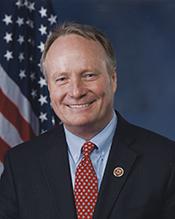
David P. Joyce
RRepublicanOH-14 · Representative
55
/ 100
Average
Attendance97
Avg: 96
Independence5
Avg: 4
Bipartisan Tone23
Avg: 15
Ethics Record100
Avg: 99
Transparency34
Avg: 53
Accountability Score — composite of attendance, independence, bipartisan tone, ethics record & transparency.
Methodology18
Bills Sponsored
0
Enacted into Law
3
Passed a Chamber
15
In Committee
All Sponsored Bills
HR9327Passed House
PEARL Act
Providing Emotional Assistance with Relief and Love Act or the PEARL Act This bill requires U.S. Customs and Border Protection (CBP) to establish a pilot program to adopt dogs from local animal shelters to be trained as support dogs for CBP’s Support Canine Program. Support dogs are used for grief assistance, trauma mitigation, and morale.
HR9471In Committee
SAFE Banking Act of 2026
Banks and other financial companies would be protected from federal penalties if they provide banking services to legal marijuana businesses in states where cannabis is allowed. Currently, many banks avoid working with marijuana companies because federal law still classifies marijuana as illegal, creating a risky situation where legal state businesses struggle to access banking services. This bill would remove that barrier so that banks can safely serve the marijuana industry without fear of federal prosecution.
HR2853Passed House
Combating Organized Retail Crime Act of 2025
Combating Organized Retail Crime Act of 2025 This bill expands federal enforcement of criminal offenses related to organized retail and supply chain crime. The term organized retail and supply chain crime includes criminal offenses involving the interstate transportation of stolen property, the sale or receipt of stolen goods, or theft from an interstate or foreign shipment that is committed by, in coordination with, or at the instruction of an organization. First, with respect to criminal offenses involving the interstate transportation of stolen property or the sale or receipt of stolen goods, the bill broadens the scope of conduct that qualifies as offenses by allowing prosecutions to be based on the aggregate value of stolen items over a 12-month period. Additionally, the bill makes the offenses predicate offenses (i.e., underlying offenses) for prosecutions under the federal money laundering statute and authorizes the criminal forfeiture of any property obtained from the proceeds of an offense. Second, with respect to criminal offenses involving theft from an interstate or foreign shipment, the bill also makes an offense an underlying offense for prosecution under the federal money laundering statute and authorizes the criminal forfeiture of any associated property. Third, the bill expands the federal money laundering statute to include offenses involving general-use prepaid cards, gift certificates, or store gift cards. Finally, the bill temporarily establishes a center within the Department of Homeland Security to coordinate federal law enforcement activities related to organized retail and supply chain crime.
HRES1264In Committee
Supporting the goals and ideals of "National Nurses Week", to be observed from May 6 through May 12, 2026.
The resolution recognizes and celebrates National Nurses Week from May 6-12, 2026, honoring the contributions and dedication of nurses in healthcare. The measure acknowledges the vital role nurses play in patient care and the healthcare system while raising awareness about the nursing profession. This symbolic gesture aims to highlight the importance of nursing work and show appreciation for the millions of nurses who care for patients across the country.
HR8495In Committee
Financial Services and General Government Appropriations Act, 2027
Financial Services and General Government Appropriations Act, 2027 This bill provides FY2027 appropriations for several federal departments and agencies, including the Department of the Treasury, the Executive Office of the President, the judiciary, the District of Columbia, and several independent agencies. The independent agencies funded in the bill include the Administrative Conference of the United States, the Consumer Product Safety Commission, the Council of the Inspectors General on Integrity and Efficiency, the Election Assistance Commission, the Federal Communications Commission, the Federal Deposit Insurance Corporation Office of the Inspector General, the Federal Election Commission, the Federal Labor Relations Authority, the Federal Trade Commission, the General Services Administration, the Harry S. Truman Scholarship Foundation, the Merit Systems Protection Board, the Morris K. Udall and Stewart L. Udall Foundation, the National Archives and Records Administration, the National Credit Union Administration, the Office of Government Ethics, the Office of Personnel Management, the Office of Special Counsel, the Privacy and Civil Liberties Oversight Board, the Public Buildings Reform Board, the Securities and Exchange Commission, the Selective Service System, the Small Business Administration, the U.S. Postal Service, and the U.S. Tax Court. The bill also sets forth requirements and restrictions for using funds provided by this and other appropriations acts.
HJRES149In Committee
Recognizing the 125th anniversary of the Army Nurse Corps, expressing gratitude for members of the Army Nurse Corps for their service to the Nation, and for other purposes.
This resolution honors the 125th anniversary of the Army Nurse Corps and thanks its members for their military service and contributions to the nation. The measure recognizes the historical importance and ongoing role of Army nurses in providing medical care to soldiers and supporting military operations. While primarily ceremonial, the resolution affirms congressional appreciation for this branch of the armed forces.
HR6866In Committee
Securing Smart Investments in our Ports Act
This bill would direct federal funding and resources toward modernizing and upgrading U.S. ports with new technology and infrastructure improvements. The legislation aims to help ports become more efficient and competitive by investing in things like automated cargo handling systems, better security measures, and improved facilities that handle shipping and trade. The changes would affect port workers, shipping companies, and communities that depend on ports for jobs and economic activity.
HR1005Passed House
Combating the Lies of Authoritarians in School Systems Act
Combating the Lies of Authoritarians in School Systems Act or the CLASS Act This bill prohibits public elementary and secondary schools, as a condition of receiving federal elementary and secondary education funds, from accepting funds from or entering into a contract with the Chinese government, the Chinese Communist Party (CCP), or any individual or entity acting on behalf of the Chinese government or the CCP. The bill also requires schools to disclose funding from or contracts with a foreign source to the Department of Education.
HR3593In Committee
Title VIII Nursing Workforce Reauthorization Act of 2025
This bill would reauthorize federal funding programs that help train and support nurses, including grants for nursing schools and scholarships for nursing students. The legislation aims to address nursing shortages by making it easier for people to become nurses and helping hospitals recruit and retain nursing staff. It affects nursing students, nursing schools, hospitals, and healthcare systems that rely on trained nursing professionals.
HR5166In Committee
Financial Services and General Government Appropriations Act, 2026
Financial Services and General Government Appropriations Act, 2026 This bill provides FY2026 appropriations for several federal departments and agencies, including the Department of the Treasury, the Executive Office of the President, the judiciary, the District of Columbia, and several independent agencies. The independent agencies funded in the bill include the Administrative Conference of the United States, the Consumer Product Safety Commission, the Election Assistance Commission, the Federal Communications Commission, the Federal Deposit Insurance Corporation, the Federal Election Commission, the Federal Labor Relations Authority, the Federal Permitting Improvement Steering Council, the Federal Trade Commission, the General Services Administration, the Harry S. Truman Scholarship Foundation, the Merit Systems Protection Board, the Morris K. Udall and Stewart L. Udall Foundation, the National Archives and Records Administration, the National Credit Union Administration, the Office of Government Ethics, the Office of Personnel Management, the Office of Special Counsel, the Privacy and Civil Liberties Oversight Board, the Public Buildings Reform Board, the Securities and Exchange Commission, the Selective Service System, the Small Business Administration, the U.S. Postal Service, and the U.S. Tax Court. The bill also sets forth requirements and restrictions for using funds provided by this and other appropriations acts.
HRES389In Committee
Supporting the goals and ideals of National Nurses Week, to be observed from May 6 through May 12, 2025.
This resolution expresses support for the goals and ideals of National Nurses Week.
HR2934In Committee
STATES 2.0 Act
I don't have access to the specific details of what the STATES 2.0 Act would do, as the information provided only includes its title, subject area, and current referral status. To write an accurate summary explaining what this bill would actually accomplish and who it affects, I would need access to the bill's text or a detailed description of its provisions. Could you provide more information about what this legislation proposes?
HR1477In Committee
Animal Cruelty Enforcement Act of 2025
Animal Cruelty Enforcement Act of 2025 This bill establishes a new section in the Environment and Natural Resources Division of the Department of Justice to enforce federal laws concerning animal cruelty.
HR1317In Committee
I CAN Act
Improving Care and Access to Nurses Act or the I CAN Act This bill allows other health care providers besides physicians (e.g., nurses) to provide certain services under Medicare and Medicaid. Among other changes, the bill (1) allows a nurse practitioner or physician assistant to fulfill documentation requirements for Medicare coverage of special shoes for diabetic individuals; (2) expedites the ability of physician assistants, nurse practitioners, and clinical nurse specialists to supervise Medicare cardiac, intensive cardiac, and pulmonary rehabilitation programs; and (3) allows nurse practitioners to certify the need for inpatient hospital services under Medicare and Medicaid.
HR1006In Committee
Higher Education Accountability Tax Act
Higher Education Accountability Tax Act This bill increases the excise tax on the net investment income of certain private university and college endowments and expands the number of universities and colleges that are subject to the excise tax. Under current law, certain private universities and colleges with 500 or more tuition-paying students (of which more than 50% are located in the United States) and endowment assets of at least $500,000 per student (per student threshold) pay an excise tax in the amount of 1.4% on the net investment income from such endowments. Endowment assets that are used directly in carrying out the institution's tax-exempt educational purpose are excluded from the tax. The bill increases the amount of the excise tax to (1) 10% of the net investment income from a university and college endowment, or (2) 20% of the net investment income from a university and college endowment maintained by an institution that increases tuition over a three-year period (preceding the current tax year) at a rate that is higher than the inflation rate. Under the bill, the tuition price for purposes of determining whether the 20% excise tax rate applies is the average yearly price charged to all first-time, full-time undergraduate students (including students who receive financial aid). Further, the bill expands the number of universities and colleges subject to the excise tax by lowering the per student threshold to $250,000.
HR583In Committee
BEACH Act of 2025
Beaches Environmental Assessment and Coastal Health Act of 2025 or the BEACH Act of 2025 This bill reauthorizes through FY2029 and expands an existing program of the Environmental Protection Agency (EPA) that awards grants to states and local governments to (1) monitor the water quality of coastal recreational waters adjacent to beaches or similar points of access that are used by the public; and (2) notify the public, local governments, and the EPA when the water is not safe for recreational activities. Specifically, the bill expands the program to allow the EPA to award grants for identifying sources of contamination (i.e., pathogens) for coastal recreation waters. It also allows grants to be used for monitoring and notification of contamination in (1) shallow waters upstream from recreational waters, and (2) recreational waters on beaches.
HR621In Committee
Protecting First Responders from Secondary Exposure Act of 2025
Protecting First Responders from Secondary Exposure Act of 2025 This bill expands the allowable uses of grant funds under the Comprehensive Opioid, Stimulant, and Substance Use Program administered by the Department of Justice. Specifically, the bill allows grants to be used for purchasing containment devices for first responders and training first responders on the use of containment devices to prevent secondary exposure to fentanyl and other potentially lethal substances.
HR284In Committee
GLRI Act of 2025
Great Lakes Restoration Initiative Act of 2025 or the GLRI Act of 2025 This bill reauthorizes through FY2031 the Great Lakes Restoration Initiative, which carries out programs and projects to protect and restore the Great Lakes.