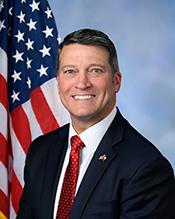
Ronny Jackson
RRepublicanTX-13 · Representative
55
/ 100
Average
Attendance97
Avg: 96
Independence4
Avg: 4
Bipartisan Tone7
Avg: 15
Ethics Record100
Avg: 99
Transparency58
Avg: 53
Accountability Score — composite of attendance, independence, bipartisan tone, ethics record & transparency.
Methodology20
Bills Sponsored
1
Enacted into Law
0
Passed a Chamber
18
In Committee
Bills That Became Law
All Sponsored Bills
HR10126In Committee
DEMAND Act of 2026
HR9909In Committee
Small Unmanned Aircraft Systems Operational Test, Evaluation, and Training Corridor Act
The Department of Defense would create designated areas where the military can test and train with small drones and related technology without restrictions that normally apply in civilian airspace. This would allow the military to develop and practice drone operations more efficiently while keeping these test flights separate from regular air traffic. The change affects military personnel and defense contractors working on drone technology.
HR7466In Committee
SAFE CATTLE Act
The bill aims to establish or modify regulations related to cattle farming and food safety, likely addressing concerns about disease prevention, animal welfare, or environmental practices in the cattle industry. It would affect ranchers, cattle producers, and potentially consumers by setting standards or requirements for how cattle are raised and processed. The bill is currently under review by two congressional committees to determine which parts fall under their respective areas of responsibility.
HRES1303In Committee
Recognizing the critical importance of the United States Special Operations Forces community and expressing support for the designation of SOF Week.
This resolution expresses congressional support for designating a week to recognize and honor the U.S. Special Operations Forces community, which includes elite military units like Navy SEALs, Army Green Berets, and Air Force special operators who conduct specialized and often dangerous missions. The measure acknowledges the critical role these forces play in national defense and counterterrorism operations. The resolution has been referred to the House Armed Services Committee for consideration.
HR6444In Committee
Blast Overpressure Research and Mitigation Task Force Act
This bill would create a task force to study the effects of blast overpressure—the dangerous shock waves from explosions—on military personnel and develop ways to protect them from these injuries. The task force would bring together experts from the military, medical field, and research institutions to better understand how blast injuries happen and recommend improvements to equipment, training, and medical care for service members exposed to explosions.
HR8689In Committee
Strategic Export Controls and Border Security Enhancement Act
The proposal would create a new office within the State Department focused on controlling exports of sensitive materials and technology while also managing border security issues related to weapons and dangerous items. This office would work to prevent countries and groups on the U.S. government's watch list from obtaining materials that could be used to build weapons or cause harm. The change would affect companies that export goods internationally, border security agencies, and foreign policy officials who work on nonproliferation issues.
HR8334In Committee
Taxpayer Protection and Somalia Accountability Act of 2026
The bill would stop the United States from sending foreign aid money to Somalia's government, either through direct bilateral assistance or through international organizations. This would affect American taxpayers who fund foreign aid programs and could impact Somalia's government operations and any development or humanitarian projects that rely on U.S. support.
HR7616Reported
Transatlantic Academic Security and Risk Mitigation Act
This bill would strengthen security measures for academic partnerships and research collaborations between the United States and European countries, likely by requiring universities and research institutions to screen international partnerships for potential national security risks. The legislation aims to protect sensitive research and intellectual property while maintaining beneficial academic exchanges with trusted allies in Europe. It would primarily affect universities, research centers, and the researchers involved in transatlantic collaborative projects.
HR7540In Committee
United States-Israel FUTURES Act of 2026
This bill would strengthen economic and security partnerships between the United States and Israel through various cooperative initiatives and agreements. The legislation likely aims to deepen trade relationships, enhance defense cooperation, and coordinate on shared regional interests, affecting both American and Israeli businesses, military personnel, and government agencies involved in international relations.
HR5633In Committee
Agriculture Infrastructure Stability Act of 2025
The legislation would strengthen support systems for farmers by improving access to credit, stabilizing commodity prices, and investing in agricultural infrastructure like irrigation systems and storage facilities. It aims to help farmers weather economic challenges and natural disasters while making it easier for them to get loans and manage financial risks. The bill would primarily benefit farmers and rural communities that depend on agriculture for their livelihoods.
HR6195In Committee
Intelligence Community Property Security Act of 2025
This bill would establish new security requirements and protections for property owned or used by U.S. intelligence agencies, likely including rules about how facilities are protected, who can access them, and how security breaches are handled. The legislation would affect intelligence agency operations, federal employees working in those agencies, and potentially contractors who work on intelligence properties. By strengthening property security standards, the bill aims to prevent unauthorized access and protect classified information and sensitive operations.
HR5466In Committee
GUARD Act
HR1316Enacted
Maintaining American Superiority by Improving Export Control Transparency Act
Maintaining American Superiority by Improving Export Control Transparency Act This act requires the Department of Commerce's Bureau of Industry and Security (BIS) to annually report to Congress on export control licensing. Under current law, BIS administers and enforces controls on the export of dual-use goods (e.g., items with both civilian and military uses) and certain military parts and components. These export controls are implemented primarily under the Export Control Reform Act of 2018 (ECRA) through the Export Administration Regulations (EAR). Under this act, BIS must annually report to Congress on license applications, other requests for authorization, and end-use checks (on-site verifications conducted by BIS) for the export, reexport, release, and in-country transfer of items subject to the EAR to covered entities. A covered entity is any entity that (1) is located in a country listed in Country Group D:5 (countries that are identified by the Department of State as subject to U.S. arms embargoes), and (2) is included on the Entity List or the Military End-User List (two of the lists published by BIS containing information on the individuals, organizations, and addresses subject to restrictions involving items subject to the EAR). The act requires this report to include specified information, such as the name of the entity submitting the application, where the item is being exported, the decision with respect to the license application or authorization, and information on any end-use checks to ensure compliance with U.S. export controls. The information shall be exempt from public disclosure (except for aggregate statistics). Additionally, BIS must exclude from the report any information that could jeopardize an ongoing investigation.
HR4677In Committee
To designate the facility of the United States Postal Service located at 505 East 9th Avenue in Amarillo, Texas, as the "Mayor Jerry H. Hodge Post Office Building".
This bill designates the facility of the United States Postal Service located at 505 East 9th Avenue in Amarillo, Texas, as the "Mayor Jerry H. Hodge Post Office Building".
HR2633In Committee
U.S.-South Africa Bilateral Relations Review Act of 2025
The legislation would require the U.S. State Department to conduct a comprehensive review of American relations with South Africa and report to Congress on key issues including trade, security cooperation, and human rights concerns. The review would help lawmakers understand the current state of the bilateral relationship and identify areas where U.S. policy might need adjustment. This affects American diplomats, businesses with South African interests, and policymakers working on African affairs.
HJRES95In Committee
Recognizing the critical importance of the United States Special Operations Forces community and expressing support for the designation of SOF Week.
The resolution honors the U.S. Special Operations Forces community and supports designating a week to recognize their contributions to national security. Special Operations Forces, which include elite military units like Navy SEALs and Army Green Berets, conduct specialized and often dangerous missions both domestically and abroad. The measure expresses congressional appreciation for these troops' sacrifices and expertise.
HR2326In Committee
Dietary Guidelines Reform Act of 2025
Dietary Guidelines Reform Act of 2025 This bill increases the requirements for the Dietary Guidelines for Americans (DGA). The DGA are federally developed recommendations by the Department of Agriculture (USDA) and the Department of Health and Human Services (HHS). Under the bill, USDA and HHS must jointly publish guidelines at least once every 10 years (currently 5 years), and the final DGA is subject to rulemaking requirements. The DGA must be based on significant scientific agreement that is determined by evidence-based review. Current law requires that the guidelines be based on a preponderance of current scientific and medical knowledge. Further, the guidelines must address issues such as (1) high-priority areas to advance health outcomes, (2) achieving nutritional adequacy and promoting health, and (3) common nutrition-related chronic diseases. In updating the guidelines, USDA and HHS must establish an Independent Advisory Board that must submit a list of scientific questions to be used as the basis for the proposed DGA. Members of the board must (1) have expertise in nutrition science or food science, and (2) disclose all relevant financial and nonfinancial conflicts of interest. The bill prohibits the DGA from being based on or including topics that are not relevant to dietary guidance (e.g., taxation, social welfare policies, food and agricultural production practices, and race). The bill provides specified funds through FY2029 to carry out these requirements. Finally, the bill specifies that the 2020 DGA are the controlling guidelines until new guidelines are published in accordance with these requirements.
HR1417In Committee
Rural Health Care Facility Technical Assistance Program Act
The proposal would create a technical assistance program to help rural health care facilities improve their operations and financial management. Rural hospitals and clinics would receive support and guidance to address challenges like staffing shortages, equipment upgrades, and administrative efficiency. This would help ensure that communities in agricultural and remote areas maintain access to quality medical services.
HR620In Committee
FARM Act
Foreign Adversary Risk Management Act or the FARM Act This bill places the Secretary of Agriculture on the Committee on Foreign Investment in the United States (CFIUS). It also requires CFIUS to review any investment that could result in foreign control of any U.S. agricultural business. Further, the bill includes agricultural systems and supply chains in the definitions of critical infrastructure and critical technologies for the purposes of reviewing such investments. The Department of Agriculture and the Government Accountability Office must each annually analyze and report on foreign influence in the U.S. agricultural industry.
HCONRES3In Committee
Expressing support for the Geneva Consensus Declaration on Promoting Women's Health and Strengthening the Family and urging that the United States rejoin this historic declaration.
This concurrent resolution affirms the commitments in the Geneva Consensus Declaration on Promoting Women's Health and Strengthening the Family and applauds the signatory countries for their dedication to advancing women's health, protecting life at every stage while affirming that there is no international right to abortion, and upholding the importance of the family as foundational to society. The resolution also states that Congress will work with the executive branch to ensure that the United States does not conduct or fund abortions, abortion lobbying, or coercive family planning in foreign countries.