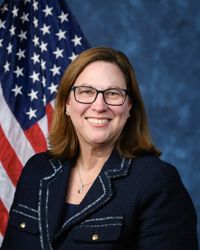
Julie Johnson
DDemocratTX-32 · Representative
50
/ 100
Average
Attendance96
Avg: 96
Independence3
Avg: 4
Bipartisan Tone10
Avg: 15
Ethics Record100
Avg: 99
Transparency25
Avg: 53
Accountability Score — composite of attendance, independence, bipartisan tone, ethics record & transparency.
Methodology21
Bills Sponsored
0
Enacted into Law
0
Passed a Chamber
20
In Committee
All Sponsored Bills
HR10564In Committee
Enduring Accountability Act
HR10365In Committee
AmeriCorps Access for Dreamers Act
HR9192In Committee
Prior Authorization Reform for Autoimmune and Blood Disorders Act
This bill would require health insurance plans to cover medications used to treat autoimmune diseases and certain blood disorders, ensuring that people with these conditions have access to necessary drugs without facing coverage denials from their insurers. The requirement would apply to most employer-sponsored health plans and individual insurance policies. Patients with conditions like lupus, rheumatoid arthritis, and hemophilia would be among those affected by this coverage mandate.
HR7182In Committee
VOTE Act
Without access to the specific bill text, this appears to be legislation related to voting procedures or election administration, though the exact changes it would make are unclear from the title alone. Based on its referral to the House Administration Committee, it likely addresses how federal elections are conducted, voter registration, or voting access in some way. To provide an accurate summary of what the bill would actually do, the specific provisions would need to be reviewed.
HR8817In Committee
FORTIFY Act
The proposal would allow Estonia, Latvia, and Lithuania to more easily share military equipment and services with each other without needing separate approval from the U.S. government each time. This would streamline defense cooperation among the three Baltic nations, which are NATO allies, by reducing bureaucratic delays when they want to transfer weapons, technology, or military support among themselves. The change primarily affects these three countries' militaries and their ability to coordinate defense resources more efficiently.
HR8794In Committee
FED UP with Bleeding Disorders Act of 2026
The legislation would direct federal funding toward research and treatment programs focused on bleeding disorders like hemophilia in communities that currently lack adequate medical resources and care. It aims to improve diagnosis, treatment access, and health outcomes for patients in underserved areas who may have limited access to specialists and expensive therapies. The bill would affect patients with bleeding disorders, healthcare providers in underserved regions, and medical research institutions working on these conditions.
HR8575In Committee
EMPOWER Act
The State Department would work with private companies and other organizations to help women in South and Central Asia gain better access to jobs, business opportunities, and economic resources. The bill aims to strengthen existing partnerships and create new ones that support women's financial independence and economic participation in countries like India, Pakistan, Afghanistan, and others in the region. This would affect women entrepreneurs and workers in those areas, as well as American companies and nonprofits involved in international development.
HR8574In Committee
U.S. in Expos Act
The federal government would be allowed to spend money on building and operating a U.S. pavilion or major exhibit at international world's fairs and expos around the globe. This would let the State Department showcase American culture, innovation, and values to international audiences at these large-scale events. The bill gives the Secretary of State the authority to decide when and how to fund these exhibits.
HR8320Reported
USA 6G Global Leadership Act
This bill aims to help the United States develop and lead the next generation of wireless technology (6G) before other countries do, likely through funding research, coordinating government efforts, and potentially supporting American companies working on this technology. The goal is to ensure the U.S. maintains a competitive advantage in telecommunications rather than falling behind countries like China in this critical technology area. It affects tech companies, researchers, and potentially consumers who will eventually use 6G networks.
HR7617In Committee
To provide funding for administrative expenses of the Department of Homeland Security during any lapse in appropriations during fiscal year 2026, to require that the Department be responsive to congressional offices during such a lapse in appropriations, and for other purposes.
This bill provides appropriations to the Department of Homeland Security (DHS) for the administrative expenses necessary to operate the department for the duration of a lapse in appropriations. This includes appropriations for the DHS Office of Legislative Affairs and U.S. Immigration and Customs Enforcement's Office of Congressional Relations. With respect to any lapse in appropriations during FY2026, DHS must use the funding provided by this bill to ensure that it performs all functions that would be performed in the absence of such a lapse, including responding to communications transmitted to DHS during the lapse by congressional offices. (There is currently a partial government shutdown in effect for DHS agencies and programs due to a lapse in FY2026 appropriations for DHS.)
HR7290In Committee
Qualified Immunity Accountability Act
This bill would limit qualified immunity, a legal protection that shields police officers and other government officials from lawsuits even when they violate someone's constitutional rights. The change would make it easier for people to sue government employees for misconduct and potentially hold them financially accountable, while supporters argue it would increase accountability and critics worry it could make it harder to recruit and retain public servants.
HR7289In Committee
Community Health Workforce Development Act
This bill would fund and support programs to train and recruit healthcare workers in underserved communities, such as rural areas and low-income neighborhoods that struggle to attract doctors, nurses, and other medical professionals. It likely includes grants, loan forgiveness, or other incentives to encourage healthcare workers to practice in these areas where patients have difficulty accessing care. The legislation would affect healthcare workers, patients in underserved regions, and community health organizations seeking to expand their workforce.
HR6717In Committee
Military Financial Literacy Accountability Act
This bill would require the military to improve financial education programs for service members and hold military leadership accountable for ensuring troops receive training on budgeting, saving, and managing money. The goal is to help active-duty personnel, veterans, and their families make better financial decisions and avoid predatory lending or debt problems. The bill likely includes requirements for the military to track how well these programs work and report results to Congress.
HR6445In Committee
Fast Track Healthcare Apprenticeships Act
The legislation would create streamlined apprenticeship programs in the healthcare field, allowing people to earn credentials and get paid while training on the job rather than spending years in traditional college programs. This would help address healthcare worker shortages by making it faster and more affordable for people to enter nursing, medical technician, and other healthcare careers. Healthcare employers, workers seeking careers without four-year degrees, and patients needing more available medical staff would all be affected by this approach.
HR6302In Committee
Whistleblowers Aiding National Security Act of 2025
This bill would create new legal protections and potentially financial rewards for people who report national security threats, espionage, or violations of foreign policy laws to government agencies or Congress. It aims to encourage insiders at companies, government agencies, and other organizations to come forward with evidence of activities that could harm U.S. national security, while shielding them from retaliation by their employers. The measure affects federal employees, private sector workers, and contractors who may have knowledge of security breaches or illegal foreign activities.
HR5272In Committee
Protect Elections from Deceptive AI Act
This bill would make it illegal to use artificial intelligence to create deceptive election content—like fake videos or audio of candidates—without clearly labeling it as AI-generated material. It aims to protect voters from being misled by sophisticated deepfakes and manipulated media during elections, and would likely impose penalties on people or groups who spread such deceptive content. The rules would apply to anyone trying to influence elections, from political campaigns to outside groups.
HR5114In Committee
No Foreign Fundraising at United States Embassies Act
This bill would prohibit U.S. embassies and diplomatic facilities from being used to raise money for political campaigns or candidates. The measure aims to prevent foreign influence in American politics by ensuring that diplomatic spaces remain neutral and are not leveraged for fundraising activities that could create conflicts of interest or the appearance of improper foreign involvement in U.S. elections.
HR4888In Committee
Reproductive Rights are Human Rights Act of 2025
The legislation would direct the U.S. government to prioritize reproductive rights in its international diplomacy and foreign aid decisions, treating access to reproductive healthcare as a fundamental human right in dealings with other countries. This would affect how the State Department and other agencies conduct foreign policy, potentially influencing which countries receive U.S. aid and how diplomats engage on global health issues. The bill aims to make reproductive healthcare access a key consideration in America's international relationships and development programs.
HR4680In Committee
Access to Homeownership Act
This bill would likely make it easier for people to buy homes by changing lending rules or down payment requirements that currently prevent some buyers from qualifying for mortgages. The changes could affect banks and lenders who issue home loans, as well as potential homebuyers who struggle to save enough money upfront or have credit histories that make them seem risky to lenders. The specific details of how it would help would depend on what the House Financial Services Committee decides as it reviews the proposal.
HR2852In Committee
Expanded Student Saver’s Tax Credit Act
This bill would expand a tax credit that helps lower- and middle-income workers save money for retirement by allowing more people to qualify and potentially increasing the amount of the credit. The change would make it easier for workers who don't currently have access to employer retirement plans to set aside money for their future while getting a tax break from the government. The bill aims to encourage more Americans to save for retirement by making the tax incentive more generous and accessible.
HCONRES26In Committee
Calling for the end of impunity of unpunished Serbian sexual war crimes during the 1999 Kosovo war in the case of United States citizen and sexual war crime survivor Vasfije Krasniqi Goodman and other survivors of sexual and gender-based violence.
This resolution calls on the U.S. government to push for accountability and justice for survivors of sexual violence during the 1999 Kosovo war, particularly focusing on cases involving American citizens like Vasfije Krasniqi Goodman. It seeks to end what supporters view as impunity for Serbian perpetrators of sexual war crimes by encouraging international legal action and support for survivors. The measure affects war crime survivors seeking justice and could influence U.S. foreign policy toward Serbia and international criminal justice efforts.