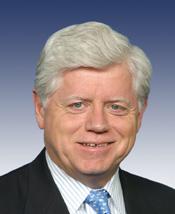
John B. Larson
DDemocratCT-1 · Representative
52
/ 100
Average
Attendance97
Avg: 96
Independence1
Avg: 4
Bipartisan Tone2
Avg: 15
Ethics Record100
Avg: 99
Transparency47
Avg: 53
Accountability Score — composite of attendance, independence, bipartisan tone, ethics record & transparency.
Methodology15
Bills Sponsored
0
Enacted into Law
0
Passed a Chamber
15
In Committee
All Sponsored Bills
HR9964In Committee
To amend the War Powers Resolution to provide for the limitation on Federal funding in contravention of the requirements of the War Powers Resolution.
This proposal would cut off federal funding for military operations that violate the War Powers Resolution, a 1973 law requiring the president to notify Congress within 48 hours of committing armed forces to military action and to get congressional approval within 60 days. The bill would give Congress a financial enforcement tool to ensure presidents follow these rules rather than conducting extended military operations without proper congressional authorization. It affects the Defense Department, military operations, and the balance of power between the president and Congress over decisions to use military force.
HR9519In Committee
Social Security 2100 Act
The proposal aims to strengthen Social Security by adjusting how the program operates to ensure it can continue paying benefits to current retirees and future generations. It would likely involve changes to how Social Security is funded or how benefits are calculated, affecting millions of Americans who rely on retirement checks and workers who contribute to the system through payroll taxes. The bill is currently being reviewed by multiple congressional committees to determine what specific changes it would make.
HR9354In Committee
Fair Elections Now Act
The proposal would change how House election campaigns are funded, likely including measures to alter campaign finance rules, donation limits, or public financing options for candidates running for the House of Representatives. These changes would affect candidates, political donors, and voters by reshaping how money flows into congressional campaigns. The specific reforms would be determined as the bill moves through the House Committee on House Administration.
HR9355In Committee
Don't Settle for Corruption Act
The federal government currently settles certain legal disputes by paying out compromise settlements, and this bill would change how those payments are processed and approved. The changes would affect how quickly settlement money reaches people who have won cases against the government and could streamline the bureaucratic procedures involved in distributing these funds. The bill is designed to make the settlement payment system more efficient for both the government and the individuals receiving compensation.
HR8694In Committee
Assault Weapon Financing Accountability Act
The proposal would make it illegal for companies to offer "Buy Now, Pay Later" financing plans for semiautomatic assault weapons, preventing customers from purchasing these guns through installment payment arrangements. This would affect both the firearms industry and financing companies that currently offer these payment options, while restricting how consumers can purchase certain types of guns.
HRES1241In Committee
Of inquiry requesting the President of the United States to furnish certain information to the House of Representatives relating to access to and usage of NUMIDENT, death information, and other personally identifiable information in the possession of the Social Security Administration by an individual acting for or on behalf of the Department of Government Efficiency.
The House is asking the President to provide information about whether someone working for the Department of Government Efficiency has accessed sensitive personal data held by the Social Security Administration, including Social Security numbers, death records, and other identifying information. This inquiry seeks to understand what information was accessed, how it was used, and whether proper authorization and safeguards were followed. The request has been sent to the House Ways and Means Committee for review.
HRES1155In Committee
Impeaching Donald J. Trump, President of the United States, for high crimes and misdemeanors.
This resolution sets forth 13 articles of impeachment against President Donald Trump for high crimes and misdemeanors on charges of war power-murder-piracy; militarization of domestic law enforcement; serial unconstitutional detentions and deportations; retaliation against constitutionally protected speech or association; abuse of the pardon power—sabotaging the rule of law; illegally crippling or defunding programs to protect consumers, the needy, workers, and the environment; usurpation of the congressional power of the purse; contempt of Congress—secret government; perverting law enforcement to persecute political opponents and benefit friends; suspending or dispensing with laws; flouting Section 1 of the Fourteenth Amendment; specious national emergency—foreign terrorist organization declarations; and domestic and foreign emoluments clauses.
HR7910In Committee
ACTION for National Service Act
The bill would establish or expand national service programs that give Americans opportunities to serve their country through civilian work on infrastructure, environmental, or community projects, likely in exchange for education benefits, job training, or other compensation. It would affect young adults and workers seeking service opportunities as well as employers and communities that could benefit from these service programs. The proposal is currently being reviewed by committees that handle education, workforce issues, and tax policy to determine how it should be structured and funded.
HR7878In Committee
Segal AmeriCorps Educational Award Tax Relief Act of 2026
This bill would allow AmeriCorps volunteers to exclude their educational awards from their taxable income, meaning they wouldn't have to pay federal income taxes on the money they receive for completing their service. Currently, these awards are treated as taxable income, which can create a significant tax burden for volunteers who have already sacrificed earnings to serve their communities. The change would make AmeriCorps service more financially attractive by letting volunteers keep more of their educational benefits.
HR7621In Committee
Stop ICE Election Militarization Act
This bill would restrict Immigration and Customs Enforcement (ICE) from conducting immigration enforcement operations near polling places, during voting periods, or in ways that could interfere with people's ability to vote. The measure aims to protect voters—particularly immigrants and communities with large immigrant populations—from intimidation or disruption while exercising their right to vote. It reflects concerns that aggressive immigration enforcement activities could discourage eligible voters from going to the polls.
HRES1059In Committee
Of inquiry requesting the President of the United States to furnish certain information to the House of Representatives relating to the Department of Government Efficiency's access to and usage of NUMIDENT and other personally identifiable information in the possession of the Social Security Administration.
The House is asking the President to provide information about how the Department of Government Efficiency has accessed and used sensitive personal data from the Social Security Administration, including Social Security numbers and other identifying information. This inquiry seeks to understand what data the efficiency department obtained, how it was used, and what safeguards were in place to protect Americans' private information. The request has been sent to the House Ways and Means Committee for review.
HR5802In Committee
MAGA Act
I cannot provide a meaningful summary because the bill's title and subjects are too vague to determine what specific policies it would actually change. Based on the referral to committees handling government operations and appropriations, the bill likely addresses federal spending or government administration, but without access to the bill's actual text or more specific subject details, I cannot accurately explain what it would do or who it would affect.
HRES627In Committee
Celebrating the 100th anniversary of Pratt & Whitney.
This resolution celebrates the achievements and legacy of the Connecticut company Pratt & Whitney on its 100 th anniversary and recognizes the company for its excellence in engineering, innovation, and public service. It also commends and thanks the past and present skilled employees of Pratt & Whitney, including machinists, engineers, technicians, and veterans.
HR1876In Committee
Keeping Our Field Offices Open Act
Keeping Our Field Offices Open Act This bill temporarily prohibits the closure or consolidation of, or other limitation of access to, Social Security Administration (SSA) offices and stations, and sets forth procedural requirements for future changes to office and station availability. Specifically, the bill prohibits through at least January 21, 2029, the closure or consolidation of, or other limitation of access to, SSA field offices, hearing offices, and resident stations. On or after that date, SSA must submit a report to Congress justifying its process for selecting stations and offices to be closed, consolidated, or limited. The prohibition is lifted 180 days after the submission of such report. The bill also sets forth requirements that must be met before SSA may close, consolidate, or otherwise limit access to an office or station after the initial moratorium expires. At least 120 days before such a change takes effect, SSA must provide public notice to individuals in affected areas, including information on how lost access to SSA services will be replaced. SSA must also conduct at least two public hearings on each such change. Further, SSA must provide a hearing to any individual who makes a timely showing that a determination to close, consolidate, or limit an office or station is arbitrary, capricious, or deficient in another specified manner. Finally, a closure, consolidation, or limitation may not result in the total number of SSA offices or stations falling below the number of such offices or stations in operation on January 20, 2025.
HR1877In Committee
Protecting Americans’ Social Security Data Act
Protecting Americans’ Social Security Data Act This bill prohibits political appointees and special government employees from accessing Social Security data systems that contain personally identifiable information about Social Security beneficiaries. Specifically, political appointees and special government employees may not access systems maintained by the Social Security Administration (SSA) that issue or record Social Security account numbers, that are used to determine eligibility for or to pay Social Security benefits, or that otherwise contain personally identifiable information about individuals receiving or applying for benefits. The bill also establishes a civil right of action for an individual whose information was negligently accessed or disclosed in violation of these provisions. The individual may bring suit against the United States if the violator was a U.S. employee or officer, or against the violator if they were not a U.S. employee or officer. Such a claim must be brought within two years of the affected individual’s discovery of the violation. Upon a finding of liability, defendants are liable for specified monetary damages. If an individual is criminally charged or subject to proposed disciplinary or adverse action by a federal or state agency for having accessed or disclosed information in violation of these provisions, SSA must notify the individual whose information was accessed or disclosed of the violation as soon as practicable. Finally, the bill requires the SSA Office of the Inspector General to investigate and report to Congress on any unauthorized access to or disclosure of information in a beneficiary data system.