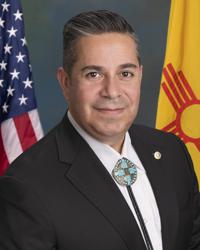
Ben Ray Luján
DDemocratNM · Senator
59
/ 100
Average
Attendance99
Avg: 97
Independence38
Avg: 23
Bipartisan Tone1
Avg: 14
Ethics Record100
Avg: 100
Transparency44
Avg: 47
Accountability Score — composite of attendance, independence, bipartisan tone, ethics record & transparency.
Methodology75
Bills Sponsored
0
Enacted into Law
3
Passed a Chamber
72
In Committee
All Sponsored Bills
S5635In Committee
Arts Education for All Act
Arts Education for All Act This bill expands arts education and programming for children in early education, K-12 students, and juveniles and adults in the criminal justice system. Specifically, the bill allows Child Care and Development Block Grant funding to be used for additional activities, including arts programming. Additionally, the bill addresses arts programming in elementary and secondary schools by directing each state educational agency to include information on arts programming in its state plan, including how it will integrate arts education instruction into the curriculum and increase the number of arts teachers in schools; requiring state report cards to include information on arts courses; requiring local educational agency (LEA) plans to describe how the LEA will encourage the use of arts education to improve student achievement; and allowing certain funds to be used for professional development for arts teachers. The bill directs the National Center for Education Research to carry out research on the use of arts and arts education in elementary and secondary schools, including in low-performing schools. Further, the National Center for Education Statistics must compile data on arts education. The National Assessment of Educational Progress must include a specified arts assessment. The bill requires a state's juvenile justice and delinquency plan to describe how the state will coordinate services and activities for juvenile justice and delinquency prevention with arts agencies and arts organizations. Additionally, grants for adult offender reentry demonstration projects may be used for facilitating arts education.
S5662In Committee
CARE Act of 2026
S1363Passed Senate
New Mexico Land Grant-Mercedes Historical or Traditional Use Cooperation and Coordination Act
New Mexico Land Grant-Mercedes Historical or Traditional Use Cooperation and Coordination Act This bill directs the Bureau of Land Management (BLM) and the Forest Service to enter a memorandum of understanding with the New Mexico Land Grant Council to describe existing processes that land grants-mercedes may use to obtain authorization for historical, traditional, or other uses of federal lands. Land grants-mercedes were created when Spain and Mexico issued grants of land to communities or individuals. When the United States acquired the land, including New Mexico, a process was created for adjudicating and recognizing these property rights. During that process, most land grants-mercedes lands became federal lands. Today, New Mexico recognizes 27 community land grants-mercedes as political subdivisions. When entering into the memorandum of understanding, the BLM and the Forest Service must consult with Indian tribes. The memorandum of understanding must provide for (1) enhanced cooperation and coordination between the BLM, the Forest Service, and qualified land grants-mercedes; and (2) subsidiary agreements with certain land grants-mercedes for specific projects. Additionally, the bill outlines what the memorandum of understanding must describe, such as the procedures for notice and comments on land management planning decisions. Finally, the BLM and the Forest Service must include in land use plans a section that evaluates the impact of other uses in the plan on historical or traditional uses by land grants-mercedes.
S5475In Committee
Timely Access to Coverage Decisions Act
SRES889In Committee
A resolution recognizing the contributions of Hispanic and Latino Americans to the musical heritage of the United States and designating September 2026 as "Latin Music Appreciation Month".
S5282In Committee
Chama Basin Watershed Protection Act
S5321In Committee
HCBS Access Act
S5278In Committee
GHOST Act
S5260In Committee
Stroke Act
S5248In Committee
Early Childhood Educator Professional Improvement Act of 2026
S5196In Committee
No Trump Immunity Act
This bill would prevent the Department of Justice from offering immunity deals to the President, Vice President, or their close family members and business associates when they are suspected of certain crimes. Immunity deals typically allow someone to avoid prosecution in exchange for cooperating with investigators, but this bill would ban that option for these high-ranking officials and their relatives. The measure aims to ensure that no one in the President's or Vice President's inner circle can escape criminal accountability through special legal agreements.
S5177In Committee
New Mexico Rural Veteran Health Care Access Act
The proposal would expand healthcare services for veterans in New Mexico by adding two counties to a Veterans Integrated Service Network, which is a regional system that coordinates VA medical care and benefits. This change would allow veterans in those counties to access VA healthcare services more easily through the expanded network. The bill is currently under review by the Senate Committee on Veterans' Affairs.
S5162In Committee
Strengthening Taxpayer Advocacy Act
The proposal would give the National Taxpayer Advocate—an independent official within the IRS who helps taxpayers resolve disputes—stronger powers to assist people dealing with tax problems. These expanded authorities would likely allow the advocate to more effectively intervene when taxpayers face unfair treatment or errors by the IRS. The change aims to make it easier for ordinary people to get help navigating complicated tax issues.
S4890In Committee
Protecting Indian Water Rights Settlements Act of 2026
The bill would modify how money is organized within a fund that helps complete water rights agreements with Native American tribes, by creating separate accounts within that fund for different purposes. This change would help track and manage the settlement payments more clearly as the government works to fulfill its obligations to tribes regarding water access and rights. Native American tribes and communities that have pending water rights settlements would be the primary beneficiaries of this organizational improvement.
S3573In Committee
A bill to amend the Aamodt Litigation Settlement Act to modify a provision relating to the extension of certain dates for the completion of the Regional Water System, and for other purposes.
This bill would change deadlines in a long-running water rights settlement agreement involving Native American tribes in New Mexico, giving the parties more time to complete construction of a regional water system that serves both tribal and non-tribal communities. The modification would affect the Aamodt settlement, which has been resolving water disputes between the Tesuque Pueblo and other stakeholders for decades. The bill is currently under review by the Senate Committee on Indian Affairs.
S5118In Committee
Local Input Act
Before the federal government can lease public land for oil and gas drilling, the Interior Department would have to get input from the public, state governments, tribes, and local officials about whether that's a good idea. This gives communities a real voice in decisions that could affect their environment and economy before leases are actually offered. The requirement applies to certain parcels of federal land that the government is considering opening up for energy development.
S5072In Committee
Taxpayer Transparency and Notice Act
The IRS would be required to send taxpayers written notices every three months if they have an unpaid tax bill, keeping them regularly informed about what they owe. This would affect anyone with outstanding tax debt and could help prevent surprise penalties or collection actions by ensuring people stay aware of their obligations. The bill is currently under review by the Senate Finance Committee.
S5073In Committee
Tax Complexity and Fraud Prevention Review Act
The Treasury Department would be required to regularly report on efforts to prevent tax fraud and identify ways to reduce unnecessary complexity in the tax code. These reports would help Congress and the public understand where tax fraud is occurring, what's being done to stop it, and which parts of tax law are most confusing or complicated. The goal is to make the tax system simpler and catch more people who aren't paying what they owe.
S4966In Committee
High Court Gift Ban Act
Federal judges would be banned from accepting gifts from lawyers, litigants, and others who have business before the courts, closing potential loopholes in current ethics rules. The restrictions aim to prevent judges from being influenced by valuable presents that could compromise their impartiality in cases. This would affect federal judges across the country and potentially strengthen public confidence in the fairness of the judicial system.
S4860In Committee
CHILE Act of 2026
The bill would create a system to help farmers who grow specialty crops like fruits, vegetables, and nuts when they face emergencies such as natural disasters or disease outbreaks. It would establish rules for how the federal government provides financial assistance to these farmers when their crops are damaged or destroyed. Specialty crop farmers would benefit from having a clearer, more predictable way to get emergency help compared to the current system.
S4731In Committee
Protecting Indian Water Rights Settlements Act of 2026
The bill would modify how money is distributed from a fund created to help settle water rights disputes involving Native American tribes, by creating separate accounts within that fund for different purposes or tribes. This change would give Congress and tribal nations more control over how settlement money is allocated and spent. The proposal affects Native American communities, federal agencies managing water resources, and states involved in water rights negotiations with tribes.
S4666In Committee
Respect Tribal IDs Act of 2026
The Department of Homeland Security would be required to train its officers and employees on issues related to Indian tribes, their sovereignty, and their legal status. This training would help federal agents and staff better understand tribal governments and laws when working on matters that affect Native American communities. The bill aims to improve how DHS interacts with tribes on border security, law enforcement, and other federal responsibilities.
S4592In Committee
Digital Opportunity Foundation Act of 2026
The legislation would create a new Foundation for Digital Opportunity to help expand internet access and digital skills training across the country, particularly in underserved communities. This would affect rural areas, low-income neighborhoods, and other regions that currently lack reliable broadband or technology education programs. The foundation would work to bridge the digital divide by funding projects that connect people to high-speed internet and teach them how to use technology effectively.
S4567In Committee
Loan Forgiveness for Educators Act of 2026
Loan Forgiveness for Educators Act of 2026 This bill expands loan forgiveness for educators by revising the Teacher Loan Forgiveness Program. The program provides loan forgiveness (up to $17,500) for teachers who are highly qualified, teach full-time in a low-income elementary or secondary school or educational service agency, and complete five years of consecutive service. Specifically, the bill renames the program as the Educator Loan Forgiveness Programs. Additionally, the bill expands the program by making additional loan types eligible for benefits under the program (e.g., Parent PLUS Loans). Further, the bill expands program eligibility to early childhood educators and program directors serving in early childhood education programs and school leaders serving in public high-need schools. The bill requires the Department of Education to make monthly student loan payments on behalf of the educator during qualifying service (i.e., employment as a full-time qualifying educator in a high-need school or an early childhood education program), provide complete loan forgiveness after five years of qualifying service (which does not have to be consecutive), and take steps to notify borrowers about changes to the program.
S4557In Committee
Outage Refund Protection Act
When phone, cable, satellite, or internet services go down, companies would be required to automatically give customers refunds for the time their service wasn't working, rather than making customers request reimbursement themselves. This would affect millions of households and businesses that rely on these services, as well as the telecommunications and cable companies that provide them. The bill aims to make it easier for consumers to get compensation when they experience service outages without having to file complaints or navigate company refund processes.
S4506In Committee
Advancing Water Reuse Act
The proposal would give businesses and property owners a tax credit—a direct reduction in taxes owed—when they invest in systems that capture and reuse water instead of letting it go to waste. This would apply to projects like rainwater harvesting, recycled wastewater systems, and other water conservation infrastructure. The incentive is designed to encourage companies and organizations to adopt water-saving technologies that reduce overall water consumption.
S4516In Committee
Respect Tribal IDs Act of 2026
The Department of Homeland Security would be required to train its officers and employees on topics related to Indian tribes, their sovereignty, and their legal status. This training would help DHS personnel better understand tribal governments and laws when working on issues that affect Native American communities. The bill aims to improve how federal law enforcement and immigration officials interact with tribes and tribal members.
S4422In Committee
WATCH Personnel Act of 2026
This bill would ensure that the Transportation Security Administration (TSA), which screens passengers and baggage at airports, can continue paying its employees and operating during a government funding gap that begins February 14, 2026. Without this measure, TSA workers like airport security screeners would go unpaid and airport security operations could be disrupted during the funding lapse. The bill allows essential TSA functions to continue until Congress passes a regular budget or another funding measure.
S4401In Committee
PRICE Act
The legislation would require companies like DoorDash, Uber Eats, and Grubhub to be transparent about their fees and pricing when customers order food or other goods through their apps, and would restrict how much these platforms can charge restaurants and small businesses for using their services. The rules would affect delivery companies, restaurants, and consumers by potentially lowering costs for both businesses and customers while requiring clearer disclosure of all fees before purchase. The bill is currently under review by the Senate Commerce Committee.
S4333In Committee
VOICE Act
This bill would allow people to sue the federal government for money damages if they believe an immigration enforcement officer violated their legal rights during an arrest, search, or other enforcement action. It creates a legal pathway for immigrants and others affected by immigration enforcement to seek compensation for violations like unlawful detention, excessive force, or violations of due process. The bill would apply to actions taken by federal immigration officers and agents.
S4324In Committee
Federal Prosecutorial Accountability Act
This bill would prevent federal government lawyers who have been punished by a court for misconduct from temporarily filling in to represent the government in legal cases. The measure aims to ensure that only lawyers in good standing handle government legal matters, protecting the integrity of cases where the federal government is involved.
S4326In Committee
The FBI Hiring Review Act
The bill would make changes to how U.S. Immigration and Customs Enforcement and U.S. Customs and Border Protection recruit, hire, and train their employees. These agencies would likely face new requirements or receive additional resources to improve their hiring standards and training programs for border agents and immigration officers. The changes could affect how quickly these agencies fill job openings and what qualifications new employees must have.
SJRES153In Committee
A joint resolution providing for congressional disapproval under chapter 8 of title 5, United States Code, of the rule submitted by the Bureau of Consumer Financial Protection relating to the withdrawal of the rule relating to "Bulletin 2022-06: Unfair Returned Deposited Item Fee Assessment Practices".
Congress is considering blocking a decision by the Consumer Financial Protection Bureau to withdraw its guidance on bank overdraft and returned check fees, which the agency had previously said were unfair practices. If approved, this resolution would force the bureau to keep its 2022 guidance in place, potentially limiting how much banks can charge customers when checks bounce or accounts are overdrawn. The measure affects banks and their customers who pay these fees.
S4101In Committee
Grocery, Farm, and Food Worker Protection Act of 2026
Grocery, Farm, and Food Worker Protection Act of 2026 This bill directs the Agricultural Marketing Service (AMS) to establish a grant program to provide farmworkers, meat processing workers, and grocery workers stabilization payments in the case of a natural disaster or other disaster. Specifically, AMS must provide funding to membership organizations or labor unions representing farmworkers, meat processing workers, and grocery workers for the payments.
S3996In Committee
DHS Hiring Review Act
This bill would require the Department of Homeland Security to review and potentially change its hiring practices and staffing levels, likely in response to concerns about how the agency manages immigration enforcement and border security operations. The measure would affect DHS employees and potentially influence how quickly the agency can hire new workers for immigration-related positions. The bill is still in early stages and has been sent to the relevant Senate committee for consideration.
S3995In Committee
LOCATE Act
The LOCATE Act would require the federal government to maintain and share information about the locations of undocumented immigrants with state and local law enforcement agencies. This would allow police departments across the country to access federal immigration data to help identify and locate people in the country illegally, affecting both immigration enforcement efforts and communities with significant immigrant populations.
S3997In Committee
Homeland Security Improvement Act
Based on the title and immigration focus, this bill likely proposes changes to how the Department of Homeland Security operates, possibly affecting border security, immigration enforcement, or the processing of immigrants and asylum seekers. The specific improvements could range from funding increases and staffing changes to new procedures for handling immigration cases, though the exact details would depend on the bill's full text. Workers, immigrants, border communities, and DHS agencies would be among those affected by whatever changes the bill ultimately proposes.
S3892In Committee
Stop Price Gouging in Grocery Stores Act of 2026
This bill would give the federal government power to prevent grocery stores and food suppliers from charging excessive prices during emergencies or times of supply shortage. It aims to protect shoppers from sudden price spikes on essential food items by allowing regulators to set limits on how much prices can increase. The law would affect large grocery chains, food distributors, and potentially manufacturers when they sell products to consumers during declared emergencies.
S3854In Committee
Advanced Weather Model Computing Development Act
This bill would fund and support the development of advanced computer systems and technology to improve weather forecasting and prediction models. The investment would help scientists and meteorologists create more accurate weather predictions, which could better protect the public from severe storms and extreme weather events. The funding would likely benefit weather agencies, research institutions, and technology companies working on next-generation forecasting tools.
S3828In Committee
CLEAN SMART Act of 2026
The bill aims to promote environmentally friendly technology and practices, likely by encouraging or requiring the use of cleaner energy sources and smart systems that reduce pollution and waste. It would probably affect energy companies, manufacturers, and potentially consumers by setting standards or providing incentives for adopting greener technologies. The specific details of which industries are targeted and what requirements or incentives would apply are still being determined in committee.
S3821In Committee
Fair Repair Act
This bill would require manufacturers to make repair parts, tools, and instructions available to consumers and independent repair shops so people can fix their own devices instead of being forced to use expensive manufacturer repair services. It would apply to products like phones, computers, appliances, and farm equipment, giving owners more control over repairs and potentially saving money while reducing electronic waste. The legislation aims to break down barriers that currently prevent people from fixing things they own.
S3594In Committee
Nutrition Administration Assistance Act of 2026
Nutrition Administration Assistance Act of 2026 This bill authorizes additional funding through FY2030 to pay administration costs incurred by states for certain Department of Agriculture nutrition programs. The bill specifically authorizes funding for administration costs incurred by state agencies to carry out the Commodity Supplemental Food Program, states to carry out state plans under the Emergency Food Assistance Program, and states to carry out the Seniors Farmers' Market Nutrition Program.
S3540In Committee
LISTOS Act of 2025
S640Passed Senate
Technical Corrections to the Northwestern New Mexico Rural Water Projects Act, Taos Pueblo Indian Water Rights Settlement Act, and Aamodt Litigation Settlement Act
Technical Corrections to the Northwestern New Mexico Rural Water Projects Act, Taos Pueblo Indian Water Rights Settlement Act, and Aamodt Litigation Settlement Act This bill authorizes deposits representing unpaid interest into the Navajo Nation Water Resources Development Trust Fund, the Taos Pueblo Water Development Fund, and the Aamodt Settlement Pueblos’ Fund. These funds were established in 2009 and 2010 under certain water rights settlement agreements that did not allow accrual of interest.
S3330In Committee
Strengthening Sanctions on Fentanyl Traffickers Act of 2025
The bill would impose new economic sanctions and penalties against individuals and organizations involved in trafficking fentanyl across international borders, aiming to disrupt the supply chains that bring this deadly drug into the United States. It would likely give the government stronger tools to freeze assets, block financial transactions, and restrict business dealings with known fentanyl traffickers and their networks. The measure targets drug smugglers and criminal organizations rather than individual drug users or patients receiving legitimate pain medication.
S3256In Committee
Disarm Hate Act
Disarm Hate Act This bill expands the categories of persons who are prohibited from receiving or possessing a firearm. Specifically, it prohibits firearm sale or transfer to and receipt, possession, shipment, or transport by a person (1) who has been convicted of a misdemeanor hate crime, or (2) who has received an enhanced hate crime misdemeanor sentence.
S3149In Committee
Responsible Wildland Fire Recovery Act
Responsible Wildland Fire Recovery Act This bill authorizes the Department of Agriculture (USDA) to waive certain requirements for matching federal funds in fire recovery projects. Specifically, USDA may waive cost-sharing requirements for projects responding to fires resulting from management activities (e.g., controlled burns) conducted by USDA on National Forest System land.
S3094In Committee
Pay Our Capitol Police Act
Pay Our Capitol Police Act This bill provides FY2026 continuing appropriations for the U.S. Capitol Police (USCP) to pay and provide benefits for employees who are working during the government shutdown that began on October 1, 2025, due to a lapse in appropriations. Specifically, the bill provides the appropriations to the USCP for the pay, allowances, pay differentials, benefits, and other payments otherwise payable on a regular basis to all USCP officers and employees for work performed during the shutdown. The bill also provides appropriations for payments to USCP contractors who are providing support to USCP officers and employees who are working during the shutdown. The appropriations are available until the earlier of (1) the enactment into law of legislation to provide FY2026 appropriations for the USCP or the legislative branch (including continuing appropriations), or (2) September 30, 2026. The bill must take effect as if it had been enacted on September 30, 2025.
S2921In Committee
A bill to amend section 7014 of the Elementary and Secondary Education Act of 1965 to advance toward full Federal funding for impact aid, and for other purposes.
S2643In Committee
Seedlings for Sustainable Habitat Restoration Act of 2025
Seedlings for Sustainable Habitat Restoration Act of 2025 This bill provides support for the collection and maintenance of native seeds and production of tree seedlings. First, the bill expands the Infrastructure Investment and Jobs Act to allow the Forest Service to enter into contracts, grants, or agreements with state forestry agencies, institutions of higher education, Indian tribes, and other entities for the (1) collection and maintenance of native seeds, including material from managed seed orchards; and (2) production of seedlings for revegetation. Second, the bill modifies requirements for forest landscape restoration proposals for funding under the Collaborative Forest Landscape Restoration Program. Specifically, the bill adds institutions of higher education to the list of entities that may provide employment or training opportunities under a proposal and allows the employment or training opportunities to include the collection and maintenance of native seeds for revegetation or the production of seedlings.
S2508In Committee
Gas Pipeline Leak Detection and Repair Act of 2025
S2325In Committee
Restore and Modernize Our National Laboratories Act of 2025
This bill would provide funding and support to upgrade and improve the nation's scientific research laboratories, which conduct work on energy, climate, and other critical technologies. The upgrades would modernize aging facilities and equipment at these labs to help them operate more efficiently and stay competitive in developing new energy solutions and scientific breakthroughs. The changes would primarily affect the Department of Energy, the scientists and engineers who work at these facilities, and the communities where the labs are located.
S2225In Committee
Prevent Interruptions in Physical Therapy Act of 2025
Prevent Interruptions in Physical Therapy Act of 2025 This bill allows a physical therapist to receive payment under Medicare for services provided to the physical therapist's patients by another physical therapist through a qualifying temporary arrangement, regardless of the geographic area or population served. Currently, physical therapists may only receive payment with respect to such arrangements for services provided in medically underserved, rural, or health professional shortage areas.
S2182In Committee
Community Solar Consumer Choice Act of 2025
This bill would allow more Americans to benefit from solar energy by letting them subscribe to shared solar projects in their communities rather than having to install panels on their own roofs. Renters, people with shaded homes, and those who can't afford individual solar systems would gain access to clean energy and potentially lower electricity bills through these community solar programs. The legislation aims to expand solar energy options for everyday consumers while supporting the growth of renewable energy across the country.
S2076In Committee
HCBS Relief Act of 2025
HCBS Relief Act of 2025 This bill temporarily increases the applicable Federal Medical Assistance Percentage (i.e., federal matching rate) under Medicaid for certain approved home- and community-based services that are provided during FY2026-FY2027. As a condition for receiving the increased rate, a state must agree to undertake activities to improve the delivery of such services, such as by providing additional benefits to home health workers and by helping individuals who were relocated to nursing facilities move back to their homes.
SRES249In Committee
A resolution expressing support for the designation of May 2025 as "Mental Health Awareness Month".
This resolution declares mental health a national priority and supports the designation of May 2025 as Mental Health Awareness Month.
SRES256In Committee
A resolution designating May 2025 as "American Stroke Month".
This resolution designates May 2025 as American Stroke Month.
S1769In Committee
Farmer to Farmer Education Act of 2025
Farmer to Farmer Education Act of 2025 This bill expands the authority of the Department of Agriculture (USDA) to provide technical assistance for farmer-to-farmer networks. USDA must use annual appropriations provided for Natural Resources Conservation Service conservation operations to implement this program. A farmer-to-farmer network means any affiliation or association of farmers that share information, technical assistance, or any other type of mutually beneficial support. Under the bill, USDA may enter into cooperative agreements with eligible entities to (1) provide assistance to farmer-to-farmer networks to build network capacity, connect farmers with mentors or group learning opportunities, and support goal setting; (2) increase technical assistance for farmers, ranchers, and forest owners who use different farming models, practices, and scales; (3) establish and steward the networks; and (4) establish reporting requirements for these activities. Those eligible for the program include nonprofit entities, farmer-to-farmer networks, tribal entities, local governments, institutions of higher education, and states. USDA must prioritize agreements with entities that seek to meet the specific needs of certain farmers, ranchers, and forest owners who are historically underserved or operating in high-poverty areas. The bill also provides for subawards to plan and conduct events, as well as to identify and develop innovative activities, in order to increase farmer access to farmer-to-farmer assistance.
S1633In Committee
TEST AI Act of 2025
S1599In Committee
Midwives for MOMS Act of 2025
This bill would expand access to midwifery services by increasing funding and support for midwife training programs and making it easier for midwives to practice across state lines. The legislation aims to help pregnant people, particularly in rural and underserved areas, by providing more options for childbirth care outside of traditional hospital settings. It would affect midwives, pregnant women, and healthcare systems by potentially reducing costs and increasing choices for maternal care.
S1598In Committee
BABIES Act
The proposal would expand access to fertility treatments and reproductive health services by allowing certain costs to be covered through tax-advantaged health savings accounts and flexible spending accounts. This would help individuals and families afford procedures like in vitro fertilization, egg freezing, and other fertility treatments that are currently expensive and often not covered by insurance. The change would primarily benefit people trying to conceive who face significant out-of-pocket costs for these medical services.
SRES182In Committee
A resolution supporting the goals and ideals of National Public Health Week.
This resolution expresses support for National Public Health Week and recognizes the role of public health in preventing infectious disease outbreaks such as COVID-19 and measles.
S1412In Committee
Chaco Cultural Heritage Area Protection Act of 2025
Chaco Cultural Heritage Area Protection Act of 2025 This bill creates a buffer zone around the Chaco Culture National Historic Park in New Mexico by prohibiting certain leases on federal land for the development of mineral resources or geothermal energy within the buffer zone. Nonproducing oil and gas leases in the buffer zone are terminated.
S1379In Committee
REPAIR Act
The REPAIR Act likely aims to improve how the government maintains and fixes transportation infrastructure like roads, bridges, and public transit systems. Based on its focus on transportation and public works, the bill probably addresses funding, efficiency, or standards for repairing existing infrastructure rather than building new projects, which would affect commuters, local governments, and construction workers.
S1310In Committee
No Tax Breaks for Union Busting (NTBUB) Act
No Tax Breaks for Union Busting (NTBUB) Act This bill excludes from the tax deduction for ordinary and necessary business expenses amounts paid or incurred to influence employees with respect to labor organizations or labor organization activities. The bill also imposes information reporting requirements related to such expenses and imposes penalties for failure to comply. Under the bill, amounts paid to influence employees with respect to labor organizations include amounts paid (including wages and other costs) in connection with an action that results in a complaint or settlement related to an unfair labor practice or a finding of interference, influence, or coercion related to railway employees’ rights to organize and bargain collectively; for any meeting or training attended by employees and at which labor organizations are discussed; and that require certain employer disclosures and financial reporting. (Some exceptions apply.) The bill requires employers to file a return reporting certain information related to expenses paid to influence employees with respect to labor organizations and imposes a penalty for noncompliance. The amount of the penalty is the greater of (1) $10,000, or (2) $1,000 multiplied by the number full-time equivalent employees. Additional penalties apply for violations that continue for more than 90 days. The bill also imposes information reporting requirements on persons conducting activities on behalf of another person to influence employees with respect to labor organizations. The bill allows certain penalties for noncompliance with the reporting requirements to be waived if noncompliance is due to reasonable cause and not willful neglect.
S1025In Committee
FCC Legal Enforcement Act
FCC Legal Enforcement Act This bill authorizes the Federal Communications Commission (FCC) to pursue certain unpaid fines related to unauthorized telemarketing calls. Under current law, the Telephone Consumer Protection Act (TCPA) prohibits certain telemarketing calls made without the recipient’s consent and using automatic dialing technology or artificial or prerecorded voice messages. The Department of Justice (DOJ) has authority to pursue unpaid fines for TCPA violations. Under the bill, if DOJ does not pursue an unpaid fine related to a TCPA violation within a specified period, the FCC may do so. The bill directs the FCC to prioritize the collection of unpaid fines over $25 million.
S1004In Committee
Pregnant and Postpartum Women Treatment Reauthorization Act
Pregnant and Postpartum Women Treatment Reauthorization Act This bill reauthorizes through FY2029 the Residential Treatment for Pregnant and Postpartum Women program, which is administered by the Center for Substance Abuse Treatment within the Substance Abuse and Mental Health Services Administration. This program awards grants to fund services for pregnant and postpartum women with substance use disorders, including services for treatment, recovery support, and case management. The bill also specifically allows grant recipients to conduct outreach that is targeted at women disproportionately impacted by maternal substance use disorders.
S859In Committee
Mining Waste, Fraud, and Abuse Prevention Act of 2025
This bill aims to prevent waste, fraud, and abuse in mining operations on federal public lands by establishing stronger oversight and accountability measures for mining companies. It likely includes provisions to improve how the government monitors mining activities, ensures companies follow environmental and safety rules, and recovers money when mining operations cause damage or violate agreements. The legislation would affect mining companies operating on public lands as well as federal agencies responsible for managing those lands.
S958In Committee
Tech to Save Moms Act
This bill aims to improve health outcomes and support for mothers, likely through funding or programs related to maternal health care, pregnancy complications, or postpartum care. The legislation would affect pregnant women, new mothers, and healthcare providers by potentially expanding access to medical services or research focused on preventing maternal deaths and serious health problems. The bill is currently under review by the Senate committee responsible for health policy.
S867In Committee
Broadcast Freedom and Independence Act of 2025
Broadcast Freedom and Independence Act of 2025 This bill prohibits the Federal Communications Commission (FCC) from taking action against or imposing certain conditions on individuals on the basis of viewpoints broadcast or disseminated by the individuals or their affiliates. Specifically, the FCC may not revoke a license or authorization of, or otherwise take action against, an individual or entity on the basis of viewpoints broadcast or otherwise disseminated by the individual or entity or an affiliate thereof. Further, the FCC may not impose conditions on its approval of certain transactions on the basis of viewpoints broadcast or otherwise disseminated by the individual or entity seeking approval of the transaction, or an affiliate thereof. Under the bill, the FCC retains its authority to take action or impose conditions on the basis of (1) violations of certain existing laws regarding lottery information, fraud, and obscene language; or (2) the broadcast or other dissemination of content that constitutes incitement under the First Amendment.
S818In Committee
Abandoned Well Remediation Research and Development Act
The bill would fund research and development projects to find better ways to safely seal and clean up abandoned oil and gas wells that pose environmental risks. This would help states and companies develop new technologies and methods to prevent these wells from leaking harmful substances into groundwater and the atmosphere. The funding would support scientists and engineers working on solutions to address thousands of abandoned wells scattered across the country.
S782In Committee
Expanding Local Meat Processing Act of 2025
Expanding Local Meat Processing Act of 2025 This bill directs the Department of Agriculture to revise its regulations to allow certain packers to hold an ownership interest in, finance, or participate in the management or operation of a market agency selling livestock on a commission basis. The bill applies to packers that have a cumulative slaughter capacity of (1) less than 2,000 animals per day or 700,000 animals per year with respect to cattle or sheep, and (2) less than 10,000 animals per day or 3 million animals per year with respect to hogs. In addition, the bill includes a disclosure requirement for a market agency that has an ownership interest in, finances, or participates in the management or operation of a packer to which the agency sells consigned livestock. Specifically, the market agency must disclose on the account of sale (1) the name of the packer, and (2) the nature of the relationship between the market agency and the packer.
S647In Committee
Regional Leadership in Wildland Fire Research Act of 2025
Regional Leadership in Wildland Fire Research Act of 2025 This bill provides for the establishment of at least seven regional wildland fire research centers to improve the understanding of wildland fire through coordinated research and development. Specifically, the Department of Commerce, in coordination with the National Oceanic and Atmospheric Administration and the Forest Service, must establish regional centers at institutions of higher education and land-grant colleges and universities in seven specified regions. Institutions must be selected to host regional centers through a competitive process. Among other priorities, regional centers must develop technologies and tools to understand, monitor, and predict wildland fire, test and operate models to support land management decision-making, and improve the understanding of post-fire risks (e.g., flash flooding). Regional centers must coordinate their research with one another and with other wildland fire research entities, and must make their work and data fully and openly available. The bill also establishes a national coordination board to develop technological research priorities and science, data management, and sharing protocols in cooperation with each regional center. The national board must coordinate the activities of regional centers and other research institutions to avoid unnecessary duplication. Further, the bill establishes an advisory board at each regional center to advise on research goals and activities, assist with dissemination of research outputs, and ensure coordination of research between regional centers and federal and state land management agencies in the relevant region. Finally, the bill sets forth certain reporting requirements with respect to the regional centers’ progress.
S415In Committee
DOT Victim and Survivor Advocate Act
DOT Victim and Survivor Advocate Act This bill directs the Department of Transportation (DOT) to establish the position of National Roadway Safety Advocate to work directly with victims and survivors of road crashes or their families (i.e., stakeholders). Specifically, the purposes of the advocate are to (1) document and communicate recommendations from stakeholders to DOT on the needs, objectives, plans, approaches, content, and accomplishments of DOT's roadway safety programs and activities; and (2) serve as a resource and point of contact for stakeholders on relevant roadway safety issues. The bill specifies that the advocate position must be filled by a career appointment. The bill prohibits the advocate from taking certain actions, such as creating or authorizing DOT policies, priorities, or activities; or disclosing or discussing any enforcement matters that are under investigation or in litigation. The advocate must submit an annual report to DOT highlighting systemic issues relating to roadway safety based on information provided by stakeholders. The report must include recommendations on how to remedy the issues.
HR2729Passed House
To authorize the designation of National Environmental Research Parks by the Secretary of Energy, and for other purposes.
Requires the Department of Energy (DOE) to designate as protected outdoor research reserves for the purpose of conducting long-term environmental research on the impacts of human activities on the natural environment: (1) Savannah River National Environmental Research Park; (2) Idaho National Environmental Research Park; (3) Los Alamos National Environmental Research Park; (4) Fermi Lab National Environmental Research Park; (5) Oak Ridge National Environmental Research Park; and (6) Nevada National Environmental Research Park. Requires each site to support environmental research and monitoring activities to characterize and monitor site conditions and serve as control areas for comparison with environmental impacts of DOE land management, energy technology development, remediation, and other site activities outside the Park areas. Authorizes areas of research and monitoring on the sites to include: (1) ecology of the site and the region; (2) population biology and ecology; (3) radioecology; (4) effects of climate variability and change on ecosystems; (5) ecosystem science; (6) pollution fate and transport research; (7) surface and groundwater modeling; (8) student training; and (9) environmental impacts of development and use of energy generation technologies, including renewable energy technologies. Requires DOE to enter into a cooperative agreement with a university, community college, or consortium of institutions of higher education with expertise in ecology and environmental science of the region in which the Park is located to ensure the independence of the research, monitoring, public education, and outreach activities. Requires each site to support an outreach program to inform the public of the diverse ecological activities conducted and to educate students at various levels in environmental science. Requires DOE to designate a National Environmental Research Park Coordinator within the Department of Energy Office of Science to: (1) coordinate research activities among the Parks; (2) ensure that information on best practices for research, education, and outreach activities is shared among the sites; and (3) serve as liaison to other federal agencies to facilitate collaborative work at the Parks. Authorizes appropriations for FY2010-FY2014. Authorizes the Parks to be utilized to provide educational opportunities through the Summer Institutes program authorized in the Department of Energy Science Education Enhancement Act.