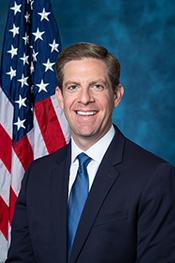
Mike Levin
DDemocratCA-49 · Representative
56
/ 100
Average
Attendance99
Avg: 96
Independence3
Avg: 4
Bipartisan Tone7
Avg: 15
Ethics Record100
Avg: 99
Transparency60
Avg: 53
Accountability Score — composite of attendance, independence, bipartisan tone, ethics record & transparency.
Methodology18
Bills Sponsored
0
Enacted into Law
0
Passed a Chamber
18
In Committee
All Sponsored Bills
HR9753In Committee
Fertility Cost Relief Act
People under age 59½ who withdraw money from retirement savings accounts to pay for fertility treatments like IVF would no longer face the usual 10% early withdrawal penalty tax, though they would still owe regular income taxes on the amount withdrawn. This change would help younger workers afford expensive fertility procedures without being penalized for accessing their own retirement savings for this purpose. The proposal affects individuals and couples seeking fertility treatment who have accumulated retirement savings.
HR7942In Committee
DEATH BETS Act
This bill would regulate or restrict the practice of wagering on people's deaths, sometimes called "death bets" or life settlement derivatives, which are financial bets that profit when someone dies. The legislation likely aims to prevent speculation on human mortality and protect individuals from having financial incentives created around their deaths. It would affect financial institutions, investors, and potentially insurance companies involved in these types of transactions.
HR7598In Committee
VALOR Act
The VALOR Act likely aims to improve benefits, job training, or economic opportunities for military veterans and service members. Based on its referral to the Subcommittee on Economic Opportunity, the bill probably addresses how veterans can transition to civilian employment or access education and career support programs. The specific details would depend on the bill's full text, but it appears focused on helping those who served in the armed forces succeed after military service.
HR7879In Committee
SUPER BUGS Act of 2026
This bill likely aims to address the growing problem of antibiotic-resistant bacteria, commonly called "superbugs," which can cause serious infections that are difficult or impossible to treat with existing medicines. The legislation probably includes measures to track and combat these resistant infections, improve how antibiotics are used in hospitals and farms, and potentially support research into new treatments—affecting patients, healthcare workers, pharmaceutical companies, and agricultural producers. By reducing the spread of antibiotic-resistant bacteria, the bill would help protect public health and prevent these dangerous infections from becoming more common.
HR7543In Committee
Plastic Pellet Free Waters Act
Plastic Pellet Free Waters Act This bill requires the Environmental Protection Agency to issue a final rule that prohibits certain discharges of plastic pellets and other preproduction plastic into waters of the United States.
HR7398In Committee
Passports for Purple Hearts and Medals of Honor Act
This bill would allow military members who have received the Purple Heart or Medal of Honor to obtain passports more easily and quickly than the standard process. The measure aims to recognize and honor these service members by streamlining the passport application procedures they would need to travel internationally.
HR7259In Committee
Military Dependents School Meal Eligibility Act of 2026
This bill would make it easier for children of military families to qualify for free or reduced-price school meals by changing how their family income is calculated. Currently, military families may not qualify for meal assistance even though their actual spending power is lower due to housing and other military-specific costs, so this bill would adjust the rules to account for those expenses. The change would help ensure military-connected students have better access to nutritious meals at school.
HR7066In Committee
SHIELD Act
The SHIELD Act would protect the nation's electrical grid from physical and cyberattacks by requiring power companies to strengthen security measures and report vulnerabilities to federal authorities. The legislation aims to prevent widespread blackouts and infrastructure damage that could affect millions of Americans who depend on reliable electricity. Power companies would need to meet new security standards and work with government agencies to identify and fix weaknesses in the grid system.
HR5195In Committee
Advancing Toward Impact Aid Full Funding Act
The federal government currently provides "impact aid" to school districts that lose tax revenue because they have military bases, Native American reservations, or other federal property within their boundaries. This bill would increase federal funding toward fully covering the costs that these districts lose, rather than the partial reimbursement they receive now. School districts serving military families, students on tribal lands, and communities near federal installations would benefit from more reliable education funding.
HR4809In Committee
INSPECT Act of 2025
Increasing Nuclear Safety Protocols for Extended Canister Transfers Act of 2025 or the INSPECT Act of 2025 This bill requires the Nuclear Regulatory Commission to assign a resident inspector to each commercial nuclear power plant that has permanently ceased operation. The inspector must (1) conduct inspections of decommissioning activities and spent nuclear fuel transfer activities, and (2) remain at the plant until all fuel is transferred from its spent fuel pools to dry storage.
HR4694In Committee
Fighting Fibers Act of 2025
The proposal would establish new regulations to reduce the release of microfibers—tiny synthetic particles shed from textiles and plastics—into the environment and water systems. It would likely require manufacturers of clothing, textiles, and other fiber-producing products to implement measures that capture or prevent these particles from entering waterways, affecting both the companies that make these products and consumers who use them. Environmental groups and public health advocates support such measures because microfibers can accumulate in ecosystems and potentially harm aquatic life and human health.
HR4511In Committee
Uncheck the Box Act
Uncheck the Box Act This bill places restrictions on recurring political contributions or donations. Specifically, the bill prohibits any person from soliciting a recurring contribution or donation for a political committee, an independent expenditure, or an electioneering communication by any method that does not require the affirmative consent of the contributor or donor. In addition, the bill prohibits a political committee, a person funding an independent expenditure, or a person funding an electioneering communication from accepting a recurring contribution or donation unless the contributor or donor gave affirmative consent. This affirmative consent cannot be a passive action by the contributor or donor, such as failing to uncheck a prechecked box. Further, any person who accepts a recurring contribution or donation must (1) provide a receipt for the initial contribution or donation and for each recurrence that clearly and conspicuously discloses all material terms, (2) provide all information needed to cancel the recurring contribution or donation in each communication with the contributor or donor, and (3) immediately cancel recurring contributions or donations upon request of the contributor or donor.
HR4136In Committee
NRC Office of Public Engagement and Participation Act of 2025
NRC Office of Public Engagement and Participation Act of 2025 This bill establishes an independent office within the Nuclear Regulatory Commission (NRC) to advocate for the public within NRC jurisdiction and support public participation in NRC proceedings and activities. The bill also authorizes the NRC to compensate certain persons for reasonable attorney’s fees, expert witness fees, and other costs of participating in NRC proceedings in certain circumstances where participation in the proceeding without compensation constitutes a significant financial hardship.
HR3217In Committee
Stop Child Hunger Act of 2025
Stop Child Hunger Act of 2025 This bill expands the Department of Agriculture's (USDA's) Summer Electronic Benefit Transfer Program for Children (Summer EBT) to include coverage during a school closure period. (Summer EBT provides grocery-buying benefits to low-income families with school-aged children when schools are closed for the summer.) Under the bill, a school closure period means a period in which an elementary school or secondary school is closed, operating remotely, or operating in a hybrid manner for five or more consecutive weekdays during a calendar year. The bill also increases the daily value of the benefit to cover the cost of breakfast, lunch, and a snack for every day school is closed. For FY2026, USDA must pay each state agency and covered tribal organization 100% of the administrative expenses (currently 50%) incurred in operating the program. The rate that USDA must pay for administrative expenses decreases each fiscal year until it reaches 50% of the expenses for FY2031 and each fiscal year thereafter. USDA must also provide grants to states to support the development or upgrading of data systems that are necessary to implement Summer EBT.
HR2862In Committee
Southern California Coast and Ocean Protection Act
This bill would protect the Southern California coast and ocean by restricting or regulating energy development activities like oil drilling and natural gas extraction in coastal waters. The legislation aims to preserve marine ecosystems and coastal communities from the environmental impacts of offshore energy operations. It would affect energy companies operating in the region as well as coastal residents and businesses that depend on ocean health.
HR1423In Committee
Guard and Reserve GI Bill Parity Act of 2025
Guard and Reserve GI Bill Parity Act of 2025 This bill expands eligibility for Post-9/11 educational assistance for members of the reserve components of the Armed Forces and members of the National Guard. Specifically, the bill expands the types of activities that count towards Post-9/11 GI Bill eligibility to include active duty, inactive-duty training, annual training duty, and full-time National Guard duty or active duty. (Generally, under current law, only federal active duty counts towards educational assistance eligibility.)
HR2786In Committee
Resilient Coasts and Estuaries Act of 2025
This bill would provide funding and support for projects that protect coastal areas and estuaries from erosion, flooding, and other environmental damage caused by storms and rising sea levels. It would help communities, states, and conservation groups restore wetlands, rebuild natural barriers like marshes and dunes, and plan for climate-related coastal changes. The funding would benefit coastal residents, fishing communities, and wildlife while helping reduce future disaster recovery costs.
HR169In Committee
Prevent Family Fire Act of 2025
This bill would change tax rules related to family-owned businesses and farms to reduce the tax burden when they are passed down to the next generation. The legislation aims to prevent families from having to sell their businesses or land to pay estate taxes after an owner dies. It primarily affects family business owners, farmers, and their heirs who inherit these assets.