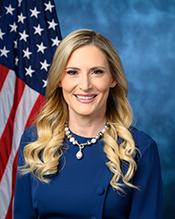
Laurel M. Lee
RRepublicanFL-15 · Representative
54
/ 100
Average
Attendance95
Avg: 96
Independence1
Avg: 4
Bipartisan Tone25
Avg: 15
Ethics Record100
Avg: 99
Transparency34
Avg: 53
Accountability Score — composite of attendance, independence, bipartisan tone, ethics record & transparency.
Methodology24
Bills Sponsored
0
Enacted into Law
3
Passed a Chamber
21
In Committee
All Sponsored Bills
HR7834Passed House
Safe Cloud Storage Act
Safe Cloud Storage Act This bill limits the civil and criminal liability of vendors that contract with law enforcement agencies to provide digital storage services (e.g., cloud-based storage) for storing, maintaining, and processing child sexual abuse material (CSAM) in investigations of online child sexual exploitation. Under current law, the National Center for Missing & Exploited Children (NCMEC) receives reports of online child sexual exploitation via its CyberTipline, evaluates and prioritizes the reports, and refers the reports to law enforcement agencies to investigate. Currently, federal law limits the liability of vendors that contract directly with the NCMEC to store and transfer CSAM. However, federal law does not limit the liability of vendors that contract with law enforcement agencies to assist in investigations. This bill establishes liability protections for vendors that contract with federal, state, and local law enforcement agencies to store, maintain, and process CSAM in investigations of online child sexual exploitation. Specifically, the bill prohibits a civil claim or criminal charge in federal or state court against such a vendor, so long as the vendor has not engaged in intentional misconduct or negligent conduct, acted with malice or reckless disregard, or acted for a purpose unrelated to its contractual duties. The bill requires vendors to comply with cybersecurity requirements for CSAM that is stored, maintained, or processed. The bill also requires vendors to comply with storage requirements for CSAM that is retained as evidence.
HR10500In Committee
Unleashing American Pipelines Act
HR10276In Committee
Ballots by Election Day Act
HR9915In Committee
Stealth Bot Prohibition Act
The legislation would ban "stealth bots"—automated programs that hide their identity while browsing websites or making purchases—and require companies to disclose when they're using bots for commercial purposes. This would affect e-commerce platforms, ticket sellers, and other online businesses that rely on automated systems, as well as consumers who compete with bots when trying to buy limited items like concert tickets or sneakers. The goal is to prevent bots from unfairly snatching up products and reselling them at inflated prices.
HR7258Passed House
Energy Emergency Leadership Act
Energy Emergency Leadership Act This bill expands the list of functions that the Secretary of Energy must assign to assistant secretaries under the Department of Energy Organization Act to include energy emergency and energy security functions, such as responsibilities with respect to energy infrastructure and cybersecurity. The Department of Energy must ensure that such functions are performed in coordination with relevant federal agencies.
HR8449In Committee
Federal Diversity Jurisdiction Modernization Act of 2026
The proposal would update the rules for when federal courts can hear lawsuits between people from different states, potentially changing which cases end up in state versus federal courts. This affects businesses, individuals, and anyone involved in civil disputes across state lines by determining where they can file their cases and what courts have authority to decide them.
HJRES152In Committee
Proposing an amendment to the Constitution of the United States to ensure that only citizens are eligible to vote in Federal elections.
This proposed constitutional amendment would explicitly restrict voting in federal elections to U.S. citizens only, which is already the current law but would be permanently enshrined in the Constitution itself. The change would make it harder to alter voting eligibility rules in the future, since constitutional amendments require approval from two-thirds of Congress and three-fourths of state legislatures. It primarily affects non-citizen residents, including legal permanent residents and other immigrants, who would be permanently barred from voting in presidential, congressional, and other federal elections.
HR6719Passed House
James T. Woods Act
James T. Woods Act This bill expands the federal framework for combating the online exploitation of children. Among its provisions, the bill establishes new criminal offenses, expands reporting requirements, and facilitates the prosecution and sentencing of offenders. TITLE I—SAFE ACT Sentencing Accountability For Exploitation Act or the SAFE Act This title directs the U.S. Sentencing Commission to review and amend its guidelines and policy statements applicable to federal criminal offenses involving the production, receipt, transport, shipment, or distribution of child sexual abuse material to (1) account for the actual and potential harm from the offense and changes since the last amendments with respect to the typical offense behavior and modern technologies, and (2) better reflect the spectrum of offender culpability. TITLE II—ENDING COERCION OF CHILDREN AND HARM ONLINE Ending Coercion of Children and Harm Online Act or the ECCHO Act This title establishes a federal framework to combat the online coercion of minors to commit harm. The title creates new criminal offenses, expands reporting of instances involving the online coercion of minors, facilitates the prosecution of offenders, and expands protections for minors who testify in court. TITLE III—STOP SEXTORTION Stop Sextortion Act This title criminalizes threats to distribute child sexual abuse material to intimidate, coerce, extort, or cause substantial emotional distress. This practice is commonly referred to as sextortion . The title also increases criminal penalties for related offenses that involve the use of child sexual abuse material to intimidate, coerce, extort, or cause substantial emotional distress.
HR7140In Committee
CLEAR Act
Without access to the specific bill text, the CLEAR Act appears to address commerce-related issues and has been sent to the House Judiciary Committee for review. Based on the title and committee assignment, it likely aims to clarify or streamline some aspect of business regulations or commercial practices, though the exact provisions would depend on the bill's specific language. To provide an accurate summary of what this bill would actually do, the full text would need to be reviewed.
HR6998In Committee
Renewed Hope Act
The Renewed Hope Act would make changes to federal crime and law enforcement policies, though the specific provisions are not detailed in the available information. Based on its status as an amended bill moving through committee, it likely addresses issues related to criminal justice, policing practices, or law enforcement procedures that affect both the criminal justice system and the communities it serves.
HR6289In Committee
Promoting a Safe Internet for Minors Act
The legislation would require social media platforms and online services to implement safety features protecting children from harmful content, predators, and excessive screen time, while giving parents better tools to monitor their kids' online activity. Tech companies would need to follow new standards for protecting minors' privacy and data, and could face penalties if they fail to meet these requirements. The bill affects social media companies, app developers, internet service providers, and families with children who use online platforms.
HR5883In Committee
Safer Supervision Act of 2025
The proposal would establish new requirements for how law enforcement agencies supervise their officers, likely including standards for training, accountability, and oversight to reduce misconduct and improve public safety. It would affect police departments across the country and potentially set minimum expectations for how officers are monitored and disciplined. The measure aims to strengthen internal controls within law enforcement agencies to prevent crimes and abuse of authority.
HR4567In Committee
Supporting Military Voters Act
Supporting Military Voters Act This bill requires the Government Accountability Office (GAO) to study and report on access to voting for uniformed services voters. Specifically, the GAO must analyze the effectiveness of the federal government in carrying out the Uniformed and Overseas Citizens Absentee Voting Act to promote access to voting for absent uniformed services voters, and study ways to improve access to voter registration information and assistance for members of the Armed Forces and their family members.
HR4336In Committee
CBP SPACE Act
CBP SPACE Act This bill expands the authorities for adjusting the rate for merchandise processing fees and the requirements for using certain customs user fees. It also prohibits U.S. Customs and Border Protection (CBP) from requiring sea ports of entry to provide or maintain certain facilities for CBP inspection services. Specifically, the bill authorizes the Department of the Treasury to adjust the ad valorem rate for merchandise processing and the related limits on the amount of the fees to offset CBP's capital costs for processing entries and releases of merchandise. (Currently, Treasury may only adjust the rate and limits to offset CBP's related salaries and expenses.) The bill also requires Treasury to use certain customs user fees to reimburse CBP for paying capital costs associated with passenger inspection services. Additionally, the bill (1) prohibits CBP from requesting or requiring a sea port of entry to provide or maintain administrative, training, or recreational facilities at the port for purposes of facilitating CBP's inspection services; and (2) requires CBP to submit an annual report to appropriate congressional committees on the amount and use of proceeds from merchandise processing fees.
HR4235In Committee
To clarify the Holocaust Expropriated Art Recovery Act of 2016, to appropriately limit the application of defenses based on the passage of time and other non-merits defenses to claims under that Act.
This bill permanently extends and expands judicial authority under the Holocaust Expropriated Art Recovery Act of 2016. The law allows and establishes procedures for civil claims and causes of action to recover artwork and other property lost between 1933 and 1945 because of Nazi persecution. Among the changes, the bill removes the deadline for filing civil claims or causes of action. Currently, the filing deadline is December 31, 2026. (Claims must still be filed within six years of the claimant's discovery of the property in question.) The bill permits courts to exercise jurisdiction over civil claims or causes of action against a foreign state without regard to the nationality or citizenship of the alleged victim. The art or property at issue must still have a connection to the foreign state's commercial activities in the United States. Additionally, the bill authorizes nationwide service of process, which allows courts to exercise personal jurisdiction over defendants in any judicial district where they may be found, reside, have an agent, or transact business. Finally, the bill limits the defenses that may be asserted against civil claims or causes of action, including by prohibiting defenses based on the passage of time, including equitable defenses such as laches (i.e., unreasonable delays); and discretionary bases for dismissal that are unrelated to the merits of the claim, including international comity (i.e., deference to the laws of other countries). These changes apply to pending and future civil claims or causes of action.
HR4040In Committee
SALONS Stories Act
The legislation would establish federal support and resources for investigating and prosecuting human trafficking crimes, particularly those occurring in nail salons and other personal care businesses where trafficking is common. It aims to help law enforcement agencies identify victims, gather evidence, and hold traffickers accountable through improved training, coordination between agencies, and funding for specialized task forces. The bill would affect trafficking victims seeking protection and support, salon workers and owners, and law enforcement agencies working to combat this crime.
HR3353In Committee
Lieutenant Osvaldo Albarati Stopping Prison Contraband Act
Lieutenant Osvaldo Albarati Stopping Prison Contraband Act This bill increases federal criminal penalties for providing or attempting to provide a cell phone to an individual who is incarcerated at a prison.
HR3111In Committee
Fresh Start Act of 2025
Fresh Start Act of 2025 This bill allows grants under the National Criminal History Improvement Program (NCHIP) to be used to implement a state law that provides for the automatic expungement or sealing of certain criminal records. NCHIP grants support efforts by state and tribal governments to enhance the quality, completeness, and accessibility of criminal history record information and ensure the implementation of effective background check systems.
HR3070In Committee
Canadian Snowbird Act
Canadian Snowbird Act This bill authorizes the Department of Homeland Security to admit into the United States qualifying Canadian citizens as long-term nonimmigrant visitors. A qualifying Canadian citizen is an individual who (1) is at least 50 years old, (2) maintains a Canadian residence, (3) owns a U.S. residence or has rented a U.S. accommodation for the duration of the individual's stay, (4) is not inadmissible or deportable, (5) will not engage in employment or labor for hire in the United States other than for a non-U.S.-based person or entity by whom the Canadian citizen was employed in Canada or for whom the Canadian citizen performed services in Canada, and (6) will not seek certain forms of assistance or benefits. A qualified individual may be admitted for up to 240 days during any single 365-day period. The spouse of such an individual may be admitted under the same terms, except that the spouse is not required to separately satisfy the requirement for owning or renting a residence in the United States. An individual admitted into the United States under this bill shall have nonresident alien tax status.
HR2784In Committee
Stopping the Theft and Destruction of Broadband Act of 2025
This bill would make it a federal crime to steal, damage, or interfere with broadband infrastructure like cables and equipment, with penalties for people who commit these crimes. The legislation aims to protect internet service providers and communities from thieves who target valuable copper wiring and other broadband components, which disrupts internet service for residents and businesses. It would give federal law enforcement tools to prosecute these crimes rather than leaving enforcement solely to local authorities.
HR1711In Committee
DHS Intelligence and Analysis Oversight and Transparency Act
The Department of Homeland Security would be required to provide Congress with regular reports on its intelligence activities, including information about how it collects and analyzes data on potential threats to national security. The law would also establish new oversight procedures to ensure that DHS intelligence operations follow legal guidelines and respect privacy rights. This affects how the federal government conducts security operations and could increase transparency for lawmakers and the public about intelligence gathering practices.
HR1257In Committee
OPIOIDS Act
Overcoming Prevalent Inadequacies in Overdose Information Data Sets Act or the OPIOIDS Act This bill establishes and revises certain grants and resources to address opioid-related overdoses. Specifically, the bill authorizes the Department of Justice (DOJ) to award grants to states, territories, and localities to improve data and surveillance related to opioid overdoses. Additionally, the bill authorizes DOJ to award grants to law enforcement agencies and forensic laboratories in communities with high rates of drug overdoses to (1) provide training to help officers better identify overdoses; (2) upgrade essential systems for drug tracing and processing samples in forensic laboratories; (3) provide training to better trace criminals through the dark web; or (4) provide training, staffing, and equipment in medical examiners and coroners’ offices to provide more timely and comprehensive services in suspected overdose cases. The bill requires the Federal Law Enforcement Training Centers to provide training to state and local law enforcement agencies on how to best coordinate with state and federal partners for tracking drug-related activity. The bill allows funds under the Community Oriented Policing Services grant program to be used to provide training and resources for equipment that protects first responders from secondary fentanyl exposure. Finally, the bill directs the Drug Enforcement Administration to (1) develop uniform reporting standards for information concerning drug control activities, and (2) budget for a program that analyzes fentanyl samples.
HR868In Committee
Prison Staff Safety Enhancement Act
Prison Staff Safety Enhancement Act This bill requires the Department of Justice to adopt national standards for the prevention, reduction, and punishment of sexual harassment and sexual assault by incarcerated individuals against correctional officers or other employees of the Bureau of Prisons.
HR440In Committee
READY Accounts Act
READY Accounts Act This bill establishes a new Residential Emergency Asset-accumulation Deferred Taxation Yield (READY) account, allows individuals to make tax-deductible contributions of up to $4,500 per year to such accounts (adjusted annually for inflation), and allows individuals to take tax-free distributions from such accounts to pay for qualified home disaster mitigation and recovery expenses related to a principal residence owned by the taxpayer. Under the bill, qualified home disaster mitigation expenses include expenses certified by a qualified industry professional as meeting criteria to mitigate damage from a natural or other disaster, including installing a roofing underlayment to sheathing, impact-resistant windows, impact-resistant entry doors, or ground anchors; replacing a roof covering; applying a foam adhesive to reinforce the roof structure; strengthening the connection of the roof deck to roof framing, roof-to-wall connections, soffits, or attic ventilation openings; elevating a residence; or achieving the current building code standard. Qualified home disaster recovery expenses include costs for repairing damage to a residence resulting from fire, storm, or other casualty (provided such costs are not reimbursed). Distributions from a READY account used for anything other than qualified home disaster mitigation and recovery expenses must be included in gross income and are subject to a 20% penalty. (Some exceptions apply.) Finally, the bill imposes a 6% tax on contributions in excess of the annual limit. (Some exceptions apply.)