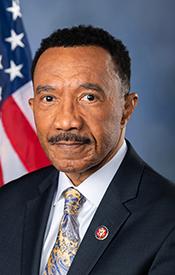
Kweisi Mfume
DDemocratMD-7 · Representative
51
/ 100
Average
Attendance93
Avg: 96
Independence2
Avg: 4
Bipartisan Tone7
Avg: 15
Ethics Record100
Avg: 99
Transparency40
Avg: 53
Accountability Score — composite of attendance, independence, bipartisan tone, ethics record & transparency.
Methodology13
Bills Sponsored
0
Enacted into Law
0
Passed a Chamber
13
In Committee
All Sponsored Bills
HR10345In Committee
EBOLA Act
HR7915In Committee
Clarence Mitchell, Jr. Statue Act
This bill would authorize the placement of a statue honoring Clarence Mitchell, Jr., a civil rights leader and lobbyist, somewhere in the U.S. Capitol building. The statue would commemorate Mitchell's decades of work advocating for civil rights legislation and his influence on Congress during the Civil Rights era. This type of legislation typically requires approval for where the statue would be located and funding for its creation and installation.
HR7740In Committee
African American History Act of 2026
This bill would likely establish or expand federal support for African American historical education, museums, cultural programs, or commemorative sites. It could fund initiatives that preserve and teach African American history through schools, public institutions, or community organizations. The measure would affect educators, students, cultural institutions, and communities interested in ensuring African American history is more widely studied and preserved.
HR7549In Committee
National Council on African American History and Culture Act of 2026
This bill would establish a new National Council on African American History and Culture to promote education and awareness about African American contributions to American society. The council would likely work to preserve historical records, support museums and cultural institutions, and develop educational programs for schools and the public. This would affect educators, students, cultural organizations, and communities interested in learning about and celebrating African American history.
HRES1062In Committee
Denouncing statements by President Donald J. Trump that he may "nationalize," commandeer, or otherwise assume direct control over elections.
This resolution expresses Congress's opposition to statements made by President Trump suggesting he might take direct government control over elections or seize election operations. The measure is a formal statement of disapproval rather than a law that would restrict presidential powers, and it has been sent to the House Judiciary Committee for consideration.
HR7265In Committee
Vote by Mail Tracking Act
The bill would require states to establish systems that allow voters to track their mail-in ballots from the time they're mailed out until they're counted, similar to how you can track a package online. This would give voters peace of mind by letting them confirm their ballot was received and counted, while also helping election officials identify any lost or delayed ballots. The measure affects all states that offer mail-in voting and aims to increase transparency and confidence in the voting process.
HR6467In Committee
National Museum of the Blind People’s Movement Act
This bill would establish a new national museum dedicated to the history and culture of the blind people's movement and disability rights advocacy. The museum would preserve and share the stories, achievements, and contributions of blind individuals and organizations that have fought for equal rights and accessibility. It would serve as an educational resource for the public, students, and researchers interested in understanding this important social movement.
HR4517In Committee
Jordan McNair Student Athlete Heat Fatality Prevention Act
The legislation would require colleges and universities to establish safety protocols and medical standards to prevent heat-related deaths among student athletes during practice and competition. Schools would need to implement measures like mandatory hydration breaks, limits on practice intensity during hot weather, and access to cooling equipment and trained medical personnel. These requirements would apply to all athletic programs and aim to protect student athletes from heat exhaustion and heat stroke.
HR3498In Committee
Henrietta Lacks Congressional Gold Medal Act
Henrietta Lacks Congressional Gold Medal Act This bill awards posthumously a Congressional Gold Medal in commemoration of Henrietta Lacks, in recognition of the contributions of her immortal cells to global health, scientific research, quality of life, and patients' rights.
HRES187In Committee
Of inquiry requesting the President to transmit certain information to the House of Representatives referring to the termination, removal, placement on administrative leave, moved to another department of Federal employees and Inspectors General of agencies.
HR2336In Committee
Doris Miller Congressional Gold Medal Act
This bill provides for the award of a Congressional Gold Medal posthumously to Doris Miller in recognition of his acts of valor while a member of the Navy during World War II.
HR2335In Committee
To authorize the President to award the Medal of Honor to Doris Miller posthumously for acts of valor while a member of the Navy during World War II.
This bill authorizes the President to posthumously award the Medal of Honor to Doris Miller for acts of valor as a member of the Navy during World War II, for which he was previously awarded the Navy Cross.
HR1718In Committee
Justice Thurgood Marshall National Historic Site Establishment Act of 2025
The federal government would establish a new national historic site dedicated to Justice Thurgood Marshall, the first African American Supreme Court justice, preserving his legacy and making his story accessible to the public. The site would protect and interpret locations significant to Marshall's life and career, allowing visitors to learn about his groundbreaking role in civil rights history and his impact on American law. This would be managed by the National Park Service, similar to other historic sites that commemorate important American figures and events.