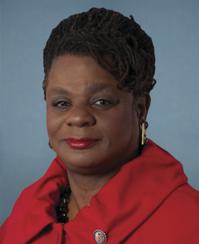
Gwen Moore
DDemocratWI-4 · Representative
61
/ 100
Average
Attendance97
Avg: 96
Independence3
Avg: 4
Bipartisan Tone28
Avg: 15
Ethics Record100
Avg: 99
Transparency67
Avg: 53
Accountability Score — composite of attendance, independence, bipartisan tone, ethics record & transparency.
Methodology28
Bills Sponsored
0
Enacted into Law
1
Passed a Chamber
27
In Committee
All Sponsored Bills
HR10764In Committee
Executive Settlement Review Act
HR9993In Committee
Rise Up for Child Care Act of 2026
The legislation would expand access to affordable child care by increasing funding for child care programs and supporting home-based child care providers through grants and subsidies. It aims to help working parents afford child care services while creating more child care options in communities that currently lack sufficient providers. The bill would affect families with young children, child care workers, and child care facilities across the country.
HR9994In Committee
Family Poverty is Not Child Neglect Act
This proposal would change federal rules to prevent child protective services from removing children from their parents' care based solely on poverty or lack of money. The change would apply to how states handle child welfare cases, ensuring that families aren't separated just because they're struggling financially. The bill aims to keep children with their parents while addressing the underlying economic hardships through support services instead.
HR9861In Committee
Veteran’s Surviving Spouse Parity Act of 2026
This bill would allow spouses and surviving spouses of military veterans to qualify for special tax breaks on mortgages that are normally only available to veterans themselves. Currently, these mortgage benefits have a three-year waiting period, but this change would let military families skip that waiting period just like actual veterans can. The change would make it easier and more affordable for military families to buy homes through special government-backed mortgage programs.
HR9758In Committee
Child Marriage Prevention Act of 2026
This legislation would establish federal laws and programs to prevent child marriage in the United States by setting minimum age requirements, improving enforcement, and providing support services for minors at risk. The bill would affect states, schools, and organizations working with young people by requiring them to implement protections and report cases of child marriage. It aims to address a practice that can interrupt education, harm health, and limit opportunities for children, particularly girls.
HR9712In Committee
Mamas First Act
Mamas First Act This bill requires state Medicaid programs to cover services furnished by doulas, midwives, and lactation support providers, including prenatal, delivery, and postpartum services, in a variety of settings.
HR9289In Committee
Keep Public Funds in Public Schools Act of 2026
The proposal would eliminate a tax break that currently allows individuals to reduce their federal income taxes when they donate money to organizations that provide scholarships to students. This change would affect donors who support scholarship programs and could reduce funding available for student scholarships, while potentially increasing tax revenue for the federal government.
HR6986In Committee
COLAs Don’t Count Act of 2026
COLAs Don't Count Act of 2026 This bill revises requirements for determining eligibility and benefits under the Supplemental Nutrition Assistance Program (SNAP) to exclude income received from certain (1) cost-of-living adjustments under the Social Security Act and to railroad retirement and veterans' benefits, and (2) supplementary payments under the Social Security Act.
HR7995In Committee
CONNECT Act
Without access to the specific legislative text, the CONNECT Act appears to address family-related policy based on its subjects. The bill has been referred to the House Ways and Means Committee, which typically handles tax and benefit programs, suggesting it may involve changes to tax credits, subsidies, or other financial support affecting families. To provide an accurate summary of what the bill would actually do, the specific provisions would need to be reviewed.
HRES1231In Committee
Supporting the designation of April 29, 2026, as "Denim Day" and honoring survivors of sexual assault.
The proposal would officially recognize April 29, 2026, as "Denim Day," a day dedicated to raising awareness about sexual assault and honoring survivors. This symbolic designation aims to draw attention to the issue of sexual violence and support efforts to help survivors, with no direct impact on laws or government programs. The measure is currently being reviewed by congressional committees to determine whether it should move forward for a vote.
HRES1232In Committee
Amending the Rules of the House of Representatives to permit individuals to wear denim clothing on the floor of the House on the last Wednesday of April of each year.
Members of Congress would be allowed to wear denim jeans on the House floor once a year, specifically on the last Wednesday of April. Currently, House rules require formal business attire, so this change would create a single exception to that dress code requirement. The proposal is currently under review by the House Rules Committee.
HR8521In Committee
Protect Moms From Domestic Violence Act
The legislation would expand protections and support services for pregnant women and new mothers experiencing domestic violence, including funding for specialized shelters, counseling, and safety planning tailored to their needs. It aims to help healthcare providers better identify and respond to abuse during pregnancy and postpartum care. The bill would affect pregnant women, new mothers, domestic violence organizations, and healthcare facilities that serve these populations.
HR8089In Committee
Perinatal Workforce Act
This bill would increase funding and support for training programs that prepare doctors, nurses, and other healthcare workers to care for pregnant women and newborns, addressing shortages in obstetric and neonatal care across the country. It aims to help more healthcare professionals specialize in perinatal medicine—the medical field focused on pregnancy, childbirth, and newborn care—particularly in rural and underserved areas where these specialists are scarce. The legislation would affect medical schools, nursing programs, and hospitals that train these healthcare workers, as well as pregnant women and families seeking quality maternity and newborn care.
HRES1120In Committee
Supporting the recognition of March 14, 2026, as "Black Midwives Day" and the longstanding and invaluable contributions of Black midwives to maternal and infant health in the United States.
This resolution would officially recognize March 14, 2026, as "Black Midwives Day" to honor the historical and ongoing contributions of Black midwives to maternal and infant health care in the United States. The measure acknowledges the important role these healthcare providers have played in serving communities and improving birth outcomes, particularly in underserved areas. While symbolic rather than creating new laws or programs, the recognition aims to highlight the value and legacy of Black midwives in American healthcare.
HRES1103In Committee
Expressing support for the designation of the week beginning March 2, 2026, as "School Social Work Week".
This resolution would officially recognize the week of March 2, 2026, as "School Social Work Week" to honor and raise awareness about the important work school social workers do in supporting students' mental health, academic success, and overall well-being. The designation would highlight the role these professionals play in helping students deal with personal challenges, family issues, and other obstacles to learning. While symbolic rather than creating new programs or funding, the recognition aims to draw public attention to the value of school social workers in the education system.
HR7798In Committee
School Social Workers Improving Student Success Act
School Social Workers Improving Student Success Act This bill provides certain resources to increase the number of social workers in elementary and secondary schools. Specifically, the bill directs the Department of Education to award grants to high-need local educational agencies to retain or hire school social workers. The bill also establishes a national technical assistance center for school social work to, among other duties, develop strategies for improving the effectiveness of the school social work workforce.
HR7705In Committee
Tribal Tax and Investment Reform Act of 2026
This bill would change tax and investment rules affecting Native American tribes and their members, likely aiming to give tribes more control over their own finances and economic development. The proposal has been sent to two congressional committees—one handling taxes and one handling education and labor issues—suggesting it may affect both how tribes are taxed and how they manage workforce or educational programs. The exact details of what changes would be made are still being determined as the committees review the proposal.
HRES1052In Committee
Expressing support for designation of the month of February 2026 as "National Teen Dating Violence Awareness and Prevention Month".
This resolution supports the designation of National Teen Dating Violence Awareness and Prevention Month.
HR7228In Committee
Maintain Access to Vital Social Security Services Act of 2026
This bill would require the Social Security Administration to maintain adequate staffing and office locations to ensure people can access benefits and services without excessive delays or closures. It aims to protect seniors, disabled individuals, and families who rely on Social Security by preventing the agency from reducing staff or closing local offices in ways that would make it harder for people to apply for benefits, resolve problems, or get help with their claims.
HR7227In Committee
Mental Health and MAMA Act of 2026
The bill aims to improve mental health services and support, likely by expanding access to mental health care, increasing funding for mental health programs, or strengthening mental health protections for vulnerable populations. The legislation would affect patients seeking mental health treatment, healthcare providers, insurance companies, and potentially schools and employers. The bill is currently being reviewed by multiple congressional committees to determine how its various provisions fit within their areas of responsibility.
HR5718In Committee
SNAP Back Act of 2025
The proposal would restore or increase food assistance benefits under the Supplemental Nutrition Assistance Program (SNAP), which helps low-income individuals and families buy groceries. The changes would affect millions of Americans who rely on SNAP benefits to afford food, potentially increasing their monthly allowances or expanding eligibility for the program. The bill is currently being reviewed by a congressional subcommittee focused on nutrition and agriculture issues.
HR5685In Committee
PNA Modernization Act
Personal Needs Allowance Modernization Act or the PNA Modernization Act This bill increases the minimum monthly personal needs allowance under Medicaid for an institutionalized individual and couple from $30 to $60 and from $60 to $120, respectively. (The personal needs allowance is deducted from an individual's total income when determining the individual's contribution to the cost of institutionalized care under Medicaid.)
HR3820In Committee
To name the Department of Veterans Affairs women's health clinic in Milwaukee, Wisconsin, as the Anna Mae Robertson VA Well Woman Clinic.
This bill designates the women’s health clinic of the Clement J. Zablocki Veterans' Administration Medical Center in Milwaukee, Wisconsin, as the Anna Mae Robertson VA Well Woman Clinic.
HR3517In Committee
Social Security Enhancement and Protection Act of 2025
Social Security Enhancement and Protection Act of 2025 This bill increases certain Social Security benefits, expands Social Security payroll taxes, and makes other changes to the Social Security program. Under current law, Social Security has a taxable maximum , which refers to the maximum amount of a worker's earnings that are subject to Social Security payroll taxes (set at $176,100 in 2025). Additionally, the taxable maximum serves as the maximum amount of earnings used to calculate a worker's Social Security benefits. This bill phases out the taxable maximum so as to apply payroll taxes to all earnings by 2035, and it revises the method used to calculate a worker’s Social Security benefits to account for earnings in excess of the taxable maximum. The bill also gradually increases the Social Security payroll tax applicable to workers and employers from 6.2% to 6.5% over six years. Other changes to benefits include establishing a new method to calculate benefits for lifetime low earners and increasing benefits for certain beneficiaries on account of long-term eligibility. In addition, an eligible child of a retired, disabled, or deceased worker may continue to receive benefits through age 26, provided the child is a full-time student in postsecondary school. An increase in Social Security benefits under these provisions may not be treated as income for purposes of determining eligibility for benefits, or the amount of any benefits, under a federal program or a state or local program financed with federal funds.
HCONRES22Passed House
Authorizing the use of Emancipation Hall in the Capitol Visitor Center for a ceremony to present the Congressional Gold Medals awarded under the ‘Six Triple Eight’ Congressional Gold Medal Act of 2021.
This bill allows Congress to hold a formal ceremony in Emancipation Hall at the Capitol Visitor Center to present Congressional Gold Medals to the members of the 6888th Central Postal Directory Battalion, an all-Black female Army unit from World War II that was previously honored by Congress in 2021. The ceremony would give these veterans and their families an official public recognition event at a prominent location in the Capitol complex. No new medals are being created—this simply authorizes the space and event to present medals that were already awarded.
HR2338In Committee
WRCR Act of 2025
Without access to the full bill text, the WRCR Act of 2025 appears to address taxation policy, though the specific provisions are unclear from the title alone. Based on its referral to the House Ways and Means Committee, it likely proposes changes to federal tax law that could affect individuals, businesses, or both. To understand exactly who would benefit or face new obligations under this proposal, the detailed bill language would need to be reviewed.
HRES196In Committee
Expressing support for the designation of the week beginning March 2, 2025, as "School Social Work Week".
This resolution supports the designation of School Social Work Week.
HRES128In Committee
Expressing support for designation of the month of February 2025 as "National Teen Dating Violence Awareness and Prevention Month".
This resolution supports the designation of National Teen Dating Violence Awareness and Prevention Month.