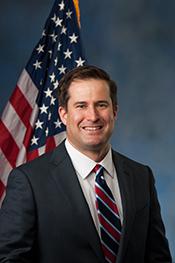
Seth Moulton
DDemocratMA-6 · Representative
46
/ 100
Below Average
Attendance85
Avg: 96
Independence2
Avg: 4
Bipartisan Tone14
Avg: 15
Ethics Record100
Avg: 99
Transparency12
Avg: 53
Accountability Score — composite of attendance, independence, bipartisan tone, ethics record & transparency.
Methodology16
Bills Sponsored
1
Enacted into Law
2
Passed a Chamber
13
In Committee
Bills That Became Law
All Sponsored Bills
HCONRES93Passed House
Directing the President, pursuant to section 5(c) of the War Powers Resolution, to remove United States Armed Forces from hostilities with Iran.
This concurrent resolution directs the President to remove U.S. Armed Forces from hostilities against Iran unless explicitly authorized by a declaration of war or a congressional authorization for use of military force against Iran. Elements of the U.S. Armed Forces needed to defend the United States, an ally, or a partner from imminent attack are not covered by this requirement provided the President complies with a specified provision of the War Powers Resolution. (The provision generally requires the President to remove U.S. Armed Forces from hostilities no more than 60 days after the President notifies or is required to notify Congress of such involvement, unless Congress authorizes such use. For more information on the War Powers Resolution, see CRS In Focus 13134 .)
HR10404In Committee
For the relief of Sindy Gualdina Rodriguez-Fernandez.
This bill provides for the relief of Sindy Gualdina Rodriguez-Fernandez.
HR10059In Committee
Building Safer Streets Act
HR9812In Committee
Protecting Mail-In Voting Act of 2026
The proposal would prevent the U.S. Postal Service from changing its rules in ways that could slow down the delivery of mail-in and absentee ballots during elections. This affects voters who rely on mail ballots, election officials who administer voting, and the Postal Service's operations during election periods. The bill aims to ensure that ballot delivery times remain consistent and reliable for all voters using mail-in voting options.
HR9523In Committee
TPS Relief Act
The proposal would allow people whose Temporary Protected Status claims have been denied to challenge those decisions in court, rather than having the government's decision be final. Currently, TPS applicants have limited ability to appeal denials through the judicial system, so this change would give immigrants seeking this temporary protection status a legal avenue to contest rejections they believe are unfair or made in error.
HR9036In Committee
American High-Speed Rail Act
The proposal would establish or expand high-speed rail corridors across the United States by amending federal transportation law, likely providing funding and regulatory support to develop faster train routes between major cities. This would affect transportation companies, state governments, and communities looking to improve rail infrastructure, while potentially offering passengers an alternative to driving or flying. The bill has been sent to two congressional committees to review the transportation and budget aspects of the proposal.
HR8858In Committee
Protecting American Voters’ Rights Act
The legislation would allow Americans to take federal officials to court if they believe those officials have violated their constitutional voting rights or broken election laws. Currently, certain legal protections make it difficult for citizens to sue government employees for such violations, and this bill would remove some of those barriers. The change would primarily affect voters seeking legal remedies and federal officials involved in administering elections.
HR8148In Committee
Prediction Market RISK Act
This bill would establish rules for prediction markets—platforms where people bet money on the outcomes of future events like elections, sports, or economic indicators—by clarifying which government agencies can oversee them and what safeguards must be in place. The legislation aims to reduce regulatory uncertainty so these markets can operate legally while protecting consumers from fraud and manipulation. Financial companies, traders, and the general public who might use these platforms would be affected by the new oversight framework.
HR3692Passed House
Captain Accursio “Gus” Sanfilippo Young Fishermen’s Development Act
This bill reauthorizes through FY2031 the Young Fishermen’s Development Grant Program, which supports local and regional training, education, outreach, and technical assistance initiatives for young fishermen.
HR7626In Committee
Defend Elections from Trump Act
The bill aims to address election security and government operations, though the specific provisions are not detailed in the available information. Based on its referral to the Judiciary, Intelligence, and Armed Services committees, it likely proposes changes to how federal agencies protect elections or respond to election-related threats. The bill would affect election officials, federal agencies, and potentially voters depending on what specific measures it contains.
HR7071In Committee
Healthcare Reinvestment Act
The bill would redirect federal healthcare spending and resources to reinvest in health programs, though the specific details of how funds would be allocated depend on the committee review process. The proposal affects patients, healthcare providers, and taxpayers by potentially changing how Medicare, Medicaid, or other health programs operate. Congress is currently examining the bill across multiple committees to determine which parts fall under their respective areas of responsibility.
HR6915In Committee
To prohibit the use of funds to use military force in or against Venezuela, and for other purposes.
This bill would prevent the U.S. military from using federal funds to conduct military operations in or against Venezuela without explicit congressional approval. The measure is designed to restrict the executive branch's ability to launch military actions in Venezuela, ensuring that any such military involvement would require a separate vote and authorization from Congress rather than happening unilaterally.
HR6493In Committee
NOEM Act
The proposal would strengthen immigration enforcement and border security measures, giving federal authorities expanded tools to detain and remove undocumented immigrants. It would affect immigration agencies, border patrol operations, and individuals in the country without legal status, while potentially impacting employers and communities with significant immigrant populations.
HR2215Enacted
Salem Maritime National Historical Park Redesignation and Boundary Study Act
Salem Maritime National Historical Park Redesignation and Boundary Study Act This act redesignates the Salem Maritime National Historic Site in Massachusetts as the Salem Maritime National Historical Park. In addition, the act directs the Department of the Interior to conduct and report on a boundary study. The study must evaluate the suitability and feasibility of including in the National Park System, as part of the Salem Maritime National Historical Park, sites and resources in the study area associated with its maritime history, coastal defenses, and military history.
HR3409In Committee
HEADs UP Act of 2025
The HEADs UP Act aims to improve how the health care system identifies and treats head injuries and related conditions. The bill likely focuses on increasing awareness, research, or medical protocols around head trauma and neurological health issues that affect patients across different age groups and settings.
HR1725In Committee
Sgt. Isaac Woodard, Jr. and Sgt. Joseph H. Maddox GI Bill Restoration Act of 2025
Sgt. Isaac Woodard, Jr. and Sgt. Joseph H. Maddox GI Bill Restoration Act of 2025 This bill expands eligibility for Post-9/11 GI bill benefits and the Department of Veterans Affairs (VA) home loan program by updating terminology related to certain Black veterans. Specifically, the bill explicitly includes the following individuals as eligible veterans under the programs: Black veterans who served on active duty during World War II and can certify they were denied a specific benefit on the basis of race; and the living surviving spouses, children, grandchildren, or other direct descendants of such veterans described above who can certify the veteran was denied a specific benefit on the basis of race. Eligible veterans must apply for educational or home loan benefits within the five-year period after the bill is enacted. The Government Accountability Office must report on the number of individuals who received VA educational or housing loan benefits due to the amendments made by the bill and the total value of such benefits. Finally, the VA must appoint a panel of independent experts to develop recommendations regarding additional benefits and assistance for female and minority members of the Armed Forces.