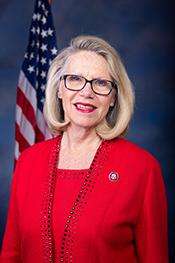
Carol D. Miller
RRepublicanWV-1 · Representative
51
/ 100
Average
Attendance95
Avg: 96
Independence2
Avg: 4
Bipartisan Tone29
Avg: 15
Ethics Record100
Avg: 99
Transparency6
Avg: 53
Accountability Score — composite of attendance, independence, bipartisan tone, ethics record & transparency.
Methodology23
Bills Sponsored
0
Enacted into Law
1
Passed a Chamber
22
In Committee
All Sponsored Bills
HR10282In Committee
Stronger Start for Working Families Act
HR10193In Committee
We Can't Wait Act of 2026
HR10147In Committee
To amend the Harmonized Tariff Schedule for the United States to establish a new subheading in chapter 39 for silicone prosthetics for women who are breast cancer survivors and a new subheading in chapter 90 for mastectomy bras.
HR8875In Committee
Improving Home Dialysis Act of 2026
Improving Home Dialysis Act of 2026 This bill provides for Medicare coverage of staff-assisted home dialysis respite care and renal mental health services that are furnished at the home of a beneficiary with end-stage renal disease.
HR8900In Committee
To redesignate a playground in the New River Gorge National Park and Preserve in the State of West Virginia as the "Hearts of Gold Playground: In Honor of West Virginia Children and Families Impacted by Childhood Cancer".
A playground at New River Gorge National Park in West Virginia would be officially renamed to honor children and families affected by childhood cancer. The new name, "Hearts of Gold Playground," would serve as a tribute to these families while maintaining the playground as a public space for visitors to the national park. This change is primarily symbolic and does not affect how the playground operates or who can use it.
HR8755In Committee
Enhanced Small Business Growth Act of 2026
The proposal would increase tax deductions for American manufacturing companies, allowing them to keep more of their profits by reducing their taxable income. This change would primarily benefit domestic manufacturers and could potentially lower their overall tax bills, though it may also affect federal tax revenue. The measure is designed to encourage manufacturing activity within the United States.
HR7224In Committee
Secure Revenue Clearance Channel Act of 2026
This bill would likely create a streamlined process for clearing international financial transactions and trade payments between the U.S. and foreign countries, potentially reducing delays and bureaucratic hurdles that businesses currently face when moving money across borders. The changes would affect companies engaged in international trade, financial institutions that process cross-border payments, and potentially consumers who buy imported goods. By making the approval process faster and more efficient, the bill aims to facilitate smoother international commerce while maintaining security checks.
HR7070In Committee
To amend the Internal Revenue Code of 1986 to extend the credit period for the production of refined coal, and for other purposes.
This bill would extend tax credits that coal companies receive when they produce refined coal, a cleaner-burning fuel made by processing raw coal. The credits help make refined coal production more financially attractive to companies by reducing their tax bills. The measure is aimed at supporting the coal refining industry and the workers it employs.
HR6804In Committee
Rural Hospital Flexibility Act of 2025
This bill would give rural hospitals more flexibility in how they operate and bill for services, likely by relaxing some federal regulations and requirements that apply to larger hospitals. The changes would aim to help smaller hospitals in less populated areas stay financially stable and continue serving their communities, which often struggle to attract doctors and maintain services. Rural patients and hospital workers would be the primary groups affected by these operational changes.
HRES923Passed House
A resolution honoring the service and sacrifice of United States Army Specialist Sarah Beckstrom and United States Air Force Staff Sergeant Andrew Wolfe, who were tragically shot in Washington, D.C., in a targeted assault against United States service members on November 26, 2025.
This resolution honors the service and sacrifice of U.S. Army Specialist Sarah Beckstrom and U.S. Air Force Staff Sergeant Andrew Wolfe as members of the West Virginia National Guard and extends sympathy, gratitude, and support for their families in the wake of the attack on November 26, 2025, in Washington, DC. The resolution also honors the bravery of the other National Guard members on the scene, expresses gratitude for the action of first responders, and condemns the attack.
HR6468In Committee
Rural Residency Planning and Development Act of 2025
This bill aims to address healthcare shortages in rural areas by creating programs and incentives to attract doctors and other medical professionals to practice in small towns and countryside communities. It likely includes funding for training programs, loan forgiveness, or financial incentives to encourage healthcare workers to establish practices in underserved rural regions where patient access to medical care is limited.
HR6407In Committee
RCORP Authorization Act
The bill would authorize funding and operations for the Recovering Persons Program (RCORP), which provides support services to individuals recovering from substance abuse and addiction. The program would help connect people in recovery with housing, employment assistance, mental health services, and peer support to reduce relapse rates and improve long-term outcomes. This affects people struggling with addiction, their families, and communities dealing with the opioid and drug crisis.
HR6214In Committee
Kidney Care Access Protection Act
This bill would protect access to kidney care services and treatments for patients with kidney disease by establishing or maintaining coverage requirements for dialysis, transplants, and related medical services. The legislation likely aims to prevent insurance companies or government programs from restricting kidney patients' access to necessary treatments or limiting their choices of care providers and facilities. Patients with kidney disease, dialysis centers, and transplant programs would be the primary groups affected by these protections.
HR5441In Committee
Fusion Advanced Manufacturing Parity Act
This bill would likely provide tax incentives or breaks for companies that manufacture fusion energy technology and equipment, aiming to help the fusion energy industry compete with other energy sectors. By offering tax advantages similar to those given to other advanced manufacturing or energy industries, the legislation seeks to encourage investment and job creation in fusion power development. The bill is currently under review by the House committee responsible for tax policy.
HR3885In Committee
Community TEAMS Act of 2025
The bill would establish or support community-based health teams that work together to provide coordinated medical care and services to patients in their local areas. These teams would likely include doctors, nurses, mental health professionals, and other healthcare workers collaborating to improve health outcomes and make care more accessible to people in underserved communities. The legislation aims to strengthen how healthcare providers coordinate with each other to better serve patients' overall health needs.
HR3552In Committee
Second Chance Reauthorization Act of 2025
Second Chance Reauthorization Act of 2025 This bill reauthorizes through FY2030 various federal grants for state, local, and tribal governments, nonprofit organizations, and service providers to support individuals who reenter the community following a period of incarceration. Specifically, the bill reauthorizes the following: grants for adult and juvenile offender reentry demonstration projects; grants for family-based substance abuse treatment programs; grants to evaluate and improve educational methods at prisons, jails, and juvenile facilities; grants for career training education; the offender reentry substance abuse and criminal justice collaboration program; and grants to nonprofit organizations for community-based mentoring and transitional services.
HR2872In Committee
RESILIENCE Act of 2025
The proposal would modify tax rules to help businesses and individuals better prepare for and recover from disasters and emergencies. It likely includes tax incentives or deductions related to resilience planning, disaster preparedness, or recovery efforts that would affect companies, property owners, and potentially workers in affected areas. The measure is currently under review by the House committee responsible for tax policy.
HR1940In Committee
Tanning Tax Repeal Act of 2025
Tanning Tax Repeal Act of 2025 This bill repeals the 10% excise tax imposed on the amount paid for indoor tanning services.
HR1882In Committee
Saving Gig Economy Taxpayers Act
The proposal would change how self-employed workers in the gig economy—such as rideshare drivers, delivery workers, and freelancers—handle their taxes by allowing them to deduct a standard amount for business expenses instead of tracking every individual expense. This would simplify tax filing for millions of independent contractors while potentially reducing their tax burden. The measure is currently under review by the House committee responsible for tax policy.
HR1881In Committee
Methane Reduction and Economic Growth Act
This bill would likely use tax incentives or penalties to encourage companies to reduce methane emissions from oil, gas, and other industrial operations. The legislation aims to balance environmental goals with economic growth by making it financially advantageous for businesses to adopt cleaner practices. Workers in energy and manufacturing industries, as well as consumers who pay for energy, could be affected depending on how companies pass along costs or savings.
HR1385In Committee
Strengthening Cooperation and Security in the Middle East Act
HR1171In Committee
SAFE Act
Stopping Addiction and Falls for the Elderly Act or the SAFE Act This bill incorporates risk assessments and prevention services for falls into annual wellness visits and initial preventive physical exams under Medicare, as well as associated services provided by physical therapists and occupational therapists.
HR953In Committee
United States Trade Leadership in the Indo-Pacific Act
United States Trade Leadership in the Indo-Pacific Act This bill requires certain actions related to trade in the Indo-Pacific region. Specifically, the bill directs the U.S. International Trade Commission to investigate the effects of existing Indo-Pacific regional trade agreements (e.g., the Regional Comprehensive Economic Partnership and the Comprehensive and Progressive Agreement for Trans-Pacific Partnership) on U.S. exporters and competitiveness in the region. Additionally, the bill establishes the Indo-Pacific Trade Strategy Commission to develop findings and recommendations for a comprehensive trade strategy for the Indo-Pacific region.