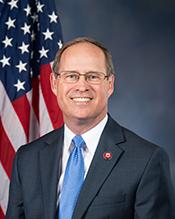
Gregory F. Murphy
RRepublicanNC-3 · Representative
50
/ 100
Average
Attendance87
Avg: 96
Independence1
Avg: 4
Bipartisan Tone14
Avg: 15
Ethics Record100
Avg: 99
Transparency32
Avg: 53
Accountability Score — composite of attendance, independence, bipartisan tone, ethics record & transparency.
Methodology34
Bills Sponsored
1
Enacted into Law
2
Passed a Chamber
31
In Committee
Bills That Became Law
All Sponsored Bills
HR10787In Committee
Access to Medical Supplies Act
HCONRES121In Committee
Expressing the sense of the Congress that assisted suicide (sometimes referred to using other terms) puts everyone, including those most vulnerable, at risk of deadly harm.
HR4931Passed House
National Park System Long-Term Lease Investment Act
National Park System Long-Term Lease Investment Act This bill allows the National Park Service (NPS) to extend long-term leases of federal property within the national parks without complying with competitive bidding requirements if the lessee entered into the lease no less than five years before the date on which the extension takes effect and is in compliance with the terms and conditions of the lease, and the NPS determines that extending the lease is in the best interests of the administration of the applicable NPS unit.
HR9862In Committee
Responsible Artificial Intelligence for Veterans Act of 2026
The Department of Veterans Affairs would hire an independent research organization to evaluate how artificial intelligence systems are being used in veterans' healthcare to ensure they're working properly and safely. This evaluation would examine whether these AI tools are helping doctors make better decisions and providing good care to veterans without introducing errors or bias. The goal is to give Congress and VA leadership an honest assessment of whether the AI systems are actually benefiting veterans or if changes are needed.
HR9524In Committee
Veterans Care and Cost Coordination Act of 2026
The proposal would require the Department of Veterans Affairs and the Department of Health and Human Services to work together and create an agreement to coordinate how they manage veterans' community care services and certain Medicare health plans. This coordination could help reduce confusion and improve care for veterans who use both VA services and Medicare benefits. The bill is currently being reviewed by three congressional committees to determine whether it's a good idea.
HR9504In Committee
Tax Exempt Hospital Transparency Act
Tax Exempt Hospital Transparency Act This bill requires tax-exempt hospital organizations to report additional information to the Internal Revenue Service. The bill defines a tax-exempt hospital organization as an organization that is licensed or recognized as a hospital and is required to conduct a community health needs assessment and adopt a strategy to meet the needs identified in the assessment, have a written financial assistance policy, limit charges for emergency and medically necessary care provided to individuals eligible for financial assistance and prohibit the use of gross charges, meet certain billing and collection requirements, and file IRS Form 990 (Return of Organization Exempt From Income Tax). Under the bill, a tax-exempt hospital organization must include with Form 990 certain identifying information and a description of how the organization addresses the needs identified in the most recent community health needs assessment, the needs not addressed, and the reasons why needs are not being addressed; audited financial statements; the value (at cost) of the financial assistance provided; and the numbers of completed financial assistance applications received, granted, and denied during the tax year. Further information reporting requirements are imposed on certain large or high-revenue tax-exempt hospital organizations. Finally, the bill requires the Government Accountability Office to (1) study and report the costs associated with the additional information reporting requirements, and (2) estimate the amount of tax revenue that would be generated from the 25 tax-exempt hospital organizations with the highest gross revenue if such organizations were not exempt from tax.
HR8553In Committee
POPCaP Authorization Act of 2026
The Department of Veterans Affairs would create a specialized program to use advanced genetic testing and personalized treatment approaches for veterans with prostate cancer. This program would help doctors tailor cancer treatments to each patient's specific tumor characteristics, potentially improving outcomes for the veterans it serves. The initiative aims to bring cutting-edge cancer care technology to the VA's medical system.
HR8163In Committee
Provider Reimbursement Stability Act of 2026
Provider Reimbursement Stability Act of 2026 This bill allows for larger annual adjustments to the Medicare physician fee schedule. It also requires the Centers for Medicare & Medicaid Services (CMS) to make certain corrections to compensate for expenditures under the fee schedule that exceed a certain amount in a given year, and it limits how much certain adjustment factors may vary each year. Current law prohibits annual adjustments to the Medicare physician fee schedule that would result in a more than $20 million difference between the adjusted amount and the non-adjusted amount of total expenditures. The bill increases this threshold to $54.3 million beginning in 2027, with adjustments for inflation every five years beginning in 2032. Additionally, for certain services, the bill requires the CMS to determine the difference between expenditures based on estimated utilization of the service and expenditures based on actual utilization. If this difference exceeds a certain percentage of total expenditures under the fee schedule, the CMS must reconcile this difference by adjusting payments for the following year. This requirement applies to services for which payment was bundled with another service and there was a separate or add-on payment during the previous year. Finally, the CMS must update the prices and rates of each category of direct costs that affect payments (e.g., prices of equipment) at least every five years, with updates made to each category in the same year. The bill also prohibits the CMS from varying a certain adjustment factor by more than 2.5% each year.
HR6583In Committee
VA Research Reform Act of 2025
This bill would change how the Department of Veterans Affairs conducts and manages medical research to make it more efficient and effective for veterans. The reforms likely aim to speed up research projects, improve how VA researchers collaborate with outside institutions, and ensure that study results translate into better treatments and care for veterans more quickly. The bill is currently being reviewed by congressional committees to determine what specific changes should be made.
HR8344In Committee
Senior Citizens’ Freedom to Work Act of 2026
This bill would likely remove or raise the earnings limits that currently reduce Social Security benefits for seniors who continue working after claiming benefits. Currently, older Americans who earn above a certain amount lose some of their Social Security payments, which discourages many from staying in the workforce. The change would allow seniors to keep their full benefits while working, giving them more financial flexibility in their later years.
HR8270In Committee
Every Dollar Counts Act of 2026
Without specific subject details available, this bill appears to address fiscal policy across multiple areas including energy, education, workforce development, and taxation. Based on its referral to committees handling budgets and spending, it likely aims to improve how federal dollars are allocated or spent more efficiently across these sectors. The bill's broad jurisdictional scope suggests it may contain provisions affecting workers, students, energy consumers, and taxpayers.
HRES1112In Committee
Supporting the goals and ideals of "Deep Vein Thrombosis and Pulmonary Embolism Awareness Month".
This resolution expresses support for Deep Vein Thrombosis and Pulmonary Embolism Awareness Month. Deep vein thrombosis is a condition caused by a blood clot in the deep veins of the body; pulmonary embolisms (i.e., where a blood clot breaks off and lodges in the lung) are a potentially life-threatening complication of this condition.
HR7230In Committee
Buying American Cotton Act of 2026
This bill would likely use tax incentives or penalties to encourage or require the purchase of American-grown cotton instead of imported cotton. It could affect textile manufacturers, clothing companies, and potentially consumers by making domestically-produced cotton products more competitive in price or by imposing costs on those who use foreign cotton. The goal appears to be supporting American cotton farmers and domestic textile production.
HR6662In Committee
Department of Defense and Department of Veterans Affairs Medical Credentialing Integration Act of 2025
This bill would streamline the process for military doctors, nurses, and other medical professionals to have their credentials recognized by the Veterans Affairs system, reducing paperwork and allowing them to move more easily between military and VA hospitals. The goal is to make it faster and simpler for veterans to receive care and for medical professionals to work across both systems without having to repeat credentialing requirements. This would primarily affect military medical staff, VA employees, and veterans seeking healthcare.
HR6504Passed House
Haiti Economic Lift Program Extension Act
Haiti Economic Lift Program Extension Act This bill extends through December 31, 2028, the special duty-free rules for various apparel products imported from Haiti, including the duty-free treatment provided for a limited amount (referred to as tariff preference levels) of certain apparel products assembled in and imported from Haiti. The bill directs the President to proclaim such modifications to the Harmonized Tariff Schedule of the United States (HTS) that may be necessary to restore preferential treatment to articles that became ineligible for such treatment due to prior revisions to the HTS. The bill also provides for the refund of duties (i.e., liquidation or reliquidation of entries) on covered articles from Haiti that entered into the United States on or after September 30, 2025, and before the date of this bill's enactment. A request for liquidation or reliquidation must be filed with U.S. Customs and Border Protection (CBP), and the request must contain sufficient information for CBP to locate the entry or, if the entry cannot be located, reconstruct the entry. CBP must refund any duties previously paid with respect to the entry within 90 days.
HR1491Enacted
Disaster Related Extension of Deadlines Act
Disaster Related Extension of Deadlines Act This act requires the Internal Revenue Service (IRS) to treat the postponement of the federal tax return deadline due to a federally declared disaster or certain other events as an extension of such deadline for purposes of calculating the limit on a tax refund. The act also provides that the IRS’s deadline for sending certain notices includes such postponement. Under current law, a tax refund claim must be filed within three years of the date that the federal tax return is filed. (Some exceptions apply.) The tax refund amount generally is limited to federal taxes paid within the three years preceding the tax refund claim plus any extension of the federal tax return deadline (known as the lookback period). Under the law in effect prior to this act, the postponement of the federal tax return deadline is not an extension for purposes of the lookback period. Thus, under prior law, certain tax payments (e.g., amounts withheld from a paycheck for federal taxes) made before the federal tax return is filed may be outside the lookback period and non-refundable. Under the act, a federal tax return deadline postponed due to a federally declared disaster or certain other events must be treated as an extension of such deadline for purposes of the lookback period. Further, under current law, the IRS is required to mail a notice and demand for tax payment within 60 days of an assessment but not before the tax payment due date. The act provides that the tax payment due date includes the postponement of the tax payment deadline due to a federally declared disaster or certain other events.
HR6721In Committee
MAP for Care Act
I don't have enough information to write an accurate summary. The bill's subjects aren't listed, and the title "MAP for Care Act" is too vague to determine what policy area it addresses or what specific changes it would make. To provide a meaningful explanation of what this bill would do and who it affects, I would need additional details about its actual provisions.
HRES947In Committee
Expressing that compelled political litmus tests used by public institutions to require individuals to identify with specific ideological views are directly at odds with the principles of academic freedom and free speech and in violation of the First Amendment of the Constitution.
This resolution condemns public institutions of higher education (IHEs) for conditioning an individual's admission to or employment at the IHE on the individual pledging allegiance to or making a statement of personal support for or opposition to any political ideology or movement (e.g., diversity, equity, and inclusion). It also discourages IHEs from requesting or requiring any such pledge or statement.
HR6663In Committee
Campus Free Speech Restoration Act
Campus Free Speech Restoration Act This bill addresses expressive activities (e.g., peacefully assembling, distributing literature, or carrying signs) on college campuses. First, the bill generally prohibits a public institution of higher education (IHE) that participates in federal student aid programs from restricting noncommercial expressive activities on campus. Further, the bill prohibits a public IHE from receiving federal funds if the Department of Education determines that the public IHE (1) maintains a policy that infringes upon the expressive rights of students; or (2) maintains or enforces time, place, or manner restrictions on expressive activities, except in limited circumstances. In addition, the bill prohibits retaliation against an individual because the individual reported or complained about restrictions on expressive activities or participated in an investigation or hearing. The bill also requires a private IHE that receives federal funds to provide students with its policies related to expressive rights. The bill also establishes a framework for investigating complaints and for IHEs to regain eligibility for federal funds.
HR6219In Committee
Conscience Protections for Medical Residents Act
This bill would allow medical residents (doctors in training) to refuse to perform or participate in certain medical procedures based on their personal or religious beliefs without facing penalties like losing their job or training position. The measure would protect residents who object to procedures like abortion or assisted suicide, while potentially affecting hospitals and medical training programs that might need to accommodate these refusals. The bill aims to balance residents' conscience rights with patients' access to medical care.
HR5919In Committee
Veterans HOPE Act
Veterans Heroin Overdose Prevention Examination Act or the Veterans HOPE Act This bill requires the Department of Veterans Affairs (VA) to complete a review of the deaths of all covered veterans who died from opioid overdoses during the five-year period preceding the enactment of this bill. Covered veterans are those who received VA hospital care or medical services during the five-year period preceding the death of the veteran. The VA shall report on the results of the review and make such report publicly available.
HR1336In Committee
Veterans National Traumatic Brain Injury Treatment Act
Veterans National Traumatic Brain Injury Treatment Act This bill requires the Department of Veterans Affairs to implement a five-year pilot program to furnish, under the Veterans Community Care Program, hyperbaric oxygen therapy to veterans with traumatic brain injuries or post-traumatic stress disorder.
HR5480In Committee
Make America's Youth Healthy Again Act of 2025
This bill aims to improve youth health and fitness by promoting sports and recreational activities for children and teenagers across the country. The legislation likely includes measures to increase access to athletic programs, physical education, and outdoor recreation opportunities in schools and communities, particularly for young people who may lack these resources. It would affect students, schools, families, and potentially local recreation departments seeking to combat childhood obesity and sedentary lifestyles.
HR4710In Committee
No Surprises Act Enforcement Act
This bill would strengthen enforcement of the No Surprises Act, a law designed to protect patients from unexpected medical bills when they receive emergency care or see out-of-network doctors at in-network hospitals. The legislation would likely give federal agencies more power to penalize health insurance companies and healthcare providers that violate these protections, helping ensure patients aren't stuck with large bills they didn't anticipate. It affects patients seeking medical care, insurance companies, and healthcare providers across the country.
HR4299In Committee
Protecting Patient Access to Cancer and Complex Therapies Act
This bill would protect patients' ability to access cancer treatments and other complex medications by limiting insurance companies' ability to deny or delay coverage for these therapies. It likely aims to reduce barriers that patients face when their doctors prescribe specialized drugs, such as requiring prior approval from insurers before treatment can begin. The measure would affect cancer patients, people with rare diseases, insurance companies, and healthcare providers.
HR4145In Committee
Ensuring Justice for Camp Lejeune Victims Act of 2025
This bill would provide legal remedies and compensation for people who were exposed to contaminated water at Camp Lejeune, a major Marine Corps base in North Carolina, and suffered health problems as a result. The legislation aims to help veterans, military families, and civilian workers who lived or worked at the base get justice through lawsuits or settlements for illnesses they believe were caused by the water contamination. It addresses a long-standing environmental health issue that affected thousands of people over several decades.
HR3886In Committee
Veterans PTSD Screening Act
Veterans PTSD Screening Act This bill requires the Department of Veterans Affairs (VA) to study through FY2027 whether RNA sequencing can be used to effectively diagnose veterans with inflammation or cellular stress (symptoms of post-traumatic stress disorder). The VA must submit to Congress a report on the results of the study.
HRES392In Committee
Expressing support for the designation of May as "National Bladder Cancer Awareness Month".
This resolution supports the designation of National Bladder Cancer Awareness Month.
HR3161In Committee
Preventing Environmental Hazards Act of 2025
Preventing Environmental Hazards Act of 2025 This bill expands National Flood Insurance Program (NFIP) coverage to include the demolition or relocation of certain coastal structures that are facing imminent collapse or subsidence. Specifically, NFIP must pay for demolition or relocation for NFIP-insured structures that are condemned or deemed unsafe by state or local authorities due to the threat of imminent collapse or subsidence from shoreline erosion or that meet other location criteria. The bill sets forth provisions for the valuation of the structure, the maximum claim to be paid, and the terms of coverage termination. This bill applies to structures covered by NFIP (1) for a period of 12 months on or before the date of the bill’s enactment, or (2) for a continuous period of 4 years prior to certification for coverage established by this bill.
HR2382In Committee
First Responders Retirement Parity Act
This bill would change tax rules for retirement savings accounts used by firefighters, police officers, and other first responders to match the rules available to other federal employees. The goal is to give these workers equal access to retirement benefits and tax advantages that other government employees currently receive. First responders and their families would benefit from more flexible retirement savings options.
HR2070In Committee
Protect Our Military Families’ 2nd Amendment Rights Act
Protect Our Military Families' 2nd Amendment Rights Act This bill broadens the scope of allowable firearms transactions involving active-duty service members and their spouses. Specifically, the bill allows a licensed gun dealer, importer, or manufacturer to sell or ship a firearm or ammunition to the spouse of a member of the Armed Forces on active duty outside the United States. Current law already allows a licensed dealer, importer, or manufacturer to sell or ship a firearm or ammunition to a member of the Armed Forces on active duty outside the United States. The bill also specifies that, for purposes of federal firearms laws, a member of the Armed Forces on active duty, or his or her spouse, is a resident of the state in which (1) the member or spouse maintains legal residence, (2) the permanent duty station of the member is located, and (3) the member maintains a home from which he or she commutes to the permanent duty station.
HR1492In Committee
To amend title XI of the Social Security Act to equalize the negotiation period between small-molecule and biologic candidates under the Drug Price Negotiation Program.
This bill lengthens the amount of time for which drug products must have market approval in order for the products to qualify for negotiation under the Medicare Drug Price Negotiation Program. The Medicare Drug Price Negotiation Program requires the Centers for Medicare & Medicaid Services to negotiate the prices of certain prescription drugs under Medicare beginning in 2026. Among other requirements, drugs must have had market approval for at least 7 years (for drug products) or 11 years (for biologics) to qualify for negotiation. The bill modifies these provisions so as to require drug products to also have had at least 11 years of market approval in order to qualify for negotiation. The bill's changes apply retroactively.
HR1083In Committee
Incentivizing Readiness and Environmental Protection Integration Sales Act of 2025
Incentivizing Readiness and Environmental Protection Integration Sales Act of 2025 This bill excludes the gain from the sale of a qualified real property interest under the Readiness and Environmental Protection Integration (REPI) Program from gross income for federal tax purposes. (Some limitations apply.) As background, the REPI Program supports cost-sharing agreements between the Armed Forces, other federal agencies, state and local governments, and certain private organizations to address land use near military installations, address environmental restrictions that limit military activities, and increase military installation resilience. Under the bill, the exclusion from gross income applies to gain from the sale of a real property interest (pursuant to an agreement under the REPI Program) to a state or U.S. possession (or a political subdivision of a state or U.S. possession) or the District of Columbia; the United States; certain corporations, trusts, community chest, funds, or foundations; or certain charitable organizations. Further, under the bill, the real property interest that is sold may be (1) the entire interest in the real property, (2) a remainder interest in the real property, or (3) a restriction on the use of the real property (e.g., easement) that is granted in perpetuity and created under state law. However, the bill limits such exclusion from gross income for a partnership or other pass-through entity (other than a family partnership or family pass-through entity) to gain from the sale of a real property interest that is held for at least three years.
HR879In Committee
Medicare Patient Access and Practice Stabilization Act of 2025
Medicare Patient Access and Practice Stabilization Act of 2025 This bill increases certain payment adjustments under the Medicare physician fee schedule for services furnished between April 1, 2025, and January 1, 2026.