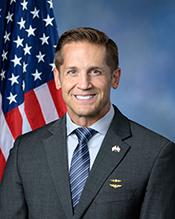
Richard McCormick
RRepublicanGA-7 · Representative
51
/ 100
Average
Attendance99
Avg: 96
Independence5
Avg: 4
Bipartisan Tone3
Avg: 15
Ethics Record100
Avg: 99
Transparency28
Avg: 53
Accountability Score — composite of attendance, independence, bipartisan tone, ethics record & transparency.
Methodology17
Bills Sponsored
0
Enacted into Law
1
Passed a Chamber
15
In Committee
All Sponsored Bills
HR10784In Committee
To amend the Internal Revenue Code of 1986 to provide home ownership assistance, and for other purposes.
HR10501In Committee
Communist Control Act of 2026
HR9991In Committee
STOP the SWAMP Act
The proposal would prevent people from working for the federal government if they refuse to answer questions asked by Congress or if they are convicted of lying under oath before Congress. This would apply to anyone seeking federal employment and could affect current or future government workers across all agencies. The bill aims to strengthen accountability by penalizing those who obstruct congressional investigations or commit perjury during congressional proceedings.
HR9919In Committee
Ban Birth Tourism Act of 2026
The proposal would change immigration law to prevent certain foreign nationals from entering or staying in the United States if they intend to have children born here in order to gain citizenship through those children. The bill targets what some call "birth tourism," where pregnant women travel to the U.S. specifically to give birth so their children automatically become U.S. citizens. This would affect pregnant women from other countries and potentially their families who come to the U.S. with the intention of having children.
HR9755In Committee
Biotechnology Diplomacy Leadership Act of 2026
The federal government would create a new high-level position at the State Department dedicated to managing America's biotechnology interests around the world, including negotiating with other countries, addressing security concerns, and promoting innovation. This official would represent the United States in international discussions about biotechnology policy and help coordinate American efforts to maintain leadership in this rapidly growing field. The change affects how the U.S. government handles biotechnology diplomacy and positions the country to better compete globally in this important industry.
HR8938In Committee
Biotechnology Workforce Alignment Act of 2026
The National Science Foundation would be directed to create programs and pathways to help train workers for biotechnology jobs and ensure that workforce development aligns with the federal government's research investments in the field. This would help prepare students and workers for careers in biotechnology while making sure training programs match where the government is actually funding research. The effort would affect students, job seekers, educational institutions, and biotechnology companies looking to hire skilled workers.
HR8580In Committee
Forestry Protection Act of 2026
This bill would cut import taxes and restrictions on forestry products in half if importers can prove the wood comes entirely from the United States, making it cheaper for companies to bring in American-made wood products. The goal is to encourage the use of domestic timber and help American forestry businesses compete with foreign imports. The proposal is currently being reviewed by the House Committee on Ways and Means.
HR7962Reported
Export Dispute Resolution Act
Export Dispute Resolution Act This bill revises the interagency dispute resolution process for export license applications. In particular, the bill requires the Operating Committee for Export Policy (an interagency body within the Department of Commerce's Bureau of Industry and Security) to resolve disputes related to specified matters by majority vote, including matters relating to countries that are subject to comprehensive U.S. arms embargoes. The bill also authorizes the committee chair to decide cases and matters that cannot be decided by majority vote.
HR8455In Committee
Make DC Square Again Act
This proposal would undo a historical law that transferred Alexandria County from Washington D.C. back to Virginia in the 1800s, effectively returning that land to federal control as part of the District of Columbia. The change would affect residents and property owners in Alexandria, Virginia, as well as the jurisdiction and governance of the area. The bill has been sent to two House committees to review whether it's legally and practically feasible to reverse this long-standing arrangement.
HRES1195In Committee
Supporting the designation of May as "National Myositis Awareness Month".
This resolution would officially designate May as "National Myositis Awareness Month" to help raise public attention about myositis, a group of rare diseases that cause muscle inflammation and weakness. The designation would encourage healthcare providers, patient advocacy groups, and the public to learn more about these conditions and support those living with them. While the resolution itself doesn't create new programs or funding, it aims to increase awareness of diseases that affect a relatively small but vulnerable population.
HR8269In Committee
CLEAR LABELS Act
Without specific subjects listed, this bill likely addresses labeling requirements for consumer products, though the exact focus is unclear. Based on its referral to both the Ways and Means Committee (which handles taxes and trade) and the Energy and Commerce Committee (which oversees consumer protection and product regulation), it probably aims to establish clearer or more standardized labeling rules that could affect manufacturers, retailers, and shoppers. The bill is still in the early stages and hasn't yet been debated or voted on.
HR7649In Committee
Humanitarian Theft Enforcement Act
This bill would create new legal tools to prosecute and punish theft of humanitarian aid and supplies intended for disaster relief or vulnerable populations, both domestically and internationally. It aims to protect food, medicine, and other assistance from being stolen by criminals or corrupt officials before it reaches people in need. The measure would likely increase penalties for those caught diverting or looting humanitarian shipments and could expand law enforcement authority to investigate such crimes.
HR7660In Committee
HBCU Empowerment and Reform Act
This bill would provide additional federal funding and support to historically Black colleges and universities (HBCUs) while potentially implementing reforms to strengthen their operations and financial management. The legislation aims to help these institutions expand educational programs, improve facilities, and increase student access to quality higher education. Students attending HBCUs, the institutions themselves, and communities that benefit from their economic contributions would be the primary beneficiaries.
HR5438In Committee
Incentivize Savings Act
Incentivize Savings Act This bill establishes requirements for allocating unexpended appropriations for federal agencies. If appropriations are provided to a federal agency for a definite period and the agency does not spend the funds during the period of availability, the bill requires 49% of the funds to remain available for an additional fiscal year, 49% of the funds to be used for payments of principal and interest on the public debt, and 2% of the funds to be used for retention bonuses within the agency that do not exceed 10% of an employee's basic pay. If an agency's unexpended appropriations are allocated under this bill, the agency's budget request for the fiscal year following the fiscal year in which the funds expired may not exceed the prior year's budget request with an adjustment for inflation.
HR4704In Committee
ROTOR Act
The proposal would establish new requirements and oversight procedures for military helicopter operations and maintenance to improve safety and reliability. It affects active-duty service members, military pilots, and defense contractors who manufacture or service rotorcraft for the armed forces. The measure aims to reduce accidents and equipment failures by setting clearer standards for inspection, training, and operational protocols.
HR1486Passed House
Economic Espionage Prevention Act
Economic Espionage Prevention Act This bill authorizes the President to impose visa- and property-blocking sanctions on foreign adversary entities that knowingly engage in (1) economic and industrial espionage with respect to trade secrets and proprietary information owned by U.S. persons, (2) the provision of material support or services to a foreign adversaries' national security entities, or (3) the violation of U.S. export control laws. The bill cites regulations that define China, Russia, Iran, North Korea, Cuba, and the Maduro regime of Venezuela as foreign adversaries. The bill also limits certain exemptions from the President's authority under the International Emergency Economic Powers Act (IEEPA). IEEPA provides the President broad authority to regulate a variety of economic transactions following a declaration of national emergency, but exempts from this authority activities such as (1) the import or export of information or informational materials; (2) transactions ordinarily incident to international travel, such as the importation of personal baggage; and (3) personal communications, such as postal or telephonic communications, that do not transfer anything of value. Under the bill, the first two of these exemptions are not applicable if the President determines such imports and exports would seriously impair the ability to deal with a declared national emergency. Additionally, the bill specifies that the first and third exemptions listed above do not apply to bulk sensitive personal data or source code used in a connected software application.
HRES277In Committee
Supporting the designation of May 2025 as "National Myositis Awareness Month".
The proposal would officially recognize May 2025 as "National Myositis Awareness Month" to increase public understanding of myositis, a group of rare inflammatory muscle diseases that affect thousands of Americans. This designation would encourage healthcare providers, patient advocacy groups, and media outlets to educate the public about the symptoms, diagnosis, and treatment options for these conditions. The recognition aims to help patients with myositis and their families by raising awareness about diseases that are often misdiagnosed or overlooked.