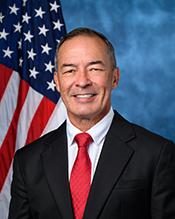
James C. Moylan
RRepublicanGU · Representative
58
/ 100
Average
Attendance87
Avg: 96
Independence35
Avg: 4
Bipartisan Tone11
Avg: 15
Ethics Record100
Avg: 99
Transparency47
Avg: 53
Accountability Score — composite of attendance, independence, bipartisan tone, ethics record & transparency.
Methodology22
Bills Sponsored
0
Enacted into Law
2
Passed a Chamber
20
In Committee
All Sponsored Bills
HR10408In Committee
Guam-Federal Consultation Act
HR10407In Committee
Childcare Cost Relief Act of 2026
HR10115In Committee
Radiation Exposure Compensation Reauthorization Act of 2026
HR9923In Committee
Biotechnology Diplomacy and Expertise Enhancement Act of 2026
The federal government would create a program to recruit and train biotechnology experts who can represent American interests in international negotiations and diplomacy. These specialists, including diplomats stationed around the world, would receive specialized training to advocate for U.S. biotechnology policies and priorities with foreign governments and international organizations. The goal is to strengthen America's position in global biotechnology discussions and ensure U.S. expertise shapes international standards and agreements in this field.
HRES1328In Committee
Honoring the 80th anniversary of United States-Philippine relations.
This resolution recognizes and celebrates 80 years of diplomatic and military partnership between the United States and the Philippines. The measure acknowledges the historical relationship between the two countries, including their alliance during World War II and their ongoing cooperation on defense and security matters. The resolution has been sent to the Foreign Affairs and Armed Services committees for review.
HR8625In Committee
USTDA Modernization Act of 2026
The proposal would allow the U.S. government to provide development aid and assistance to wealthy countries, which is not currently permitted under existing foreign aid law. This change would expand where American foreign aid dollars can be spent, potentially supporting development projects in high-income nations alongside traditional aid to lower-income countries. The measure is currently being reviewed by the House Committee on Foreign Affairs.
HR8343In Committee
Territorial Small Business Development Act of 2026
The bill would create a new Small Business Administration program specifically designed to help small business owners from Pacific territories like Guam, American Samoa, and the Northern Mariana Islands access loans, training, and other support services. This program would give entrepreneurs in these island communities better access to federal small business resources that are currently harder for them to reach due to their remote locations. The goal is to boost economic development and job creation in these U.S. territories.
HR6472Passed House
Territorial Student Access to Higher Education Act
Territorial Student Access to Higher Education Act This bill requires public institutions of higher education that participate in federal student aid programs to charge no more than in-state tuition and fee rates to students who are residents of Guam, the Northern Mariana Islands, American Samoa, or the U.S. Virgin Islands, provided they are also U.S. nationals.
HR7673In Committee
To amend the Organic Act of Guam to provide an exception to the "public purpose" requirement for certain land transfers in the case of a transfer restoring such land to the original landowner or heirs, and for other purposes.
The bill would change Guam's land laws to allow the government to return property to its original owners or their heirs without having to prove the transfer serves a public purpose, which is normally required for government land deals. This would make it easier for people whose families lost land in Guam to reclaim it through the government. The proposal is currently being reviewed by several congressional committees to determine which parts fall under their areas of responsibility.
HR7672In Committee
Parity for Pacific Radiation Survivors Act
This bill would extend the same federal compensation and benefits to people who were exposed to radiation during nuclear weapons testing in the Pacific to those already receiving benefits for radiation exposure from U.S. nuclear weapons testing in Nevada and other domestic locations. Pacific islanders and military personnel affected by these tests would gain access to healthcare, financial compensation, and other support programs currently available only to domestic radiation survivors. The legislation aims to treat all Americans harmed by government nuclear testing equally regardless of where the exposure occurred.
HR7229In Committee
Territorial SBA Loan Guaranty Adjustment Act of 2026
This bill would adjust how Small Business Administration loans work in U.S. territories like Puerto Rico, Guam, and the U.S. Virgin Islands, likely by changing loan terms, guaranty amounts, or eligibility rules to better support small business owners in these areas. The changes would affect small business owners in territories who rely on SBA loans to start or expand their companies, as well as the lenders who provide these loans.
HR6275In Committee
China AI Power Report Act
This bill would require the federal government to study and report on China's artificial intelligence capabilities, infrastructure, and power consumption related to AI development. The report would help Congress and policymakers understand how advanced China's AI technology is becoming and what resources it's using to build that technology. This affects U.S. foreign policy and national security strategy by providing information to guide decisions about competing with China in the AI field.
HR7073In Committee
Equality in the Halls of Congress Act
HR6063In Committee
Designating the Guam and Western Pacific USDA Rural Development Office Act
The federal government would establish a dedicated USDA Rural Development office specifically serving Guam and the Western Pacific region, giving these island communities their own local resource center for agricultural loans, infrastructure grants, and rural business support. Currently, these areas are served from offices located elsewhere, which can make it harder for farmers, small business owners, and local governments to access federal agricultural assistance programs. This change would bring USDA services closer to the people who need them in the Pacific.
HR4814In Committee
Supplemental Security Income Equality Act
Supplemental Security Income Equality Act This bill extends Supplemental Security Income (SSI) benefits to eligible residents of Puerto Rico, the U.S. Virgin Islands, Guam, and American Samoa. SSI is a federal assistance program designed to help aged, blind, and disabled individuals with limited income and resources meet basic needs. Under current law, residents of these territories are excluded from the program. Under the bill, the Social Security Administration may waive or modify statutory requirements relating to the provision of benefits as necessary to adapt the SSI program to each territory. The bill also eliminates a cap on payments to these territories from certain programs, including Temporary Assistance for Needy Families (TANF) and other grants to support aid for older individuals, blind individuals, and individuals with disabilities. Finally, the bill specifies that non-citizen U.S. nationals are eligible for SSI benefits under the same conditions as U.S. citizens. (Individuals born in American Samoa are nationals, but not citizens, of the United States.)
HRES505In Committee
Recognizing June 12, 2025, as this year's observance of "Philippines Independence Day" to honor the 127th anniversary of the independence of the Philippines.
This resolution recognizes the historic significance of the 127th anniversary of the Philippines' sovereignty and independence. The resolution also (1) reaffirms the bonds of friendship and cooperation between the United States and the Philippines, (2) recognizes the courage and bravery of Filipino and Filipino American servicemembers who have fought alongside and in the U.S. armed forces, and (3) supports the recognition of Philippines Independence Day.
HR877Passed House
Deliver for Veterans Act
Deliver for Veterans Act This bill requires the Department of Veterans Affairs (VA) to include delivery costs when paying the full purchase price of an automobile or other conveyance for certain disabled veterans or members of the Armed Forces. Currently, the VA must pay the lesser of (1) $26,417.20 (adjusted annually for inflation), or (2) the full purchase price associated with providing an automobile or other conveyance to such individuals (not including delivery costs).
HR2216In Committee
To amend title 49, United States Code, to except from certain requirements relating to eligibility for essential air service Guam and the Northern Mariana Islands, and for other purposes.
This bill exempts Guam and the Northern Mariana Islands from specific eligibility requirements of the Essential Air Service (EAS) program, thus allowing certain communities in Guam and the Northern Mariana Islands to participate. As background, the Department of Transportation's EAS program subsidizes passenger airline service to eligible small and isolated communities. To participate in the program under current law, most places must meet the eligibility requirements, such as be a community that received EAS in FY2011. Alaska and Hawaii are generally exempt from most of the EAS eligibility requirements. This bill adds Guam and the Northern Mariana Islands to that exemption.
HR2149In Committee
Correcting Guam’s History in the PACT Act
Correcting Guam's History in the PACT Act This bill expands eligibility for a presumption of service-connection for specified diseases associated with exposure to certain herbicide agents. Under a presumption of service-connection, specific conditions diagnosed in certain veterans are presumed to have been caused by the circumstances of their military service. Health care benefits and disability compensation may then be awarded. Under the bill, service performed in Guam or its territorial waters between August 15, 1958, and July 31, 1980, provides a veteran who has a specified disease that is associated with exposure to certain herbicide agents with eligibility for a presumption of service-connection. (Under current law, the eligible time frame for service in Guam is between January 9, 1962, and July 31, 1980.)
HRES183In Committee
Supporting the designation of March as National CHamoru Heritage and Culture Month.
HR1536In Committee
PIFAA
Pacific Island Flight Alternatives Act of 2025 or PIFAA This bill allows authorized foreign aircraft to pick up and drop off passengers and cargo in Guam or the Northern Mariana Islands on international flights to or from other places in the United States. Authorized aircraft are those registered to a foreign air carrier from Japan, the Philippines, or South Korea. Current law prohibits foreign air carriers from transporting passengers or cargo between places in the United States, with exceptions. The bill deems that passengers or cargo that are added to or removed from authorized foreign aircraft in Guam or the Northern Mariana Islands on a flight that is traveling between another place in the United States and an international location have not broken the international journey, thus allowing authorized foreign aircraft to transport passengers and cargo between Guam or the Northern Mariana Islands and other places in the United States on such flights.
HRES156In Committee
Honoring the 25th anniversary of the partnership between Guam and the Republic of the Philippines under the State Partnership Program.