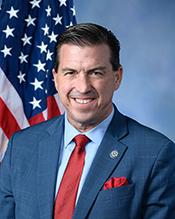
Kevin Mullin
DDemocratCA-15 · Representative
58
/ 100
Average
Attendance93
Avg: 96
Independence2
Avg: 4
Bipartisan Tone17
Avg: 15
Ethics Record100
Avg: 99
Transparency74
Avg: 53
Accountability Score — composite of attendance, independence, bipartisan tone, ethics record & transparency.
Methodology21
Bills Sponsored
0
Enacted into Law
0
Passed a Chamber
20
In Committee
All Sponsored Bills
HR10583In Committee
Garrett’s Law
HR7945Reported
Nitrous Oxide Safety Act of 2026
This bill would likely establish new safety standards and regulations for nitrous oxide, a gas used in medical settings, food production, and other industries. The legislation probably aims to address concerns about improper use, storage, or handling of the chemical by setting requirements for manufacturers, distributors, and users. It would affect hospitals, dental offices, food companies, and other businesses that rely on nitrous oxide in their operations.
HR10131In Committee
National Archives Protection Act
HR10033In Committee
AV Emergency Response Coordination Act
The proposal would set up basic rules for how companies operating self-driving cars must communicate and cooperate with firefighters, police, and paramedics during emergencies. This would help ensure that autonomous vehicles don't interfere with emergency response efforts and that first responders have the information they need to handle accidents or other incidents involving driverless cars. The bill affects autonomous vehicle companies, emergency services, and the public who share roads with self-driving vehicles.
HR9635In Committee
Getting Innovations to Patients During Shutdowns Act
The Food and Drug Administration would be allowed to continue reviewing new drug and medical device applications even when the federal government runs out of money and shuts down, ensuring that life-saving medications and treatments don't get stuck in bureaucratic limbo during budget disputes. This would affect pharmaceutical companies waiting for approval of new drugs, patients who need access to innovative treatments, and the FDA staff who review these applications. The bill aims to prevent delays in getting new medicines to market whenever Congress fails to pass a budget on time.
HR9478In Committee
Methane Removal Research and Innovation Act of 2026
The Department of Energy would be required to launch a research program focused on developing new technologies that can capture and remove methane gas from the atmosphere, addressing one of the major greenhouse gases contributing to climate change. This initiative would support scientists and engineers working on innovative solutions to reduce methane levels, which could benefit the environment and public health by helping slow global warming. The program would affect energy companies, research institutions, and ultimately communities dealing with climate-related impacts.
HR9291In Committee
Federal Flood Risk Management Act of 2026
The proposal would create a national standard to help communities and the federal government better prepare for and handle flooding, both from current flood threats and those expected to increase in the future. This would affect homeowners, businesses, local governments, and federal agencies by establishing consistent guidelines for flood planning and resilience efforts across the country. The measure is currently being reviewed by committees that handle financial services, transportation, and infrastructure matters.
HR7985In Committee
CHATBOT Act
The CHATBOT Act would establish rules for how companies can use artificial intelligence chatbots and similar automated systems to interact with consumers. The legislation likely aims to protect people from deceptive practices by requiring transparency about when they're talking to a bot rather than a human, and may set standards for how these systems handle personal information. This would affect tech companies, customer service providers, and anyone using AI chatbots for business purposes.
HRES1117In Committee
Expressing support for the designation of March as "Multiple System Atrophy Awareness Month" to strengthen public awareness of this neurodegenerative disorder.
This resolution asks Congress to officially recognize March as "Multiple System Atrophy Awareness Month" to help increase public knowledge about a rare neurological disease that causes progressive damage to the nervous system. The designation would encourage media coverage, educational campaigns, and community events to help patients, families, and healthcare providers better understand this serious condition. This is a symbolic measure that doesn't create new laws or programs, but aims to draw national attention to a disease that currently affects thousands of Americans.
HR7770In Committee
Hearing Aid Assistance Tax Credit Act
This bill would allow people to claim a tax credit to help pay for hearing aids and related services, reducing their out-of-pocket costs when they file their taxes. The credit would make hearing aids more affordable for individuals and families who need them, particularly those who don't have insurance coverage for these devices. The proposal is currently under review by the House committee that handles tax legislation.
HR7741In Committee
E-Access Act
The bill would make it easier for companies to create and sell software tools that help people track and manage their electricity and natural gas use, while preventing any single company from controlling the market. It would require energy companies to share customer data with these third-party apps and services so consumers can better understand their energy consumption and potentially save money. The changes are intended to spur innovation in energy management technology while also helping stabilize the electrical grid by giving consumers better information about when and how they use power.
HR7440In Committee
To direct the Secretary of Transportation to convey all right, title, and interest to certain property to the San Mateo County Transit District.
The federal government would transfer ownership of a specific piece of property to the San Mateo County Transit District, a public transportation agency in California. This would allow the transit district to use or develop the land for transportation-related purposes without federal restrictions. The transfer would affect the local community's ability to expand or improve public transit services in the San Mateo area.
HR3360In Committee
Driver Technology and Pedestrian Safety Act of 2025
This bill would require vehicle manufacturers to install advanced safety technology in cars to help prevent accidents involving pedestrians, such as automatic braking systems and collision warning features. The legislation aims to reduce injuries and deaths among people walking or biking near roads by making these protective technologies standard equipment rather than optional add-ons. Drivers and pedestrians would benefit from these safety improvements, while automakers would need to comply with the new equipment requirements.
HR7405In Committee
Rail and Highway Transmission Planning Act
This bill would require better coordination between energy companies and transportation agencies when planning new power lines and highways to avoid conflicts and reduce costs. It aims to streamline the process for building transmission infrastructure—the lines that carry electricity across the country—by having utilities and state/federal transportation officials work together from the start rather than discovering problems later. This would affect energy companies, construction firms, and communities where new power lines or roads are planned.
HR6661In Committee
Staff Salary Schedule Improvement Act
The proposal would increase salaries for congressional staff members who work in the House of Representatives. This would affect the thousands of people employed by individual representatives and House committees, potentially making these jobs more competitive and helping Congress retain experienced workers. The bill is currently being reviewed by the House Committee on House Administration.
HR6013In Committee
Filipino Veterans Fairness Act of 2025
This bill would provide equal benefits and recognition to Filipino soldiers who fought alongside the U.S. military during World War II and other conflicts, many of whom have historically received lower pay and fewer veterans' benefits than American soldiers. The legislation aims to address decades-old inequities by ensuring Filipino veterans and their families receive comparable healthcare, disability payments, and other support services available to U.S. veterans. The bill affects thousands of aging Filipino veterans and their descendants who served in the U.S. Armed Forces but were previously excluded from full veteran status.
HR5650In Committee
Weatherization Resilience and Adaptation Program Act
The bill would establish a federal program to help homeowners and building owners make their properties more energy-efficient and resilient to extreme weather, likely through grants, loans, or other financial assistance for improvements like better insulation, updated heating and cooling systems, and weather-resistant upgrades. This program would primarily benefit low- and moderate-income households that struggle to afford these improvements on their own, while also reducing energy costs and carbon emissions. The proposal is currently being reviewed by committees focused on financial services and scientific research to determine how to structure and fund the initiative.
HR5154In Committee
REACT Act
The REACT Act likely aims to improve how the federal government responds to emergencies and disasters by streamlining coordination between agencies and local communities. Based on its referral to the economic development and emergency management subcommittee, the bill probably addresses how to better prepare for, respond to, and recover from crises while supporting affected businesses and communities.
HR3459In Committee
Empty Lots to Housing Act
The legislation would allow communities to convert unused or abandoned land into housing developments, potentially making it easier for local governments and developers to build homes on vacant properties. This could help address housing shortages in areas with available land while reducing blight from empty lots. The bill affects city planners, developers, and people looking for affordable housing options.
HRES188In Committee
Affirming the obligation of the President of the United States to comply with court orders.
HR1428In Committee
Poverty Line Act of 2025
Poverty Line Act of 2025 This bill revises the methodology used to calculate the federal poverty guidelines. The federal poverty guidelines are used to determine eligibility for many federal and state public assistance programs, including the Supplemental Nutrition Assistance Program (SNAP), the Children’s Health Insurance Program (CHIP), and the National School Lunch Program. The poverty guidelines are currently calculated by adjusting the Census Bureau’s poverty thresholds to account for changes in the Consumer Price Index. The bill requires the Department of Health and Human Services (HHS) to calculate regional poverty guidelines based on a combination of factors including average household expenditures on food, clothing, utilities, and transportation; the average cost of rental housing; and the average cost of health insurance. These factors must be calculated using regional data as applicable. HHS must make available to the public a tool for determining the poverty guideline applicable to a given household. The new regional poverty guidelines established by HHS may not be lower than existing, corresponding poverty guidelines as of the date of enactment of the bill. HHS must review and evaluate the poverty guidelines at least every four years and propose changes to this methodology as appropriate. The bill takes effect three years after its enactment.