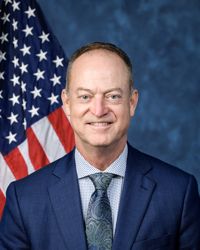
Mark B. Messmer
RRepublicanIN-8 · Representative
55
/ 100
Average
Attendance98
Avg: 96
Independence1
Avg: 4
Bipartisan Tone27
Avg: 15
Ethics Record100
Avg: 99
Transparency32
Avg: 53
Accountability Score — composite of attendance, independence, bipartisan tone, ethics record & transparency.
Methodology13
Bills Sponsored
0
Enacted into Law
0
Passed a Chamber
13
In Committee
All Sponsored Bills
HR10577In Committee
To prioritize the finalization of design requirements for new Ready Reserve Force vessels, and for other purposes.
HR9859In Committee
Ethical Investigations and Integrity Act
The Labor Department would be required to sign agreements protecting confidentiality when it shares information with individuals about potential lawsuits, ensuring that sensitive details don't get misused or leaked during legal disputes. This would apply whenever the department provides information that could be relevant to civil cases, protecting both the government's interests and the privacy of people involved in labor-related legal matters.
HR6213In Committee
Heat Workforce Standards Act of 2025
Heat Workforce Standards Act of 2025 This bill prohibits the Occupational Safety and Health Administration (OSHA) from finalizing, implementing, or enforcing a safety standard requiring certain employers to create a heat injury and illness prevention plan to evaluate and control heat hazards in their workplaces. Specifically, OSHA is prohibited from finalizing the proposed rule titled Heat Injury and Illness Prevention in Outdoor and Indoor Work Settings, which was published on August 30, 2024, or any substantially similar standard. The proposed standard generally applies to employers conducting outdoor and indoor work in all general industry, construction, maritime, and agriculture sectors where OSHA has jurisdiction. Employers must develop plans in accordance with the specified standards to address employee exposures to heat indexes at or above 80 degrees (initial heat trigger) or 90 degrees (high heat trigger) Fahrenheit. As background, the Occupational Safety and Health Act of 1970 generally requires employers to provide their employees with a place of employment that is free from recognized hazards that are causing or likely to cause death or serious harm to employees. OSHA conducts workplace inspections and cites employers that fail to satisfy these requirements. Currently, OSHA does not have specific heat exposure standards; however, OSHA has historically used its general authority to cite employers for violations involving excessive heat, including through a National Emphasis Program that focuses on indoor and outdoor heat exposure in industries that have the highest risks.
HR7547In Committee
DOD and USDA Interagency Research Act
The Department of Defense and Department of Agriculture would work together on research and development projects, likely combining military expertise with agricultural knowledge to address shared challenges. This could involve areas like food security for military operations, developing crops that can withstand extreme conditions, or using agricultural land for defense-related research. The bill is still in early stages and has been sent to two congressional committees to review the specific details.
HR9128In Committee
CFTC Protection of Information and Data Act of 2026
The proposal would modify rules governing commodity futures markets to protect certain sensitive business information from public disclosure. Companies trading in commodities like oil, grain, and metals would be able to keep some of their trading data confidential rather than having it automatically reported to regulators and the public. The changes would affect traders, agricultural businesses, and energy companies that participate in these markets.
HR7720In Committee
Child Care Payment Integrity and Fraud Accountability Act of 2026
This bill would strengthen oversight of child care assistance programs by requiring better tracking of payments, implementing fraud detection systems, and holding providers accountable for misusing government funds. It aims to protect families who rely on child care subsidies and ensure taxpayer money goes to legitimate providers rather than being wasted through fraud or abuse. The legislation would likely increase inspections and penalties for providers who break the rules.
HR8181In Committee
Critical Industry Skills Act
This bill would likely create or expand training programs to help workers develop skills needed for jobs in industries considered vital to the economy, such as manufacturing, energy, or technology. It probably aims to connect job seekers with education and apprenticeship opportunities in these fields, potentially involving partnerships between schools, employers, and government. The goal would be to address worker shortages in critical sectors while giving people pathways to better-paying careers.
HR7469In Committee
SNAP Online Access Act of 2026
This bill would allow people who receive SNAP benefits (food stamps) to buy groceries online and have them delivered or picked up, rather than only being able to shop in physical stores. The change would make it easier for elderly people, people with disabilities, and those without reliable transportation to purchase food using their benefits. Currently, SNAP online shopping is limited, so this legislation aims to expand those options significantly.
HR7264In Committee
Restoring America’s Floodplains Act
This bill would likely work to restore and protect America's natural floodplains—the areas that naturally flood along rivers and streams—by removing barriers, replanting native vegetation, and reconnecting waterways to their surrounding lands. Restoring floodplains helps reduce flooding damage to farms and communities, improves water quality, and creates better habitats for fish and wildlife. The changes would primarily affect farmers, landowners, and communities in flood-prone areas, along with environmental conservation efforts.
HR6657In Committee
Restaurant Meals Program Reform Act of 2025
The proposal would make changes to how the federal government handles meal programs for restaurants, likely affecting how food assistance benefits can be used at dining establishments and potentially expanding or modifying eligibility rules for restaurant participation in federal nutrition programs. This would impact both restaurant owners who participate in these programs and low-income individuals who rely on food assistance to purchase meals. The specific reforms are currently being reviewed by the congressional subcommittee responsible for nutrition policy.
HR2270In Committee
Empowering Employer Child and Elder Care Solutions Act
Empowering Employer Child and Elder Care Solutions Act This bill excludes the value of employer-funded child or dependent care from being used in calculating an eligible employee's overtime pay. Under current law, overtime hours must be paid at one and a half times an employee's regular rate of pay. This rate is an average hourly rate that must include certain types of pay, such as commissions. The bill specifies that an employer can provide or pay for child or dependent care services without the value of the services being included in this calculation.
HR6466In Committee
Forced Abortion Prevention and Accountability Act
This bill would make it a federal crime to coerce, intimidate, or force someone into having an abortion against their will, and would establish penalties for those who commit such acts. It would also allow victims to sue for damages and could provide federal resources to prosecute these cases. The law would apply to anyone who uses threats, violence, or other pressure to force a person to terminate a pregnancy.
HJRES15In Committee
Providing for congressional disapproval under chapter 8 of title 5, United States Code, of the rule submitted by the Department of Energy relating to "Energy Conservation Program: Energy Conservation Standards for Commercial Water Heating Equipment".
This joint resolution nullifies the final rule titled Energy Conservation Program: Energy Conservation Standards for Commercial Water Heating Equipment , which was submitted by the Department of Energy on October 6, 2023. The rule adopts more stringent energy conservation standards for commercial water heating equipment under the Energy Policy and Conservation Act in order to achieve more energy savings.