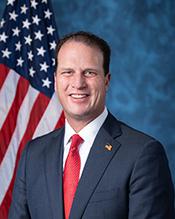
August Pfluger
RRepublicanTX-11 · Representative
63
/ 100
Average
Attendance99
Avg: 96
Independence1
Avg: 4
Bipartisan Tone34
Avg: 15
Ethics Record100
Avg: 99
Transparency78
Avg: 53
Accountability Score — composite of attendance, independence, bipartisan tone, ethics record & transparency.
Methodology44
Bills Sponsored
1
Enacted into Law
12
Passed a Chamber
30
In Committee
All Sponsored Bills
HR7022Passed House
Mystic Alerts Act
Mystic Alerts Act This bill provides for wireless emergency alerts to be transmitted to mobile devices via satellite. (Currently, wireless emergency alerts are sent via terrestrial mobile networks to individual devices in geographically targeted areas. Commercial mobile service providers are not required to participate; only devices connected to a participating service provider’s network receive alerts.) Under the bill, commercial mobile service providers that participate in the wireless emergency alerts system must give notice to the Federal Communications Commission (FCC) indicating whether they will transmit such alerts via satellite (in addition to sending alerts via terrestrial networks). The FCC must establish technical standards and other regulations to enable satellite emergency alerts. Providers that opt to transmit emergency alerts via satellite must comply with such regulations. If a provider elects not to transmit satellite alerts, the provider must give notice of that election to new and existing subscribers. Separately, mobile service subscribers may opt out of receiving satellite alerts.
HR10695In Committee
United States Submarine Cable Security Policy Act of 2026
HR10633In Committee
Medicaid Integrity and Fiscal Accountability Act
HR10594In Committee
Reliable Artificial Intelligence Research Act of 2026
HR9616Passed House
EMRTAI Authorization Act of 2026
Environmental Monitoring and Remediation Technology Assessment Initiative Authorization Act of 2026 or the EMRTAI Authorization Act of 2026 This provides statutory authority for an initiative within the Environmental Protection Agency (EPA) that recovers critical materials from contaminated sites. A critical material means (1) any non-fuel mineral, element, substance, or material that the Department of Energy determines has a high risk of a supply chain disruption and serves an essential function in energy technologies; and (2) any critical mineral. A critical mineral means any mineral, element, substance, or material designated as critical by the U.S. Geological Survey. Under the program, the EPA must investigate, evaluate, and support processes, methods, and systems which may be used to identify sources of critical materials at contaminated sites and recover such critical materials from those sites. In carrying out the program, the EPA may provide assistance (e.g., awards) to persons, nonprofit organizations, and state, local, and tribal government entities. The bill prohibits the EPA from providing assistance (1) in an amount that exceeds $10 million in any fiscal year in the aggregate; or (2) to any person, nonprofit organization, or government entity, in an amount that exceeds $3 million. The bill terminates the program after 10 years.
HR7443Passed House
I&A Mission Reorientation Act of 2026
I&A Mission Reorientation Act of 2026 This bill requires the Office of Intelligence and Analysis (I&A) of the Department of Homeland Security (DHS) to prioritize providing intelligence support to state, local, tribal, and territorial governments and private sector entities equally with providing support to other elements of the intelligence community. To carry out this requirement, the bill directs I&A to facilitate two-way information sharing between I&A and its government and private sector partners and to identify and address threats using forward-deployed intelligence capabilities. I&A must also ensure that its provision of intelligence support to DHS leadership does not interfere with I&A’s responsibilities to government and private sector partners. Further, the bill directs I&A to maintain robust and sustained engagement with fusion centers. (Fusion centers are collaborative efforts between federal, state, local, or tribal governments that combine resources, expertise, or information to detect, prevent, investigate, and respond to criminal or terrorist activity.) After the bill’s enactment, I&A must report to Congress on its efforts to implement these provisions.
HR10197In Committee
Biosecurity Modernization and Innovation Act
HJRES212In Committee
Providing congressional disapproval under chapter 8 of title 5, United States Code, of the rule submitted by the Environmental Protection Agency relating to "California State Motor Vehicle Pollution Control Standards; Advanced Clean Car Program; Reconsideration of a Previous Withdrawal of a Waiver of Preemption; Notice of Decision".
HR9970In Committee
RESCUE Act of 2026
The proposal would adjust how Medicare pays for ambulance services to make sure payments are fair and appropriate for the providers who offer this emergency transportation. Ambulance companies and Medicare beneficiaries who need emergency transport would be affected by changes to how these services are reimbursed under the federal health insurance program for seniors and some disabled people.
HR9397In Committee
Premium Transparency Act
This bill would require health insurance companies to publicly disclose how much money they spend on overhead costs and administrative expenses, as well as details about how much they pay out for medical claims, so patients and regulators can see where insurance premiums actually go. It would also direct the federal government to create clear guidelines for what insurance information companies must provide to customers. The changes would apply to private health insurance plans and Medicare, making the insurance industry more transparent about its spending.
HR9106In Committee
Robert Lodge Medal of Honor Act
The President would be authorized to award the Medal of Honor, the military's highest decoration for bravery, to Robert Lodge for his courageous actions as an Air Force member during the Vietnam War. The Medal of Honor recognizes extraordinary acts of valor in combat that go above and beyond the call of duty. This special authorization allows Congress to formally recognize Lodge's heroic service decades after his actions occurred.
HR8990In Committee
Protect Domestic Oil and Gas Small Business Act of 2026
The proposal would exempt small, low-producing oil and gas wells (called marginal wells) from certain pollution control requirements that normally apply to all wells under federal air quality laws. This would allow these smaller operations to avoid meeting the same emissions standards as larger wells, potentially reducing their compliance costs. The change would primarily affect small oil and gas producers and companies operating marginal wells, while potentially allowing more air pollution from these sources.
HR1343Passed House
Federal Broadband Deployment Tracking Act
Federal Broadband Deployment Tracking Act This bill requires the National Telecommunications and Information Administration to submit a plan to Congress for tracking the acceptance, processing, and disposition of applications for communications use authorizations. (These are requests for easements, rights-of-way, leases, licenses, or other authorizations to locate or modify a transmitting device, support structure, or other communications facility on public lands or National Forest System land.)
HR6409Passed House
FENCES Act
Foreign Emissions and Nonattainment Clarification for Economic Stability Act or the FENCES Act This bill modifies standards under the Clean Air Act to exempt states from penalties for emissions outside of the state’s control. The bill provides that certain nonattainment areas (i.e., those classified as severe or extreme for ozone or as serious for particulate matter) are not subject to sanctions for implementation plan deficiencies or for fees for failing to attain national ambient air quality standards (NAAQS) if the state demonstrates it would have avoided deficiencies or attained its standards but for emissions outside of its control (e.g., emissions from an exceptional event like a wildfire). A state must renew its demonstration at least once every five years for exemption from the sanctions or fees to continue to apply. The bill specifies that an area within a state may not be designated as a nonattainment area regarding any new or revised NAAQS for a pollutant if the state demonstrates it would be in attainment but for emissions emanating from outside of the country, regardless of whether the emissions resulted from human activity. For purposes of approving a state implementation plan or meeting certain NAAQS, current law provides that a state may demonstrate to the Environmental Protection Agency that but for emissions emanating from outside of the country, it would have attained applicable NAAQS by the attainment date for certain pollutants. The bill specifies that such emissions emanating from outside the country may include emissions that result from human activity.
HR7084Passed House
Defending American Property Abroad Act of 2026
Defending American Property Abroad Act of 2026 This bill authorizes the President to prohibit the entry of a vessel into the United States if the vessel has transited any U.S. port, harbor, or marine terminal that has been nationalized or expropriated (e.g., seized) by a Western Hemisphere country that has a free trade agreement with the United States. Under the bill, the President may prohibit the entry and operation of a vessel if it has called at any port, harbor, or marine terminal that was owned, held, or controlled by a U.S. entity or individual, but has been nationalized or expropriated by the government of a country that is located in the Western Hemisphere and has a free trade agreement in effect with the United States. The prohibition ends when the President determines that (1) the applicable country has restored ownership of the property that had been nationalized or expropriated, (2) the applicable country has provided mutually acceptable compensation for the nationalized or expropriated property, (3) the conditions for the prohibition are no longer satisfied, or (4) the dispute has been otherwise resolved to the satisfaction of the President. The bill permits certain foreign vessels that are otherwise prohibited from entering the United States under this bill or current law to enter if the vessel is experiencing an emergency (involving the vessel or an individual on the vessel) and in certain instances where access to a covered facility was granted by a U.S. property owner.
HR8022In Committee
DETECT Nitazenes Act of 2026
This bill would likely establish new detection methods or monitoring systems for nitazenes, a class of synthetic opioids that have become an emerging drug threat. The legislation would probably help law enforcement, public health officials, and border security agencies identify and track nitazenes more effectively to prevent their distribution and use. This could affect drug enforcement agencies, healthcare providers, and communities dealing with opioid-related issues.
HR7773In Committee
Field Integration of Homeland Intelligence Act of 2026
This bill would improve how the Department of Homeland Security shares intelligence information with local law enforcement agencies and first responders across the country. The goal is to help police departments, fire departments, and emergency services get faster access to federal security information so they can better protect their communities from threats. The bill likely aims to break down communication barriers between federal and local agencies that currently slow down the sharing of important security data.
HR7742In Committee
Keep It Moving Act
Based on the vague title and referral to the Energy and Commerce Committee, this bill likely addresses broadband internet access, telecommunications infrastructure, or technology deployment to improve connectivity and data transmission speeds across the country. The measure probably aims to remove regulatory barriers or streamline approval processes that slow down the installation or expansion of internet and communications networks. This would affect internet service providers, telecommunications companies, and potentially millions of Americans seeking faster or more reliable internet access.
HR6988In Committee
Trade Transparency Unit Strategy Act
Trade Transparency Unit Strategy Act This bill requires a strategy and report related to the expansion of trade transparency units. Trade transparency units examine trade anomalies and financial irregularities associated with trade-based money laundering, customs fraud, contraband smuggling, and tax evasion. Specifically, the Department of Homeland Security must coordinate with the Departments of State, Commerce, and the Treasury to submit a strategy to Congress. This strategy must (1) expand information sharing between U.S. Customs and Border Protection, Homeland Security Investigations of U.S. Immigration and Customs Enforcement, appropriate elements of the Department of Commerce, the Financial Crimes Enforcement Network of the Department of the Treasury, and appropriate counterparts of foreign customs agencies through trade transparency units; and (2) improve intra-agency, interagency, and other multilateral information sharing with respect to these units. The Government Accountability Office must submit a report to Congress that includes an assessment of the strategy.
HR6538In Committee
More Affordable Care Act
HR1949Passed House
Unlocking our Domestic LNG Potential Act of 2025
Unlocking our Domestic LNG Potential Act of 2025 This bill repeals certain restrictions on the import and export of natural gas under the Natural Gas Act, including requirements for Department of Energy (DOE) approval and related provisions that address free trade agreements. In addition, the bill grants the Federal Energy Regulatory Commission (FERC) the exclusive authority to approve or deny applications to authorize the siting, construction, expansion, or operation of facilities (e.g., liquefied natural gas terminals) to export natural gas to foreign countries or import natural gas from foreign countries. (Currently, DOE authorizes the export or import of natural gas, and FERC authorizes related facilities.) In determining whether to approve or deny an application, FERC must deem the exportation or importation of natural gas to be consistent with the public interest.
HR1736Passed House
Generative AI Terrorism Risk Assessment Act
Generative AI Terrorism Risk Assessment Act This bill requires the Department of Homeland Security (DHS) to periodically provide Congress with an assessment of threats to the United States posed by the use of generative artificial intelligence (AI) for terrorism. Generative AI is defined as the class of AI models that emulate the structure and characteristics of input data to generate derived synthetic content, including images, videos, audio, text, and other digital content. The bill also (1) requires DHS to review and disseminate related information gathered by state and major urban area fusion centers and the National Network of Fusion Centers, and (2) requires other federal agencies to share related information with DHS. (A fusion center is a collaborative effort of two or more federal, state, local, or tribal government agencies that combines resources, expertise, or information with the goal of maximizing the ability of such agencies to detect, prevent, investigate, apprehend, and respond to criminal or terrorist activity.)
HR6105In Committee
REVOKE Act
The REVOKE Act likely addresses the removal or cancellation of military commissions, security clearances, or other armed forces authorizations, though the specific details would depend on the bill's full text. Based on its referral to the Armed Services Committee, it probably affects military personnel, defense contractors, or government employees who hold security clearances or military appointments. The bill's purpose appears to be establishing or clarifying procedures for revoking these credentials or positions.
HR6106In Committee
CLEAR Path Act
I don't have access to the full text of the CLEAR Path Act to provide an accurate summary of what it would do. To write a factual summary, I would need to review the bill's actual provisions. Could you provide the bill number or additional details about its specific contents?
HR6107In Committee
PAID OFF Act of 2025
The bill addresses international affairs matters and has been sent to multiple House committees for review, including Foreign Affairs, Judiciary, and Rules, suggesting it likely involves cross-cutting issues related to U.S. foreign policy, legal frameworks, or procedural matters. Without access to the bill's specific text, the exact provisions cannot be detailed, but the referral pattern indicates it may deal with international obligations, diplomatic relations, or how Congress handles foreign policy decisions. The bill is currently in the early stages of the legislative process awaiting committee consideration.
HR5888In Committee
UNtaxed Act
The bill addresses taxation policy, though its specific provisions are not detailed in the available information. Based on its referral to both the Foreign Affairs and Ways and Means committees, it likely involves tax treatment of international transactions or foreign-related income. The measure is currently under review to determine which committee will have primary responsibility for different sections of the legislation.
HR5602In Committee
LAUNCH Act
Licensing Aerospace Units to New Commercial Heights Act or the LAUNCH Act This bill makes changes to, and requires certain evaluations of, regulatory processes for licensing commercial space launch and reentry activities and private remote sensing systems. The Federal Aviation Administration (FAA) Office of Commercial Space Transportation regulates the launch and reentry of commercial spacecraft. In 2020, the FAA consolidated launch and reentry licensing requirements for all types of space vehicles into a single set of regulations, known as Part 450. The bill requires the FAA to evaluate and report on the implementation of Part 450 and its impacts on the commercial spaceflight industry, including whether the rule has resulted in uncertainty or operational delays. The FAA must also continue an aerospace rulemaking committee comprised of launch and reentry service providers. Further, the FAA must develop a digital system to accept commercial space launch and reentry applications and provide status information and notifications to applicants. The bill elevates the Office of Commercial Space Transportation to a modal administration reporting directly to the Department of Transportation (DOT). The administration must exercise all of DOT’s authorities related to commercial space launch and reentry. Finally, the bill revises the licensing process for private remote sensing systems and requires the Government Accountability Office to report on the Department of Commerce’s regulation of the private remote sensing industry. ( Remote sensing generally refers to the collection of data by instruments in Earth’s orbit, such as satellites, that can be processed into imagery of Earth’s surface.)
HR5526In Committee
Biosimilar Red Tape Elimination Act
This bill would streamline the approval process for biosimilar drugs—cheaper alternatives to expensive biologic medications—by reducing regulatory requirements and paperwork that manufacturers must complete. The goal is to get these more affordable treatment options to patients faster and make it easier for drug makers to bring them to market, which could lower costs for patients and insurance companies paying for medications like cancer treatments and arthritis drugs.
HR5485In Committee
Second Chance at Life Act of 2025
The legislation would expand access to life-saving treatments and support services for people recovering from serious illnesses or injuries, with a focus on helping them return to work and independent living. It would likely increase funding for rehabilitation programs, mental health services, and job training for patients transitioning out of hospitals or treatment facilities. The bill would affect patients, healthcare providers, employers, and state health programs that coordinate recovery services.
HR4577In Committee
Defending American Property Abroad Act of 2025
The bill would establish protections and legal remedies for American citizens and businesses whose property has been seized or damaged by foreign governments, allowing them to pursue compensation through U.S. courts. It aims to give Americans a way to recover losses from countries that have taken their assets without fair compensation, potentially affecting business owners, investors, and others with property interests abroad. The legislation would strengthen the government's ability to support American interests in international disputes over property rights.
HR884Passed House
To prohibit individuals who are not citizens of the United States from voting in elections in the District of Columbia and to repeal the Local Resident Voting Rights Amendment Act of 2022.
This bill prohibits a non-U.S. citizen from voting in a District of Columbia (DC) election and repeals relevant provisions of DC law. Federal law prohibits noncitizens from voting in a federal election; however, in 2022, DC enacted a law allowing noncitizens who meet residency and other requirements to vote in local elections. This bill repeals the DC law, which went into effect on February 23, 2023.
HR3731In Committee
Small Biotech Innovation Act
This bill aims to support smaller biotechnology companies by likely providing tax breaks, regulatory relief, or funding to help them develop new medicines and treatments more easily. The changes would reduce some of the financial and bureaucratic barriers that small biotech firms face compared to large pharmaceutical companies, potentially speeding up innovation in areas like rare diseases or personalized medicine. The bill is currently being reviewed by two congressional committees to determine which parts fall under their respective responsibilities.
HR3411In Committee
Conscience Protection Act of 2025
This bill would allow healthcare workers and medical facilities to refuse to provide certain medical services, including abortion and contraception, based on their personal religious or moral beliefs without facing legal penalties or losing federal funding. The law would protect doctors, nurses, hospitals, and other healthcare providers from discrimination lawsuits or government action if they decline to perform procedures they object to on conscience grounds. Patients seeking these services might face delays or have to travel elsewhere to receive care, depending on their location and available alternatives.
HR881Passed House
DHS Restrictions on Confucius Institutes and Chinese Entities of Concern Act
DHS Restrictions on Confucius Institutes and Chinese Entities of Concern Act This bill restricts funding to an institution of higher education (IHE) that has a relationship with a Confucius Institute, Thousand Talents Program, or Chinese entity of concern. The bill defines (1) Confucius Institute as a cultural institute funded by the Chinese government; (2) Thousand Talents Program as any technological or educational program funded or administered by China's Ministry of Industry and Information Technology; and (3) Chinese entity of concern as generally any university or college in China that is involved in China's military, police, or intelligence activities. Specifically, the Department of Homeland Security (DHS) must ensure that an IHE that has awarded a contract to, entered into an agreement with, or received an in-kind donation or gift from a Confucius Institute, Thousand Talents Program, or Chinese entity of concern is ineligible to receive any funds from DHS, unless the IHE terminates the relationship. The IHE may regain eligibility for these funds upon termination of the relationship.
HR530Passed House
ACES Act
ACES Act This bill requires the Department of Veterans Affairs to enter into an agreement with the National Academies of Sciences, Engineering, and Medicine to study and report on the prevalence and mortality of cancers among veterans who served on active duty as aircrew members and regularly flew in fixed-wing aircraft.
HR2158Reported
Countering Transnational Repression Act of 2025
The legislation would authorize the federal government to take action against foreign governments and their agents who attempt to suppress, intimidate, or harm people living in the United States based on their political views or activities. It would give law enforcement and intelligence agencies tools to investigate and counter efforts by foreign regimes to silence dissidents, journalists, and activists on American soil. The law would affect immigrants, refugees, and U.S. citizens who face threats from authoritarian governments trying to control them from abroad.
HR2574In Committee
No Iranian Energy Act
The proposal would prohibit U.S. companies and financial institutions from doing business with Iran's energy sector, including oil, natural gas, and related industries. This would prevent American firms from investing in or purchasing Iranian energy products, and would restrict financial transactions that support Iran's energy operations. The measure aims to increase economic pressure on Iran through sanctions targeting one of its most important industries.
HR2272In Committee
FAFSA Act of 2025
Freeze Aid For Student Assaulters Act of 2025 or the FAFSA Act of 2025 This bill prohibits an individual who is convicted of a criminal offense of assault against a police officer or rioting (e.g., inciting a riot or participating in a riot) from receiving student federal financial assistance. Specifically, an individual who is convicted of such an offense shall not be eligible to receive any grant, loan, or work assistance under Title IV of the Higher Education Act of 1965 (HEA). (Title IV financial assistance is the largest source of federal aid to postsecondary students.) Additionally, any grant previously awarded to such an individual must be treated as a Federal Direct Unsubsidized Stafford Loan that is subject to repayment. Further, interest shall accrue on the converted loan from the date of the original grant award. Converted loans may not be eligible for any loan forgiveness, cancellation, discharge, or reduction programs under the HEA, any other provision of law, or any administrative action or program.
HJRES35Enacted
Providing for congressional disapproval under chapter 8 of title 5, United States Code, of the rule submitted by the Environmental Protection Agency relating to "Waste Emissions Charge for Petroleum and Natural Gas Systems: Procedures for Facilitating Compliance, Including Netting and Exemptions".
This joint resolution eliminates an annual waste emissions charge on oil or gas facilities under the Methane Emissions Reduction Program. Under the program, the Environmental Protection Agency (EPA) currently collects a waste emissions charge from specific types of oil or gas facilities, such as onshore or offshore facilities that produce oil or gas, for exceeding emission thresholds for greenhouse gas emissions and methane emissions. Specifically, the joint resolution nullifies the rule titled Waste Emissions Charge for Petroleum and Natural Gas Systems: Procedures for Facilitating Compliance, Including Netting and Exemptions and published by the EPA on November 18, 2024.
HR1735In Committee
Early Action and Responsiveness Lifts Youth Minds Act
This bill aims to improve mental health services and support for young people by establishing programs that help identify and respond quickly to mental health issues in children and teenagers. The legislation would likely fund early intervention efforts, training for healthcare providers, and resources to make mental health care more accessible to youth in schools and communities. It affects students, families, healthcare providers, and schools that would implement or benefit from these mental health initiatives.
HR1212In Committee
Countering Online Radicalization and Terrorism Act
The legislation would establish new programs and strategies to identify and counter online content that promotes violent extremism and terrorism, particularly targeting military personnel and veterans who may be vulnerable to radicalization through social media and internet platforms. It would direct federal agencies to work together to monitor, analyze, and respond to terrorist recruitment efforts online while also supporting efforts to help individuals disengage from extremist groups. The bill aims to protect national security by addressing how terrorist organizations use the internet to attract followers and plan attacks.
HR26Passed House
Protecting American Energy Production Act
Protecting American Energy Production Act This bill prohibits the President from declaring a moratorium on the use of hydraulic fracturing unless Congress authorizes the moratorium. The bill also expresses the sense of Congress that states should maintain primacy (authority) for the regulation of hydraulic fracturing for oil and natural gas production on state and private lands. Hydraulic fracturing, or fracking, is a process to extract underground resources such as oil or gas from a geologic formation by injecting water, a propping agent (e.g., sand), and chemical additives into a well under enough pressure to fracture the formation.
HR1094In Committee
Amateur Radio Emergency Preparedness Act
Amateur Radio Emergency Preparedness Act This bill limits the adoption and enforcement of private land use restrictions (e.g., rules of a homeowners' association) that prohibit, restrict, or impair the installation, maintenance, or operation of an amateur station antenna on property controlled by an amateur radio operator. Private land use restrictions are deemed to prohibit, restrict, or impair the installation, maintenance, or operation of an amateur station antenna if they unreasonably delay, prevent, or increase the cost or difficulty of such installation, maintenance, or operation; or if they prevent or degrade the reception or transmission of a signal acceptable to the operator. However, the bill permits certain private land use restrictions, including restrictions that require amateur station antennas (1) to be maintained in a structurally safe condition; or (2) to be installed in compliance with manufacturer specifications, applicable zoning ordinances, amateur radio tower ordinances, and building codes. The bill also establishes certain limits on the adoption and enforcement of private land use restrictions that require an amateur radio operator to obtain prior approval before installing an amateur station antenna, and exempts certain categories of amateur station antenna from prior approval requirements altogether. Finally, the bill sets forth procedures for the enforcement of these provisions and provides a private right of action for individuals harmed by violations of the provisions.
HR631In Committee
PARTS Act of 2025
Based on the title and crime/law enforcement focus, this bill likely addresses penalties or regulations related to vehicle parts theft or trafficking, which has become a significant problem affecting car owners and insurance costs. The bill would probably establish new criminal penalties, increase enforcement resources, or create tracking systems to combat the illegal sale and distribution of stolen automotive parts. This would impact car owners dealing with theft, law enforcement agencies, auto repair shops, and potentially online marketplaces where stolen parts are sold.