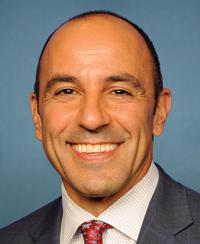
Jimmy Panetta
DDemocratCA-19 · Representative
59
/ 100
Average
Attendance100
Avg: 96
Independence7
Avg: 4
Bipartisan Tone41
Avg: 15
Ethics Record100
Avg: 99
Transparency28
Avg: 53
Accountability Score — composite of attendance, independence, bipartisan tone, ethics record & transparency.
Methodology44
Bills Sponsored
1
Enacted into Law
2
Passed a Chamber
41
In Committee
Bills That Became Law
All Sponsored Bills
HR10586In Committee
NATO Shield Act
HR5334Enacted
Lindsey O. Graham Sanctioning Russia and Iran Act of 2026
Lindsey O. Graham Sanctioning Russia and Iran Act of 2026 This bill imposes a variety of sanctions, tariffs, and prohibitions related to Russia, extends an Iran-related sanctions law, and expands a tax deduction for teacher expenses to include early childhood educators. For example, under the bill, the President must impose visa- and property-blocking sanctions on specified persons (individuals and entities) such as the Russian president and certain Russian military commanders. The President must also increase the rate of duty up to 100% ad valorem (i.e., relative to the value) on all goods imported into the United States from a country that was among the five largest importers of Russian-origin crude oil or natural gas if such country knowingly makes new purchases of such products after enactment of the bill. The bill prohibits (1) the export, reexport, or in-country transfer to or in Russia of any U.S.-produced energy or energy product; (2) U.S. persons from making new investments in Russia or purchasing Russian sovereign debt; and (3) trading the securities of Russian government-owned, -controlled, or -affiliated entities on U.S. national securities exchanges. The bill extends through 2031 the Iran Sanctions Act of 1996, which requires the President, with some exceptions, to impose sanctions on certain persons engaged in specified transactions related to Iran's energy sector or Iran's efforts to acquire or develop certain weapons. The bill expands eligibility for federal tax deductions of certain educator expenses to early childhood educators providing educational or childcare services to those under age 6.
HR1266Passed House
Combating Illicit Xylazine Act
Combating Illicit Xylazine Act This bill regulates xylazine under the Controlled Substances Act (CSA). Xylazine, also known as tranq , is a nonopioid sedative and pain reliever that is approved for use in animals. Recently, the Drug Enforcement Administration (DEA) has reported an increase in trafficking of fentanyl mixed with xylazine. This bill adds xylazine, including its salts, isomers, and salts of isomers, to schedule III of the CSA. Schedule III controlled substances, including anabolic steroids, buprenorphine, and ketamine, have less potential for abuse than a schedule I or II substance, have a currently accepted medical use, and have low or moderate risk of dependence if abused. Under the bill, manufacturing, distributing, or dispensing xylazine, or possessing with intent to manufacture, distribute, or dispense xylazine for illicit use is subject to criminal penalties under the CSA. The bill also requires xylazine transactions to be tracked in the drug reporting system maintained by the DEA. The bill exempts from registration under the CSA persons and entities that possess xylazine (1) lawfully dispensed by a veterinarian or pharmacy and (2) for an animal or for use in certain animal-control or wildlife programs. The bill also exempts xylazine manufacturers from the CSA's physical security requirements. Finally, the bill requires the DEA, in coordination with the Food and Drug Administration, to report on (1) the prevalence and impact of illicit xylazine use in the United States, and (2) updated information on the prevalence and proliferation of xylazine trafficking and misuse in the United States.
HR10195In Committee
Mali Security Partnership and Counterterrorism Act
HR9927In Committee
Farmers Lifeline to Overcoming Disasters (FLOOD) Act
The proposal would allow the emergency watershed program, which helps communities repair damage from floods and other water-related disasters, to participate in a federal partnership program that brings together government agencies, nonprofits, and landowners to work on conservation projects. This change would give farmers, ranchers, and rural communities access to additional funding and resources for water management and land protection efforts. The bill is currently under review by the House Agriculture Committee.
HR4288Passed House
To name the Department of Veterans Affairs community-based outpatient clinic in San Jose, California, as the "Corporal Patrick D. Tillman VA Clinic".
This bill designates the community-based outpatient clinic of the Department of Veterans Affairs in San Jose, California, as the Corporal Patrick D. Tillman Department of Veterans Affairs Clinic or the Pat Tillman VA Clinic.
HRES1388In Committee
Recognizing the importance of pollinators to ecosystem health and agriculture in the United States and expressing support for "National Pollinator Week".
The resolution recognizes how important bees, butterflies, and other pollinators are to keeping ecosystems healthy and supporting American farming, and it expresses support for designating a "National Pollinator Week" to raise awareness about these insects. This measure affects farmers, gardeners, and anyone who depends on crops that rely on pollinators to produce food. The bill is currently being reviewed by the House Committee on Agriculture.
HR6588In Committee
PROVIDE Act
The proposal would establish new requirements for how the military handles and protects sensitive information and personnel records. It aims to strengthen security procedures across armed forces operations to prevent unauthorized access or breaches that could compromise national defense or endanger service members and their families.
HR9444In Committee
Support our Firefighters Act
Federal wildland firefighters would receive additional paid leave time to rest and recover after working on large fires, similar to how the military provides rest periods for troops returning from deployments. This change would apply to government employees who fight wildfires on federal lands and would help reduce burnout among workers who face physically and mentally demanding seasons. The bill is currently being reviewed by congressional committees to determine whether it should move forward.
HR9322In Committee
Abraham Accords Defense Cooperation Act of 2026
The Department of Defense would be required to create a new program to strengthen military partnerships and cooperation with countries that have signed the Abraham Accords, which are peace agreements between Israel and several Arab nations. This initiative would help these countries work together on defense matters, security challenges, and military coordination in the Middle East region. The measure affects military officials, defense contractors, and the governments of countries involved in these agreements.
HR8735In Committee
American Sovereignty and Monterey Historic Military Site Study Act
The federal government would study whether Lower Presidio Historic Park in Monterey, California should become a protected national park or receive other special federal designation and funding. The Interior Department would examine the park's historical significance, current condition, and potential for preservation and public access. This study would help determine what level of federal involvement and resources the site deserves.
HR8706In Committee
Better Energy Storage and Safety Act
The bill would update federal programs that support the development and deployment of energy storage technology, such as batteries that store power from renewable sources like solar and wind. These changes would affect energy companies, researchers, and manufacturers working on storage solutions, potentially influencing how the government funds and manages projects in this area. The specific modifications are currently being reviewed by the House Committee on Science, Space, and Technology.
HR8626In Committee
Workforce Housing Tax Credit Act
The proposal would give tax credits to developers and builders who construct or rehabilitate housing that is affordable for middle-income families and individuals. These credits would reduce the amount of federal income taxes owed by qualifying housing projects, making it financially easier for companies to build more moderately-priced homes in areas where housing costs have become difficult for average workers and families to manage.
HR8228In Committee
To nullify the Presidential Proclamation relating to Imposing a Temporary Import Surcharge to Address Fundamental International Payments Problems, and for other purposes.
This bill would cancel a presidential order that placed extra taxes on imported goods to address trade imbalances with other countries. The measure would affect American businesses and consumers who rely on imported products, potentially lowering prices on foreign goods but also affecting domestic manufacturers and workers in industries that compete with imports. The bill is currently under review by the House committee responsible for trade and tax policy.
HR7318In Committee
Opportunities in Organic Act
This bill would likely expand support and opportunities for organic farming by making it easier and more affordable for farmers to transition to or maintain organic production methods. The legislation probably includes provisions such as increased funding for organic certification assistance, research into organic farming practices, or incentives for farmers to adopt organic standards. Organic farmers and consumers seeking locally-produced organic food would be the primary beneficiaries of these changes.
HR7142In Committee
ACE Agriculture Act
Advancing Cutting Edge Agriculture Act or the ACE Agriculture Act This bill reauthorizes the Agriculture Advanced Research and Development Authority (AGARDA) through FY2032 and expands the program's environmental sustainability goals. This Department of Agriculture (USDA) program supports innovative research and development of technology, research tools, and products to address long-term and high-risk challenges related to food and agriculture. The bill expands the program's goals to include water conservation; responding to greenhouse gas emissions; and resilience to drought, infectious diseases, and plant and animal pathogens and pests. The bill also expands the program's goals to include undertaking advanced research and development in areas in which industry by itself is not likely to do so because of economic cost. Further, the bill removes the current pilot program designation and requires USDA to establish and maintain an AGARDA staff. Finally, the bill allows USDA to use any unobligated USDA funds to implement the program.
HR5555In Committee
Monterey Bay National Heritage Area Study Act
The bill would authorize the federal government to study whether the Monterey Bay area in California should be designated as a National Heritage Area, which would help preserve and promote the region's natural, cultural, and historical resources. If approved after the study, such a designation would bring federal funding and coordination to protect the area's ecosystems, support local tourism and education, and help communities manage development while maintaining the bay's environmental and cultural significance.
HR7373In Committee
Trade Cheating Restitution Act of 2026
This bill would create a system to compensate American workers and businesses that have been harmed by unfair foreign trade practices, such as when other countries illegally subsidize their exports or dump cheap products on the U.S. market. The money for these payments would likely come from tariffs or penalties collected from countries found to be cheating on trade rules. Workers who lost jobs and companies that lost business due to these unfair practices could potentially receive financial restitution to help offset their losses.
HR7188In Committee
MOLD Act
The MOLD Act addresses mold-related issues affecting military facilities and service members' living conditions. The bill likely aims to establish standards for mold inspection, remediation, and prevention in military housing and buildings to protect the health and safety of active-duty personnel, veterans, and their families. This would require the Department of Defense to take action to identify and fix mold problems in barracks, family housing, and other military installations.
HR7143In Committee
Roadside Pollinator Program Amendments Act
This bill would expand and improve programs that plant and maintain wildflowers and native plants along highways and roadsides to help bees, butterflies, and other pollinators survive. The changes would likely make it easier for states and transportation departments to participate in these programs and could provide more funding or resources to support pollinator-friendly landscaping instead of traditional mowing. This affects both environmental conservation efforts and how transportation agencies manage the land alongside roads.
HR6696In Committee
Restoring American Mineral Security Act of 2025
This bill aims to reduce America's dependence on foreign countries for critical minerals needed in electronics, batteries, and defense equipment by supporting domestic mining and processing industries. It would likely involve trade measures, tax incentives, or regulations to encourage American companies to extract and refine minerals at home rather than relying on imports from other nations. The legislation affects miners, manufacturers, national security officials, and consumers who depend on products containing these minerals.
HR6666In Committee
HIRRE Prosecutors Act of 2025
The bill would allow federal prosecutors to hire and retain experienced legal talent more flexibly by adjusting hiring rules and compensation for prosecutors working in the Justice Department. This change aims to help federal law enforcement offices compete with private law firms for skilled attorneys and reduce turnover among prosecutors handling important cases. The measure affects how the federal government staffs its prosecutorial offices and could impact the quality and stability of criminal prosecutions nationwide.
HR6324In Committee
Retirement Simplification and Clarity Act
This bill would simplify retirement savings rules and make them easier for workers and small business owners to understand and follow. It likely aims to reduce confusing regulations around retirement accounts like 401(k)s and IRAs so more people can save for retirement without getting tangled up in complicated tax rules. The changes would probably affect workers saving for retirement, small businesses offering retirement plans, and the IRS's enforcement of retirement account rules.
HR6323In Committee
Taxpayer Protection and Preparer Proficiency Act
This bill would establish new standards and requirements for tax preparers to ensure they meet minimum competency levels before helping people file their taxes. It likely aims to protect taxpayers from errors or fraud by requiring tax preparers to pass exams, maintain certifications, or meet other professional qualifications. The changes would affect tax preparation companies and individual preparers who help millions of Americans file their annual tax returns.
HR6157In Committee
FORCE Act of 2025
First Responders' Care Expansion Act of 2025 or the FORCE Act of 2025 This bill provides for Medicare coverage of first responders between the ages of 57 and 64 who do not otherwise already qualify for Medicare.
HR5281In Committee
REAL Health Providers Act
The bill would likely expand or clarify which healthcare providers can be reimbursed by Medicare and other federal health programs, potentially allowing more types of medical professionals to bill directly for their services. This could affect patients by increasing access to certain healthcare providers and affecting which practitioners insurance will pay for. Healthcare providers and insurance companies would need to adjust their billing and credentialing practices based on any new provider categories the bill establishes.
HR5208In Committee
To amend title 37, United States Code, to exclude the basic allowance for housing from the calculation of gross household income for purposes of the basic needs allowance for eligible members of the Armed Forces.
This bill would change how the military calculates whether active-duty service members qualify for financial assistance by not counting their housing allowance as income when determining eligibility for the basic needs allowance. The change would make it easier for military families to receive this extra financial support without their housing benefits reducing their qualification. This affects active-duty service members and their families who struggle to afford basic necessities.
HR4817In Committee
Immigrant Witness and Victim Protection Act of 2025
HR4717In Committee
First-Time Homebuyer Tax Credit Act of 2025
This bill would create a tax credit to help first-time homebuyers reduce the federal taxes they owe, making it easier for people buying their first home to afford the purchase. The credit would apply to individuals and families meeting certain income and home price requirements, potentially saving them thousands of dollars when they file their taxes. The proposal aims to address housing affordability challenges by putting money back in the pockets of new homeowners.
HR4610In Committee
BRIDGE Africa Act
The legislation aims to strengthen economic and diplomatic ties between the United States and African nations by supporting infrastructure development, trade partnerships, and investment opportunities across the continent. It would help American companies and workers access new markets while providing African countries with resources and technical expertise for projects like roads, ports, and energy systems. The bill is designed to increase U.S. influence in Africa and create mutual economic benefits for both regions.
HR4062In Committee
MONARCH Act of 2025
Monarch Action, Recovery, and Conservation of Habitat Act of 2025 or the MONARCH Act of 2025 This bill provides support for the conservation of western monarch butterflies (the monarch butterfly population that overwinters along the coast of California and breeds across California, Arizona, Nevada, Washington, Oregon, Idaho, and Utah). Specifically, the bill establishes the Western Monarch Butterfly Rescue Fund. The Department of the Interior must use amounts in the fund to provide grants for the conservation of such butterflies and other pollinators within the range of western monarch butterflies. In addition, Interior must enter into an agreement with the National Fish and Wildlife Foundation to facilitate updating and implementing the Western Monarch Butterfly Conservation Plan, which was prepared by the Western Association of Fish and Wildlife Agencies.
HRES526In Committee
Recognizing the importance of pollinators to ecosystem health and agriculture in the United States by designating June 15 through June 22, 2025, as "National Pollinator Week".
This resolution supports the designation of National Pollinator Week.
HR3990In Committee
Disaster Relief Medicaid Act
Disaster Relief Medicaid Act This bill establishes a series of programs and requirements relating to Medicaid coverage of individuals affected by a federally declared major disaster, national emergency, or public health emergency. In particular, the bill provides for specific coverage under Medicaid for individuals who meet specified income eligibility standards and were either residents of the impacted area or were employed in the impacted area (and subsequently lost employment). Coverage is effective for two years after the date of the disaster or emergency declaration. State Medicaid programs must provide coverage that is at least as comprehensive as the state's Medicaid coverage and the Medicaid coverage of the individual's home state, as applicable. The bill applies a 100% Federal Medical Assistance Percentage (i.e., federal matching rate) to such coverage and related administrative expenses. The Centers for Medicare & Medicaid Services must contract with a nonprofit to evaluate the impact of the bill's implementation.
HR3783In Committee
Plant Biostimulant Act of 2025
This bill would establish federal regulations and standards for plant biostimulants—natural substances like microbes, seaweed extracts, and amino acids that help plants grow stronger and more resistant to stress—to ensure they're safe and effective for farmers and gardeners. The legislation would likely create a clearer approval process for these products, similar to how pesticides are regulated, which could help farmers more easily adopt environmentally friendly alternatives to traditional chemical fertilizers. This would affect agricultural companies that produce these products, farmers looking for sustainable growing methods, and potentially consumers through changes in food production practices.
HR2882In Committee
Central Coast of California Conservation Act of 2025
This bill would protect a stretch of California's central coast from oil and gas drilling by restricting energy development in that region. It affects oil and gas companies that operate in the area, as well as coastal communities and environmental advocates concerned about protecting marine ecosystems and beaches. The proposal has been sent to the House Natural Resources Committee for review.
HR2156In Committee
Fair Access to Agriculture Disaster Programs Act
Fair Access to Agriculture Disaster Programs Act This bill waives the adjusted gross income limitations for payments or benefits under specific Department of Agriculture (USDA) disaster assistance programs for a person or legal entity that derives a portion of their income from agriculture. Currently, a person or entity is not eligible to receive certain benefits during a crop, fiscal, or program year if their average gross income exceeds $900,000. Specifically, in the case of an excepted payment or benefit, the adjusted gross income limitation is waived if 75% or more of the average adjusted gross income for the person or entity is derived from farming, ranching, or silviculture activities. These activities include agritourism, direct-to-consumer marketing of agricultural products, and the sale of agricultural equipment owned by such person or entity. The bill applies to the USDA Livestock Indemnity Program; Livestock Forage Disaster Program; Emergency Assistance for Livestock, Honey Bees, and Farm-Raised Fish Program; Tree Assistance Program; and Noninsured Crop Disaster Assistance Program.
HR2459In Committee
Reclaim Trade Powers Act
Reclaim Trade Powers Act This bill repeals the statute that directs the President to take certain actions, such as imposing a tariff of up to 15% for up to 150 days on articles imported into the United States, when necessary to address large and serious U.S. balance-of-payments deficits or certain other situations that present fundamental international payments problems.
HR2157In Committee
To provide that members of the Armed Forces performing services in Kenya, Mali, Burkina Faso, and Chad shall be entitled to tax benefits in the same manner as if such services were performed in a combat zone.
This bill treats Kenya, Mali, Burkina Faso, and Chad as combat zones for purposes of determining eligibility for certain federal tax benefits available to members of the U.S. Armed Forces. (Conditions apply.) Specifically, under the bill, a qualified hazardous duty area is treated as a combat zone for purposes of determining the filing status of an individual whose spouse is missing in action; excluding compensation received by a member of the Armed Forces serving in a combat zone from gross income and wages subject to withholding; forgiving the income tax liability of a member of the Armed Forces who dies in a combat zone; certain estate tax rules applicable to a member of the Armed Forces who dies in a combat zone or as a result of an injury, wound, or disease suffered while in a combat zone; the exemption from the federal excise tax imposed on certain telephone services for telephone calls originating from a combat zone by a member of the Armed Forces; and postponing certain federal tax deadlines (e.g., filing a tax return, paying taxes, and claiming a tax refund) for a member of the Armed Forces serving in a combat zone. The bill defines a qualified hazardous duty area as Kenya, Mali, Burkina Faso, and Chad if any member of the U.S. Armed Forces is entitled to special pay (e.g., hostile fire pay and imminent danger pay) for services performed in such locations.
HR2010In Committee
NATO Edge Act
NATO Edge Act This bill places additional restrictions on the President's ability to exit from the North Atlantic Treaty, the multilateral collective security agreement that established the North Atlantic Treaty Organization (NATO). Current law specifies that the President may not exit from this treaty or use federal funds to support such an exit except pursuant to an act of Congress or with the concurrence of two-thirds of the Senate. The bill adds an additional exit restriction tied to the members of NATO that have not allocated at least 2% of their gross domestic product to annual defense spending. Under the bill, the President may only exit from the treaty or make federal funds available to support an exit if all such nations have not committed to achieving such spending level within five years from the fiscal year to which the President seeks to exit from the treaty. The Senate or the House of Representatives may adopt a resolution authorizing the Senate Legal Counsel or the General Counsel of the House of Representatives to initiate or intervene in federal court proceedings to oppose any exit from the treaty that does not comply with the statutory requirements. The bill specifies congressional procedures to follow for any resolution or joint resolution introduced related to exiting from the treaty. The changes made by this bill expire on September 30, 2033.
HRES158In Committee
Recognizing three years of Ukraine defending its sovereign territory against the Russian Federation's second unprovoked assault and full-scale invasion.
HR1389In Committee
Marriage Equality for Disabled Adults Act
Marriage Equality for Disabled Adults Act This bill eliminates certain marriage-related criteria for individuals entitled to Social Security child’s benefits and Supplemental Security Income (SSI). Specifically, the bill removes the requirement that individuals receiving Social Security child’s benefits be unmarried. Those eligible for Social Security child’s benefits generally include the minor children of eligible or deceased workers and disabled adult children (the disabled adult children of such workers for whom the onset of disability occurred before age 22). Under current law, child beneficiaries generally lose their benefits upon marriage to an individual who is not also eligible for Social Security benefits. With respect to SSI, the bill removes the requirement that couples who present themselves as married in their community be considered married for purposes of SSI eligibility. The bill also exempts SSI recipients who are disabled adult children, or who marry disabled adult children, from the general requirement that the income or resources of an SSI recipient’s spouse be considered in an eligibility determination. Further, married disabled adult children and their spouses who would otherwise be eligible for Medicaid in a state if they were unmarried must remain eligible for Medicaid regardless of their marriage.
HR1340In Committee
More Homes on the Market Act
More Homes on the Market Act This bill increases the amount of gain from the sale of a principal residence that an individual may exclude from gross income (for federal tax purposes). Under the bill, an individual may exclude from gross income gain from the sale of a principal residence of up to $500,000 (currently $250,000), and taxpayers who are married and file a joint federal income tax return may exclude up to $1 million (currently $500.000). The bill also requires these amounts to be adjusted annually for inflation.
HRES112In Committee
Expressing support for the designation of February 5, 2025, as "National Prosecutors Day".
HR1024In Committee
US-Kazakhstan Trade Modernization Act
US-Kazakhstan Trade Modernization Act This bill addresses trade between the United States and Kazakhstan. Specifically, the bill authorizes the President to determine that Section 402 of the Trade Act of 1974 (commonly known as the Jackson-Vanik amendment) does not apply to Kazakhstan. The Jackson-Vanik amendment denies normal trade relations (NTR) status to some current and former nonmarket economy countries unless they comply with certain freedom-of-emigration requirements. Under a provision of this amendment, the President may extend NTR status to a country affected by the amendment by waiving the freedom-of-emigration requirements or determining that the country is not in violation of those requirements, subject to an annual review. Kazakhstan has received temporary NTR status since 1992. Additionally, the bill authorizes the President to extend permanent NTR status to Kazakhstan.