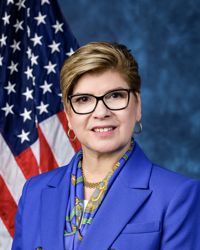
Nellie Pou
DDemocratNJ-9 · Representative
52
/ 100
Average
Attendance100
Avg: 96
Independence3
Avg: 4
Bipartisan Tone5
Avg: 15
Ethics Record100
Avg: 99
Transparency34
Avg: 53
Accountability Score — composite of attendance, independence, bipartisan tone, ethics record & transparency.
Methodology14
Bills Sponsored
0
Enacted into Law
0
Passed a Chamber
12
In Committee
All Sponsored Bills
HRES1588In Committee
Congratulating the People's Republic of Bangladesh on assuming the Presidency of the 81st session of the United Nations General Assembly.
HR10596In Committee
Safe Water for Schools Act of 2026
HR10303In Committee
FLIGHT DECK Act
HR9762In Committee
HOLDBACKS Act
The proposal would require ticket sellers and venues to clearly show customers how many tickets are actually available for an event, preventing companies from artificially hiding inventory to make prices seem higher than they should be. It aims to give concert, sports, and entertainment fans better information when buying tickets so they can make smarter purchasing decisions and understand the true scarcity of available seats.
HR7448In Committee
Modernizing and Improving the National Terrorism Advisory System Act of 2026
Modernizing and Improving the National Terrorism Advisory System Act of 2026 This bill requires the Department of Homeland Security to submit to Congress a strategy to modernize the National Terrorism Advisory System (NTAS). The NTAS communicates information about terrorist threats by providing advisories to the American public. The bill also directs the Government Accountability Office to report on implementation of the strategy.
HR8902In Committee
WATCH Personnel Act of 2026
If the federal government runs out of money starting February 14, 2026, this bill would keep the Transportation Security Administration (TSA) operating and pay its employees during that shutdown period. The TSA is the agency that screens passengers at airports and protects transportation systems, so this ensures airport security checkpoints and related operations continue functioning even if Congress hasn't approved a full budget.
HR8524In Committee
Kenya Merritt Renewing our PACT Act of 2026
Federal employees who were exposed to toxic burn pits while working overseas would gain improved access to workers' compensation benefits under this proposal. The bill would make it easier for these workers to receive medical care and financial support for illnesses they believe resulted from their exposure to hazardous materials burned in open pits at military and government facilities. This change would primarily affect civilian federal workers stationed abroad who may have developed health problems from breathing contaminated air.
HR7986In Committee
Save the World Cup Act
The bill would allow certain foreign nationals to enter and work in the United States temporarily to support World Cup soccer operations and related events. It likely creates a special visa category or exemption to make it easier for international workers, organizers, and support staff to participate in hosting the tournament without going through standard immigration procedures.
HR7449In Committee
PLATE Act
The PLATE Act addresses immigration policy, though the specific details of what it would change are not yet clear from the title alone. Based on its referral to both the Judiciary and Homeland Security committees, the bill likely proposes modifications to how immigration is enforced, processed, or regulated in the United States. The measure would affect immigrants, immigration agencies, and potentially employers or communities involved in immigration matters.
HR7268In Committee
CLEAN–UP Act
The CLEAN-UP Act addresses environmental protection issues, though the specific provisions are not detailed in the available information. Based on its referral to both the Energy and Commerce Committee and the Transportation and Infrastructure Committee, the bill likely tackles pollution, cleanup of contaminated sites, or environmental standards across multiple industries. The bill is currently in the early stages of the legislative process and has not yet been debated or voted on.
HR5783Reported
State Actions For Employing Transportation Risk Assessments and Crossing Knowledge Strategies Act
This bill would require states to conduct risk assessments on their transportation infrastructure and develop strategies to improve safety at railroad crossings and other high-risk transportation areas. The legislation aims to help states identify dangerous locations and implement better safety measures to protect drivers, pedestrians, and railroad workers from accidents and injuries.
HR5335In Committee
PERU Act of 2025
The legislation would establish new immigration policies and procedures related to Peru and Peruvian nationals seeking entry to the United States. The bill affects both immigration officials who enforce these rules and Peruvian citizens and their families who may be seeking to immigrate, visit, or work in the country. The specific provisions would be determined as the bill moves through the House Judiciary Committee.
HR3305In Committee
LEO Fair Retirement Act of 2025
Federal law enforcement officers would receive changes to their retirement benefits and pension calculations, potentially affecting how much money they receive after leaving their jobs. The bill addresses rules for officers working in agencies like the FBI, Secret Service, and other federal law enforcement organizations. These changes would impact current officers, future hires, and the federal government's budget for employee benefits.
HR2285Reported
DHS Basic Training Accreditation Improvement Act of 2025
The Department of Homeland Security would establish new standards and accreditation requirements for basic training programs that prepare emergency responders and disaster management personnel. This would help ensure that first responders, emergency managers, and other DHS-trained personnel receive consistent, high-quality instruction across different training facilities and regions. The changes would affect emergency management agencies, training institutions, and the emergency response workforce nationwide.