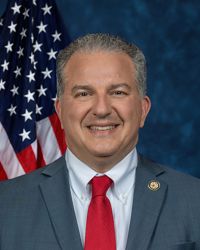
Jimmy Patronis
RRepublicanFL-1 · Representative
50
/ 100
Average
Attendance100
Avg: 96
Independence5
Avg: 4
Bipartisan Tone5
Avg: 15
Ethics Record100
Avg: 99
Transparency18
Avg: 53
Accountability Score — composite of attendance, independence, bipartisan tone, ethics record & transparency.
Methodology14
Bills Sponsored
0
Enacted into Law
0
Passed a Chamber
14
In Committee
All Sponsored Bills
HR10789In Committee
Protecting Florida's Offshore Military Readiness Act
HR10693In Committee
GI Bill Transferability Act
HR10196In Committee
Lake America Act
HR9869In Committee
FECA Modernization and Cost Containment Act of 2026
The proposal would change how federal workers' compensation works by updating rules for injured government employees to help them recover better while also cutting down on fraud and unnecessary spending. It affects federal workers who get hurt on the job and receive benefits through the government's workers' compensation program. The changes aim to balance protecting injured workers with making the system more efficient and cost-effective.
HR9229In Committee
Seaport Security Act of 2026
The bill would give seaport authorities and the federal government new powers to detect, track, and disable drones flying near ports and maritime facilities to prevent security threats and smuggling. This would affect port operators, shipping companies, and drone users by establishing rules about where unmanned aircraft can operate near sensitive water infrastructure. The measure aims to close security gaps at major transportation hubs that handle cargo and passengers.
HR8737In Committee
Never Fight Alone Act
The bill would allow more veterans to use the VA's community care program to get mental health and substance abuse treatment from private doctors and clinics instead of only VA facilities. This expansion would give veterans more options for where they receive care and could reduce wait times by letting them see non-VA providers when VA services aren't readily available. The change primarily affects veterans struggling with mental health issues or addiction who currently have limited access to timely treatment through the VA system.
HR9009In Committee
Firearm Freedom Act of 2026
The proposal would remove a 1986 law that banned civilians from owning machine guns manufactured after that date, allowing people to legally purchase newly-made automatic weapons if they meet other federal requirements. This would affect gun owners, firearms manufacturers, and federal firearms regulators, potentially expanding the types of weapons available on the civilian market. The change would reverse nearly four decades of restrictions on automatic weapons for private citizens.
HR8554In Committee
Defense Community Infrastructure Program Revisions Act
The proposal would expand a federal program that helps pay for infrastructure improvements at military bases to also include Coast Guard facilities. This would allow Coast Guard installations to access the same funding and support that Army, Navy, Air Force, and Marine Corps bases currently receive for things like repairs, upgrades, and construction projects.
HR7393In Committee
Save for Success Act
The Save for Success Act would likely create or expand tax incentives to encourage Americans to save money for retirement or other long-term financial goals, possibly through changes to tax-advantaged savings accounts or deductions. The bill would primarily affect individual workers and savers by potentially making it easier or more affordable to set aside money for their future. The House Committee on Ways and Means is currently reviewing the proposal.
HR7045In Committee
PROTECT Act
The PROTECT Act would establish new rules and requirements for technology companies and communications platforms to safeguard users—likely focusing on issues like data privacy, online safety, or protection from harmful content. The bill affects tech companies, internet service providers, and the millions of Americans who use their services daily. It has been sent to the House Committee on Energy and Commerce for review and discussion.
HR5095In Committee
HOMEFRONT Act of 2025
The proposal would strengthen support and protections for military members and their families, likely including measures related to housing, healthcare, education benefits, or workplace protections for service members and veterans. The bill is currently being reviewed by a congressional subcommittee to examine its specific provisions and potential impact on the armed forces and military communities.
HRES934In Committee
Supporting the recognition of November 2025 as "Carbon Monoxide Action and Awareness Month" and promoting nationwide education, prevention, and detection efforts to protect United States families from carbon monoxide poisoning.
The proposal designates November 2025 as "Carbon Monoxide Action and Awareness Month" to encourage nationwide education and prevention efforts against carbon monoxide poisoning, which kills hundreds of Americans annually and can occur from faulty appliances, generators, and car exhaust. The recognition aims to promote awareness among families about the dangers of this odorless, colorless gas and encourage the installation and maintenance of carbon monoxide detectors in homes. This affects households across the country by highlighting the importance of detection and prevention measures to protect against accidental poisoning.
HR5035In Committee
Veteran and Spouse Licensing Flexibility Act of 2025
The legislation would make it easier for veterans and their spouses to obtain professional licenses in new states by requiring states to recognize or streamline the licensing process for credentials earned in other states. This would help military families who frequently relocate avoid having to retake exams or repeat training requirements when moving to a different state for a new job. The bill primarily affects veterans, military spouses, and state licensing boards that oversee professions like nursing, teaching, and skilled trades.
HR4873In Committee
To codify Executive Order 14319 (relating to preventing woke AI in the Federal Government).
The proposal would write into law rules that prevent federal agencies from using artificial intelligence systems that the bill characterizes as "woke," though the specific criteria for what qualifies as such are not detailed in the title. It would apply to all federal government agencies and their use of AI technology in operations and decision-making. The bill is currently under review by the House Committee on Oversight and Government Reform.