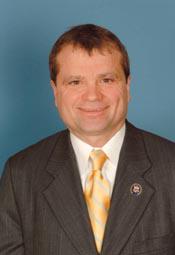
Mike Quigley
DDemocratIL-5 · Representative
54
/ 100
Average
Attendance96
Avg: 96
Independence2
Avg: 4
Bipartisan Tone5
Avg: 15
Ethics Record100
Avg: 99
Transparency56
Avg: 53
Accountability Score — composite of attendance, independence, bipartisan tone, ethics record & transparency.
Methodology11
Bills Sponsored
0
Enacted into Law
1
Passed a Chamber
9
In Committee
All Sponsored Bills
HR8205Passed House
Accelerating Access to Critical Therapies for ALS Reauthorization Act of 2026
Accelerating Access to Critical Therapies for ALS Reauthorization Act of 2026 This bill reauthorizes through FY2031 and revises programs that support research and development of drugs and other therapies to address amyotrophic lateral sclerosis (also known as ALS or Lou Gehrig's disease) and other neurodegenerative diseases. The bill reauthorizes grants from the National Institutes of Health (NIH) for scientific research on investigational drugs to prevent or treat ALS for individuals not otherwise eligible for clinical trials, grants from the Food and Drug Administration (FDA) for research and development of therapies to prevent and treat ALS and other neurodegenerative diseases, and a Public-Private Partnership including the FDA and NIH that supports development and regulatory review of treatments for neurodegenerative diseases. Also, the NIH, in considering renewal of its grants, must assess available information on the safety and efficacy of the investigational drugs. It must also require grantees to promptly report serious and unexpected adverse events associated with their investigational drugs. Additionally, the FDA must publish a plan describing actions it will take over a five-year period to foster development of safe and effective drugs, and facilitate access to investigational drugs, that treat ALS and other rare neurodegenerative diseases. The FDA must also publish a report describing the actions it has taken under the plan.
HRES1473In Committee
Commending the Chicago Cubs baseball team as it celebrates its 150th anniversary on August 29, 2026.
The House is recognizing the Chicago Cubs baseball team for reaching 150 years of existence on August 29, 2026, honoring the franchise's long history in professional baseball. This is a ceremonial measure that celebrates the team's milestone anniversary rather than creating any new laws or policies. The resolution has been sent to the House Committee on Oversight and Government Reform for consideration.
HR8830In Committee
Flood Mapping Modernization and Homeowner Empowerment Pilot Program Act of 2026
FEMA would run a test program to create better maps showing where urban flooding happens and what property damage results, then share this information with homeowners, businesses, and local governments so they can better understand and reduce their flood risks. The program aims to give people and communities more detailed, accessible data about flooding dangers in their areas to help them prepare and protect themselves.
HRES1258In Committee
Expressing support for the designation of May 2026 as "National Brain Tumor Awareness Month".
Congress would officially recognize May 2026 as "National Brain Tumor Awareness Month" to increase public understanding of brain tumors and support for patients and their families dealing with this disease. The designation would encourage awareness campaigns, educational efforts, and fundraising activities throughout the month to help people learn about brain tumor symptoms, treatment options, and available resources. This symbolic recognition aims to bring attention to brain tumors as a serious health issue affecting thousands of Americans each year.
HRES1074In Committee
Celebrating the 175th anniversary of the Young Men's Christian Association (YMCA).
This resolution honors the 175-year history of the YMCA, an organization that provides sports, fitness, and recreational programs to millions of Americans across the country. The measure recognizes the YMCA's contributions to community health, youth development, and social services since its founding. While primarily ceremonial, it acknowledges the organization's role in making sports and wellness activities accessible to people of all backgrounds and income levels.
HR6889In Committee
BRIDGE Act
The BRIDGE Act likely aims to improve or fund bridge infrastructure and repair across the country, affecting states, local governments, and construction companies that work on transportation projects. The bill's referral to the railroads and hazardous materials subcommittee suggests it may also address safety standards or the movement of dangerous materials across bridges. This type of legislation typically seeks to modernize aging bridges, improve public safety, and support jobs in construction and infrastructure maintenance.
HR6890In Committee
PROTECT Immigration Act of 2025
Based on the title and immigration subject matter, this bill likely aims to strengthen immigration enforcement and border security measures, though the specific provisions are not yet detailed in available summaries. The bill would probably affect immigrants, border communities, immigration enforcement agencies, and employers who hire workers. Without access to the full text, the exact impact on immigration policy—such as changes to deportation procedures, visa requirements, or border operations—cannot be determined at this stage.
HRES833In Committee
Honoring the extraordinary life, leadership, and legacy of Dr. Jane Goodall.
This resolution recognizes the scientific contributions and conservation work of primatologist Dr. Jane Goodall, who revolutionized our understanding of chimpanzees and animal behavior through decades of research in Africa. The measure honors her environmental advocacy and efforts to promote wildlife protection and sustainability around the world. While primarily ceremonial, it acknowledges her influence on how scientists and the public view environmental conservation.
HR1809Reported
Great Lakes Fishery Research Reauthorization Act
The legislation extends federal funding and authorization for scientific research programs that study fish populations and ecosystems in the Great Lakes, helping scientists understand and protect the region's fisheries. This affects fishing communities, environmental organizations, and researchers who depend on these studies to manage fish stocks and maintain the health of one of North America's most important freshwater resources. The bill ensures these research efforts can continue beyond their current expiration date.
HR3604In Committee
Reducing Waste in National Parks Act
This bill would require the National Park Service to reduce waste and improve recycling and composting programs across America's national parks. It aims to make parks more environmentally sustainable by cutting down on trash sent to landfills and encouraging visitors and park staff to participate in waste reduction efforts. The changes would affect both the parks themselves and the millions of visitors who use them each year.
HR3199In Committee
Captive Primate Safety Act of 2025
This bill would restrict the private ownership of primates like monkeys and apes by requiring special permits and setting strict care standards for anyone who wants to keep them as pets or in facilities. The law aims to protect both the animals from poor living conditions and the public from potential safety risks, since primates can carry diseases and become dangerous as they grow larger and stronger. It would likely affect zoos, research facilities, and private owners who currently keep primates.