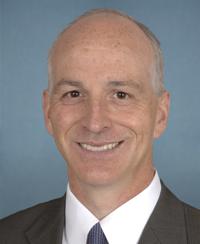
Adam Smith
DDemocratWA-9 · Representative
50
/ 100
Average
Attendance93
Avg: 96
Independence1
Avg: 4
Bipartisan Tone4
Avg: 15
Ethics Record100
Avg: 99
Transparency41
Avg: 53
Accountability Score — composite of attendance, independence, bipartisan tone, ethics record & transparency.
Methodology14
Bills Sponsored
0
Enacted into Law
0
Passed a Chamber
14
In Committee
All Sponsored Bills
HR10708In Committee
Immigrants in Nursing and Allied Health Act of 2026
HR10707In Committee
Internationally Trained Physicians Assistance Act of 2026
HR10077In Committee
Safety Starts at the Top Act of 2026
HRES1468In Committee
Encouraging Congress to pursue reforms to ensure that all United States citizens contribute to funding the operations of the Federal Government in proportion to the economic gains they realize.
This resolution encourages Congress to reform the federal tax system so that all Americans pay taxes based on the economic benefits they receive from government operations. The measure suggests that current tax contributions may not fairly reflect how much different people and groups benefit from federal programs and services. It has been referred to the House Committee on Ways and Means for consideration.
HR9765In Committee
Educators for America Act
The proposal would change the rules for how teacher training programs operate at colleges and universities, likely affecting requirements for how future teachers gain classroom experience before graduating. This could impact education students, teacher preparation programs, and ultimately the quality of instruction in schools. The bill is currently being reviewed by the House Committee on Education and Workforce.
HR9766In Committee
Building Community in America Act
The proposal would change federal service programs to make it easier for underrepresented groups—such as low-income people, minorities, and other populations that historically haven't participated as much—to join volunteer and service opportunities. This could include removing barriers to participation, offering additional support or incentives, or creating new pathways for these communities to get involved in national service programs like AmeriCorps. The changes would affect both the people looking to serve and the organizations that run these programs.
HR9657In Committee
Protecting American Homes from Hedge Funds Act
The proposal would charge hedge funds and investment firms a tax penalty if they hold onto too many single-family homes without selling them, aiming to discourage large investors from buying up residential properties that families might otherwise purchase. The tax would apply when these investment groups own more homes than a certain threshold and fail to sell them within a specified timeframe. This could affect both the investment firms that own residential properties and everyday homebuyers who compete with institutional investors in the housing market.
HR5859In Committee
Behavioral Health Crisis Care Centers Act of 2025
Behavioral Health Crisis Care Centers Act of 2025 This bill requires the Department of Health and Human Services to establish a grant program for states, Indian tribes, territories, and localities to support one-stop crisis facilities. These facilities provide behavioral health, substance use disorder, recovery, and related support services at a single location, as well as coordinate with other services available in the community.
HR5492In Committee
PAAF Act
The PAAF Act addresses immigration policy, though the specific details of what changes it would make are not clear from the title alone. Based on its referral to the House Judiciary Committee, the bill likely proposes modifications to how immigration cases are handled, who can immigrate, or what benefits and protections are available to immigrants and their families. Once the bill moves through committee, its concrete effects on immigration processes, eligibility requirements, or enforcement will become clearer.
HR4383In Committee
Sound Insulation Treatment Repair and Replacement Program Act
Sound Insulation Treatment Repair and Replacement Program Act This bill establishes a pilot program to allow airports to repair and replace sound insulation in residential buildings using funds provided under the Airport Improvement Program (AIP). Currently, airports may use AIP funds for one-time sound insulation projects for residential buildings. Under the bill, the Federal Aviation Administration must establish a pilot program to allow up to four airports to have a one-time waiver to use AIP funds for the repair and replacement of sound insulation in residential buildings if the airport previously received federal assistance or federally authorized airport assistance for the insulation. For a property to qualify under the waiver, additional requirements include that the insulation previously installed was done prior to 2002 and has resulted in structural deterioration; interior and exterior sound decibel levels for the residence meet certain criteria; current interior noise levels will be reduced by new insulation; and the airport and the property owner have exhausted funding available through warranties, insurance coverage, and legal remedies for the previously installed insulation.
HR3658In Committee
911 Community Crisis Responders Act of 2025
911 Community Crisis Responders Act of 2025 This bill authorizes grants to dispatch unarmed, specialized health care or social service providers to respond to nonviolent emergency calls instead of law enforcement officers. The Substance Abuse and Mental Health Services Administration may award such grants to state, territorial, local, and tribal governments (including consortia of tribal governments). Recipients may use the grants for hiring and training necessary staff, working with 9-1-1 dispatchers and 9-8-8 call centers to appropriately dispatch services in response to nonviolent emergency calls, and connecting individuals with local health and social service providers. (The 9-8-8 system provides callers with mental health or suicide crisis support and resources.)
HR3569In Committee
Fit to Serve Act
The bill would establish or modify fitness and health standards for military service members, likely addressing physical requirements, medical evaluations, or wellness programs for active duty personnel and recruits. The changes would affect how the military determines who is eligible to serve and what health benchmarks service members must meet during their careers. This could impact recruitment standards, medical discharge policies, or mandatory fitness testing across the armed forces.
HR1745In Committee
HOPE for Homeownership Act
This bill would likely create tax incentives or credits to help people afford to buy homes, such as deductions for down payments or tax breaks for first-time homebuyers. The changes would affect individuals trying to purchase their first home and could reduce the upfront costs they need to pay. The bill is still in early stages and has been sent to the House committee that handles tax policy.
HR897In Committee
Aviation-Impacted Communities Act
Aviation-Impacted Communities Act This bill increases access to noise mitigation measures for aviation-impacted communities. Under the bill, an aviation-impacted community is a community that is located not more than one mile from any point at which a commercial or cargo jet route is 3,000 feet or less above ground level. The bill expands noise mitigation program funding under the Airport Improvement Program to include aviation-impacted communities that are not currently within the 65 day-night average sound level (DNL) standard. The Federal Aviation Administration (FAA) must conduct outreach to aviation-impacted communities to inform them of the opportunity to be a designated community. A designated community must form a community board to provide information to airport operators and the FAA concerning aviation impacts (e.g., aircraft noise). A community board may petition the FAA to conduct a community assessment and, based on the assessment, the FAA must devise an action plan that alleviates or addresses the community’s concerns. In addition, the FAA must enter into an agreement with the National Academy of Sciences to conduct a study and provide the FAA with a framework and diagnostic tool for conducting community assessments. The FAA must provide grants for necessary noise mitigation in a designated community for residences, hospitals, nursing homes, adult or child day care centers, schools, and places of worship. Further, the FAA and airport operators must provide (1) noise mitigation grants for communities subject to significant frequency of overhead flights, and (2) noise mitigation for residences impacted by significant nighttime aircraft noise.