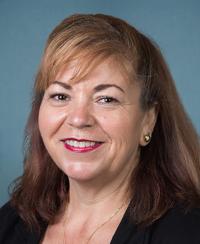
Linda T. Sánchez
DDemocratCA-38 · Representative
47
/ 100
Below Average
Attendance98
Avg: 96
Independence1
Avg: 4
Bipartisan Tone0
Avg: 15
Ethics Record100
Avg: 99
Transparency16
Avg: 53
Accountability Score — composite of attendance, independence, bipartisan tone, ethics record & transparency.
Methodology18
Bills Sponsored
0
Enacted into Law
0
Passed a Chamber
18
In Committee
All Sponsored Bills
HR10235In Committee
Protecting Our Widows and Widowers in Retirement Act
HRES1427In Committee
Expressing support for the designation of July 10th as Journeyman Lineworkers Recognition Day.
The proposal would officially recognize July 10th as a national day to honor journeyman lineworkers, the skilled electricians who install and maintain power lines and electrical infrastructure across the country. This symbolic designation would celebrate the contributions these workers make to keeping electricity flowing to homes and businesses. The measure has been sent to the House Committee on Energy and Commerce for consideration.
HR9296In Committee
Strengthening Social Security Act of 2026
The proposal would make changes to Social Security to help ensure the program remains financially stable and provides adequate retirement income for American workers and their families. The specific changes have been referred to congressional committees for review and debate, though the exact details of what modifications would be made are not yet finalized. Workers nearing or in retirement, as well as younger workers planning for their future, would be affected by any changes to how Social Security operates.
HR8996In Committee
Rental Housing Investment Act
The proposal would allow owners of long-term rental housing to deduct the cost of their buildings more quickly from their taxes through "bonus depreciation," meaning they could reduce their taxable income faster in the early years after construction or purchase. This tax break would primarily benefit real estate investors and companies that own apartment buildings and other residential rental properties. The goal is to encourage more investment in rental housing by making it more financially attractive for property owners.
HR8632In Committee
PFAS Cleanup Act
The proposal would add a tax on companies that sell certain long-lasting chemicals called PFAS (often found in non-stick cookware, water-resistant clothing, and firefighting foam) to encourage them to reduce production of these substances. It would also provide tax credits to help communities and water systems pay for removing these chemicals from drinking water supplies. This affects chemical manufacturers, water utilities, and ultimately consumers who rely on clean drinking water.
HR8023In Committee
To amend the Internal Revenue Code of 1986 to provide a credit for increasing wages paid to child care providers.
The bill would give tax credits to businesses and organizations that increase wages paid to child care workers, making it cheaper for employers to afford higher pay for these workers. This would help child care providers earn more money while reducing the financial burden on the employers who hire them. The goal is to improve wages in an industry that typically pays low salaries and has high worker turnover.
HR7966In Committee
Hospice CARE Act of 2026
The bill would make changes to how hospice care is paid for and regulated under Medicare and Medicaid programs. It likely aims to improve access to end-of-life care services for patients and address issues affecting hospice providers, though the specific reforms are not yet detailed in the referral stage.
HR7805In Committee
Trade Adjustment Assistance Modernization Act
This bill would update the Trade Adjustment Assistance program, which helps workers and communities that lose jobs or income due to increased imports or shifts in global trade. The changes likely aim to make it easier for affected workers to qualify for benefits like job training, income support, and relocation assistance, and to help communities adapt to economic changes from international trade. The bill is currently being reviewed by the House Committee on Ways and Means.
HR7557In Committee
Respect NATO Allies Act
This bill would likely address trade or financial policies affecting NATO member countries, possibly by adjusting tariffs, trade agreements, or economic sanctions to better align with U.S. relationships with allied nations. The measure has been referred to multiple committees that handle international trade, foreign policy, and legislative procedures, suggesting it involves complex economic and diplomatic considerations. The bill's specific provisions would affect American businesses engaged in trade with NATO allies and potentially influence U.S. foreign policy priorities in Europe.
HJRES148In Committee
Expressing support for designation of the week of February 2, 2026, through February 6, 2026, as "National School Counseling Week".
This joint resolution honors the contributions of school counselors to the success of students in elementary and secondary schools. The joint resolution encourages the observation of National School Counseling Week with ceremonies and activities that promote awareness of the crucial role school counselors play in preparing students for fulfilling lives as contributing members of society.
HR5529In Committee
Fair Housing for Disabeled Veterans Act
This bill would likely provide tax benefits or financial assistance to disabled veterans who are buying or renting homes, making housing more affordable for those with service-related disabilities. The measure aims to help disabled veterans overcome financial barriers to homeownership or stable housing by potentially offering tax credits, deductions, or other tax-based incentives. Veterans with disabilities and their families would be the primary beneficiaries of these housing-related tax provisions.
HRES575In Committee
Expressing support for the designation of July 10th as Journeyman Lineworkers Recognition Day.
This resolution expresses support for the designation of Journeyman Lineworkers Recognition Day. (A journeyman lineworker is a person who builds and maintains electrical power systems.)
HR3501In Committee
To amend title XVIII of the Social Security Act to provide for certain cognitive impairment detection in the Medicare annual wellness visit and initial preventive physical examination.
Medicare would be required to include screening for cognitive impairment (like memory loss or confusion) as part of the free annual wellness visits and initial physical exams that seniors already receive. This change would help doctors catch early signs of conditions like dementia or Alzheimer's disease so patients can get treatment sooner. The screening would be added to existing Medicare benefits at no additional cost to beneficiaries.
HR2888In Committee
Stopping a Rogue President on Trade Act
Stopping a Rogue President on Trade Act This bill terminates specified executive orders imposing duties (i.e., tariffs) on certain imports into the United States. It also requires the President to receive congressional approval in order to take certain trade actions. Specifically, the bill terminates duties imposed under the following executive orders (or any executive orders that are substantially similar to these executive orders): Executive Order 14257 , which imposed a 10% tariff on most imports to the United States and additional duties on specified trading partners; Executive Order 14193 , which imposed a 25% tariff on most imports from Canada (except for Canadian energy or energy resources, which have a 10% tariff); and Executive Order 14194 , which imposed a 25% tariff on most imports from Mexico. Additionally, the bill prohibits the President from imposing or increasing a duty, quota, or tariff-rate quota on imports entering the United States, or preventing the application of trade agreement concessions on imports, unless a joint resolution of approval is enacted into law. The bill provides exclusions from this congressional approval requirement, such as imposing antidumping and countervailing duties under the Tariff Act of 1930. (Antidumping laws provide relief to U.S industries and workers that are materially injured or threatened with injury due to imports of like products sold in the U.S. market at less than fair value, while countervailing duty laws provide such relief from imports of products subsidized by a foreign government or public entity.)
HR1840In Committee
Closing the De Minimis Loophole Act
Closing the De Minimis Loophole Act This bill immediately terminates de minimis treatment for goods originating in China and phases out such treatment for goods originating from all other countries. (Current law allows for U.S. imports under a de minimis threshold of $800 per shipment to enter free of tariffs, fees, and taxes.) Specifically, de minimis treatment ends (1) with respect to goods from China, beginning on the bill's enactment date (with an exception for goods already loaded onto a vessel or in transit during the three-day period that ends on the enactment date); and (2) with respect to goods from any other country, 120 days after the bill's enactment. During the 120-day period beginning on the date of the bill's enactment, the Department of the Treasury must carry out a rulemaking process. Among other elements, the rulemaking process must ensure that data requirements and entry procedures for informal modes of entry are sufficient to ensure the effective enforcement of U.S. laws and the efficient and accurate collection of duties, fees, and taxes. The bill directs Treasury, in the case of shipments sent through the international postal network, to determine appropriate fees and procedures to ensure consistency between the treatment of shipments by the U.S. Postal Service and other shipments.
HR1810In Committee
Safe Schools Improvement Act
Safe Schools Improvement Act This bill requires states to direct their local educational agencies (LEAs) to establish policies that prevent and prohibit bullying and harassment of elementary and secondary school students. In particular, these policies must prohibit bullying and harassment based on race, color, national origin, disability, religion, or sex. Sex includes sexual orientation, gender identity, and sex characteristics (including intersex traits). Further, LEAs must provide (1) students, parents, and educational professionals with annual notice of the conduct prohibited in their disciplinary policies; (2) students and parents with grievance procedures that target such conduct; and (3) the public with annual data on the incidence and frequency of that conduct at the school and LEA level. The Department of Education must conduct and report on an independent biennial evaluation of programs and policies to combat bullying and harassment in elementary and secondary schools. The National Center for Education Statistics must collect state data to determine the incidence and frequency of the conduct prohibited by LEA disciplinary policies.
HR894In Committee
Keeping Drugs Out of Schools Act of 2025
Keeping Drugs Out of Schools Act of 2025 This bill allows the Office of National Drug Control Policy to award grants for eligible entities to implement school-community partnerships for preventing and reducing substance use and misuse among youth. Eligible entity refers to a coalition that (1) receives or has received a grant under the Drug-Free Communities Support Program, and (2) has a memorandum of understanding in effect with not less than one local school to establish a school-community partnership.
HR5902In Committee
Direct Care Workforce Empowerment Act
Direct Care Workforce Empowerment Act - Amends the Fair Labor Standards Act of 1938 to exempt from minimum wage and maximum hour requirements any employee employed on a casual basis in domestic service employment to provide companionship services for individuals who because of disability (or because of age or infirmity, as under current law) are unable to care for themselves. Directs the Secretary of Health and Human Services (HHS) to establish: (1) a direct care workforce monitoring program; and (2) a National Advisory Council on the Direct Care Workforce. Directs the Secretary to award three-year grants to states and other eligible entities to improve the recruitment, retention, and education of the direct care workforce.