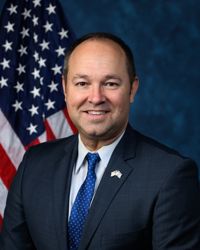
Marlin A. Stutzman
RRepublicanIN-3 · Representative
52
/ 100
Average
Attendance97
Avg: 96
Independence3
Avg: 4
Bipartisan Tone4
Avg: 15
Ethics Record100
Avg: 99
Transparency41
Avg: 53
Accountability Score — composite of attendance, independence, bipartisan tone, ethics record & transparency.
Methodology13
Bills Sponsored
0
Enacted into Law
1
Passed a Chamber
12
In Committee
All Sponsored Bills
HR10609In Committee
Don’t Spy On Me Act of 2026
HR8278Passed House
Fostering the Use of Technology to Uphold Regulatory Effectiveness in Supervision Act
Fostering the Use of Technology to Uphold Regulatory Effectiveness in Supervision Act This bill requires specified federal financial agencies to assess their technological capabilities and procurement practices. Specifically, agencies (the Federal Reserve Board, the Consumer Financial Protection Bureau, the Federal Deposit Insurance Corporation, the Department of the Treasury, the Office of the Comptroller of the Currency, the Financial Crimes Enforcement Network, the Federal Housing Finance Agency, and the National Credit Union Administration) must assess the technology used by the agency and its capabilities to conduct real-time supervisory assessments of entities over which the agency has supervisory authority. Additionally, the agencies must assess the applicable procurement rules and protocols when acquiring or developing new technological systems and identify any opportunities to streamline these procedures. Every five years, these agencies must report to specified congressional committees. Among other topics, the report must contain an overview of the technology used in supervisory assessments and any anticipated upgrades, a description of procurement practices, an overview of the agency’s technology development workforce, and details regarding data sharing procedures.
HR9937In Committee
No Leniency for Fentanyl Dealers Act
The proposal would increase criminal penalties for manufacturing, distributing, and importing fentanyl and similar synthetic opioids, making violations more serious under federal law. It aims to give law enforcement stronger tools to combat the fentanyl crisis by treating these drugs more harshly than other controlled substances. The changes would affect drug manufacturers, dealers, and importers who handle these dangerous substances.
HRES1339In Committee
Expressing the sense of the House of Representatives in support of Prime Minister Benjamin Netanyahu's initiative to transition the United States-Israel relationship toward mutual defense cooperation and joint economic investment, recognizing the contributions of Israel to joint military operations against Iran, and condemning the global rise of antisemitism.
This resolution expresses support for the relationship between the United States and Israel. Specifically, this resolution commends Prime Minister Benjamin Netanyahu’s proposal to transition the relationship between the United States and Israel toward mutual cooperation and joint investment, expresses gratitude to Israel for its partnership with the United States in military operations against Iran, and condemns antisemitism in all its forms.
HR8155In Committee
Foreign Propaganda Transparency Act
This bill would require foreign governments and their agents to disclose when they're spending money to influence American public opinion through media, advertising, or other communications. The law aims to help Americans identify propaganda and understand who is actually funding political messaging they encounter. It would likely affect foreign governments, media outlets with foreign backing, and potentially some international organizations operating in the United States.
HR8090In Committee
To require the Federal Deposit Insurance Corporation and the National Credit Union Administration to carry out an analysis to determine whether insurance coverage should be raised on covered transaction accounts, and for other purposes.
The bill would require federal banking regulators to study whether the amount of money the government insures in checking and savings accounts should be increased beyond the current $250,000 limit. This analysis would help determine if higher insurance coverage is needed to better protect people's deposits during banking crises. The study would affect everyday bank customers, small business owners, and financial institutions that hold these accounts.
HR7586In Committee
American Families First Act
Based on the title and housing focus, this bill likely aims to help American families afford housing or improve their living conditions through federal programs or funding. The specific measures could include assistance for first-time homebuyers, rental support for low-income families, or investments in community development projects. The bill is currently being reviewed by a congressional subcommittee focused on economic opportunity.
HR6541In Committee
Regulation A+ Improvement Act of 2025
Regulation A+ Improvement Act of 2025 This bill increases the aggregate dollar limit of certain securities offerings exempt from registration requirements (i.e., Regulation A+ offerings) from $50 million annually to $150 million annually, adjusted in future years for inflation.
HR7237In Committee
Chemical Abortion Risk Awareness Act
This bill would require doctors to inform patients about the risks associated with medication-based abortion before providing the drugs, and would establish reporting requirements for any serious complications that occur. The measure would affect women seeking abortion care and healthcare providers who administer these medications. Supporters argue it increases informed consent, while opponents contend it could create barriers to accessing abortion services.
HR4989In Committee
Streamlining Rural Housing Act of 2025
This bill would make it easier for people in rural areas to get loans and build or improve homes by simplifying the application process and reducing red tape for rural housing programs. It likely aims to help rural families and communities access affordable housing by cutting through bureaucratic delays that currently slow down loan approvals. The changes would primarily affect rural homebuyers, farmers, and small communities that have struggled to compete with urban areas for housing development resources.
HR4737In Committee
Apeel Reveal Act of 2025
The legislation would require companies to disclose the ingredients and safety information for plant-based coatings applied to produce, making it easier for consumers to know what's on their fruits and vegetables. Currently, these protective coatings are used to extend shelf life and reduce food waste, but shoppers often don't know what chemicals or substances are being applied to their food. The bill aims to give consumers more transparency about food treatments so they can make informed choices about what they buy and eat.
HR3787In Committee
Emergency Spending Accountability Act
HR1226In Committee
Restoring Checks and Balances Act
Restoring Checks and Balances Act This bill requires any covered rule issued by a federal agency after this bill's enactment to sunset five years after its effective date unless the rule is specifically reauthorized by Congress. A covered rule generally means a rule under the Administrative Procedure Act, but does not include a rule issued in accordance with specified formal rulemaking provisions of the Administrative Procedure Act; issued with respect to a military or foreign affairs function of the United States; that the Office of Information and Regulatory Affairs certifies is necessary for the enforcement of federal criminal laws; that is limited to agency organization, management, or personnel matters; or that is necessary due to an imminent threat to human health or safety or any other emergency. An agency may not reissue, enforce, revise, or take other regulatory action related to a covered rule that has sunset. The Office of Management and Budget or the relevant agency may oversee the sunset of covered rules. If the agency that issues covered rules wants to request a reauthorization for such rules, such agency shall submit to Congress a report that includes (1) a justification for such reauthorization, (2) any related covered rules, and (3) any recommendation or request made by the chair or ranking member of an appropriate congressional committee.