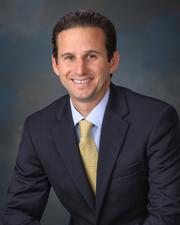
Brian Schatz
DDemocratHI · Senator
53
/ 100
Average
Attendance99
Avg: 97
Independence15
Avg: 23
Bipartisan Tone9
Avg: 14
Ethics Record100
Avg: 100
Transparency25
Avg: 47
Accountability Score — composite of attendance, independence, bipartisan tone, ethics record & transparency.
Methodology58
Bills Sponsored
0
Enacted into Law
2
Passed a Chamber
48
In Committee
All Sponsored Bills
S3383Passed Senate
Unlocking Native Lands and Opportunities for Commerce and Key Economic Developments Act of 2025
This bill would make it easier for Native American tribes and individuals to develop and lease their land for business purposes, potentially allowing more commercial projects on tribal lands. The changes could help Native communities generate income and economic growth, though they might also affect how tribes manage their natural resources and traditional lands. The bill has advanced through the Senate Committee on Indian Affairs with approval.
S5614In Committee
Beyond the Box for Higher Education Act of 2026
Beyond the Box for Higher Education Act of 2026 This bill requires the Department of Education to issue guidance and recommendations for institutions of higher education to remove criminal and juvenile justice questions from their admission applications.
S5664In Committee
FUTURE of Workers Act
SJRES218In Committee
A joint resolution proposing an amendment to the Constitution of the United States to abolish the electoral college and to provide for the direct election of the President and Vice President of the United States.
SRES920In Committee
A resolution expressing concern about the growing problem of book banning, and the proliferation of threats to freedom of expression in the United States.
SRES902Introduced
A resolution supporting the designation of the week of September 20 through September 26, 2026, as "Telehealth Awareness Week".
SRES909In Committee
A resolution designating September 2026 as "Hawaiian History Month" to recognize the history, culture, and contributions of Native Hawaiians and reaffirm the United States Federal trust responsibility to the Native Hawaiian Community to support their well-being.
S5537In Committee
Sexual Abuse Services in Detention Act
S5482In Committee
PREP Act
S5414In Committee
Stop Child Labor Act
S5403In Committee
Debt-Free College Act of 2026
Debt-Free College Act of 2026 This bill establishes measures to cover the unmet financial need of students who are enrolled at certain institutions of higher education (IHEs). Unmet financial need refers to the difference between a student's cost of attendance and the student's student aid index, plus any federal, state, and local sources of grant aid. In addition, the bill makes certain Dreamer students (i.e., students who have been granted Deferred Action for Childhood Arrivals status and who entered the United States before the age of 16) eligible for federal financial aid. First, the bill requires the Department of Education (ED) to award grants for state-federal partnerships with a goal of providing debt-free college for all eligible students at in-state public IHEs. Eligible student refers to an individual who (1) is enrolled or is eligible to enroll in an in-state public IHE, and (2) completes a Free Application for Federal Student Aid (FAFSA) or demonstrates eligibility for a Federal Pell Grant through state or institutional financial aid eligibility forms. Next, the bill requires ED to award grants to historically Black colleges and universities and minority-serving institutions to cover the unmet financial need of enrolled students. ED must establish an office to administer grants and provide oversight. In addition, the bill makes Dreamer students who entered the United States before the age of 16 who meet certain educational criteria eligible for federal student aid.
S4830Reported
A bill to designate the facility of the United States Postal Service located at 86-014 Farrington Highway in Waianae, Hawaii, as the "United States Representative Colleen Hanabusa Post Office Building".
This bill designates the facility of the United States Postal Service located at 86-014 Farrington Highway in Waianae, Hawaii, as the "United States Representative Colleen Hanabusa Post Office Building".
S5288In Committee
Protecting Pentagon Press Access Act
S5317In Committee
INSPIRES Act
Inspiring New STEM Professionals by Investing in Renovation of Education Spaces Act or the INSPIRES Act This bill directs the Department of Education to establish grant programs (1) for the modernization, renovation, or repair of career- and technical-education facilities; and (2) to enable secondary schools that are located in rural areas or that serve Native American students to improve facilities that provide science, technology, engineering, and mathematics (STEM) education and to support high-speed internet in STEM facilities.
S5193In Committee
Expanding Capacity for Health Outcomes Act of 2026
The bill would modify federal health programs to help more people get access to specialized medical care and improve overall health results. It aims to expand the capacity of the healthcare system to serve patients better, though the specific changes would be determined as the bill moves through Congress. The proposal is currently being reviewed by the Senate committee responsible for health policy.
S5168In Committee
Comprehensive Paid Leave for Federal Employees Act
Federal employees would be able to take up to 12 weeks of paid leave per year for family and medical reasons, such as caring for a newborn, recovering from surgery, or dealing with a serious illness in the family. Currently, federal workers can take unpaid leave but often cannot afford to do so, so this would allow them to maintain their paychecks while handling important personal matters. The change would affect roughly 2 million federal workers across government agencies.
S4610Reported
Pacific POWER Act
The legislation aims to encourage the development and use of geothermal energy—heat from within the Earth used to generate electricity and heating—in Pacific island nations and territories. This would help these communities reduce their dependence on imported fossil fuels, lower energy costs, and create jobs in renewable energy sectors. The bill affects Pacific island residents, energy companies, and U.S. interests in the region by potentially providing technical support and resources for geothermal projects.
S5131In Committee
CORE Pacific Act
The federal government would study whether it's practical to station State Department officials at U.S. Coast Guard and Navy bases in Pacific Island countries to help with diplomatic work. This would allow American diplomats to be more present in the region while working alongside military personnel already stationed there. The analysis would help determine if this arrangement could improve U.S. relationships and operations in the Pacific Islands.
S4915In Committee
AI Labeling Act of 2026
The legislation would require companies and individuals to clearly label content created or significantly altered by artificial intelligence so that people know when they're viewing AI-generated material rather than authentic human-created content. This would affect social media platforms, news outlets, advertisers, and anyone else publishing AI-generated images, videos, audio, or text online. The requirement aims to help the public make informed decisions about what they're reading, watching, or listening to while combating potential misinformation and deception.
S4926In Committee
State Firearms Dealer Licensing Enhancement Act
The federal government would provide money to states that create licensing programs for gun dealers, similar to how some states already license other businesses. States that set up these dealer licensing systems could receive federal grants to help cover the costs of running them. This would allow states to have more control over regulating who can legally sell firearms within their borders.
S4695In Committee
CONSENT Act
The bill would allow people to sue someone who sends them unwanted sexually explicit images or videos without permission. This would give victims a legal way to seek damages and hold perpetrators accountable for sharing intimate photos or videos without consent, a practice sometimes called "revenge porn" or non-consensual pornography. The measure would affect anyone who sends such images, potentially including ex-partners, hackers, or others who share intimate content to harass or embarrass someone.
S4582In Committee
Ensuring Access to General Surgery Act of 2026
The bill would change how the federal government identifies areas that don't have enough general surgeons, which could help direct more resources and incentives to recruit doctors to underserved communities. This affects patients in rural and low-income areas who struggle to access surgical care, as well as hospitals trying to attract surgical specialists to their regions. The proposal is currently being reviewed by the Senate health committee.
SRES730Introduced
A resolution congratulating the University of Hawaii men's volleyball team for winning the 2026 National Collegiate Athletic Association Men's Volleyball Championship.
Congress is officially recognizing and congratulating the University of Hawaii men's volleyball team for winning the 2026 NCAA national championship. This resolution honors the athletes' achievement and the university's athletic program without creating any new laws or policies. The measure passed the Senate with unanimous approval.
S4545In Committee
Scientific Integrity Act
The bill would require federal agencies that fund or conduct scientific research to establish policies protecting the integrity of that research, such as preventing political interference with scientific findings and ensuring researchers can speak publicly about their work. These policies would apply to agencies like the National Institutes of Health, NASA, and the Environmental Protection Agency, affecting how they manage research projects and communicate results to the public. The goal is to ensure that scientific conclusions are based on evidence rather than politics or pressure from officials.
SRES715In Committee
A resolution recognizing escalating threats to freedom of the press and freedom of speech worldwide, including increasing harm to journalists reporting in conflict zones and under repressive regimes, reaffirming the vital role that a free and independent press plays in upholding democracy, fostering economic prosperity, and keeping the public informed, and reaffirming freedom of the press as a priority of the United States Government in supporting democracy, human rights, and good governance in commemoration of "World Press Freedom Day" on May 3, 2026.
This resolution recognizes the centrality of a free press to free societies and democratic governance and expresses concerns about threats to the exercise of freedom of expression globally.
S4466In Committee
PATH to the Foreign Service Act
The bill would create a way for former USAID workers to become Foreign Service officers, which are diplomats who represent the U.S. abroad. This would allow experienced international development professionals to transition into diplomatic careers without having to start from scratch, potentially making it easier to fill Foreign Service positions with people who already understand how U.S. government works overseas.
SRES670In Committee
A resolution supporting the goals and ideals of the 2026 Day of Silence in bringing attention to anti-LGBTQI+ bullying, harassment, discrimination, and other forms of victimization faced by individuals in schools, and calling on communities across the country to take action to demand equal educational opportunity, basic civil rights protections, and freedom from erasure for all students, particularly LGBTQI+ young people, in K-12 schools.
This resolution expresses support for the 2026 Day of Silence, an annual event where students stay silent to raise awareness about bullying and discrimination faced by LGBTQI+ youth in schools. It calls on communities nationwide to take action to protect LGBTQI+ students from harassment, ensure they have equal educational opportunities, and prevent their erasure in K-12 schools. The resolution is symbolic and does not create new laws, but rather urges schools and communities to address anti-LGBTQI+ bullying and discrimination.
S4216In Committee
GUARDRAILS Act
The GUARDRAILS Act would establish safety standards and oversight requirements for artificial intelligence systems to ensure they operate reliably and don't cause harm to the public. The legislation would likely require AI developers and companies to test their systems, report on potential risks, and follow guidelines before deploying them widely. This would affect tech companies building AI tools, as well as workers and consumers who use these systems in their daily lives.
SCONRES32In Committee
A concurrent resolution supporting the goals and ideals of International Transgender Day of Visibility.
This resolution expresses Congress's support for International Transgender Day of Visibility, which occurs annually on March 31st to recognize and celebrate transgender people and raise awareness about discrimination they face. The resolution does not create new laws or programs, but rather serves as a statement of the legislative body's values regarding civil rights and the visibility of transgender individuals. It has been referred to the Judiciary Committee for consideration.
S4210In Committee
Child Suicide Prevention Act
This bill would establish new federal programs and funding to help prevent suicide among children and teenagers, likely including training for schools and healthcare providers to recognize warning signs, mental health support services, and research into what causes youth suicide. The legislation would affect schools, hospitals, mental health professionals, and families dealing with youth mental health challenges by providing resources and guidance to identify at-risk young people and connect them to treatment before a crisis occurs.
SRES625In Committee
A resolution designating February 2026 as "Hawaiian Language Month" or "Olelo Hawai'i Month".
This resolution designates February 2026 as Hawaiian Language Month or 'Ōlelo Hawai'i Month.
S3910In Committee
ReSCUE Oceans Act
This bill would establish new protections and restoration programs for ocean ecosystems, likely including measures to reduce pollution, protect marine habitats, and support conservation efforts in U.S. waters. The legislation would affect fishing communities, environmental organizations, coastal businesses, and federal agencies responsible for managing ocean resources. It aims to address threats to ocean health while balancing economic interests of those who depend on marine environments.
S3823In Committee
FAIR Act
Without access to the specific bill text, the FAIR Act likely addresses federal government operations or election integrity based on its referral to the Homeland Security and Governmental Affairs Committee. The bill's actual impact would depend on whether it focuses on areas like federal employee practices, voting procedures, government transparency, or election administration. To provide an accurate summary of what this bill would actually do, the specific legislative language would need to be reviewed.
S3570In Committee
Data Care Act of 2025
The Data Care Act would establish new rules requiring companies to protect personal information they collect from consumers and to notify people if their data is breached or misused. The law would give consumers more control over their personal data and could impose penalties on companies that fail to safeguard it properly. This would affect most businesses that collect customer information, from social media platforms to retailers to healthcare providers.
S612Passed Senate
A bill to amend the Native American Tourism and Improving Visitor Experience Act to authorize grants to Indian tribes, tribal organizations, and Native Hawaiian organizations, and for other purposes.
This bill authorizes grants to Indian tribes, tribal organizations, and Native Hawaiian organizations for activities related to recreational travel and tourism. Specifically, the bill authorizes (1) the Bureau of Indian Affairs to make these grants to and enter into agreements with Indian tribes and tribal organizations; (2) the Office of Native Hawaiian Relations to make these grants to and enter into agreements with Native Hawaiian organizations; and (3) other federal agencies to make these grants to and enter into agreements with tribes, tribal organizations, and Native Hawaiian organizations.
S3462In Committee
Safeguarding American Families and Expanding Social Security Act of 2025
The legislation would increase Social Security benefits for current and future retirees while adjusting how the program is funded through changes to the payroll tax system. It would affect seniors receiving retirement benefits, workers paying into Social Security, and potentially high-income earners depending on the specific tax modifications included. The bill aims to strengthen the long-term financial stability of Social Security while providing more generous retirement income to beneficiaries.
S613Reported
Improving Flood and Agricultural Forecasts Act of 2025
Improving Flood and Agricultural Forecasts Act of 2025 This bill provides statutory authority for the National Mesonet Program (NMP) maintained by the National Oceanic and Atmospheric Administration (NOAA). (Mesonets are networks of automated weather and soil observation stations that collect data used in measuring, tracking, and forecasting weather and its effects. The NMP is a national network of local mesonets that collects and disseminates non-federal atmospheric weather observations in the United States.) The bill sets forth certain requirements for the NMP, including that the program must obtain weather observations in order to improve understanding and forecasting of atmospheric, drought, fire, and water events, and establish means to integrate increased numbers and types of environmental observations into the program annually. However, NOAA may obtain data under the program only when it is demonstrably cost effective and meets or exceeds certain data quality standards. Of funds appropriated to the program annually, NOAA must award at least 15% to state, tribal, private, and academic entities seeking to build, expand, or upgrade mesonet system equipment and capacity. Entities receiving funds must agree to provide data to the NMP. In allocating funding, NOAA must prioritize providing funds to entities in remote areas and areas that lack environmental monitoring stations. NOAA must also ensure the NMP has an active advisory committee, comprised of subject matter experts, to make recommendations on data needs and procurement, among other topics.
S1378Reported
TAME Extreme Weather and Wildfires Act
SRES443In Committee
A resolution expressing concern about the growing problem of book banning, and the proliferation of threats to freedom of expression in the United States.
SRES417Introduced
A resolution supporting the designation of the week of September 14 through September 20, 2025, as "Telehealth Awareness Week".
This resolution designates the week of September 14, 2025, as Telehealth Awareness Week.
S2652In Committee
Pacific Ready Coast Guard Act
S2488In Committee
Empowering App-Based Workers Act
This bill would establish new labor protections and benefits for workers who drive for ride-sharing services like Uber and Lyft or deliver food and packages through apps. It likely aims to clarify the status of these workers and ensure they receive certain protections such as minimum earnings, benefits eligibility, or workplace safety standards that traditional employees currently receive. The changes would affect millions of gig economy workers and the companies that employ them.
S2363In Committee
Build More Housing Near Transit Act of 2025
S2253In Committee
Unsubscribe Act of 2025
The bill would require companies to make it as easy for customers to cancel subscriptions as it is to sign up for them, and would ban automatic renewal tactics that trick people into unwanted charges. This would affect anyone who subscribes to services like streaming platforms, software, or memberships, giving them clearer control over their recurring payments and reducing surprise billing.
S278Reported
Kids Off Social Media Act
Kids Off Social Media Act This bill limits children’s access to social media platforms and requires both platforms and schools to implement certain restrictions on children’s social media usage. Specifically, the bill prohibits social media platforms from knowingly allowing children under the age of 13 to create or maintain accounts. Platforms must delete existing accounts held by children and any personal data collected from child users. Platforms are also generally prohibited from using automated systems to suggest or promote content based on personal data collected from users under the age of 17. The bill directs the Federal Trade Commission to enforce these provisions. States may also bring civil actions against platforms whose violations of these provisions have adversely affected their residents. Further, as a condition of receiving discounted telecommunications service under the Schools and Libraries Universal Service Support (E-Rate) program, schools must enforce policies preventing the use of E-Rate-supported services, networks, and devices to access social media, and must use blocking or filtering technology to prevent such access. Schools that do not make a good faith effort to comply and correct known violations are required to reimburse any E-Rate support they received for the applicable period. Schools must also submit copies of their internet safety policies to the Federal Communications Commission for publication. Under the bill, social media platforms are defined as public-facing sites that function primarily as forums for user-generated content. Some categories of online platforms are explicitly excluded, including sites that provide primarily videoconferencing, emailing, or educational services.
S2073In Committee
State Public Option Act
State Public Option Act This bill allows residents who are not already eligible for Medicaid and not concurrently enrolled in other health insurance coverage to buy into a state Medicaid plan beginning January 1, 2026, at the option of the state. State Medicaid programs may set premiums and cost-sharing requirements for such coverage in accordance with specified limitations. The bill also (1) provides the enhanced Federal Medical Assistance Percentage (i.e., federal matching rate) to every state that expands Medicaid coverage for individuals who are newly eligible under the Patient Protection and Affordable Care Act, regardless of when such expansion takes place; and (2) requires state Medicaid programs to cover comprehensive sexual and reproductive health care services, including abortion services.
SRES204In Committee
A resolution recognizing escalating threats to freedom of the press and freedom of speech worldwide, including increasing harm to journalists reporting in conflict zones and under repressive regimes, reaffirming the vital role that a free and independent press plays in upholding democracy, fostering economic prosperity, and keeping the public informed, and reaffirming freedom of the press as a priority of the United States Government in supporting democracy, human rights, and good governance in commemoration of "World Press Freedom Day" on May 3, 2025.
This resolution recognizes the centrality of a free press to free societies and democratic governance and expresses concerns about threats to the exercise of freedom of expression globally.
S1471In Committee
Climate Change Financial Risk Act of 2025
This bill would require banks, insurance companies, and other financial institutions to assess and disclose how climate change could affect their investments and business operations, similar to how they already report other financial risks. The requirement would help investors and regulators understand which financial companies are exposed to climate-related losses from extreme weather, changing regulations, or stranded assets. This transparency would allow people managing retirement accounts, insurance policies, and bank deposits to make more informed decisions about where their money goes.
S1261In Committee
CONNECT for Health Act of 2025
Creating Opportunities Now for Necessary and Effective Care Technologies (CONNECT) for Health Act of 2025 or the CONNECT for Health Act of 2025 This bill expands coverage of telehealth services under Medicare. Among other provisions, the bill permanently removes geographic restrictions on originating sites (i.e., the location of the beneficiary) and allows the home of the beneficiary to serve as the originating site for all services; permanently allows federally qualified health centers and rural health clinics to serve as the distant site (i.e., the location of the health care practitioner); and allows the Centers for Medicare & Medicaid Services (CMS) to generally waive coverage restrictions during any public health emergency. Additionally, the CMS must post certain information about the effects of Medicare telehealth services on its website, including information about utilization, costs, and the outcome of services. The CMS must also (1) provide resources to health care professionals about the requirements for furnishing telehealth services under Medicare, including with respect to payment, patient privacy, and support for underserved populations; and (2) ensure certain quality measures are applied to telehealth services.
SRES152In Committee
A resolution designating April 2025 as "Preserving and Protecting Local News Month" and recognizing the importance and significance of local news.
This resolution designates April 2025 as Preserving and Protecting Local News Month.
SCONRES11In Committee
A concurrent resolution supporting the goals and ideals of International Transgender Day of Visibility.
This resolution expresses Congress's support for International Transgender Day of Visibility, a day dedicated to recognizing and celebrating transgender people and raising awareness about discrimination they face. The resolution does not create any new laws or programs, but rather serves as a symbolic statement of the government's commitment to transgender civil rights and inclusion. It has been referred to the Judiciary Committee for consideration.
S1181In Committee
Tribal Energy Fairness Act of 2025
This bill would give Native American tribes greater control and fairness in developing energy resources on their lands, likely by reducing federal barriers to tribal energy projects and ensuring tribes receive a larger share of revenue from energy development. The legislation aims to help tribes become more economically independent through renewable and traditional energy ventures while protecting their sovereignty over natural resources. It would primarily affect Native American tribes, energy companies operating on tribal lands, and the federal agencies that currently oversee these projects.
S1125In Committee
Cultural Trade Promotion Act
Cultural Trade Promotion Act This bill expands certain trade activities by the Department of Commerce and its related trade agencies to promote goods and services from microenterprises, creative industries and occupations (e.g., businesses focused on arts or culture), and Native Hawaiian businesses. Specifically, the bill expands the activities that must be carried out by the U.S. Commercial Service to include the promotion of U.S. goods and services that are exported by microentrepreneurs. Additionally, the bill expands the activities that must be carried out by Trade Promotion Coordinating Committee to include in its annual strategic plan (1) recommendations to better assist microenterprises, and (2) a consideration of how to promote exports of goods and services from creative industries and occupations. The bill authorizes Commerce to provide assistance to eligible entities (e.g., Native Hawaiian tribes and Native Hawaiian-owned businesses) for the development of foreign markets for authentic Native Hawaiian arts and crafts. The bill also requires the International Trade Administration, the U.S. Commercial Service, and the U.S. Postal Service to consult and collaborate to connect microenterprises and small businesses to fast and reliable international shipping services. The bill directs the U.S. Trade and Development Agency to place special emphasis on the creative industries and occupations sectors when promoting U.S. private sector participation in development projects in developing and middle-income countries. Finally, Commerce must appoint a representative of creative industries and occupations to serve as a permanent member of the U.S. Travel and Tourism Advisory Board.
S997In Committee
Rights for the TSA Workforce Act
This bill would give Transportation Security Administration (TSA) workers the right to form unions and collectively bargain for better pay, benefits, and working conditions, similar to rights that many other federal employees already have. Currently, TSA employees have limited ability to organize and negotiate as a group, so this legislation aims to level the playing field for the roughly 60,000 airport security screeners and other TSA staff members across the country.
S871In Committee
Hawaii Native Species Conservation and Recovery Act of 2025
SRES83In Committee
A resolution designating February 2025 as "Hawaiian Language Month" or "'Ōlelo Hawai'i Month".
This resolution designates February 2025 as Hawaiian Language Month or 'Ōlelo Hawai'i Month.
S590In Committee
Improving Flood and Agricultural Forecasts Act of 2025
Improving Flood and Agricultural Forecasts Act of 2025 This bill provides statutory authority for the National Mesonet Program (NMP) maintained by the National Oceanic and Atmospheric Administration (NOAA). (Mesonets are networks of automated weather and soil observation stations that collect data used in measuring, tracking, and forecasting weather and its effects. The NMP is a national network of local mesonets that collects and disseminates non-federal atmospheric weather observations in the United States.) The bill sets forth certain requirements for the NMP, including that the program must obtain weather observations in order to improve understanding and forecasting of atmospheric, drought, fire, and water events, and establish means to integrate increased numbers and types of environmental observations into the program annually. However, NOAA may obtain data under the program only when it is demonstrably cost effective and meets or exceeds certain data quality standards. Of funds appropriated to the program annually, NOAA must award at least 15% to state, tribal, private, and academic entities seeking to build, expand, or upgrade mesonet system equipment and capacity. Entities receiving funds must agree to provide data to the NMP. In allocating funding, NOAA must prioritize providing funds to entities in remote areas and areas that lack environmental monitoring stations. NOAA must also ensure the NMP has an active advisory committee, comprised of subject matter experts, to make recommendations on data needs and procurement, among other topics.
S126In Committee
FAIR Act
Without access to the specific bill text, I cannot provide an accurate summary since "FAIR Act" is a generic title that could refer to multiple different pieces of legislation. To write a meaningful summary, I would need additional details about the bill's actual provisions, such as what specific government operations or political processes it would change. If you can provide the bill number (like S. 123 or H.R. 456) or more details about its content, I'd be happy to create an accurate summary.